Description
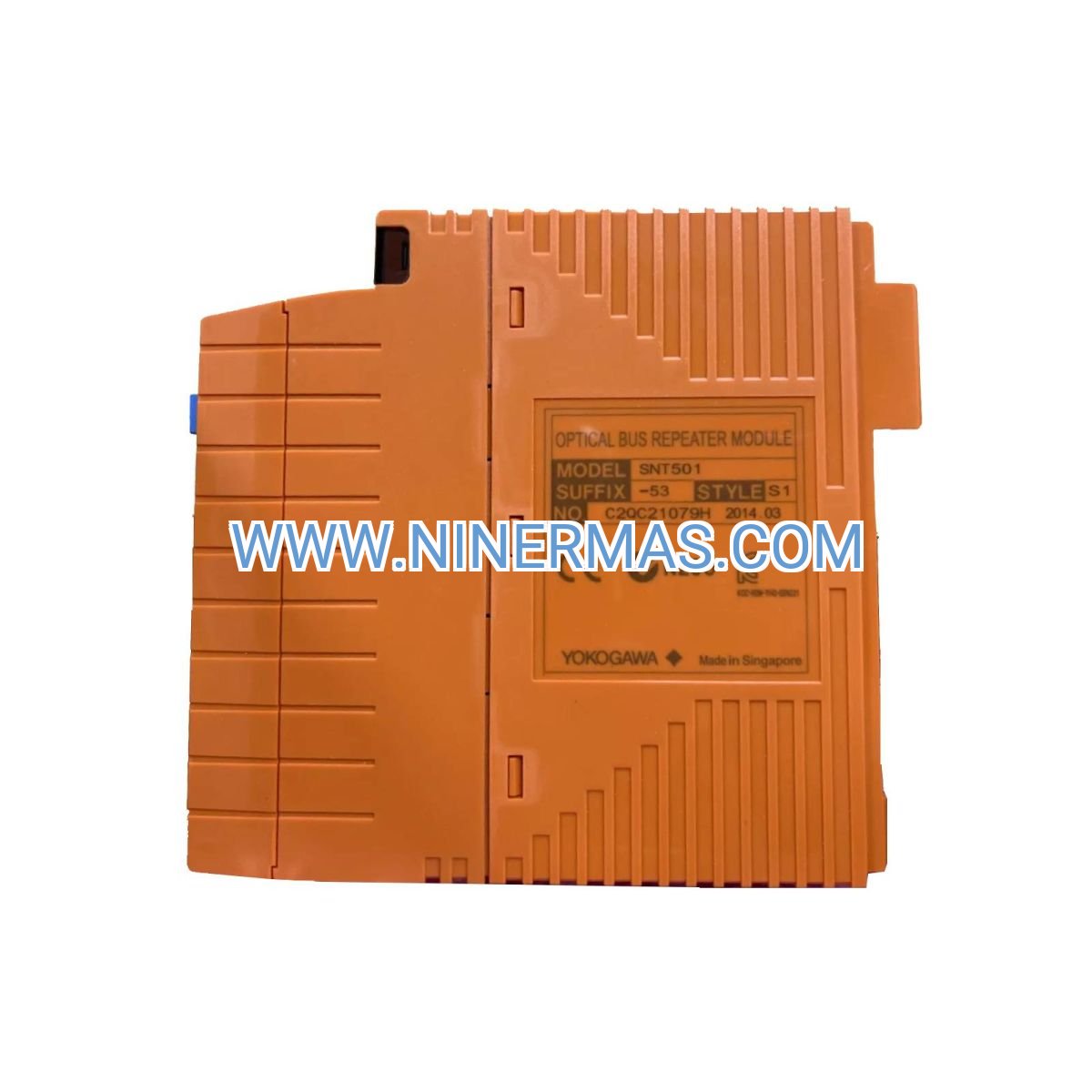
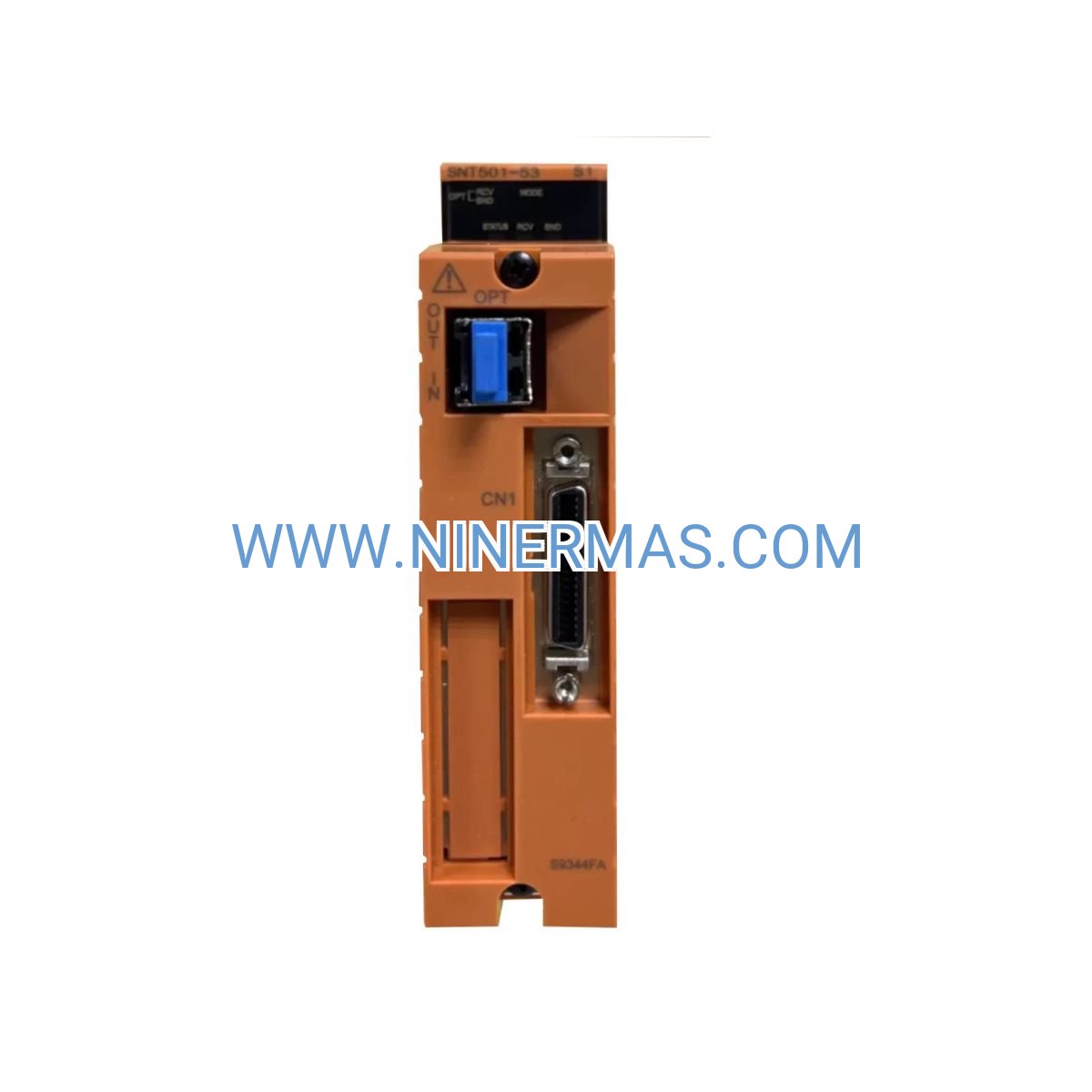
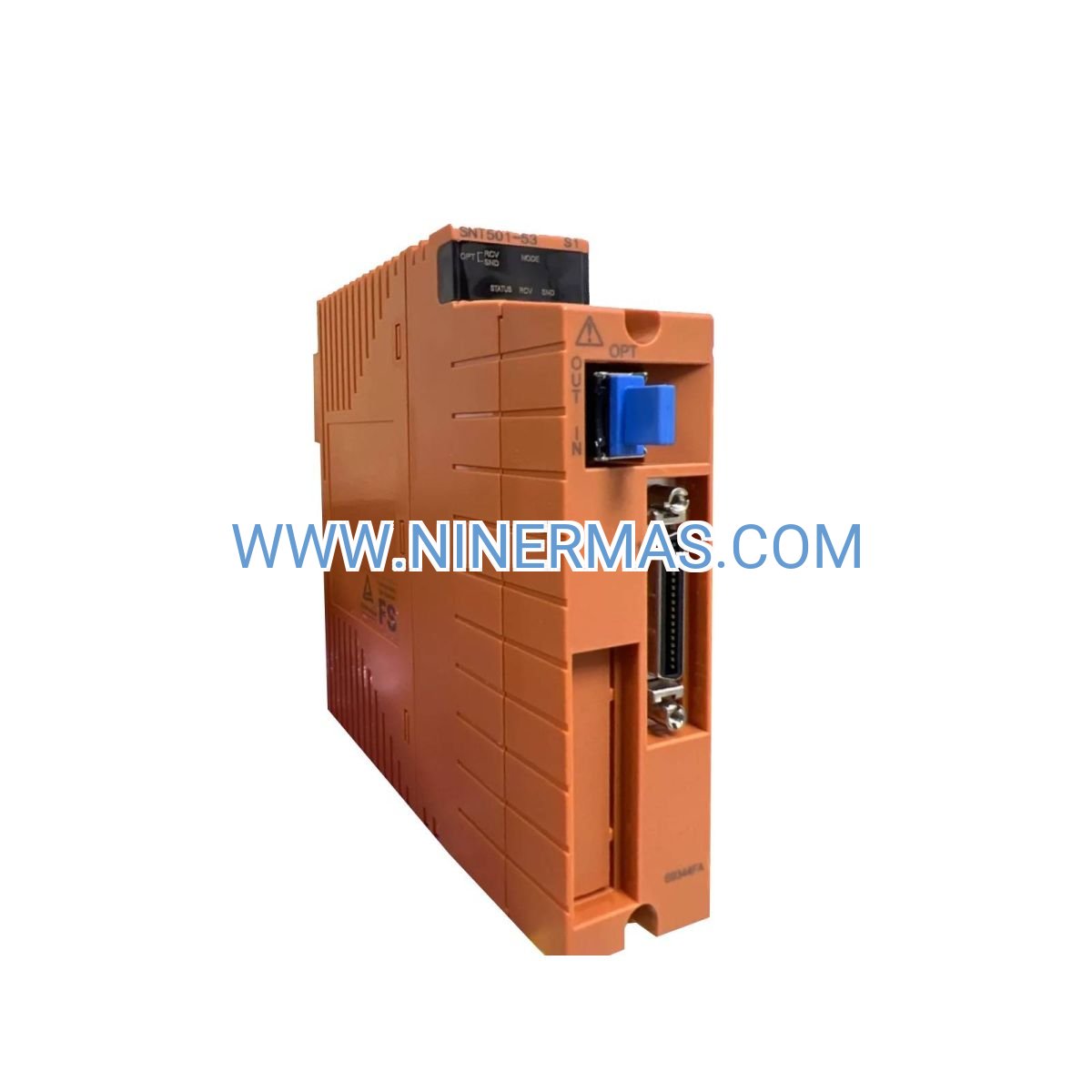
SNT501-53 Optical ESB Bus Repeater (Industrial-Grade Network Extender)
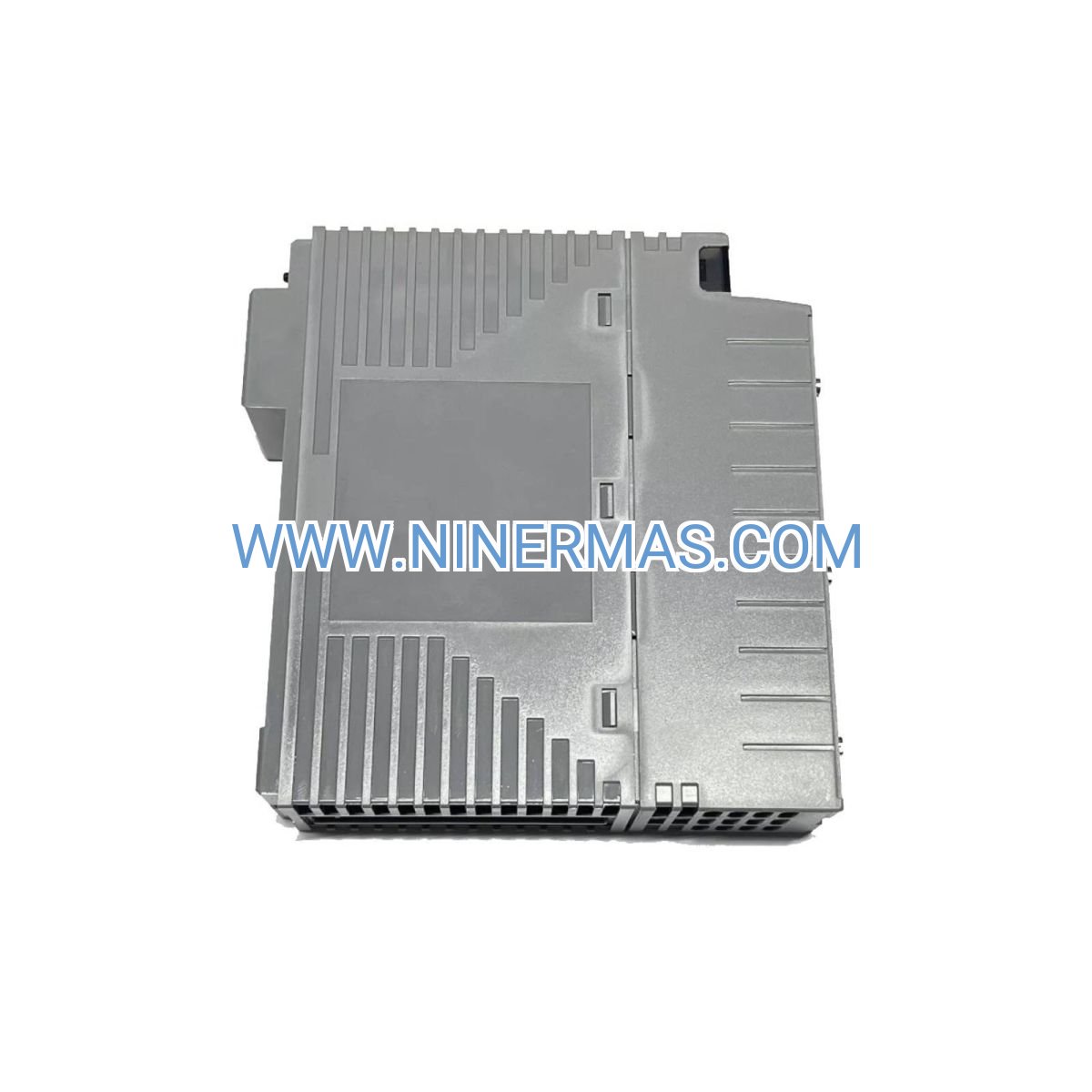
The Yokogawa SNT501-53 is a slave-side optical ESB bus repeater designed to overcome distance limitations in distributed control architectures. By converting electrical signals to optical transmission, this module enables reliable communication across distances up to 2 kilometers between master controllers and remote I/O stations. Built for CENTUM VP and CENTUM CS 3000 platforms, it delivers deterministic data exchange in mission-critical process automation environments where cable runs exceed standard electrical bus specifications.
Process industries face a persistent challenge: maintaining signal integrity when control cabinets must be positioned far from field instrumentation. The SNT501-53 addresses this by providing galvanic isolation and immunity to electromagnetic interference, making it the preferred solution for refineries, chemical plants, and utilities operating in electrically noisy environments. Its compact DIN-rail form factor integrates seamlessly into existing control panels without requiring specialized mounting hardware.
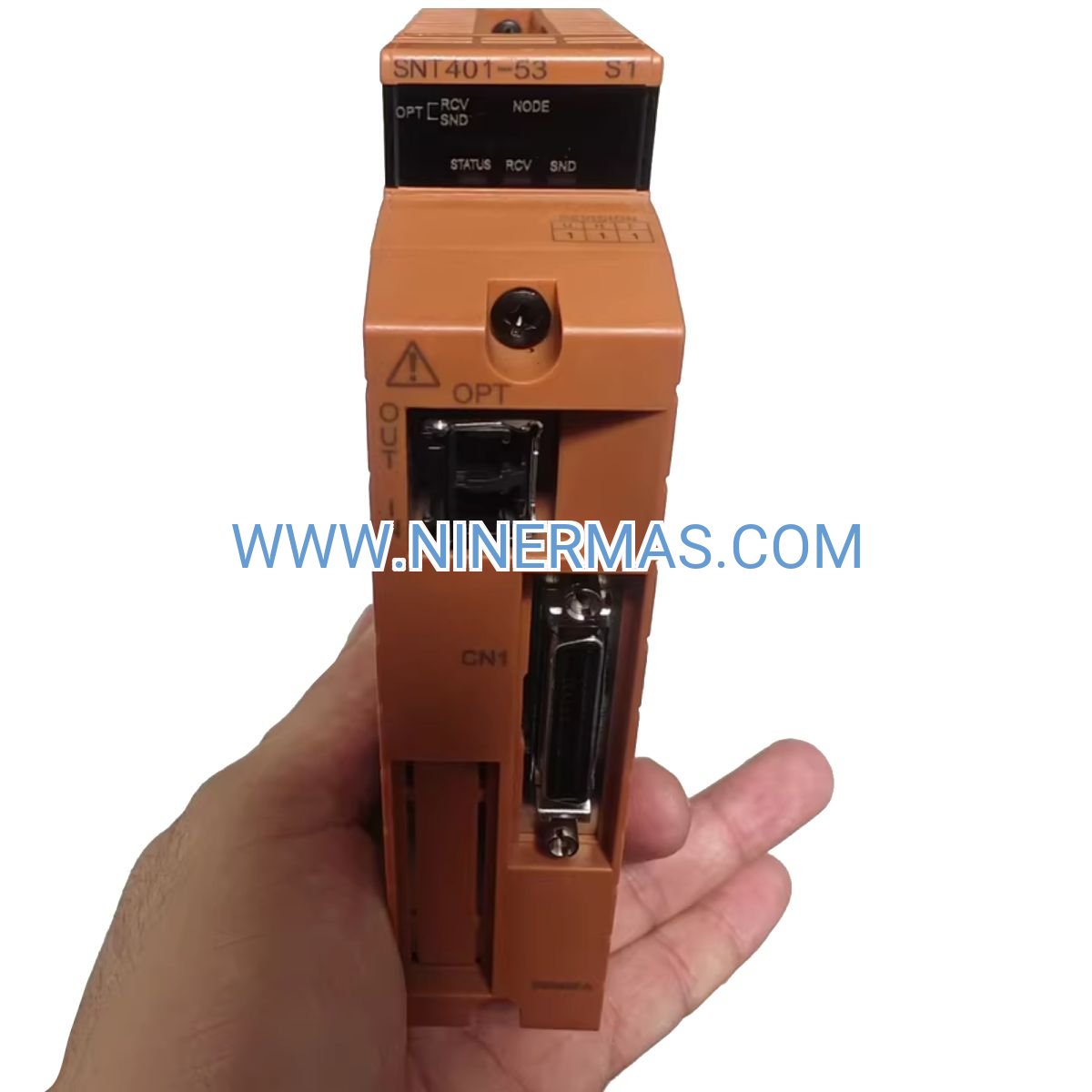
Whether you're expanding an existing CENTUM installation or designing a greenfield facility with distributed control nodes, the SNT501-53 ensures your ESB network maintains full bandwidth and deterministic response times across extended topologies. Pair it with the SNT401-53 master repeater to create robust, long-haul communication links that meet the uptime demands of continuous process operations.
Core Capabilities & Business Value
→ 2-Kilometer Optical Reach
Extends ESB bus communication beyond standard electrical limits, eliminating the need for intermediate relay cabinets and reducing infrastructure costs in large facilities.
✓ Complete Electrical Isolation
Fiber optic transmission breaks ground loops and blocks transient surges, protecting sensitive control electronics from lightning strikes and high-voltage equipment interference.
→ Plug-and-Play CENTUM Integration
Pre-configured for Yokogawa DCS platforms with automatic bus recognition, reducing commissioning time and minimizing configuration errors during system startup.
✓ Low-Latency Data Transfer
Maintains sub-millisecond response times critical for closed-loop control applications, ensuring regulatory compliance in safety-instrumented systems (SIS).
→ Compact DIN-Rail Design
Occupies minimal panel space (0.3 kg weight) while providing industrial-temperature operation from 0°C to 55°C, suitable for non-climate-controlled equipment rooms.
✓ Energy-Efficient Operation
Low power consumption reduces heat generation in densely populated control cabinets, extending the service life of adjacent electronics and lowering cooling requirements.
Industry Applications & Problem Resolution
Oil & Gas Refineries
Connect remote pump stations and tank farms to central control rooms across sprawling facilities. The SNT501-53 eliminates signal degradation caused by long cable runs through electrically noisy compressor buildings and high-voltage switchyards, ensuring reliable communication for custody transfer metering and emergency shutdown systems.
Chemical Processing Plants
Link reactor control panels in hazardous areas to safe-area operator stations without compromising intrinsic safety barriers. Optical isolation prevents ground potential differences between buildings from corrupting analog signals or triggering false alarms in batch control sequences.
Power Generation Facilities
Bridge the distance between turbine control systems and auxiliary equipment rooms in combined-cycle plants. The repeater's immunity to EMI from generators and transformers maintains data integrity for critical parameters like steam pressure and fuel flow, preventing costly unplanned outages.
Water & Wastewater Treatment
Expand SCADA networks to remote lift stations and clarifier basins without trenching new conduit. Fiber optic links resist corrosion in humid environments and eliminate the need for surge protection devices, reducing long-term maintenance expenses.
Pharmaceutical Manufacturing
Enable distributed control of cleanroom HVAC systems and process skids while maintaining validated system architectures. The SNT501-53's deterministic performance supports 21 CFR Part 11 compliance by ensuring audit trail integrity across extended network segments.
Technical Parameters & Selection Criteria
| Parameter | Specification |
|---|---|
| Model Number | SNT501-53 |
| Module Type | Slave-side optical ESB repeater |
| Maximum Distance | 2,000 meters (6,562 feet) |
| Fiber Type | Multi-mode optical fiber |
| Bus Protocol | Enhanced Serial Bus (ESB) |
| Operating Temperature | 0°C to +55°C (32°F to 131°F) |
| Storage Temperature | -20°C to +70°C (-4°F to 158°F) |
| Humidity Range | 5% to 95% RH (non-condensing) |
| Mounting Method | 35mm DIN rail (IEC 60715) |
| Dimensions (W×H×D) | Compact modular housing |
| Weight | 0.3 kg (0.66 lbs) |
| Power Consumption | Low-power design (specifications available upon request) |
| Certifications | Industrial automation standards compliant |
Selection Guidelines: Use the SNT501-53 as the slave (remote) module in conjunction with the SNT401-53 master module. Calculate total fiber run length including patch panels and slack loops—ensure it remains below 2km. For distances exceeding this limit, consider cascaded repeater pairs or Ethernet-based field networks. Verify compatibility with your CENTUM system revision; consult Yokogawa documentation for firmware requirements in legacy CS 3000 installations.
Advanced Integration Options
Redundant Network Topologies
Deploy dual SNT501-53 modules in parallel configurations to create fault-tolerant communication paths. Automatic failover ensures continuous operation even if one fiber link is severed during maintenance or accidental damage.
Hybrid Copper-Fiber Networks
Combine optical repeaters with standard ESB electrical segments to optimize costs. Use fiber only where EMI immunity or extended distance is required, transitioning back to copper for short runs within control buildings.
Third-Party System Bridging
Interface CENTUM DCS with legacy PLCs or SCADA systems using protocol gateways connected via ESB repeater links. Maintain real-time data exchange while preserving existing infrastructure investments.
Delivery Timeline & Support Services
Standard Lead Time: 3-5 business days for in-stock units; custom configurations may require 2-3 weeks depending on factory availability and regional logistics.
Warranty Coverage: 12-month manufacturer's warranty covering defects in materials and workmanship. Extended service agreements available for critical applications requiring rapid replacement guarantees.
Technical Assistance: Pre-sales engineering support for network design validation, fiber budget calculations, and system integration planning. Post-installation troubleshooting via phone, email, and remote diagnostics.
Documentation Package: Includes installation manual, wiring diagrams, fiber termination guidelines, and configuration worksheets. CAD drawings and 3D models available for panel layout design.
Frequently Asked Questions
Q: What fiber optic cable type is required for the SNT501-53 repeater module?
A: The module uses multi-mode optical fiber with standard LC or SC connectors (consult datasheet for exact connector type). Ensure fiber meets minimum bandwidth requirements for ESB data rates—typically OM2 or better grade cable.
Q: Can I extend the network beyond 2 kilometers using multiple repeater pairs?
A: Yes, cascading repeater sets is possible, but total latency must remain within ESB timing specifications. For distances exceeding 4km, evaluate Yokogawa's Ethernet-based Vnet/IP field networks as a more scalable alternative.
Q: Does the SNT501-53 require configuration or is it auto-sensing?
A: The module auto-detects ESB bus parameters and requires no manual configuration in standard CENTUM installations. DIP switches or software settings may be needed for specialized applications—refer to the installation guide.
Q: How does optical transmission improve energy efficiency compared to copper cabling?
A: Fiber eliminates resistive losses inherent in long copper runs and reduces the need for signal boosters or conditioners. Lower power consumption also decreases heat dissipation, reducing HVAC loads in control rooms.
Q: Is the SNT501-53 compatible with CENTUM CS 1000 or CS 3000 R3 systems?
A: Compatibility depends on system firmware revision. The SNT501-53 is optimized for CENTUM VP; for legacy systems, verify compatibility with Yokogawa technical support or consult the product compatibility matrix.
Q: What diagnostic features are available for troubleshooting fiber link issues?
A: The module includes LED indicators for power status, signal presence, and communication errors. Advanced diagnostics are accessible through CENTUM engineering tools for bit error rate monitoring and link quality assessment.
Request a Technical Consultation
Optimize your distributed control network with expert guidance. Our application engineers will review your facility layout, calculate fiber budgets, and recommend the optimal repeater configuration for your CENTUM system. Contact us today to receive a detailed proposal including pricing, lead times, and integration support options.
© 2026 NINERMAS COMPANY LIMITED. All rights reserved.
Original Source: https://ninermas.com
Contact: sale@ninermas.com | +0086 187 5021 5667
PDF Specification
Download PDF file here:
Click to Download PDFRelated products

Contact Info
-
Address:22 / F, South Wo Hang building, 148 Wing Lok Street, Sheung Wan, Western District, Hong Kong
-
Phone:+8618750215667
-
Email: