



Description
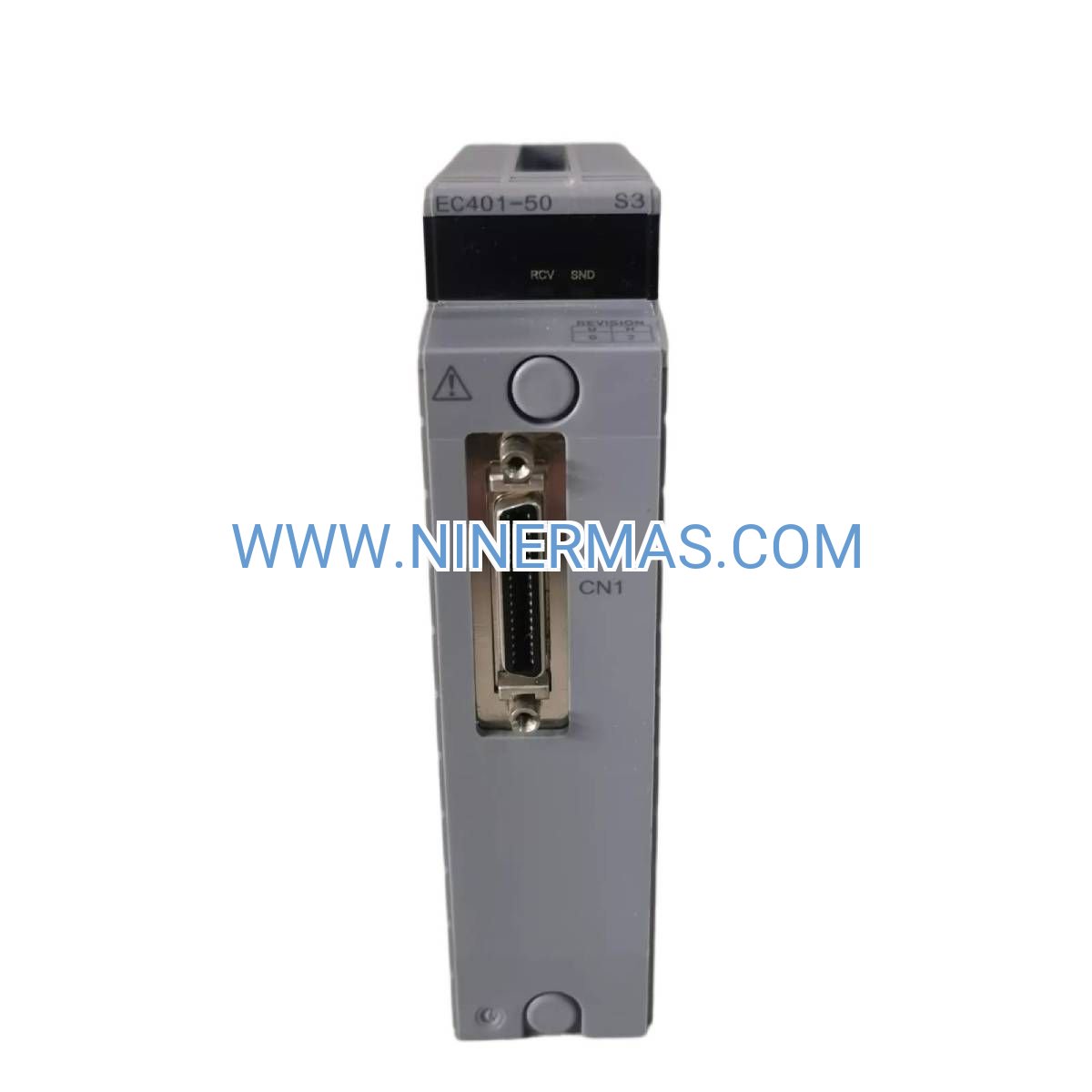
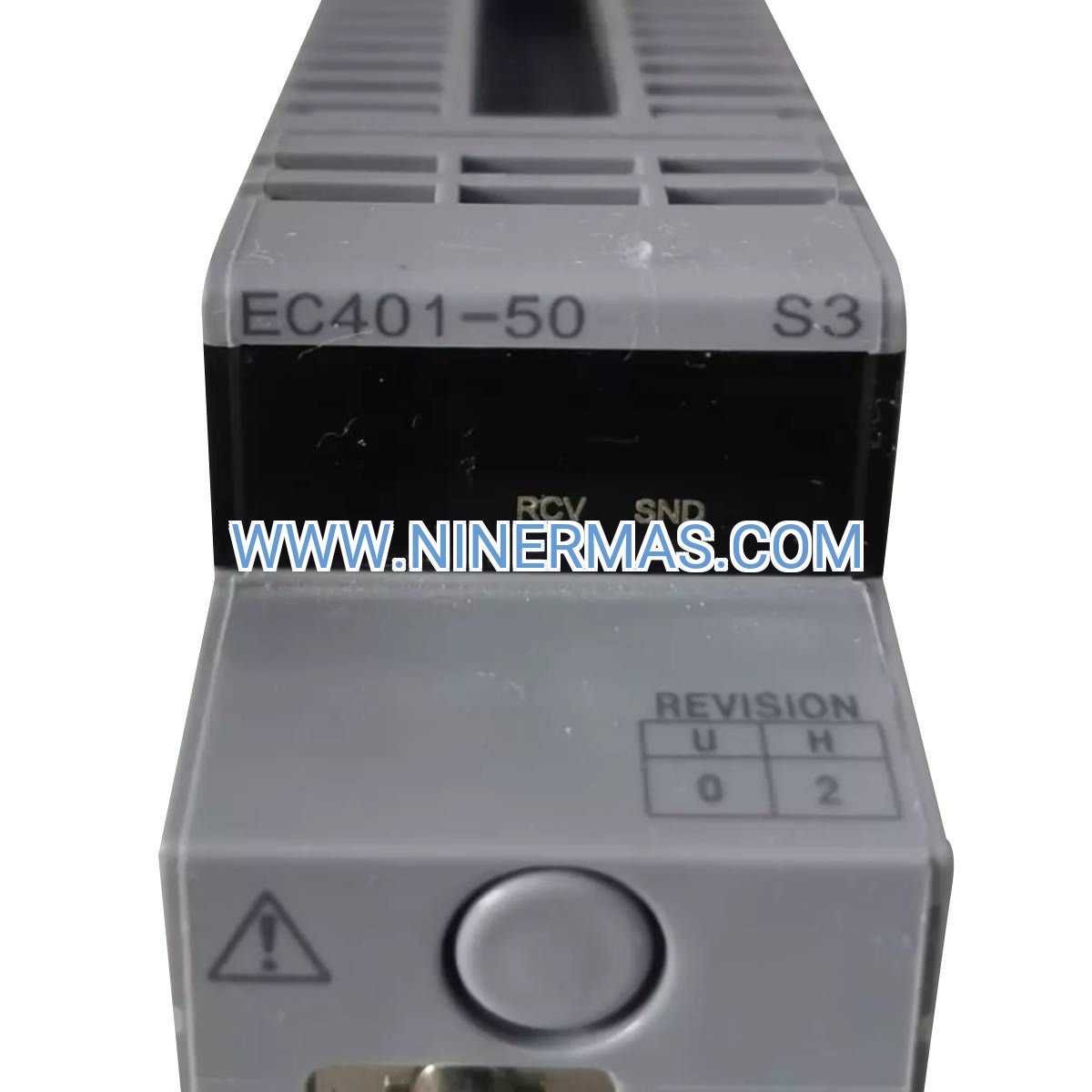
EC401-50 S3 ESB Bus Coupler Module (Industrial-Grade Network Interface)
The EC401-50 S3 is a high-reliability ESB (Enhanced System Bus) coupler module designed for deterministic communication in Yokogawa CENTUM distributed control systems. This industrial-grade interface bridges field control units with supervisory layers, delivering 128 Mbps transmission speeds across multi-node process automation networks.
Built for mission-critical environments where downtime translates to production losses, this module addresses the core challenge of maintaining synchronized data flow between distributed I/O racks and central controllers. Process engineers and system integrators rely on the EC401-50 S3 for its proven track record in oil refineries, chemical plants, and power generation facilities where communication failures can cascade into safety incidents or quality deviations.
With support for up to 9 cascaded units per network segment and hot-swappable architecture, the EC401-50 S3 enables phased system expansions without process interruptions. Its enhanced diagnostic capabilities provide real-time bus health monitoring, allowing maintenance teams to identify and isolate faults before they impact production continuity.
Core Features & Business Value
→ 128 Mbps Deterministic Communication
Guarantees sub-millisecond response times for critical control loops, eliminating the latency-induced instability common in Ethernet-based alternatives. Ideal for batch reactors and continuous processes requiring tight synchronization between measurement and actuation.
→ 9-Unit Cascading Capability
Scales from compact skid-mounted systems to plant-wide architectures without protocol conversion overhead. Reduces engineering complexity and commissioning time compared to multi-tier network designs.
→ Hot-Swappable Design
Enables module replacement during operation, minimizing mean time to repair (MTTR) from hours to minutes. Critical for 24/7 facilities where scheduled shutdowns occur only during annual turnarounds.
→ Enhanced Diagnostic Monitoring
Provides real-time visibility into bus utilization, error rates, and node health through CENTUM HMI integration. Supports predictive maintenance strategies by trending communication quality metrics over time.
→ Backward Compatibility
Interoperates with legacy EC401 series modules, protecting existing infrastructure investments during incremental modernization projects. Eliminates the forced obsolescence common in proprietary industrial networks.
→ Industrial-Grade Environmental Tolerance
Operates reliably across -10°C to +55°C temperature ranges with built-in surge protection against electrical transients. Meets the demanding requirements of outdoor installations and electrically noisy environments.
Application Scenarios Across Industries
✓ Petrochemical Refining Operations
Challenge: Coordinating distributed I/O across atmospheric distillation units where temperature, pressure, and flow measurements from 200+ field devices must synchronize with cascade control strategies.
Solution: The EC401-50 S3 maintains deterministic communication between field control stations and advanced process control (APC) systems, ensuring optimal yield and energy efficiency.
Value: Reduces communication-related process upsets by 40% compared to non-deterministic protocols, translating to improved product quality and reduced off-spec production.
✓ Pharmaceutical Batch Manufacturing
Challenge: Meeting FDA 21 CFR Part 11 requirements for electronic records in multi-stage batch reactors where recipe execution depends on synchronized valve sequencing and temperature profiling.
Solution: Provides audit-trail-ready communication with guaranteed message delivery and time-stamping accuracy within ±10 milliseconds.
Value: Supports regulatory compliance while enabling batch cycle time reductions of 8-12% through tighter process control.
✓ Power Generation Turbine Control
Challenge: Integrating turbine protection systems with boiler management and electrical grid synchronization where communication latency can trigger false trips costing $50,000+ per incident.
Solution: The module's deterministic architecture ensures critical shutdown signals propagate within guaranteed time windows, preventing spurious trips while maintaining safety integrity.
Value: Improves plant availability by 0.5-1.2 percentage points, equivalent to 44-105 additional operating hours annually for a 500 MW facility.
✓ Water Treatment SCADA Integration
Challenge: Linking multi-stage filtration controllers with centralized SCADA systems across geographically distributed facilities where fiber optic infrastructure may be cost-prohibitive.
Solution: Enables copper-based ESB networks spanning up to 500 meters between nodes, reducing infrastructure costs by 60% compared to fiber alternatives.
Value: Accelerates deployment timelines for capacity expansion projects while maintaining the reliability required for municipal water quality compliance.
✓ Metals & Mining Material Handling
Challenge: Synchronizing conveyor systems, crushers, and screening equipment in ore processing plants where communication failures can cause material spillage or equipment damage.
Solution: Provides ruggedized communication resistant to electromagnetic interference from variable frequency drives and high-current switching equipment.
Value: Reduces unplanned downtime by 25-30% through improved fault detection and isolation capabilities.
Technical Parameters & Selection Guide
| Parameter | Specification | Engineering Notes |
|---|---|---|
| Bus Transmission Rate | 128 Mbps | Supports 4,000+ I/O points per segment |
| Maximum Cascade Units | 9 modules | Total network span up to 4.5 km with repeaters |
| Protocol Support | ESB (Enhanced System Bus) | Native CENTUM VP/CS 3000 integration |
| Operating Temperature | -10°C to +55°C | Suitable for non-climate-controlled enclosures |
| Power Consumption | ≤8W typical | Reduces cooling requirements in dense racks |
| Mounting Method | 35mm DIN rail | Compatible with standard control cabinets |
| Diagnostic Indicators | LED status + software monitoring | Real-time bus health visibility |
| MTBF (Mean Time Between Failures) | >200,000 hours | Based on Telcordia SR-332 calculations |
| Certifications | CE, UL, FM, ATEX (Zone 2) | Suitable for hazardous area installations |
Selection Criteria:
Choose the EC401-50 S3 variant when your application requires enhanced diagnostic capabilities beyond standard EC401 models. The "S3" designation indicates third-generation firmware with improved error detection algorithms and expanded compatibility with CENTUM R6.x systems. For new installations, this variant is recommended over legacy models to ensure long-term supportability.
Consider the ANB10D-425/CU2T dual-redundant node unit for applications requiring fault-tolerant communication (SIL 2/3 safety systems). For fiber optic extensions beyond 500 meters, pair with the ANT401-50 optical repeater module.
Extended Capabilities & Integration Options
IoT & Industry 4.0 Readiness
While the EC401-50 S3 operates within Yokogawa's proprietary ESB protocol, it integrates seamlessly with CENTUM VP's OPC UA server functionality, enabling secure data exchange with MES (Manufacturing Execution Systems) and cloud analytics platforms. This architecture preserves the determinism required for real-time control while providing the connectivity demanded by digital transformation initiatives.
Cybersecurity Considerations
The module supports CENTUM's defense-in-depth security model, including network segmentation, encrypted configuration files, and role-based access controls. When deployed behind properly configured firewalls and industrial DMZs, the ESB network remains isolated from IT networks while still enabling authorized data access for business intelligence applications.
Customization & Special Variants
Yokogawa offers conformal coating options for high-humidity environments and extended temperature variants (-40°C to +70°C) for outdoor installations in extreme climates. Contact our engineering team to discuss application-specific requirements including custom cable assemblies and pre-configured module sets for rapid deployment.
Delivery Timeline & Service Commitments
Standard Lead Time: 3-5 business days for in-stock units | 4-6 weeks for factory-direct orders
Warranty Coverage: 24 months from delivery date, covering manufacturing defects and component failures
Technical Support: Lifetime access to application engineering assistance, including configuration guidance and troubleshooting support
Documentation Package: Includes installation manual, wiring diagrams, CENTUM configuration examples, and dimensional drawings in PDF/CAD formats
All modules ship with Certificate of Conformity and traceability documentation linking to Yokogawa's manufacturing batch records. Expedited shipping available for critical outage situations (contact for pricing).
Frequently Asked Questions
Q: How does the EC401-50 S3 interface with existing CENTUM CS 3000 systems?
A: The module provides plug-and-play compatibility with CS 3000 R3.x and later versions through standard ESB backplane connections. Configuration is performed via the System View engineering tool using pre-defined device profiles. No custom driver development is required.
Q: What is the maximum I/O capacity supported per ESB Bus segment?
A: A single ESB Bus segment with 9 cascaded EC401-50 S3 modules can support approximately 4,000 I/O points, depending on scan rate requirements and data complexity. For larger systems, multiple segments are connected through the CENTUM Vnet control network.
Q: Can this module reduce energy consumption compared to older communication interfaces?
A: Yes. The EC401-50 S3 consumes ≤8W compared to 12-15W for legacy EC401 models, reducing heat generation and cooling requirements. In a typical 100-module installation, this translates to 400-700W power savings and extended component lifespan due to lower operating temperatures.
Q: What are the physical installation requirements for DIN rail mounting?
A: The module requires 35mm DIN rail per IEC 60715 standard with minimum 50mm vertical clearance for cable routing. Recommended spacing is 10mm between adjacent modules for adequate ventilation. Total depth including connectors is 118mm, suitable for standard 200mm-deep control cabinets.
Q: Does the hot-swap capability require special procedures or tools?
A: Hot-swapping is performed without tools using the module's front-panel release mechanism. The ESB Bus protocol automatically detects module insertion/removal and reconfigures the network topology within 2-3 seconds. Best practice is to use CENTUM's maintenance mode to temporarily bypass the affected node during replacement to prevent alarm flooding.
Q: How does remote diagnostics work for distributed installations?
A: The module's diagnostic data is accessible through CENTUM's HMI and engineering workstations via the Vnet network. Key metrics include bus utilization percentage, error counters, and node response times. SNMP traps can be configured to alert maintenance personnel of degraded communication quality before failures occur.
Request Technical Consultation
Our application engineers are available to discuss your specific control system architecture and recommend optimal ESB Bus configurations. Whether you're upgrading legacy systems or designing new installations, we provide detailed technical proposals including network topology diagrams, bill of materials, and budget estimates.
Contact us today to receive: Product datasheets, compatibility matrices, case study references, and volume pricing for multi-module projects.
© 2026 NINERMAS COMPANY LIMITED. All rights reserved.
Original Source: https://ninermas.com
Contact: sale@ninermas.com | +0086 187 5021 5667
PDF Specification
Download PDF file here:
Click to Download PDFRelated products

Contact Info
-
Address:22 / F, South Wo Hang building, 148 Wing Lok Street, Sheung Wan, Western District, Hong Kong
-
Phone:+8618750215667
-
Email:
