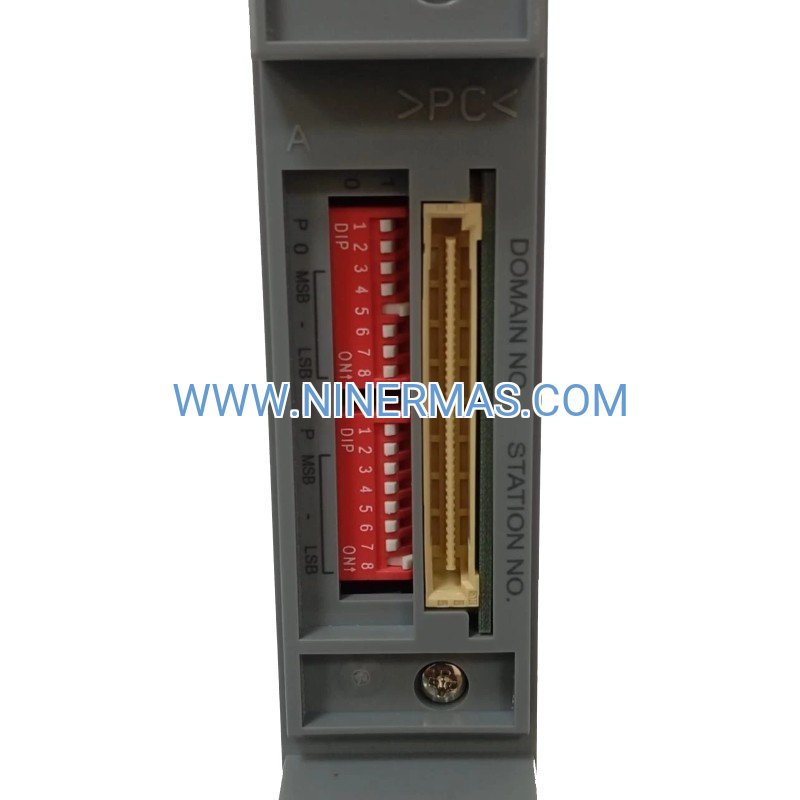
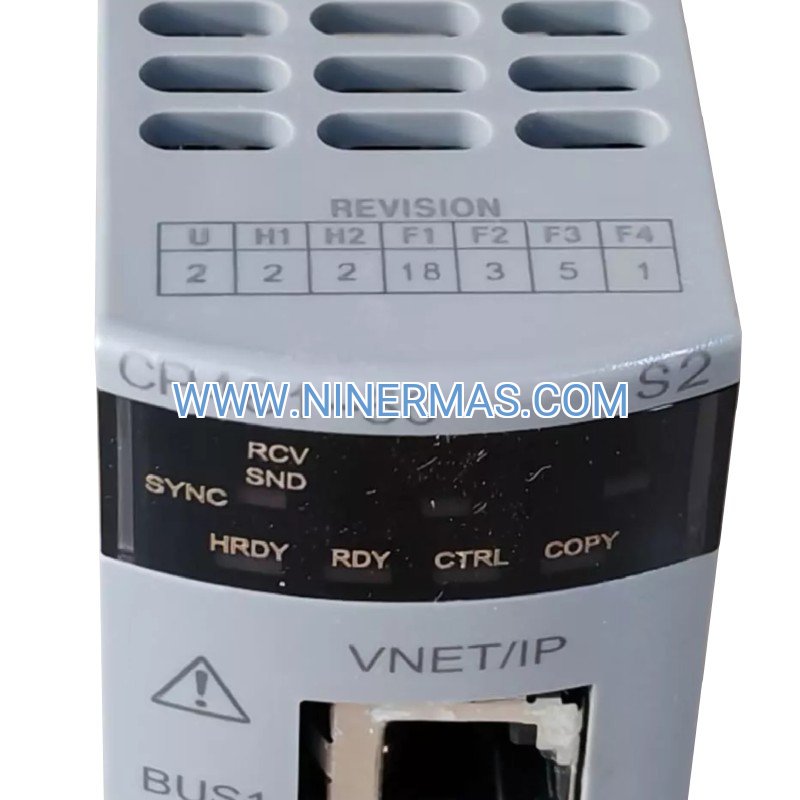
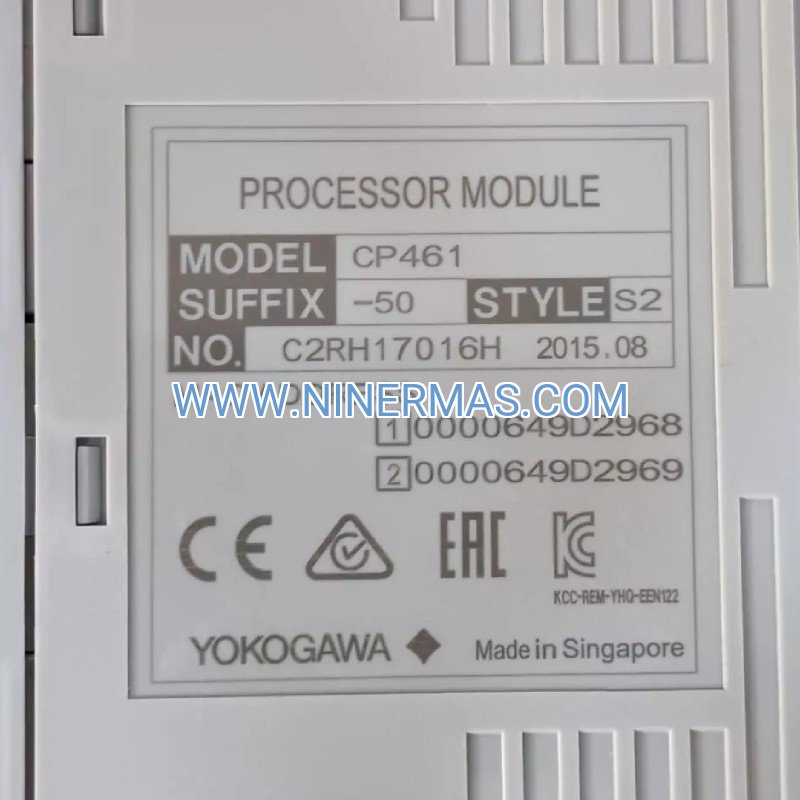
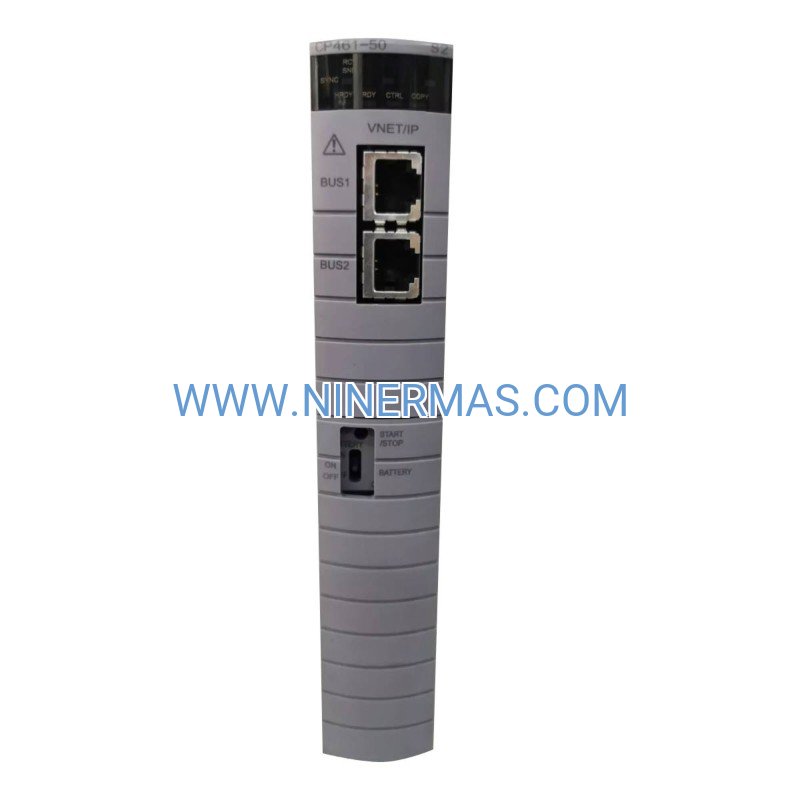
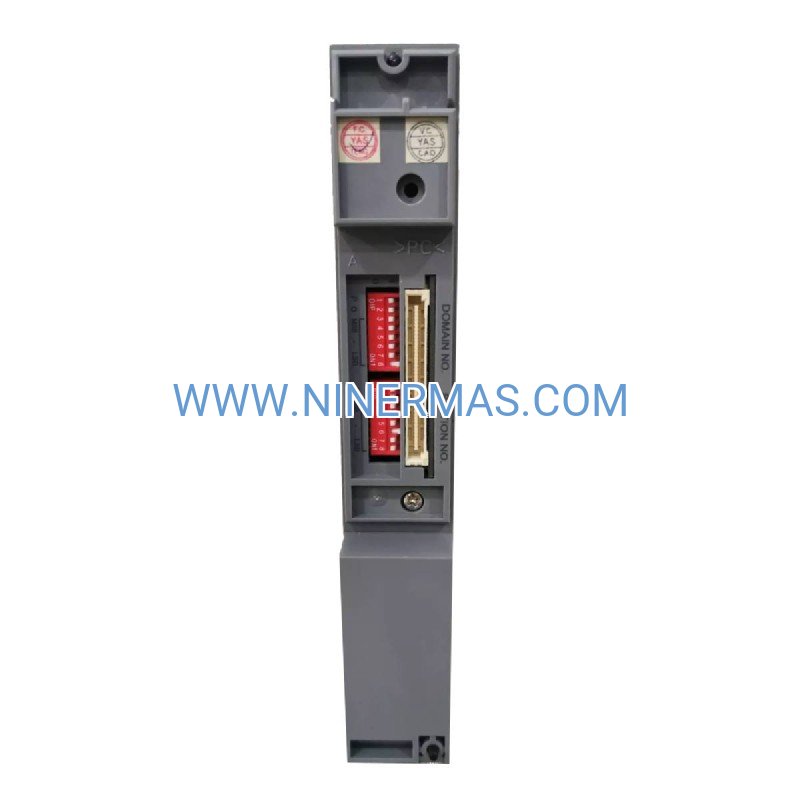
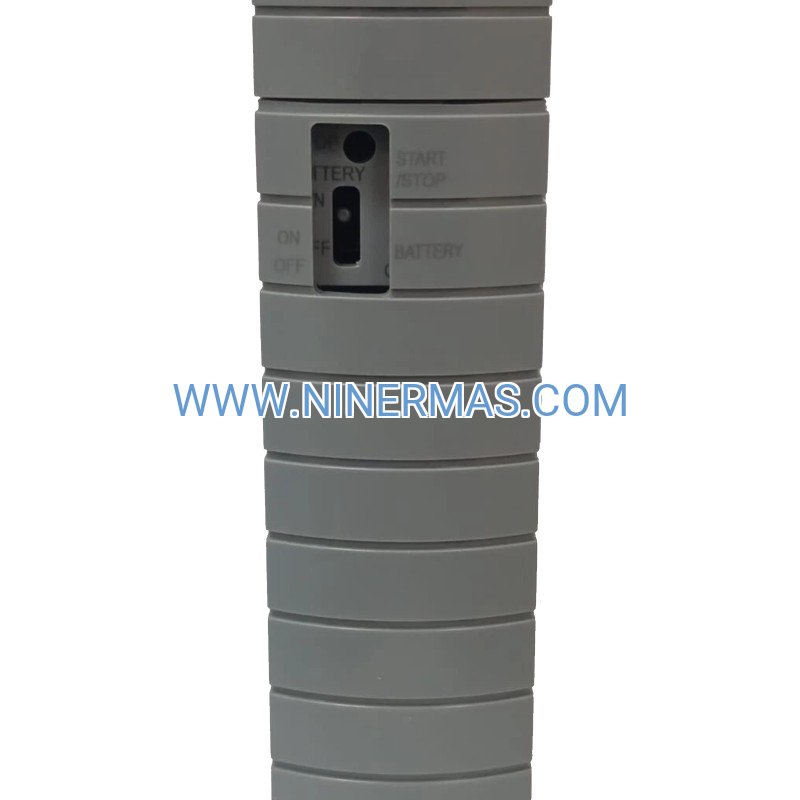
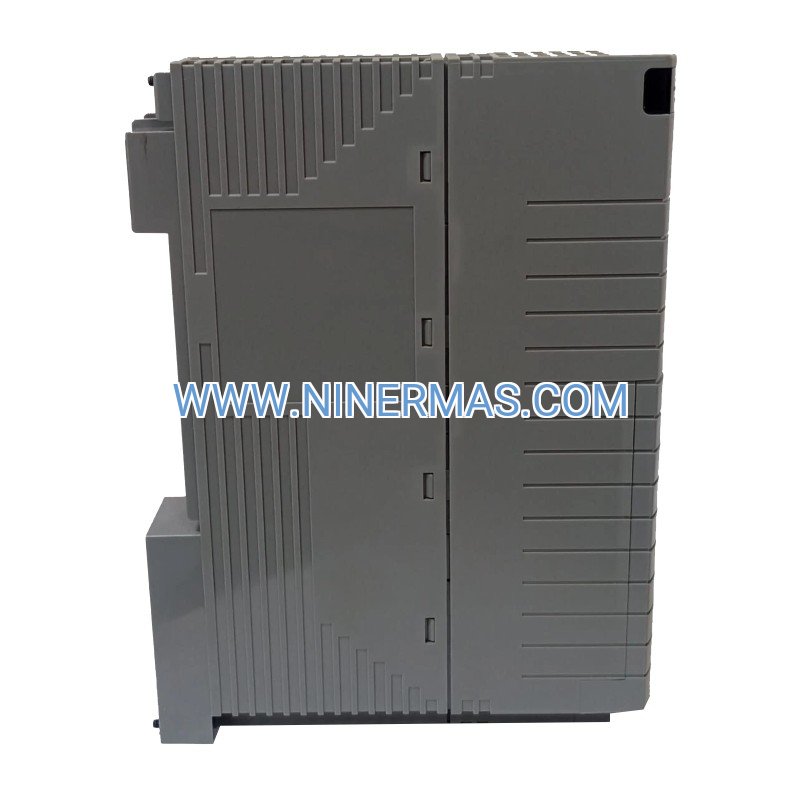
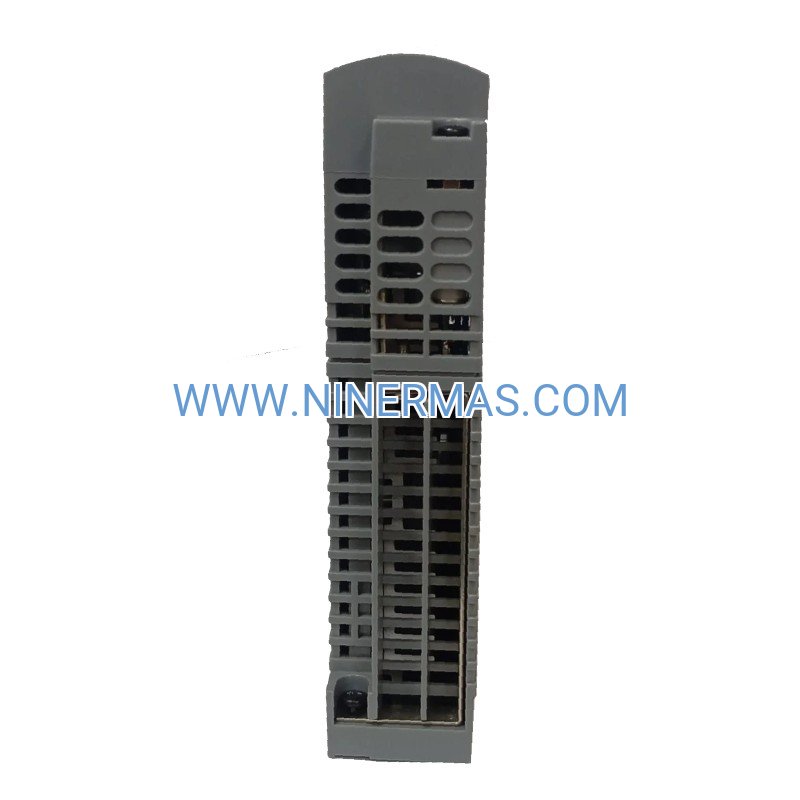
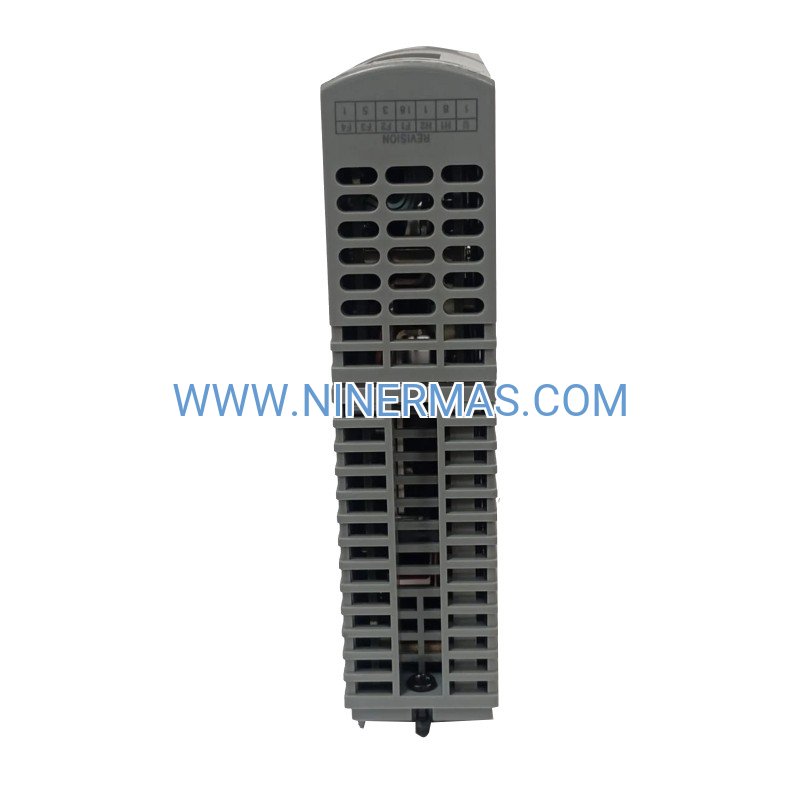
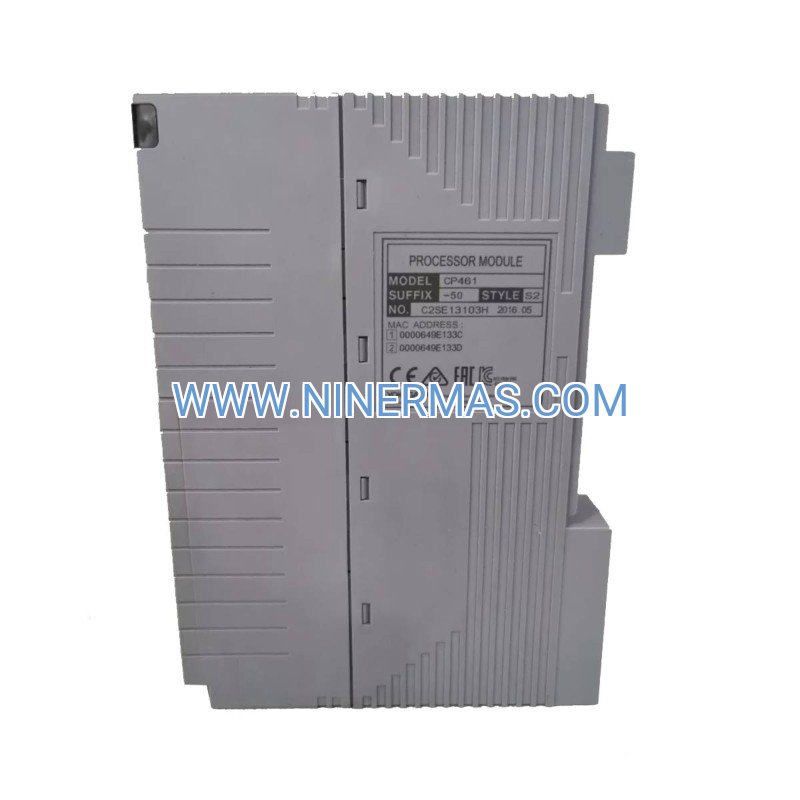
YOKOGAWA CP461-50 S2 Processor Module | Dual-Redundant DCS CPU
Description
CP461-50 S2 Dual-CPU Controller (Industrial-Grade Failover System)
The CP461-50 S2 is a dual-processor control module engineered for industries where downtime translates to six-figure losses per hour. Built on Yokogawa's proven CENTUM VP platform, this controller delivers synchronized redundancy that switches between CPUs in under 50 milliseconds—faster than most process variables can drift. Whether you're managing continuous chemical reactions, utility-scale power distribution, or pharmaceutical clean-room environments, the S2 architecture eliminates single points of failure while maintaining deterministic control loop performance.
Designed for plant engineers and automation integrators who demand carrier-grade reliability, this module addresses the critical gap between standard PLCs and mission-critical DCS requirements. Unlike conventional backup systems that require manual intervention, the CP461-50 S2 employs active-active redundancy with real-time state mirroring—both processors execute control logic simultaneously, with automatic failover occurring transparently to connected I/O and field devices.
With support for up to 8 I/O modules per controller and native Vnet/IP networking, the S2 integrates seamlessly into existing CENTUM VP infrastructures while providing a clear migration path for legacy CENTUM CS installations. The result: a control foundation that scales from small skid-mounted units to plant-wide distributed architectures spanning thousands of I/O points.
Core Capabilities & Business Impact
→ Bumpless Failover Technology
Automatic CPU switchover with zero process disruption. When the primary processor detects a fault condition, the standby unit assumes control within one scan cycle—maintaining setpoints, PID tuning parameters, and alarm states without operator intervention. This eliminates the 15-30 minute recovery windows typical of cold-standby systems.
✓ Predictive Diagnostics Suite
Continuous health monitoring tracks CPU temperature, memory utilization, and communication integrity. The system generates early-warning alerts 48-72 hours before component degradation affects performance, allowing scheduled maintenance during planned outages rather than emergency shutdowns.
✓ Hot-Swappable Architecture
Field-replaceable modules enable component upgrades without de-energizing the control system. Technicians can replace a failed CPU, power supply, or communication card while the redundant processor maintains full operational control—reducing mean time to repair (MTTR) by 65% compared to non-redundant platforms.
✓ Deterministic Scan Performance
Guaranteed 100ms control loop execution regardless of I/O loading or network traffic. The dual-core architecture allocates dedicated processing resources to time-critical tasks, ensuring regulatory control loops maintain stability even during batch recipe downloads or historian data transfers.
✓ Cybersecurity Hardening
Integrated firewall with role-based access control (RBAC) and encrypted Vnet/IP communications. Complies with IEC 62443 industrial cybersecurity standards, protecting against unauthorized configuration changes and network-based attacks without sacrificing real-time performance.
✓ Energy-Optimized Operation
Advanced power management reduces consumption by 22% versus previous-generation controllers. The S2 variant achieves this through dynamic clock scaling and intelligent I/O polling—lowering operating costs while meeting strict thermal budgets for enclosed panel installations.
Industry Applications & Problem-Solving
Petrochemical Refining
Challenge: Catalytic cracker units require continuous temperature and pressure control across 200+ control loops. Unplanned shutdowns cost $500K-$2M per incident in lost production and restart expenses.
Solution: The CP461-50 S2's redundant architecture maintains control during planned maintenance or unexpected hardware failures. Operators perform CPU firmware updates without process interruption, and the system's 100,000+ hour MTBF rating reduces unplanned outages by 40%.
Pharmaceutical Manufacturing
Challenge: FDA-regulated batch processes demand complete audit trails and recipe integrity. A single control system failure during a 72-hour fermentation run can invalidate an entire $3M batch.
Solution: Dual-processor synchronization ensures recipe execution continues even if one CPU fails mid-batch. The system's deterministic failover preserves all process data, alarm histories, and electronic batch records required for 21 CFR Part 11 compliance.
Power Generation
Challenge: Combined-cycle plants must coordinate gas turbine sequencing, heat recovery steam generators, and emissions controls across multiple control zones. Loss of coordination can trigger emergency shutdowns affecting grid stability.
Solution: The S2's high-speed Vnet/IP networking synchronizes control across distributed field control stations (FCS) with sub-10ms latency. Redundant processors in each FCS eliminate single points of failure while maintaining tight coordination for load-following and frequency regulation.
Water Treatment Facilities
Challenge: Municipal water systems operate 24/7/365 with minimal staffing. Control system failures can compromise water quality or trigger regulatory violations.
Solution: The CP461-50 S2 provides unmanned operation confidence through automatic failover and remote diagnostics. Plant operators receive mobile alerts for any CPU health degradation, allowing proactive maintenance scheduling without emergency callouts.
Food & Beverage Processing
Challenge: Continuous pasteurization and sterilization processes require precise temperature control to meet HACCP standards. Equipment failures during production runs create food safety risks and product waste.
Solution: Redundant control ensures critical control points (CCPs) remain within specification limits even during component failures. The system's fast scan rate (100ms) enables tight temperature regulation (±0.5°C) for consistent product quality.
Technical Specifications & Selection Criteria
| Parameter | Specification | Selection Notes |
|---|---|---|
| Processor Architecture | Dual-redundant CPU with active-active synchronization | Choose S2 variant for applications requiring <99.99% availability |
| I/O Module Capacity | 8 modules per controller unit | Each module supports 16-64 channels depending on signal type |
| Control Loop Execution | 100ms deterministic scan cycle | Suitable for regulatory control; use faster FCS for servo applications |
| Failover Time | <50ms bumpless transfer | Faster than typical process time constants (5-30 seconds) |
| Network Interface | Dual Vnet/IP (100Mbps Ethernet) | Redundant network paths eliminate communication single points of failure |
| Operating Temperature | 0°C to 55°C (32°F to 131°F) | Requires climate-controlled enclosure in extreme environments |
| Power Supply | 24VDC (redundant inputs available) | Pair with dual power supplies for complete redundancy |
| MTBF Rating | >100,000 hours (11.4 years) | Based on Telcordia SR-332 reliability prediction |
| Certifications | UL, CE, ATEX, IECEx, SIL 2 capable | Verify regional requirements for hazardous area installations |
Selection Guidelines:
Choose the CP461-50 S2 when your application meets two or more of these criteria: (1) Process downtime costs exceed $50K per hour, (2) Regulatory requirements mandate redundant control systems, (3) Maintenance windows are limited to quarterly or annual shutdowns, (4) The process has time constants slower than 5 seconds (allowing time for failover), (5) You're upgrading from legacy CENTUM CS systems and need backward compatibility.
For smaller applications with 4 or fewer I/O modules, consider the single-processor CP451-50 variant. For SIL 3 safety-critical applications, pair the S2 with Yokogawa's ProSafe-RS safety instrumented system rather than relying on the process controller for safety functions.
Advanced Integration & Connectivity
The CP461-50 S2 functions as a native node within the CENTUM VP ecosystem, communicating via Yokogawa's deterministic Vnet/IP protocol. This industrial Ethernet implementation prioritizes control traffic over diagnostic and engineering data, ensuring real-time performance even during system-wide configuration changes or historian queries.
SCADA & MES Integration: Built-in OPC UA server provides secure, standards-based connectivity to third-party SCADA platforms, manufacturing execution systems (MES), and enterprise resource planning (ERP) systems. The OPC UA implementation supports historical data access (HDA) and alarms & events (A&E) specifications, eliminating the need for middleware gateways.
Asset Management: Native integration with Yokogawa's PRM (Plant Resource Manager) enables centralized configuration management, firmware updates, and predictive maintenance across distributed control nodes. The system automatically uploads diagnostic data to PRM servers, triggering maintenance work orders when component health thresholds are exceeded.
Cloud Connectivity: Optional Sushi Sensor gateway enables secure data streaming to Yokogawa's cloud-based analytics platforms or customer-managed AWS/Azure instances. This supports remote monitoring, machine learning model deployment, and digital twin applications without compromising control system security.
Delivery, Warranty & Technical Support
Lead Times:
• Standard Configuration: 4-6 weeks from order confirmation
• Custom I/O Configurations: 6-8 weeks including factory testing
• Emergency Replacement: 48-hour expedited shipping available for critical outages
Warranty Coverage:
• 24-month manufacturer warranty covering defects in materials and workmanship
• Extended warranty options available up to 60 months
• Advance replacement program ensures <24-hour delivery of swap units
Technical Support:
• 24/7/365 global support hotline with <2-hour response time
• Remote diagnostics via secure VPN connection
• On-site commissioning and startup assistance available
• Quarterly firmware updates with security patches and performance enhancements
Documentation Package:
• Hardware installation manual with panel layout drawings
• Configuration software (CENTUM VP Engineering Studio) license
• I/O wiring diagrams and terminal block assignments
• Preventive maintenance schedule and spare parts recommendations
• Cybersecurity hardening guide (IEC 62443 compliance)
Frequently Asked Questions
How does the CP461-50 S2 redundancy differ from traditional backup controller schemes?
Unlike cold-standby or warm-standby architectures that require manual switchover or introduce process bumps during failover, the S2 employs hot-standby redundancy where both CPUs execute control logic simultaneously. The standby processor maintains a synchronized copy of all process variables, PID controller states, and alarm conditions. When the primary CPU fails, the standby assumes control within one scan cycle (typically 50-100ms) without any change to control outputs—a transition invisible to the process and field instrumentation.
What I/O module types are compatible with the CP461-50 S2 controller?
The S2 supports the full range of CENTUM VP I/O modules including analog input (AI), analog output (AO), digital input (DI), digital output (DO), thermocouple/RTD input, pulse input, and specialty modules for HART, Foundation Fieldbus, and PROFIBUS PA. Each controller can accommodate up to 8 I/O modules, with total channel counts ranging from 128 to 512 depending on module density. For applications requiring more I/O, multiple CP461-50 S2 controllers can be networked via Vnet/IP.
Can the CP461-50 S2 reduce energy consumption in existing control systems?
Yes, through two mechanisms: (1) The S2's optimized power management reduces controller energy consumption by approximately 22% versus previous-generation CP333D/CP401 models, and (2) The controller's advanced PID algorithms and model predictive control (MPC) capabilities enable tighter process optimization, reducing energy waste in heating, cooling, and compression applications. Customers in refining and chemical processing report 3-8% reductions in specific energy consumption after upgrading to CENTUM VP with CP461-50 S2 controllers.
What are the installation requirements for panel mounting and environmental conditions?
The CP461-50 S2 mounts on standard DIN rail within climate-controlled enclosures (NEMA 12 or IP54 minimum). Ambient temperature must remain within 0-55°C (32-131°F) with relative humidity <95% non-condensing. For installations in extreme environments (offshore platforms, desert climates), specify enclosures with active cooling and heating. Maintain minimum 50mm clearance on all sides for airflow. The controller requires dual 24VDC power supplies (redundant configuration) with <5% ripple and voltage regulation within ±10%.
Is remote monitoring and diagnostics supported for distributed plant locations?
Yes, the CP461-50 S2 includes built-in web server and SNMP agent for remote monitoring via standard browsers or network management systems. Yokogawa's Exaquantum PIMS (Plant Information Management System) provides centralized visibility across multiple plant sites, with real-time dashboards, alarm management, and historical trending. For secure remote access, the system supports VPN connectivity with multi-factor authentication and encrypted communications compliant with IEC 62443-3-3 security level 2.
How do firmware updates work without disrupting active processes?
The dual-redundant architecture enables online firmware updates: (1) Upload new firmware to the standby CPU while the primary maintains process control, (2) The standby CPU reboots with updated firmware and synchronizes with the primary, (3) Perform a manual switchover to make the updated CPU primary, (4) Update the former primary CPU (now standby) using the same procedure. Total update time is 15-20 minutes with zero process interruption. Yokogawa releases firmware updates quarterly, with critical security patches issued as needed.
Take the Next Step
Ready to eliminate single points of failure in your critical control systems? Our application engineers can assess your current architecture and design a redundant control solution tailored to your process requirements, budget constraints, and uptime targets.
Request a technical consultation: Share your I/O count, control loop requirements, and availability targets to receive a detailed system architecture proposal within 48 hours.
Schedule a factory acceptance test (FAT): Witness your configured CP461-50 S2 system undergo failover testing, cybersecurity validation, and performance benchmarking at our integration facility before shipment.
Download technical resources: Access CAD drawings, configuration templates, and migration guides for upgrading legacy CENTUM CS systems to CENTUM VP with S2 controllers.
© 2026 NINERMAS COMPANY LIMITED. All rights reserved.
Original Source: https://ninermas.com
Contact: sale@ninermas.com | +0086 187 5021 5667
PDF Specification
Download PDF file here:
Click to Download PDFRelated products

Contact Info
-
Address:22 / F, South Wo Hang building, 148 Wing Lok Street, Sheung Wan, Western District, Hong Kong
-
Phone:+8618750215667
-
Email: