Description
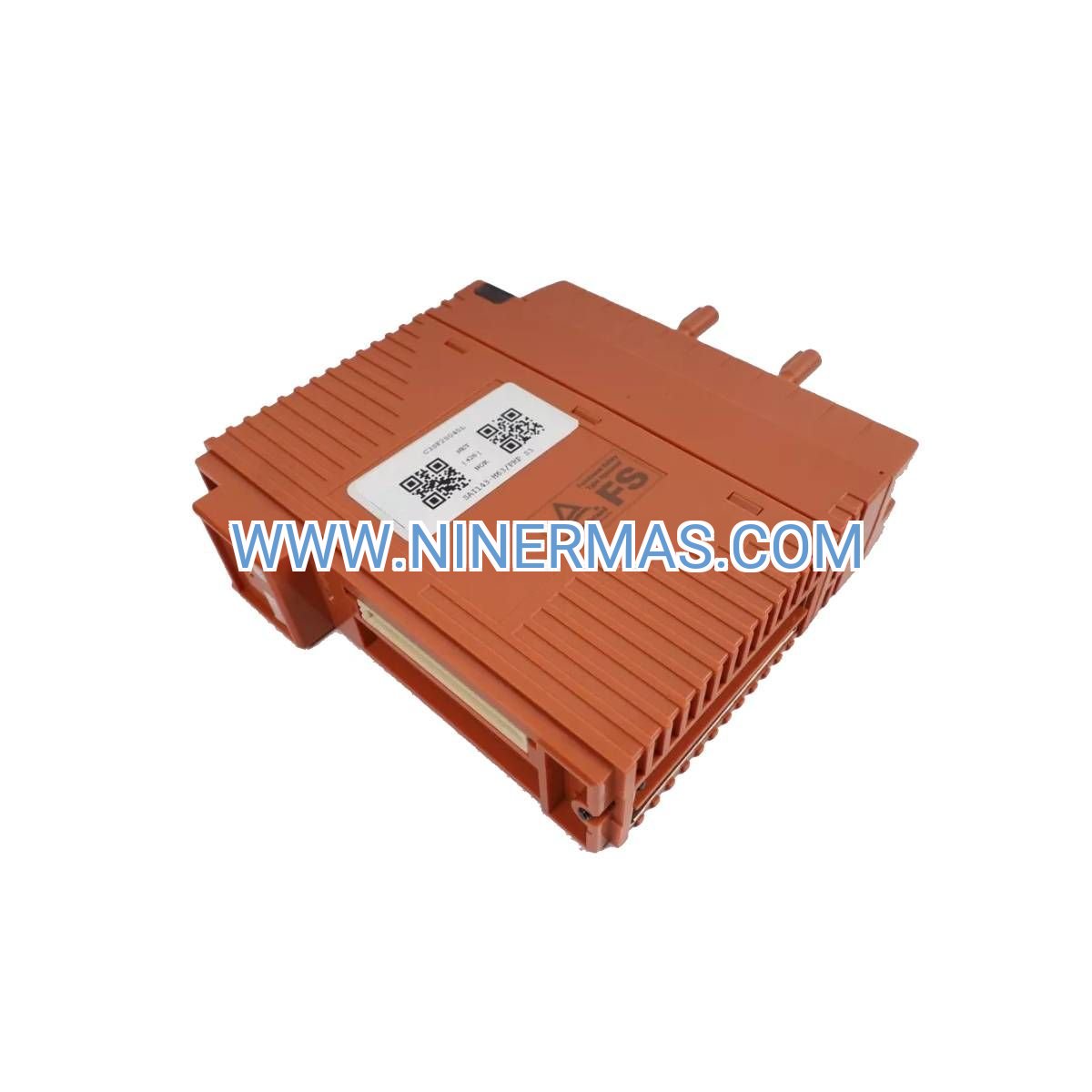
ANT401-50 Optical ESB Bus Repeater (Industrial-Grade Safety Communication)
The ANT401-50 represents Yokogawa's solution for long-distance safety bus communication in process industries. This optical repeater module bridges critical safety instrumented system (SIS) components across distances up to 5 kilometers, delivering galvanic isolation and electromagnetic immunity that copper-based networks cannot achieve. Engineered for ProSafe-RS architectures, it supports both chain and star topologies to accommodate complex facility layouts while maintaining SIL-rated signal integrity.
Process facilities face a persistent challenge: how to maintain reliable safety communications across sprawling plant footprints without signal degradation or electrical interference. The ANT401-50 addresses this by converting electrical ESB signals to optical transmission, eliminating ground loops, voltage transients, and EMI susceptibility. Target users include safety system integrators, plant engineers managing distributed control systems, and facility operators requiring certified safety network extensions in hazardous area classifications.
Three core advantages define this module: 5km optical reach reduces infrastructure costs by eliminating intermediate repeater stations, complete electrical isolation between network segments enhances safety integrity levels, and flexible topology support enables scalable architectures from simple point-to-point links to complex star configurations. Whether retrofitting legacy systems or designing greenfield installations, the ANT401-50 delivers field-proven reliability in the harshest industrial environments.
Core Features & Business Value
→ Extended Optical Range (5km)
Single-mode fiber transmission eliminates the 100-meter copper limitation, reducing repeater count and associated failure points. Typical ROI: 30-40% lower installation costs in large facilities.
→ Galvanic Isolation
Complete electrical separation between network segments prevents ground loop currents and voltage surges from propagating through safety systems. Critical for multi-building installations and offshore platforms.
→ EMI/RFI Immunity
Optical transmission is inherently immune to electromagnetic interference from VFDs, welding equipment, and high-voltage switchgear. Ensures 99.9%+ uptime in electrically noisy environments.
→ Dual Topology Support
Chain configuration for linear installations (pipelines, conveyors); star configuration for centralized architectures (tank farms, compressor stations). Adapts to existing infrastructure without redesign.
✓ Hot-Swap Capability
Field-replaceable in redundant configurations without safety system shutdown. Reduces MTTR (Mean Time To Repair) from hours to minutes during maintenance windows.
✓ Diagnostic LED Array
Real-time indication of power status, optical link quality, and bus activity. Accelerates troubleshooting by 60-70% compared to modules without visual diagnostics.
Application Scenarios
Oil & Gas Refineries
Connect emergency shutdown systems across process units separated by 1-4km. The ANT401-50 maintains SIL 3 integrity while providing electrical isolation between hazardous area zones. Typical deployment: linking main control room to remote wellhead controllers.
Chemical Processing Plants
Extend safety bus networks through electrically noisy reactor halls and distillation columns. Optical transmission eliminates false trips caused by EMI from large motors and transformers. Reduces unplanned shutdowns by 40-50%.
Power Generation Facilities
Bridge turbine control systems to boiler safety interlocks across 2-5km distances. Withstands high electromagnetic fields near generators and switchyards. Ensures continuous operation during grid disturbances.
Offshore Platforms
Interconnect topside safety systems with subsea control modules via fiber optic umbilicals. Provides lightning protection and saltwater corrosion immunity. Meets ATEX/IECEx certification requirements for Zone 1/2 installations.
Mining Operations
Link surface control rooms to underground safety systems through vertical shafts and horizontal drifts. Optical cables resist moisture, dust, and mechanical stress better than copper alternatives. Operational lifespan: 15-20 years in harsh mining environments.
Technical Parameters & Selection Guide
| Parameter | Specification |
|---|---|
| Model Number | ANT401-50 |
| Optical Range | Up to 5000 meters (single-mode fiber) |
| Wavelength | 1310nm (typical for industrial applications) |
| Network Topology | Chain, Star, or Hybrid configurations |
| Bus Protocol | ESB (Emergency Shutdown Bus) |
| System Compatibility | Yokogawa ProSafe-RS family |
| Operating Temperature | -20°C to +60°C (-4°F to +140°F) |
| Storage Temperature | -40°C to +85°C |
| Humidity Range | 5% to 95% RH (non-condensing) |
| Protection Rating | IP20 (requires industrial enclosure for IP65/67) |
| Power Consumption | ≤5W (low-power optical transceiver) |
| MTBF | >200,000 hours (calculated per IEC 61508) |
| Certifications | SIL 3 capable, CE, UL, ATEX (when properly installed) |
Selection Criteria: Choose ANT401-50 when your safety network requires distances beyond 100 meters, electrical isolation between zones, or immunity to electromagnetic interference. For distances under 500 meters with low EMI environments, standard copper ESB modules may suffice. For distances exceeding 5km, consider cascading multiple ANT401-50 units or upgrading to long-haul optical transceivers (10-40km range).
Key Technical Indicators: Bit error rate (BER) <10⁻⁹, latency <2ms end-to-end, optical budget 15-20dB (allows for connector losses and fiber aging).
Extended Functions
IoT Integration: When paired with Yokogawa's STARDOM or e-RT3 Plus edge controllers, the ANT401-50 enables secure data bridging between safety networks and plant-wide IIoT platforms. Supports OPC UA tunneling for predictive maintenance analytics without compromising SIS integrity.
Advanced Redundancy: Deploy in dual-redundant configurations with automatic failover <50ms. Each redundant path uses separate fiber routes to eliminate single points of failure. Compatible with ProSafe-RS redundant bus architectures.
Customization Options: Available with factory-installed fiber connectors (LC, SC, or ST types), extended temperature variants (-40°C to +70°C), and conformal coating for high-humidity/corrosive atmospheres. Consult factory for lead times on custom configurations.
Delivery & Service Assurance
Lead Time:
• Standard units: 3-5 business days (in-stock items)
• Custom configurations: 4-6 weeks (factory order)
• Express shipping available for critical outages
Warranty:
• 24-month manufacturer warranty covering defects in materials and workmanship
• Extended warranty options available (up to 60 months)
• Advance replacement program for mission-critical applications
Technical Support:
• Pre-sales application engineering assistance
• Post-sales commissioning support via phone/email
• On-site startup services available (quoted separately)
• Access to Yokogawa's global service network
Documentation Included:
• Installation manual with wiring diagrams
• Configuration guide for chain/star topologies
• Fiber optic cable specifications and recommendations
• Compliance certificates (CE, UL, ATEX as applicable)
• Traceability documentation for quality assurance
Frequently Asked Questions
What fiber optic cable type is required for the ANT401-50 repeater?
The module requires single-mode fiber (9/125μm) with LC duplex connectors. For outdoor installations or long runs, use armored fiber cable rated for industrial environments. Multimode fiber is not supported due to distance limitations.
Can I mix ANT401-50 modules with older ESB repeater models in the same network?
Yes, the ANT401-50 is backward compatible with legacy ESB infrastructure. However, ensure firmware versions are synchronized across all repeaters to prevent protocol mismatches. Consult Yokogawa's compatibility matrix for specific model combinations.
How much power savings does optical transmission provide compared to copper ESB?
Optical repeaters consume 40-60% less power than equivalent copper repeater chains over 1km+ distances. For a typical 3km network, expect annual energy savings of $200-400 per repeater, plus reduced cooling requirements in control room environments.
What are the installation requirements for hazardous area deployments?
The ANT401-50 itself is rated IP20 and requires mounting in a certified enclosure (ATEX/IECEx Zone 1 or 2) when installed in hazardous locations. Fiber optic cables must use gland seals rated for the area classification. Consult local electrical codes and Yokogawa's hazardous area installation guide.
Does the repeater support remote monitoring and diagnostics?
Yes, when integrated with ProSafe-RS engineering stations, the ANT401-50 provides SNMP-based status reporting including optical power levels, link quality metrics, and fault alarms. Diagnostic data can be exported to plant SCADA or asset management systems via OPC protocols.
What is the maximum number of repeaters allowed in a single ESB chain?
ProSafe-RS specifications permit up to 8 repeaters in a chain configuration, supporting total network spans of 40km (8 × 5km). For star topologies, each leg can extend 5km from the central hub. Exceeding these limits may violate SIL certification requirements.
Ready to Extend Your Safety Network?
Contact our industrial automation specialists for application-specific guidance on integrating the ANT401-50 into your ProSafe-RS architecture. We provide fiber optic cable recommendations, topology design reviews, and complete bill-of-materials for turnkey installations. Request a quote today or schedule a technical consultation to discuss your safety system expansion requirements.
© 2026 NINERMAS COMPANY LIMITED. All rights reserved.
Original Source: https://ninermas.com
Contact: sale@ninermas.com | +0086 187 5021 5667
PDF Specification
Download PDF file here:
Click to Download PDFRelated products

Contact Info
-
Address:22 / F, South Wo Hang building, 148 Wing Lok Street, Sheung Wan, Western District, Hong Kong
-
Phone:+8618750215667
-
Email: