


Description
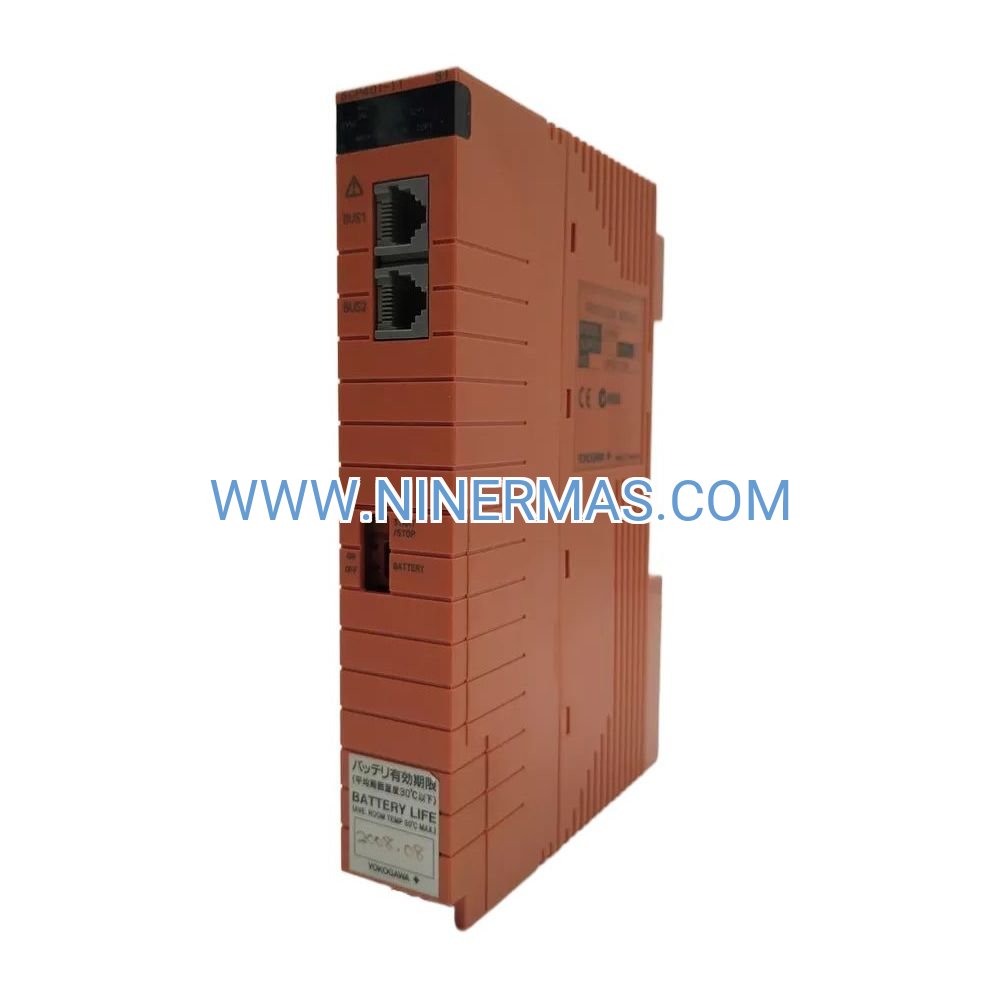
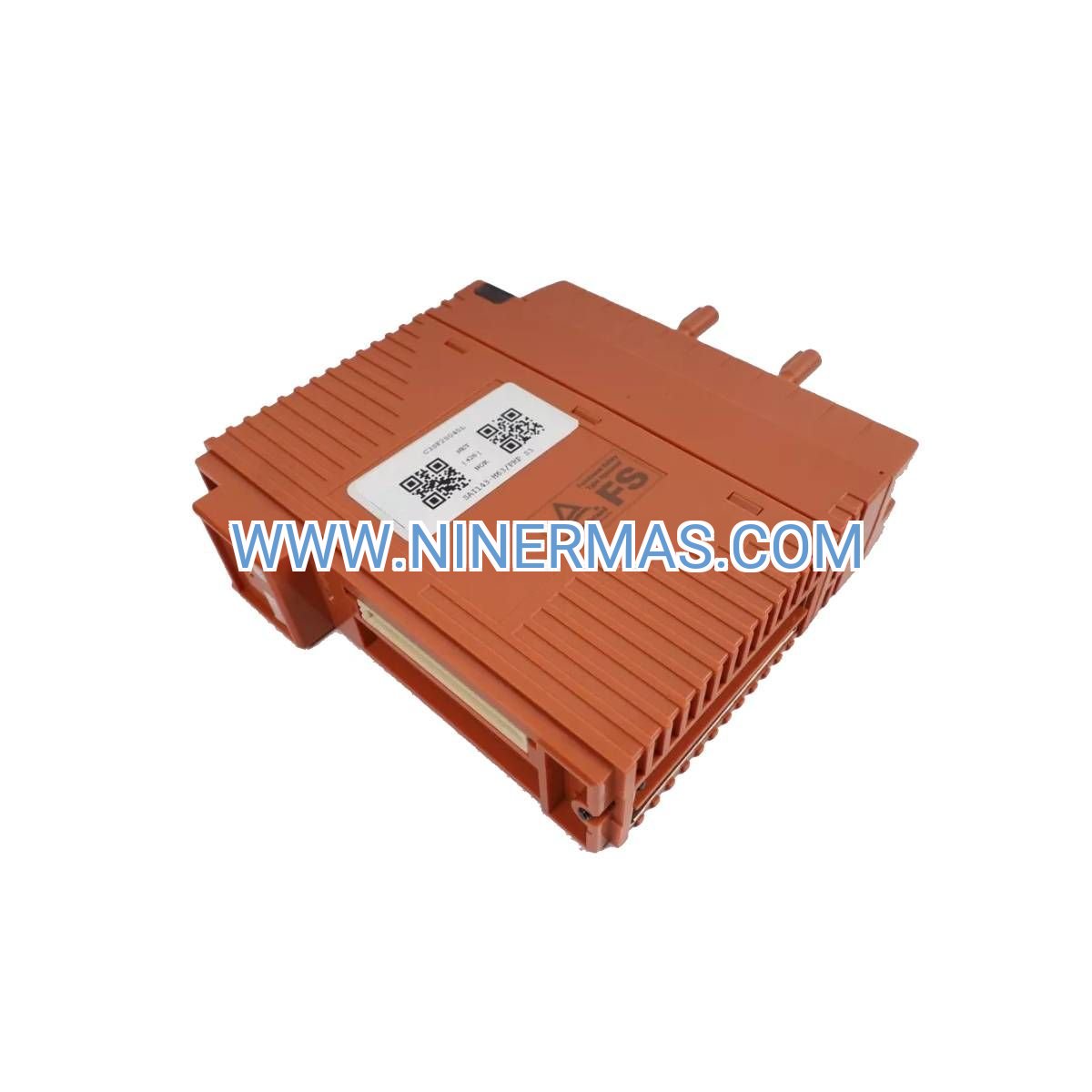
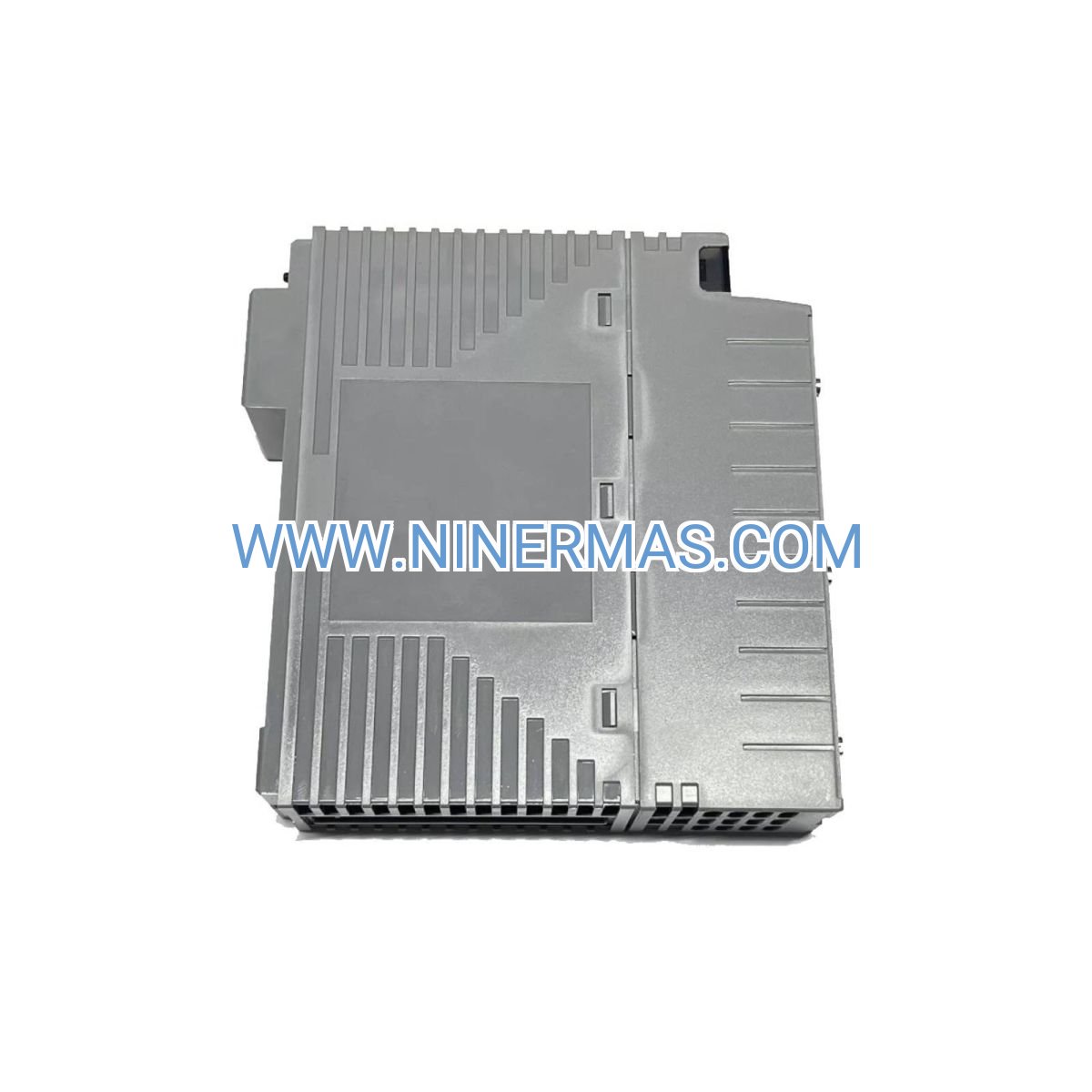
ANB10D-421/CU2N/NDEL Dual-Redundant ESB Communication Node (Industrial-Grade)
The ANB10D-421/CU2N/NDEL represents Yokogawa's commitment to zero-downtime process control through intelligent dual-redundant ESB (Enhanced Serial Bus) architecture. This industrial-grade node unit bridges distributed field I/O modules with CENTUM DCS platforms, maintaining continuous data flow even when primary communication channels experience faults or require maintenance. Built for environments where process interruption translates directly to production loss, this node delivers deterministic communication with automatic failover protection.
Process engineers face constant pressure to maximize uptime while managing aging infrastructure. Traditional single-bus architectures create vulnerability points that risk entire control loops during cable damage, connector corrosion, or scheduled maintenance. The ANB10D-421 eliminates this risk through parallel ESB channels that monitor each other continuously, switching seamlessly within milliseconds when degradation is detected. This design philosophy ensures your critical temperature loops, pressure controls, and flow measurements never lose connection to supervisory systems.
Whether you're retrofitting legacy CENTUM installations or designing greenfield facilities, this node unit integrates into existing I/O terminal bases without custom mounting hardware. Hot-swap capability means technicians can replace units during operation, while built-in diagnostics provide real-time visibility into bus health, reducing troubleshooting time from hours to minutes.
Core Capabilities & Technical Advantages
→ Parallel ESB Bus Architecture: Operates two independent communication channels simultaneously, with automatic switchover logic that detects signal degradation, cable faults, or termination issues within 50ms response time.
→ Protocol Optimization: Yokogawa's proprietary ESB protocol ensures deterministic scan cycles for time-critical control loops, supporting up to 64 I/O modules per bus segment with guaranteed latency under 10ms.
→ Universal I/O Compatibility: Interfaces seamlessly with analog input cards (4-20mA, RTD, thermocouple), digital I/O modules, pulse counters, and specialized function blocks across the Yokogawa I/O family.
✓ Diagnostic Intelligence: Multi-color LED arrays provide instant status feedback for primary/secondary bus health, power supply conditions, communication errors, and node addressing conflicts—reducing mean time to repair by 60%.
✓ Field-Serviceable Design: Hot-swap capability with keyed connectors prevents incorrect insertion, while onboard configuration memory retains settings during replacement, eliminating re-commissioning delays.
✓ Environmental Resilience: Operates reliably across -20°C to +60°C ambient temperatures with conformal coating protection against humidity, dust, and chemical vapors common in process environments.
Industry Applications & Problem-Solving Scenarios
Petrochemical Refining Operations:
In catalytic cracking units and distillation columns, the ANB10D-421 maintains uninterrupted communication between field transmitters and DCS controllers across distributed control cabinets. When vibration-induced cable wear damages the primary ESB trunk, the secondary bus sustains all 48 I/O points without operator intervention, preventing emergency shutdowns that cost $50,000+ per hour in lost production.
Batch Chemical Manufacturing:
Pharmaceutical and specialty chemical plants require validated communication paths for FDA 21 CFR Part 11 compliance. Dual-redundant ESB architecture provides auditable data integrity, ensuring reactor temperature profiles, pH measurements, and dosing sequences maintain continuous historian records even during planned bus maintenance or unexpected failures.
Power Generation & Cogeneration:
Turbine control systems and boiler management applications demand fail-safe communication where single-point failures could trigger protective shutdowns. The ANB10D-421's redundant design eliminates communication as a failure mode, supporting safety instrumented systems (SIS) integration while maintaining normal control functions on separate buses.
Pulp & Paper Production Lines:
Continuous digesters and paper machines generate high electromagnetic interference that can corrupt single-bus systems. Dual ESB channels with independent shielding provide immunity to EMI while maintaining scan rates fast enough for closed-loop moisture control and basis weight regulation.
Water Treatment Facilities:
Municipal and industrial wastewater plants operate 24/7 with limited maintenance windows. Hot-swappable node units allow technicians to replace aging hardware during operation, while redundant buses ensure SCADA systems maintain visibility into clarifier levels, chemical feed pumps, and effluent quality parameters.
Technical Specifications & Selection Criteria
| Communication Interface | Dual ESB bus ports (primary + secondary) |
| Protocol Type | Yokogawa proprietary ESB with deterministic timing |
| Maximum I/O Capacity | 64 modules per bus segment |
| Scan Cycle Time | < 10ms typical (configuration-dependent) |
| Failover Response | < 50ms automatic switchover |
| Operating Temperature | -20°C to +60°C (-4°F to 140°F) |
| Storage Temperature | -40°C to +85°C |
| Humidity Tolerance | 5% to 95% RH (non-condensing) |
| Power Input | 24 VDC (redundant input optional) |
| Power Consumption | < 5W typical |
| Mounting Method | DIN rail or Yokogawa terminal base |
| Diagnostic Indicators | Multi-color LEDs (power, bus 1/2 status, error) |
| Configuration Method | Yokogawa Resource Configurator software |
| Certifications | CE, UL, cUL, FM (Class I Div 2 optional) |
Selection Guidelines: Choose the ANB10D-421/CU2N/NDEL when your application requires guaranteed uptime for critical control loops, operates in harsh environmental conditions, or needs to meet regulatory requirements for redundant communication paths. For non-critical monitoring applications with single-bus tolerance, consider standard ANB10S single-channel nodes. Verify compatibility with your CENTUM system version (VP, CS 3000, or Centum VP) before ordering.
Advanced Integration & IoT Connectivity
Modern process facilities increasingly demand integration between traditional DCS platforms and enterprise-level MES/ERP systems. The ANB10D-421 supports this convergence through its role in Yokogawa's unified architecture, enabling:
OPC UA Gateway Integration: Connect ESB-networked I/O data to cloud analytics platforms via Yokogawa's STARDOM or e-RT3 edge controllers, maintaining cybersecurity boundaries while exposing process variables to machine learning algorithms for predictive maintenance.
Asset Management Connectivity: Diagnostic data from the node unit feeds into Yokogawa's Plant Resource Manager (PRM), providing maintenance teams with early warning of bus degradation, connector resistance increases, or power supply drift before failures occur.
Custom Protocol Bridging: When interfacing with third-party PLCs or legacy systems, pair the ANB10D-421 with Yokogawa's ALE111 Ethernet modules to translate ESB data into Modbus TCP, EtherNet/IP, or PROFINET formats.
Delivery Timelines & Service Commitments
Standard Lead Time: 3-5 business days for in-stock units (North America/Europe warehouses)
Custom Configurations: 2-3 weeks for factory-configured units with specific firmware or certification requirements
Warranty Coverage: 24-month manufacturer warranty covering defects in materials and workmanship
Technical Support: Lifetime access to application engineers for configuration assistance, troubleshooting, and system integration guidance
Documentation Package: Includes installation manual, wiring diagrams, Resource Configurator setup guide, and dimensional drawings in PDF/CAD formats
Frequently Asked Questions
Q: How does the ANB10D-421 interface with existing CENTUM CS 3000 systems during a phased migration to Centum VP?
A: The node unit maintains backward compatibility with CS 3000 field control units (FCUs) while supporting forward migration to Centum VP controllers. During transition periods, you can operate mixed-generation systems on the same ESB bus, allowing gradual controller upgrades without replacing field I/O infrastructure. Ensure firmware versions match your target CENTUM platform—contact our engineering team for compatibility matrices.
Q: What cable specifications are required for dual-redundant ESB bus installations to maintain signal integrity?
A: Use Belden 3105A or equivalent shielded twisted-pair cable (22 AWG, 120-ohm impedance) with continuous shield grounding at one end only to prevent ground loops. Maximum segment length is 500 meters at standard baud rates; for extended distances up to 1000 meters, reduce communication speed or implement ESB repeaters. Maintain 300mm minimum separation from AC power cables to prevent EMI coupling.
Q: Can the hot-swap replacement procedure be performed without specialized tools or factory training?
A: Yes—the ANB10D-421 uses keyed connectors that prevent incorrect insertion, and onboard EEPROM retains node addressing and configuration parameters. Standard replacement procedure: (1) verify secondary bus is active via LED indicators, (2) release locking tabs and extract unit, (3) insert replacement until connectors seat fully, (4) confirm green LEDs indicate both buses active. Total swap time under 2 minutes with no programming required. Detailed procedures are in Section 4.3 of the installation manual.
Q: How much energy efficiency improvement can be achieved compared to legacy single-bus node units?
A: The ANB10D-421 consumes approximately 4.8W under full load—representing a 35% reduction versus previous-generation ANB10C models. For a typical installation with 20 node units operating continuously, this translates to 840 kWh annual savings, reducing both operating costs and cooling requirements in control cabinet environments. Low-power design also extends backup UPS runtime during utility failures.
Q: What diagnostic capabilities help predict bus failures before they impact production?
A: Built-in diagnostics monitor signal quality metrics including bit error rates, cable impedance mismatches, and termination resistance drift. When parameters exceed warning thresholds (configurable in Resource Configurator), the node generates maintenance alerts to CENTUM HIS stations and Plant Resource Manager, typically providing 2-4 weeks advance notice before hard failures occur. Trending these metrics during planned outages enables proactive cable replacement.
Q: Is the ANB10D-421 suitable for hazardous area installations requiring intrinsic safety barriers?
A: The standard ANB10D-421 is rated for Class I Division 2 (Zone 2) non-incendive installations. For Division 1 (Zone 1) applications requiring intrinsic safety, use Yokogawa's MTL or Pepperl+Fuchs IS barriers between field devices and I/O modules, with the node unit mounted in the safe area control cabinet. For offshore platforms or chemical plants with ATEX/IECEx requirements, specify the ANB10D-421-EX variant with certified enclosures.
Ready to Eliminate Communication Downtime?
Contact our process automation specialists to discuss your specific CENTUM DCS architecture and receive customized recommendations for node placement, bus topology, and redundancy strategies. We provide complete system integration support including cable schedules, loop drawings, and FAT/SAT documentation for capital projects.
Request a technical consultation: Our engineers will review your P&IDs and existing I/O counts to optimize node distribution and minimize spare parts inventory.
© 2026 NINERMAS COMPANY LIMITED. All rights reserved.
Original Source: https://ninermas.com
Contact: sale@ninermas.com | +0086 187 5021 5667
PDF Specification
Download PDF file here:
Click to Download PDFRelated products

Contact Info
-
Address:22 / F, South Wo Hang building, 148 Wing Lok Street, Sheung Wan, Western District, Hong Kong
-
Phone:+8618750215667
-
Email:
