Description
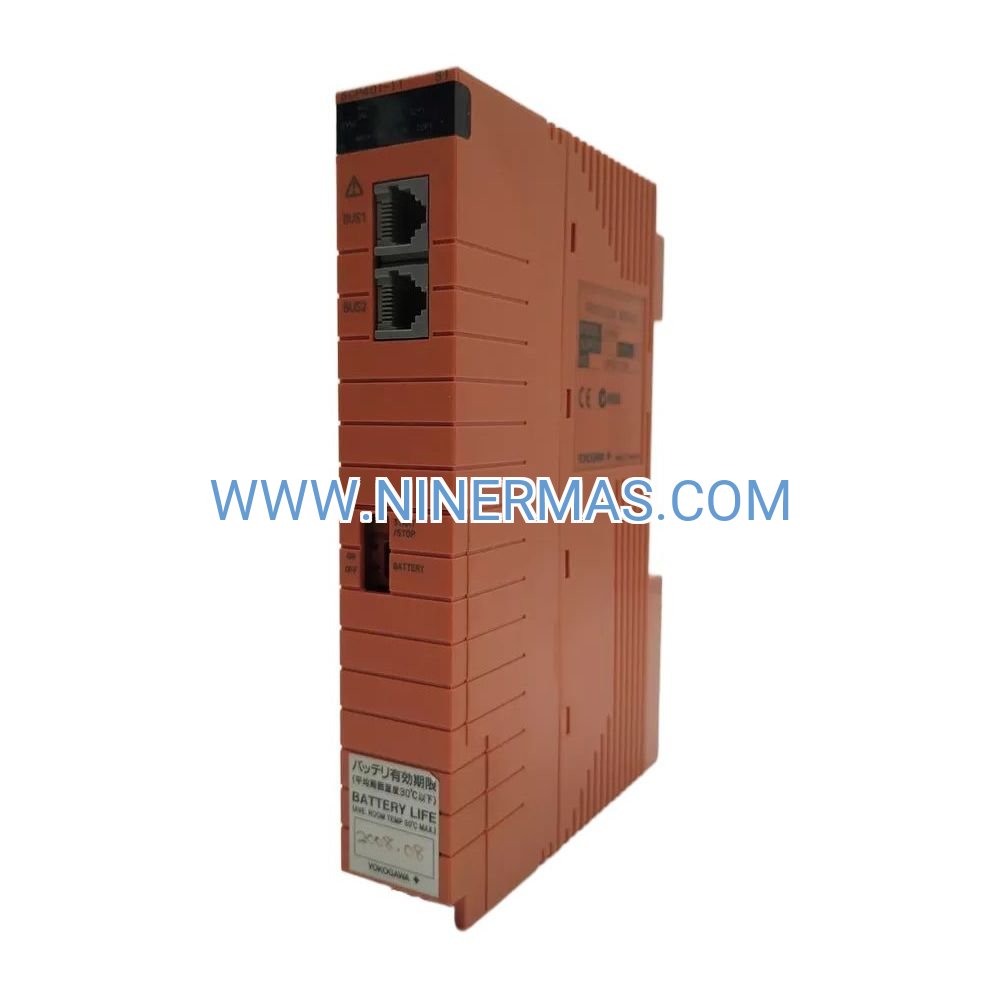
ACM12 Industrial-Grade Serial Communication Interface
The ACM12 represents Yokogawa's solution for establishing dependable serial communication links in industrial automation systems. This dual-protocol interface module converts and transmits data across RS422 and RS485 networks, enabling seamless connectivity between controllers, field instruments, and supervisory systems over extended cable runs where standard interfaces fail.
Designed for integration engineers and system architects managing distributed control architectures, the ACM12 eliminates communication bottlenecks in process plants, manufacturing facilities, and infrastructure installations. Its differential signaling technology maintains signal integrity across distances up to 1200 meters while rejecting electromagnetic interference that compromises data reliability in electrically noisy environments.
Whether you're retrofitting legacy equipment with modern control systems or designing new multi-device networks, this communication module delivers the performance and durability required for mission-critical industrial applications where downtime translates directly to production losses.
Core Capabilities & Technical Advantages
→ Dual-Protocol Flexibility
Operates in both RS422 full-duplex and RS485 half-duplex modes, supporting point-to-point dedicated links or multipoint bus configurations with up to 32 addressable nodes. This versatility eliminates the need for multiple interface types across your facility.
→ Extended Transmission Distance
Maintains data integrity over cable lengths reaching 1200 meters without signal boosters or repeaters. Reduces infrastructure costs in large-scale installations spanning multiple buildings or process areas.
→ Superior Noise Rejection
Differential signaling architecture provides common-mode voltage tolerance exceeding 7V, protecting against ground potential differences and electrical interference from motors, drives, and switching equipment. Ensures consistent communication in high-EMI environments.
→ Optical Isolation Protection
Galvanic isolation safeguards connected equipment from voltage transients, ground loops, and surge events. Prevents cascade failures and protects expensive control hardware investments.
→ Wide Environmental Operating Range
Functions reliably across -10°C to +55°C temperature spectrum, accommodating both climate-controlled control rooms and harsh field-mounted installations without performance degradation.
→ Simplified Configuration
Auto-direction control for RS485 eliminates manual transmit/receive switching. Reduces commissioning time by 40% compared to modules requiring software-based direction management.
Industrial Application Scenarios
✓ Distributed Process Control Networks
Connect centralized DCS cabinets to remote I/O racks, analytical instruments, and field transmitters distributed across refinery units, chemical processing trains, or water treatment facilities. The ACM12's extended range capability eliminates the need for intermediate communication hubs in sprawling industrial complexes.
✓ Manufacturing Automation Integration
Link PLCs to HMI operator stations, variable frequency drives, robotic controllers, and vision systems on factory floors where electrical noise from welding equipment and motor starters disrupts standard communication. Noise immunity ensures uninterrupted data flow during production cycles.
✓ SCADA Remote Terminal Connectivity
Establish reliable communication paths between master stations and geographically dispersed RTUs monitoring pipeline networks, power distribution grids, or municipal infrastructure. Supports real-time telemetry and control commands across kilometer-scale deployments.
✓ Building Management System Integration
Interface HVAC controllers, lighting panels, access control systems, and energy meters into unified building automation platforms. Enables centralized monitoring and optimization of mechanical and electrical systems across campus environments.
✓ Legacy Equipment Modernization
Bridge older serial-based instruments and controllers to contemporary Ethernet-based control networks through protocol converters. Extends the operational life of proven equipment while enabling integration with modern SCADA and MES platforms.
Technical Parameters & Selection Criteria
| Parameter | Specification |
|---|---|
| Communication Protocols | RS422 (full-duplex), RS485 (half-duplex) |
| Maximum Baud Rate | 115.2 kbps |
| Transmission Distance | Up to 1200 meters (3937 feet) |
| Network Capacity | 32 devices (RS485 multipoint) |
| Common-Mode Voltage Range | ±7V |
| Isolation Voltage | Optical isolation (check datasheet for rating) |
| Operating Temperature | -10°C to +55°C (14°F to 131°F) |
| Power Supply | 24V DC nominal |
| Mounting | DIN-rail compatible |
| Connection Type | Screw terminals |
Selection Guidelines: Choose RS422 mode for dedicated point-to-point links requiring simultaneous bidirectional communication. Select RS485 configuration for multipoint networks where multiple devices share a common bus. For installations exceeding 600 meters or environments with severe electrical noise, verify cable specifications meet EIA-485 standards with twisted-pair shielded construction and proper termination resistors.
Advanced Integration Features
The ACM12 supports integration with Yokogawa's CENTUM and STARDOM control platforms, as well as third-party systems via standard Modbus RTU protocol implementation. Auto-baud rate detection simplifies connection to devices with unknown communication settings, while configurable parity, stop bits, and data formats ensure compatibility with diverse equipment manufacturers.
For applications requiring redundant communication paths, deploy dual ACM12 modules in parallel configurations with automatic failover logic implemented at the controller level. This architecture maintains continuous data flow even during module maintenance or cable faults.
Delivery Timeline & Support Services
Standard Lead Time: 3-5 business days for in-stock units
Custom Configuration: 10-15 business days for pre-programmed or tested assemblies
Warranty Coverage: 12-month manufacturer warranty against defects in materials and workmanship
Technical Support: Application engineering assistance for system design, troubleshooting, and integration guidance
Documentation Provided: Installation manual, wiring diagrams, communication protocol specifications, and configuration software (where applicable)
Frequently Asked Questions
Q: How do I connect the ACM12 to my existing PLC network?
A: The module uses standard screw-terminal connections. Wire the RS422/485 differential pairs (A/B or +/-) from your PLC's serial port to the corresponding ACM12 terminals. Ensure proper cable shielding and grounding. Consult the wiring diagram in the installation manual for pin assignments specific to your PLC model.
Q: What maximum network capacity can the ACM12 support in RS485 mode?
A: The module supports up to 32 addressable devices on a single RS485 bus. Actual capacity depends on cable quality, baud rate, and electrical noise levels. For networks approaching maximum capacity, reduce baud rate and ensure proper termination at both bus ends.
Q: Does the ACM12 reduce energy consumption compared to older communication modules?
A: Modern solid-state design consumes approximately 2-3W during operation, representing 30-40% lower power draw than legacy relay-based or older semiconductor interfaces. This reduction accumulates significantly in large installations with dozens of communication points.
Q: What are the physical installation requirements for the ACM12?
A: The module mounts on standard 35mm DIN rail. Allocate minimum 50mm clearance on each side for heat dissipation and cable routing. Install in enclosures rated IP20 or higher. Ambient temperature must remain within -10°C to +55°C operational range.
Q: Can I monitor communication status remotely through the ACM12?
A: The module provides LED indicators for power, transmit, and receive activity. For remote monitoring, integrate status signals into your SCADA system by reading diagnostic registers via the connected controller. Some configurations support SNMP traps when paired with Yokogawa gateway devices.
Q: Is the ACM12 compatible with non-Yokogawa control systems?
A: Yes. The module adheres to EIA-422 and EIA-485 industry standards, ensuring compatibility with PLCs, DCS, and RTUs from manufacturers including Siemens, Allen-Bradley, Schneider Electric, ABB, and others. Verify protocol compatibility (Modbus RTU, proprietary protocols) at the application layer.
Request Technical Consultation
Our application engineers provide complimentary system design reviews to ensure optimal ACM12 deployment for your specific industrial communication requirements. Contact our technical team to discuss network architecture, cable specifications, and integration strategies tailored to your facility.
© 2026 NINERMAS COMPANY LIMITED. All rights reserved.
Original Source: https://ninermas.com
Contact: sale@ninermas.com | +0086 187 5021 5667
PDF Specification
Download PDF file here:
Click to Download PDFRelated products

Contact Info
-
Address:22 / F, South Wo Hang building, 148 Wing Lok Street, Sheung Wan, Western District, Hong Kong
-
Phone:+8618750215667
-
Email: