Description
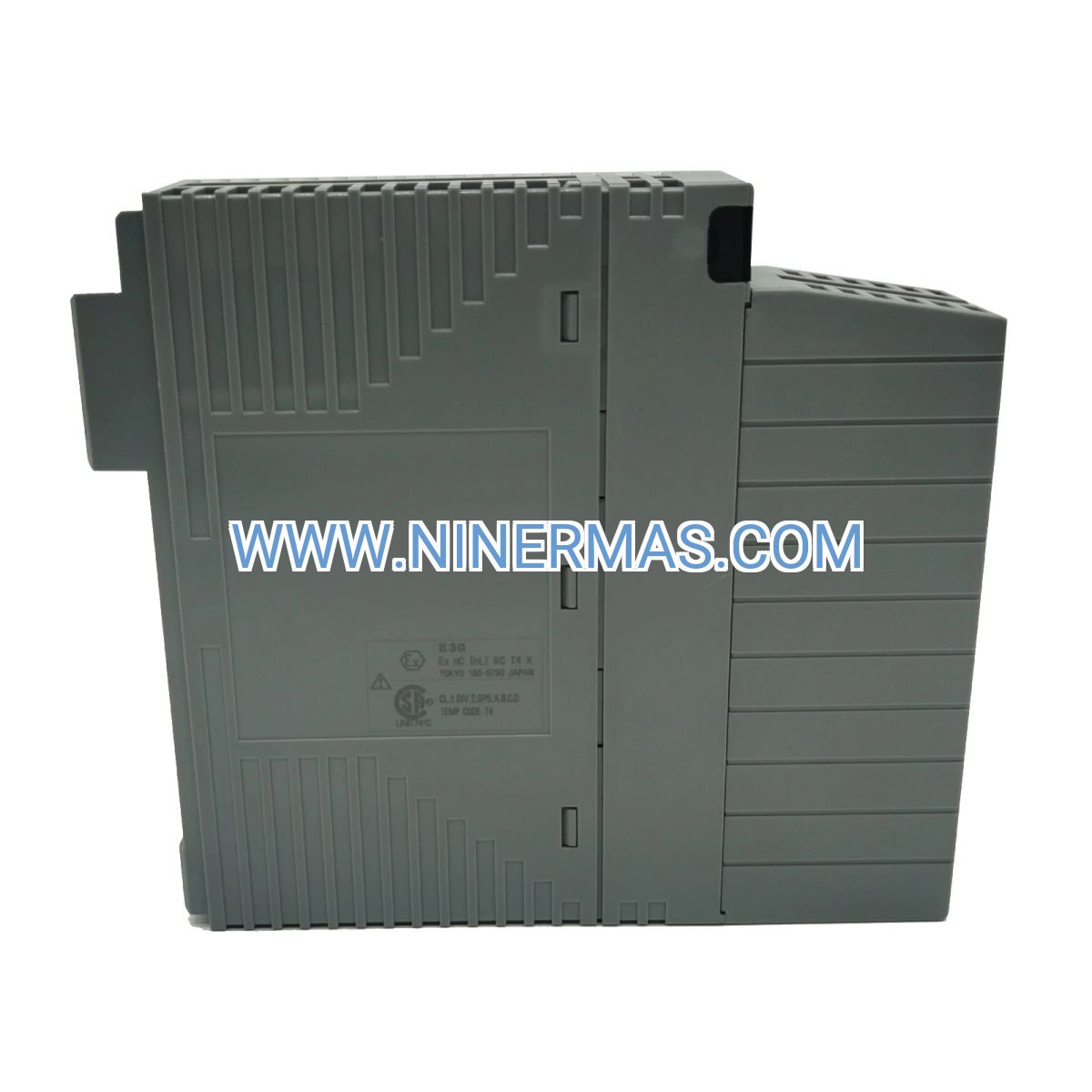
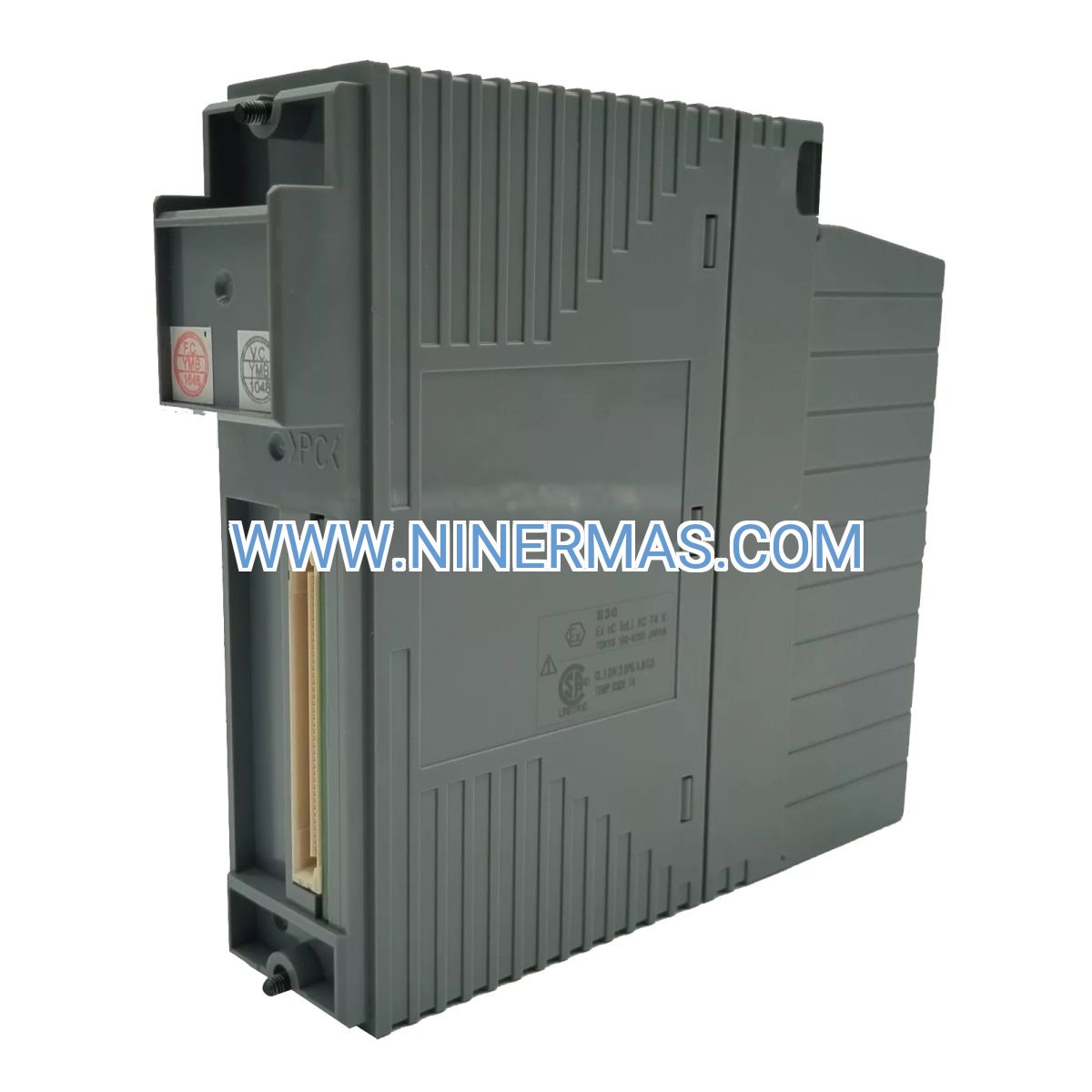
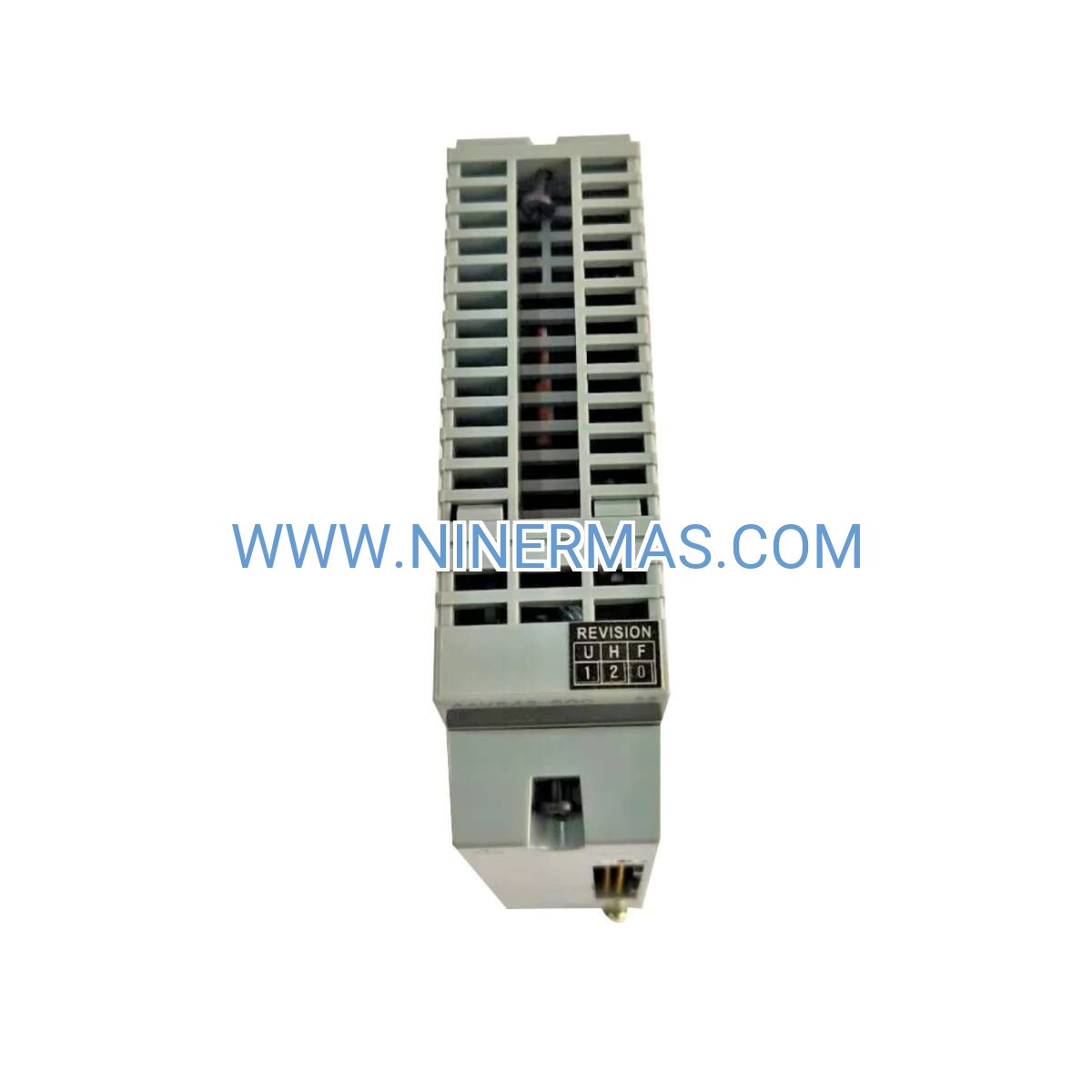
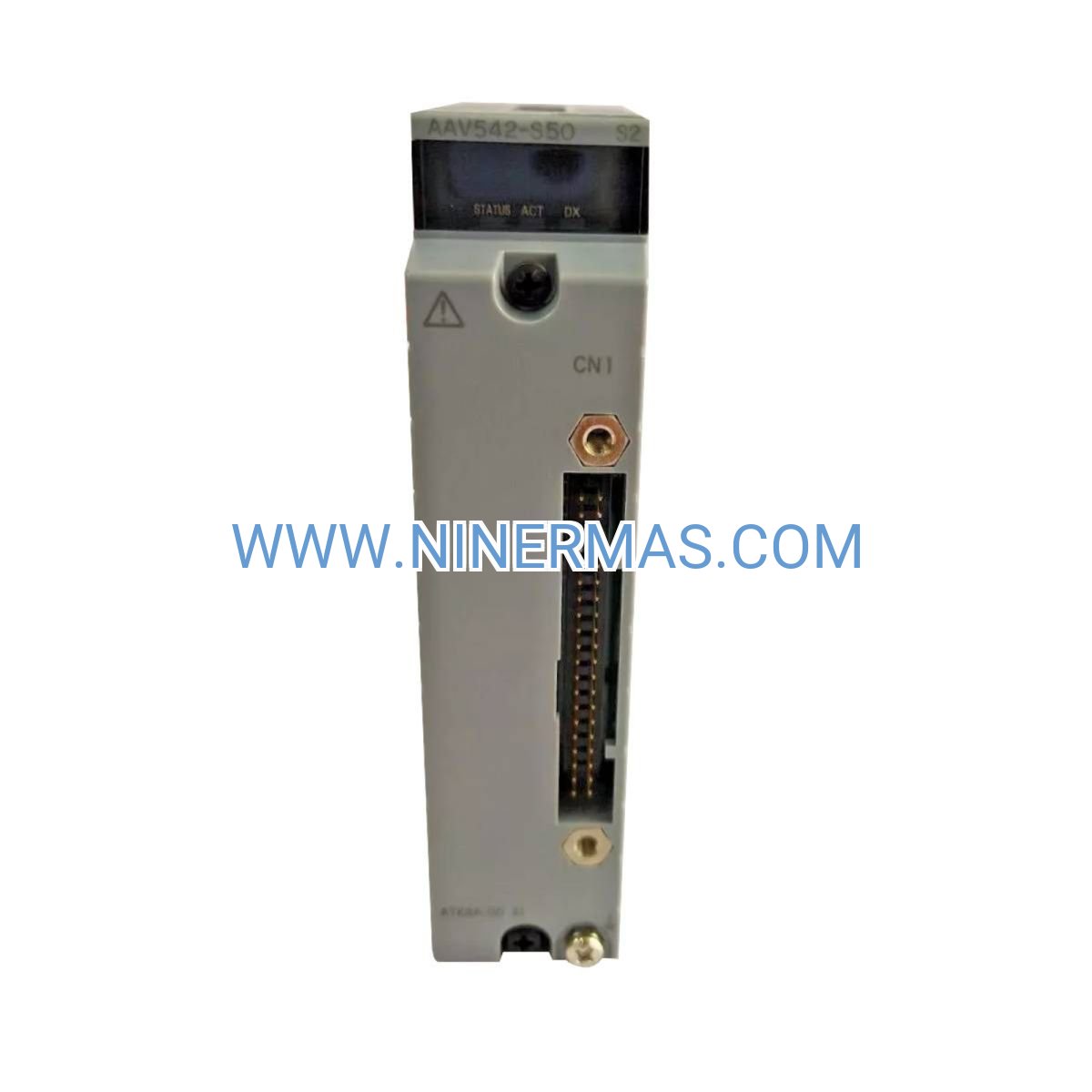
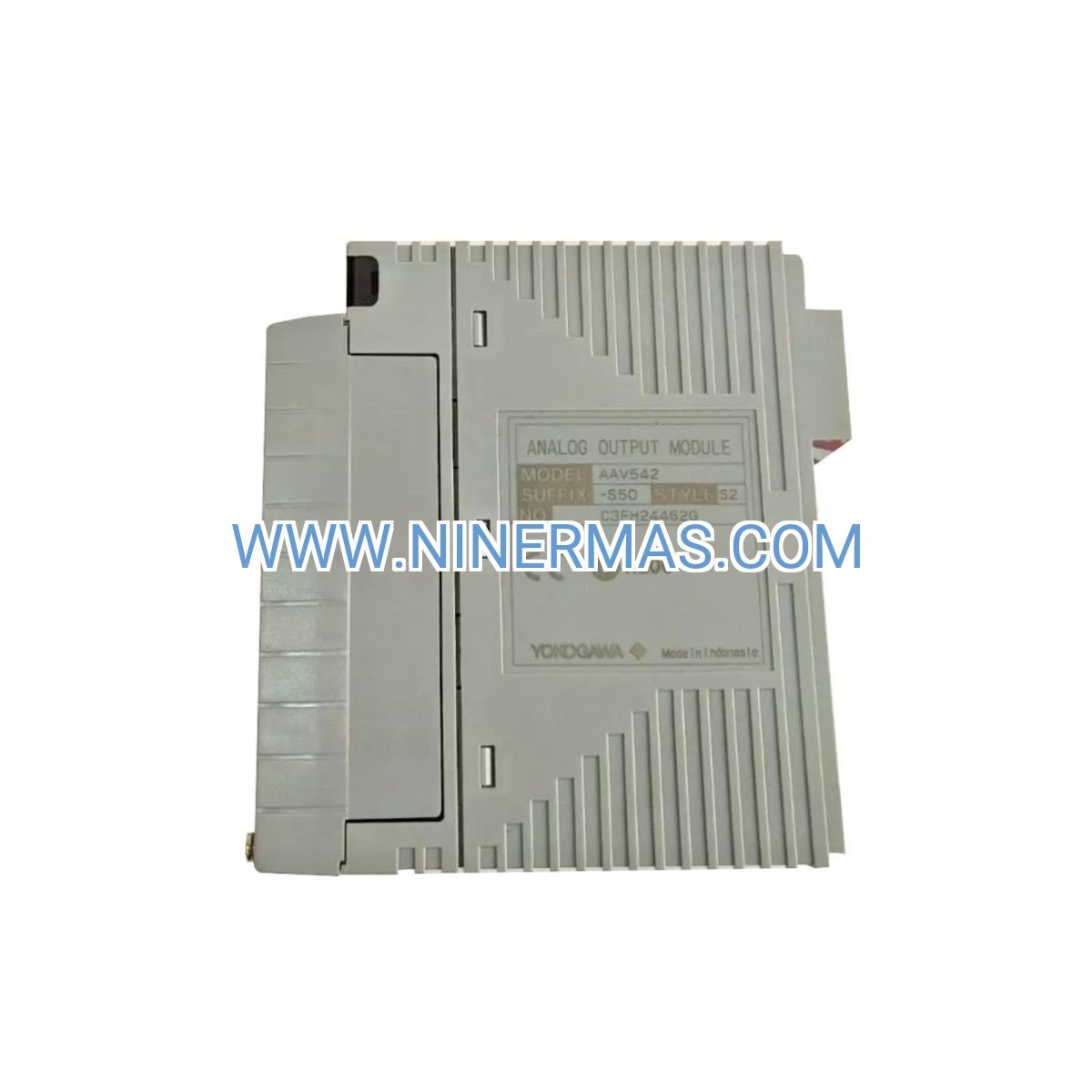
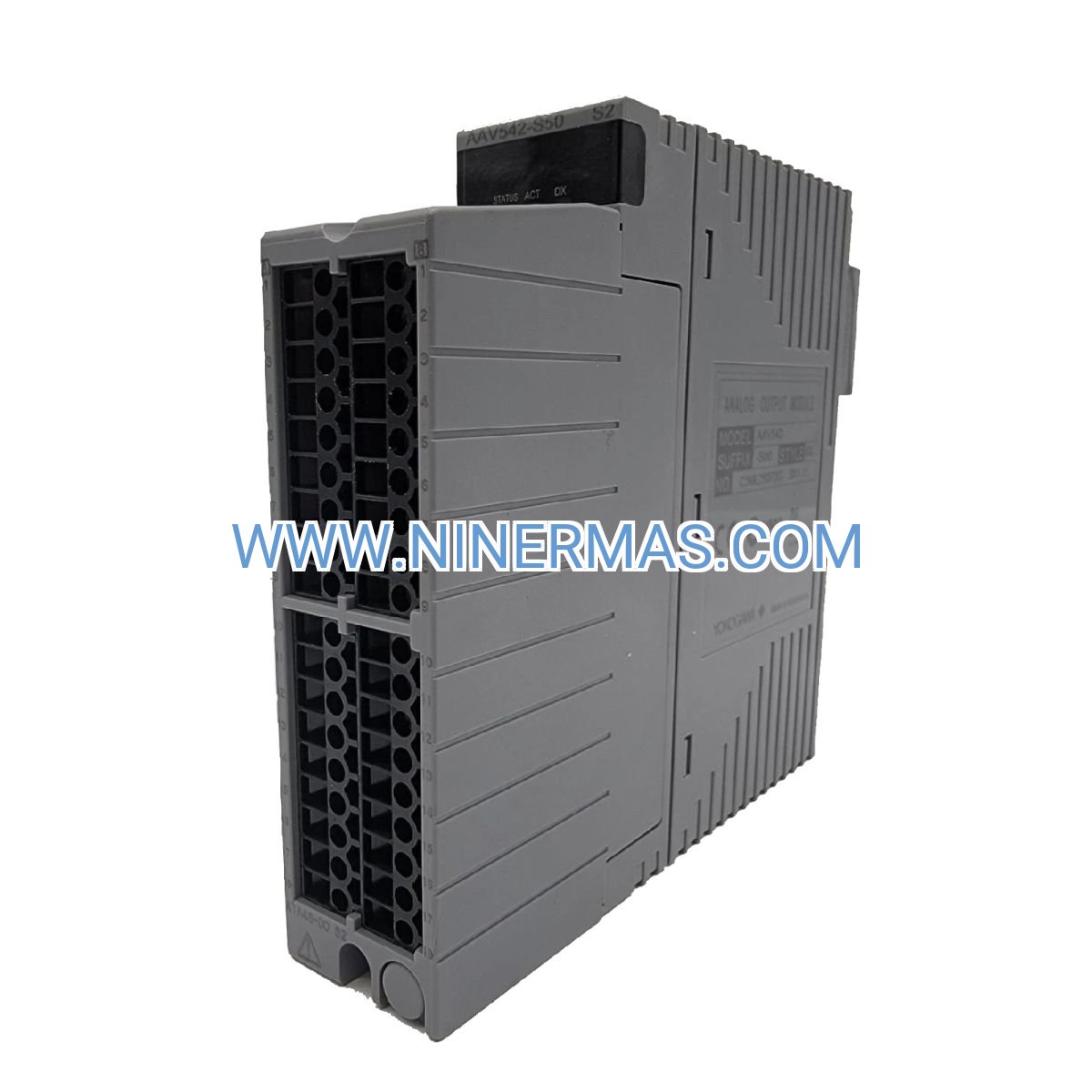
AAV542-S50 Voltage Output Module (Industrial-Grade Analog Control Interface)
The AAV542-S50 is a 16-channel analog voltage output module designed for industrial distributed control systems requiring precise ±10V DC signal generation. Built on Yokogawa's field-proven I/O platform, this module converts digital control commands into stable voltage signals that drive variable frequency drives, motorized valve actuators, and proportional control devices across process automation environments.
Process engineers face the challenge of coordinating multiple analog control loops while maintaining signal accuracy and system uptime. The AAV542-S50 addresses this through 12-bit D/A conversion, ±0.1% full-scale accuracy, and hot-swappable architecture that enables maintenance without process interruption. Target users include automation integrators deploying CENTUM VP systems, plant engineers managing legacy DCS upgrades, and OEMs building packaged control solutions for chemical processing, power generation, and water treatment facilities.
Key advantages include removable terminal blocks for simplified wiring maintenance, auto-configuration upon installation to reduce commissioning time, and diagnostic LED indicators that accelerate fault isolation. The non-isolated channel design optimizes cost-per-point economics for applications not requiring galvanic separation, while maintaining signal integrity through robust EMI filtering and thermal management.
Core Features & Benefits
✓ 16 Independent Voltage Outputs: Simultaneous control of multiple field devices from a single module reduces cabinet space and wiring complexity while lowering installation costs by up to 40% compared to discrete output cards.
✓ ±10V Bipolar Range: Direct compatibility with industry-standard VFD speed references, valve positioner command signals, and servo amplifier inputs eliminates the need for external signal conditioning hardware.
✓ 12-Bit Resolution (4096 Steps): Fine-grained control authority enables precise positioning of actuators and smooth modulation of process variables, critical for applications like pH control and flow rate regulation where small signal changes produce significant process effects.
✓ ±0.1% Full-Scale Accuracy: Maintains control precision across 0-55°C operating range, ensuring consistent process performance despite ambient temperature variations in non-climate-controlled equipment rooms.
✓ Hot-Swappable Design: Field-replaceable module with automatic configuration backup allows technicians to replace failed cards in under 5 minutes without halting production or re-engineering control logic.
✓ Removable Screw Terminals: Pre-wired terminal blocks transfer to replacement modules, reducing maintenance downtime by 70% and eliminating wiring errors during emergency repairs.
Application Scenarios
Chemical Batch Processing: Pharmaceutical manufacturers use the AAV542-S50 to control motorized dosing valves in multi-ingredient batch reactors. The module's stable output prevents valve hunting during critical mixing phases, while the ±10V range maps linearly to 0-100% valve position for intuitive operator control. One European API producer reduced batch-to-batch variability by 18% after upgrading to AAV542-based valve control.
Power Plant Turbine Control: Combined-cycle facilities deploy these modules for steam turbine governor systems and generator excitation control. The 100ms update rate provides responsive load-following capability, while the module's proven MTBF exceeds 200,000 hours in high-vibration turbine deck installations.
Water Treatment pH Adjustment: Municipal water plants leverage the AAV542-S50 to modulate chemical feed pumps for pH correction. The 12-bit resolution enables precise dosing control that maintains pH within ±0.05 units, meeting stringent discharge regulations while reducing chemical consumption by 12-15% compared to on/off control strategies.
HVAC Zone Temperature Control: Commercial building automation systems use these modules to drive variable air volume (VAV) box damper actuators. The non-isolated architecture suits the low-noise electrical environment of HVAC applications, while the module's compact form factor allows dense I/O concentration in mechanical room panels.
Pulp & Paper Machine Speed Control: Paper mills employ the AAV542-S50 for section drive VFD speed references in multi-section paper machines. The module's ability to maintain ±0.1% accuracy across temperature extremes ensures consistent draw ratios between sections, preventing web breaks that cost $15,000-$50,000 per incident in lost production.
Technical Parameters & Selection Guide
| Parameter | Specification |
|---|---|
| Output Channels | 16 (non-isolated) |
| Output Range | -10V to +10V DC |
| Resolution | 12-bit (0.0049V per step) |
| Accuracy | ±0.1% FS @ 25°C, ±0.2% FS @ 0-55°C |
| Load Impedance | ≥1kΩ per channel (minimum) |
| Update Rate | 100ms per 16-channel scan |
| Output Current | ±10mA maximum per channel |
| Isolation | Non-isolated (channel-to-channel & channel-to-bus) |
| Operating Temp | 0°C to 55°C ambient |
| Storage Temp | -40°C to 85°C |
| Humidity | 5% to 95% RH (non-condensing) |
| Power Consumption | 4.5W typical @ 24V DC |
| MTBF | >200,000 hours @ 40°C |
| Dimensions | 34mm (W) × 130mm (H) × 120mm (D) |
| Weight | 0.2 kg |
Selection Criteria: Choose the AAV542-S50 when your application requires voltage output signals (vs. 4-20mA current loops) and does not mandate channel-to-channel isolation. Typical use cases include VFD speed control, valve positioner command, and servo amplifier reference signals where field devices accept ±10V inputs. For applications requiring galvanic isolation (e.g., ground loop prevention, hazardous area interfaces), consider the AAV544-S50 isolated voltage output variant. If your field devices require 4-20mA current signals instead, specify the AAI543-S53 current output module.
Extended Functions
Fail-Safe Output Configuration: Engineering software allows definition of predetermined output states (hold last value, go to zero, or preset safe position) upon communication loss or module fault, ensuring controlled shutdown sequences.
Output Ramping: Configurable slew rate limiting prevents abrupt signal changes that could damage mechanical actuators or destabilize process loops, with ramp times adjustable from 0.1 to 60 seconds per full-scale transition.
Channel Grouping: Logical grouping of related outputs (e.g., all valve positioners in a reactor) enables synchronized updates and coordinated control sequences through single function block calls.
Remote Diagnostics: Module status, channel health, and output current monitoring data streams to SCADA/HMI systems via standard OPC interfaces, enabling predictive maintenance strategies that identify degrading field wiring before failures occur.
Delivery & Service Assurance
Lead Time: Stock items ship within 3-5 business days; custom-configured modules with factory testing require 4-6 weeks. Expedited processing available for critical outage situations.
Warranty: 24-month manufacturer warranty covering defects in materials and workmanship. Extended warranty programs available for critical process applications.
Technical Support: Access to Yokogawa-certified application engineers for integration assistance, configuration guidance, and troubleshooting support via phone, email, and remote desktop sessions. Average response time <4 hours for priority support cases.
Documentation Package: Each module ships with installation manual, wiring diagrams, configuration software, and sample function block libraries for CENTUM VP/DCS integration. CAD drawings and 3D STEP models available for panel design.
Frequently Asked Questions
Q: How does the AAV542-S50 interface with existing CENTUM VP systems?
A: The module mounts directly to Yokogawa I/O bus backplanes and auto-configures upon power-up. The engineering station recognizes the module type and channel count automatically, allowing immediate assignment to control function blocks without manual parameter entry.
Q: What maximum cable length can I use between the module and field devices?
A: With ≥1kΩ load impedance, shielded twisted-pair cable runs up to 300 meters maintain signal integrity. For longer distances or noisy environments, consider 4-20mA current output modules (AAI543-S53) which offer superior noise immunity.
Q: Can this module drive multiple actuators from a single output channel?
A: Yes, provided the combined load impedance remains ≥1kΩ and total current draw stays below 10mA. For example, two 2kΩ actuators in parallel (1kΩ equivalent) represent the minimum acceptable load.
Q: Does the AAV542-S50 support HART communication over the voltage outputs?
A: No, HART protocol requires 4-20mA current loop topology. For smart device integration with digital communication, specify current output modules with HART capability.
Q: What happens to output signals during module replacement?
A: The DCS can be configured to hold last values, force outputs to zero, or drive to preset safe positions during hot-swap operations. Most users configure critical loops to hold last value while non-critical outputs go to zero.
Q: Is this module suitable for SIL-rated safety instrumented systems?
A: The standard AAV542-S50 is designed for basic process control, not safety functions. For SIL 2/3 applications, specify modules from Yokogawa's ProSafe-RS safety system portfolio with certified failure rate data.
Take the Next Step
Ready to enhance your analog control infrastructure? Contact our application engineering team for system-specific recommendations, pricing, and integration support. We'll help you determine optimal I/O configurations, provide wiring schematics, and coordinate factory acceptance testing to ensure first-time-right commissioning.
Request a Quote: Email your project requirements to sale@ninermas.com or call +0086 187 5021 5667 to speak with a control systems specialist.
© 2026 NINERMAS COMPANY LIMITED. All rights reserved.
Original Source: https://ninermas.com
Contact: sale@ninermas.com | +0086 187 5021 5667
PDF Specification
Download PDF file here:
Click to Download PDFRelated products

Contact Info
-
Address:22 / F, South Wo Hang building, 148 Wing Lok Street, Sheung Wan, Western District, Hong Kong
-
Phone:+8618750215667
-
Email: