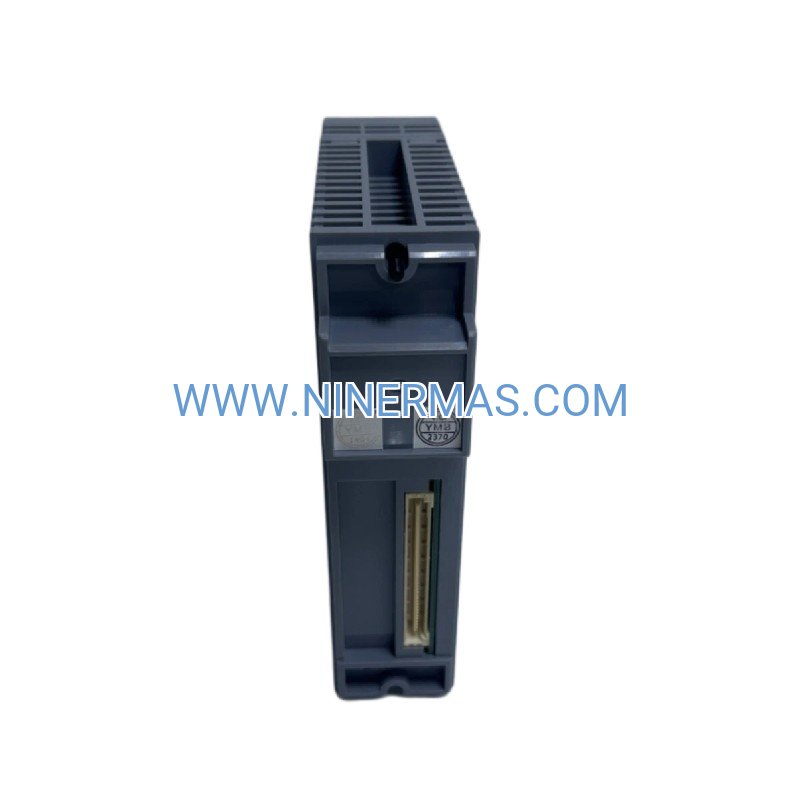
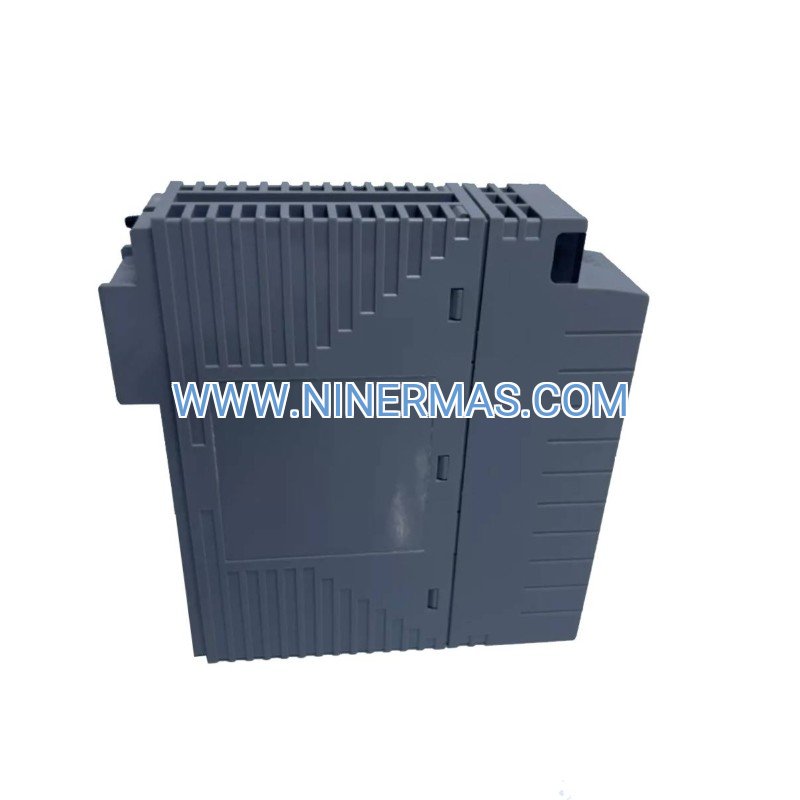
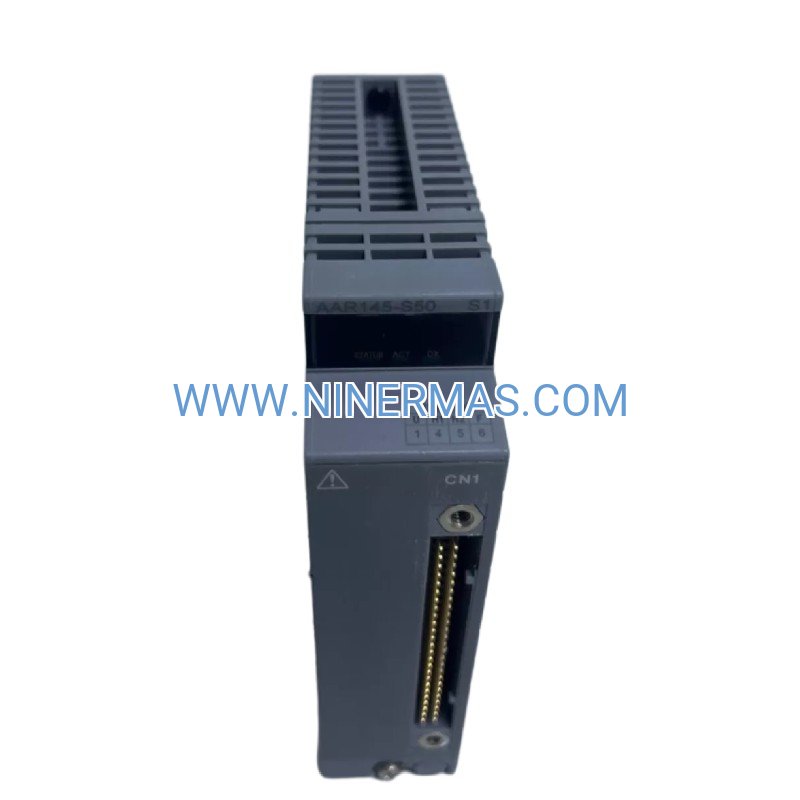
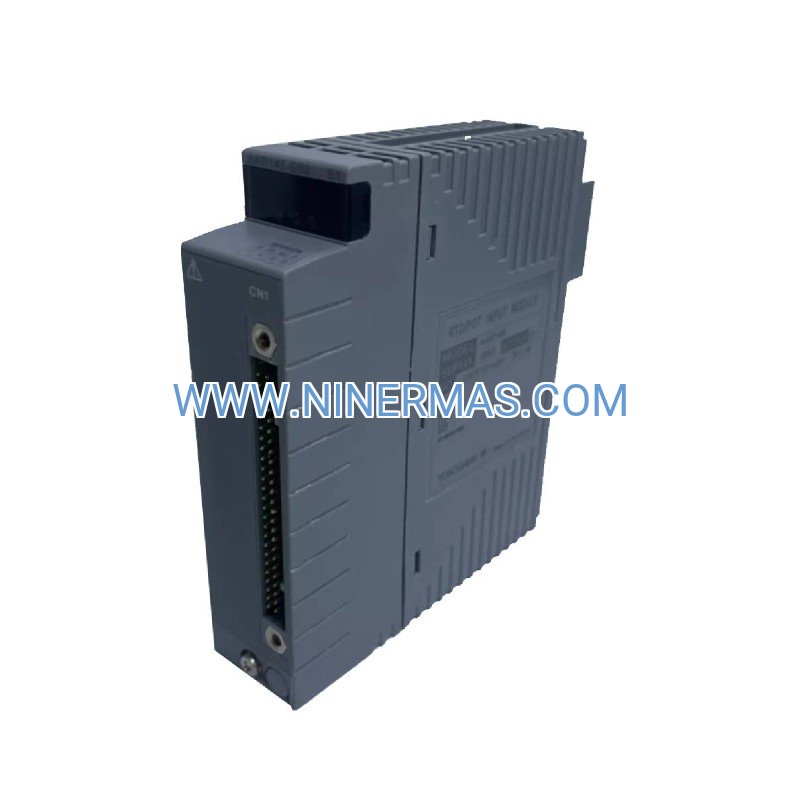
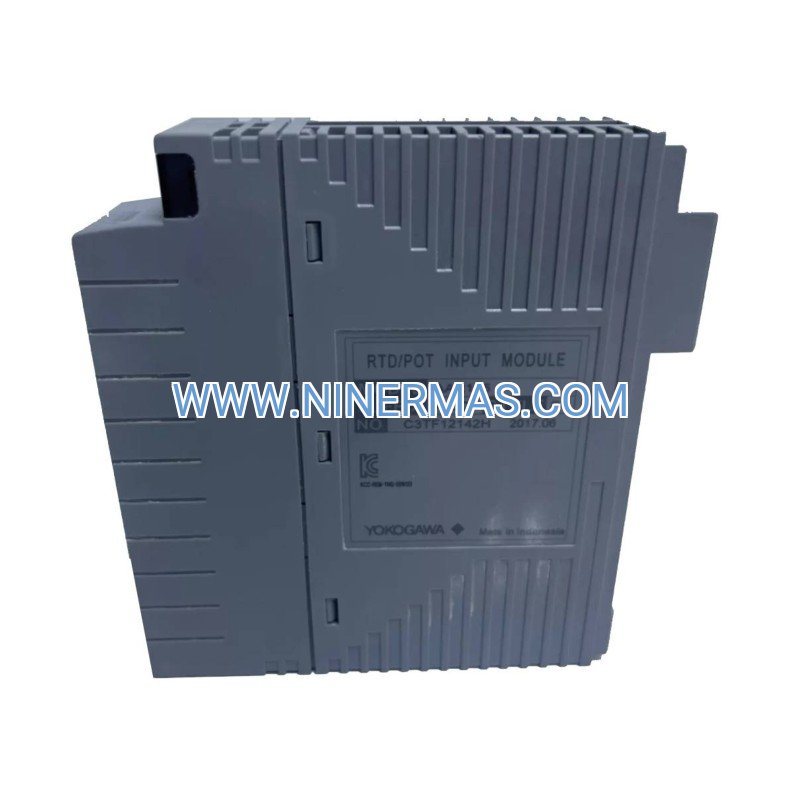
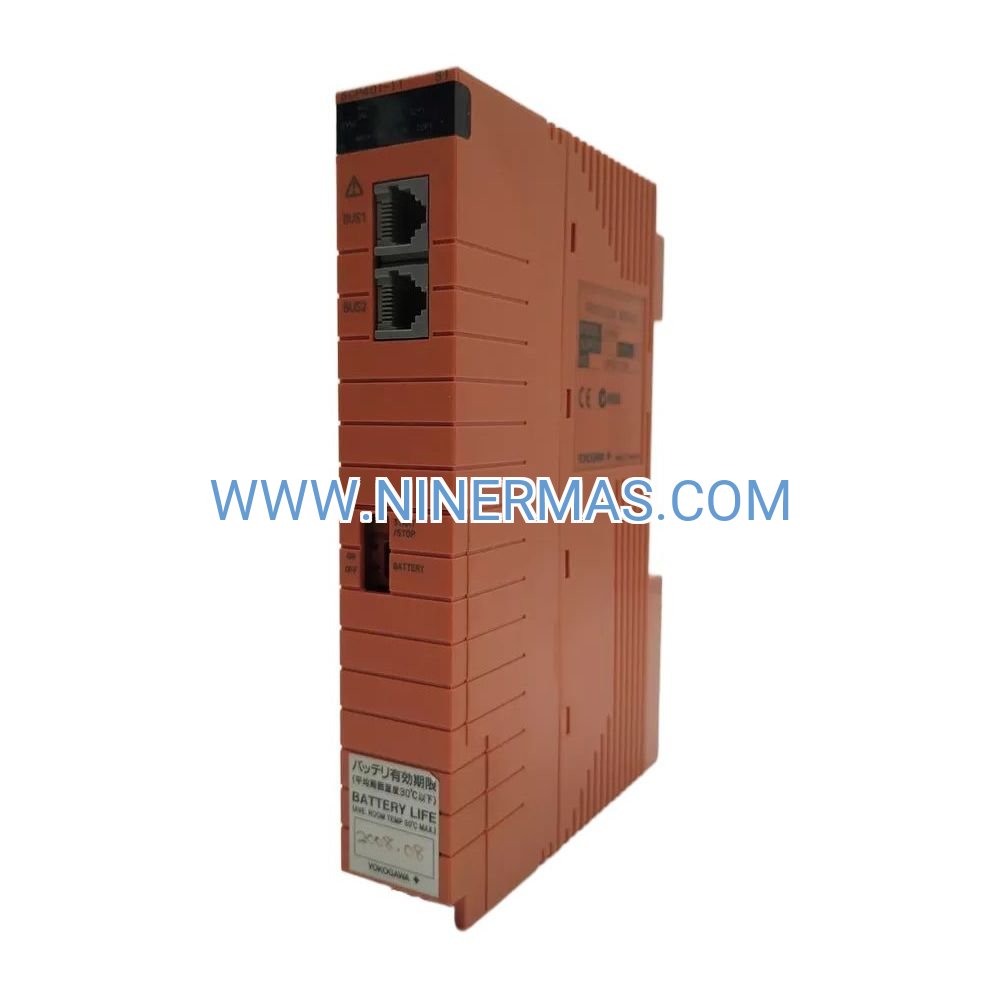
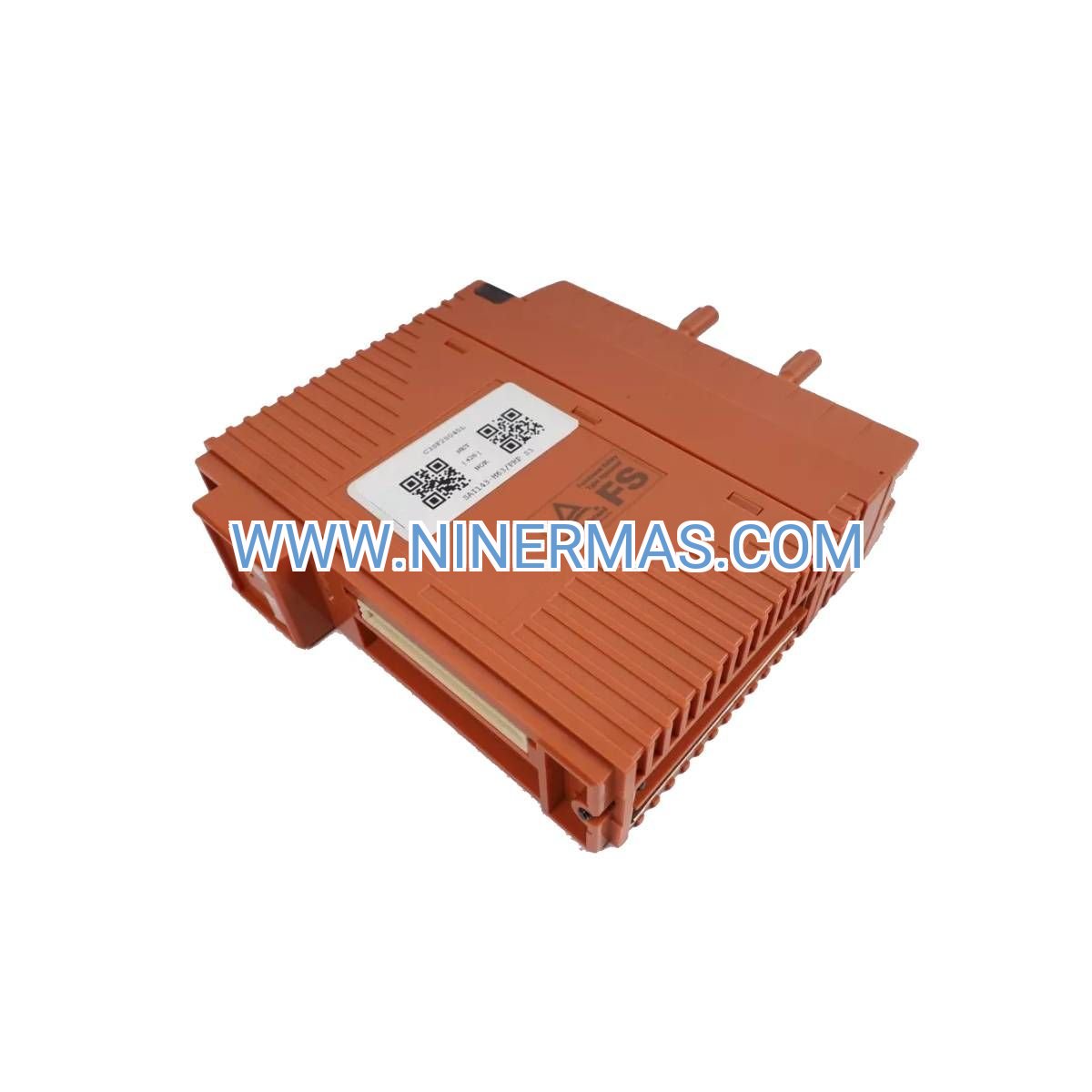
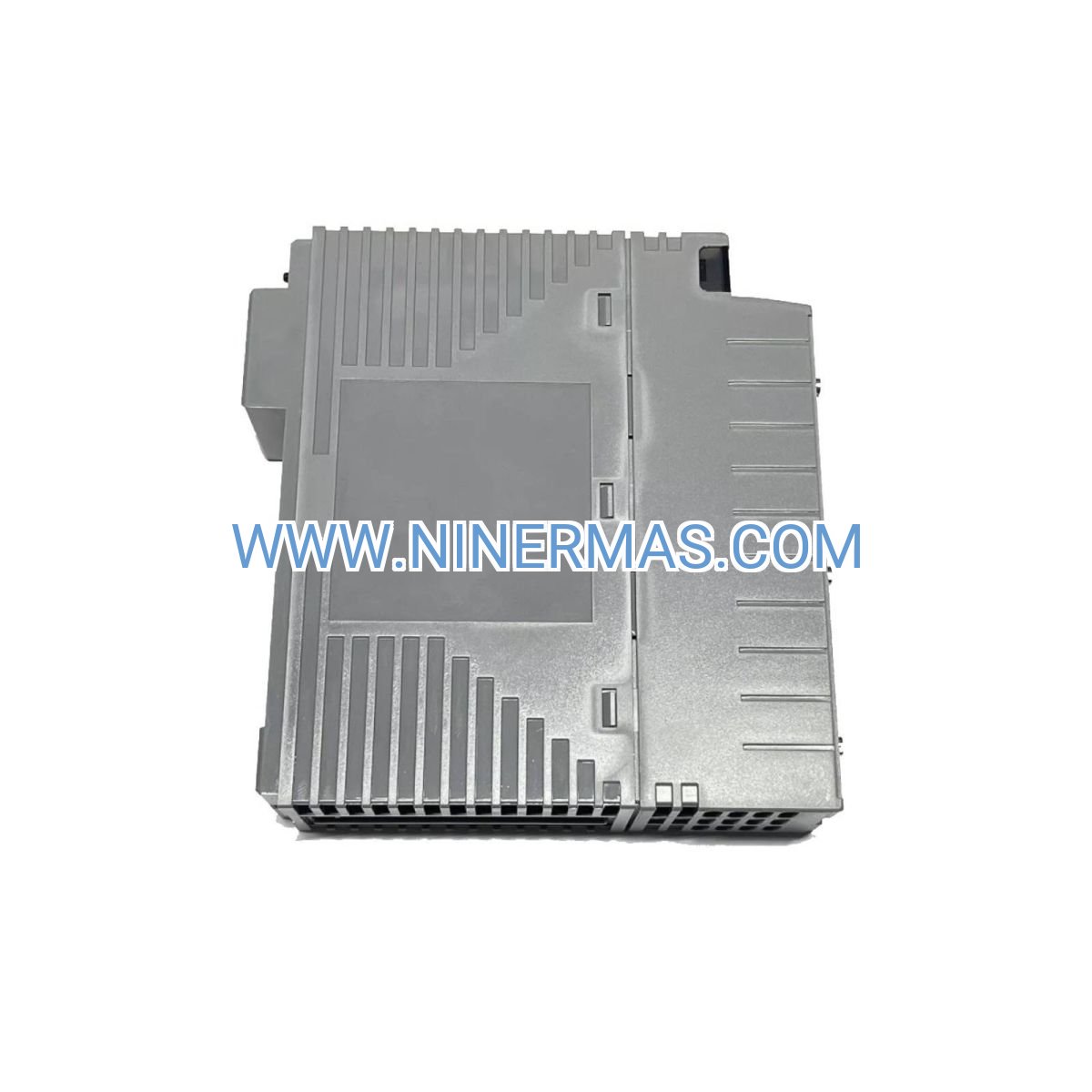
YOKOGAWA AAR145-S50 S1 RTD/POT Input Module | 16-Channel Temperature Sensor
Description
YOKOGAWA AAR145-S50 S1 – Industrial-Grade RTD/Potentiometer Input Module
The YOKOGAWA AAR145-S50 S1 is a high-precision 16-channel RTD and potentiometer input module engineered for demanding industrial temperature measurement applications. Designed for seamless integration with CENTUM VP and ProSafe-RS distributed control systems, this module delivers exceptional accuracy, channel isolation, and multi-wire RTD support for process-critical environments where measurement integrity cannot be compromised.
Built for petrochemical, pharmaceutical, power generation, and food processing industries, the AAR145-S50 S1 addresses the challenge of accurate temperature profiling in electrically noisy environments. With support for Pt100, Pt1000, JPt100, Ni100, Cu50, and Cu100 sensors across 2-wire, 3-wire, and 4-wire configurations, this module ensures reliable data acquisition for reactor monitoring, heat exchanger control, furnace regulation, and environmental chamber applications.
Whether you're upgrading legacy temperature measurement systems or designing new process control architectures, the AAR145-S50 S1 combines proven YOKOGAWA reliability with advanced diagnostic capabilities to minimize downtime and maximize process efficiency. Contact our technical team today for application-specific configuration guidance.
Core Features & Technical Advantages
✓ 16 Isolated RTD/POT Input Channels
Channel-to-channel and channel-to-system isolation eliminates ground loop interference and cross-talk, ensuring measurement integrity across all inputs simultaneously. Ideal for multi-zone temperature profiling in reactors and furnaces.
✓ Universal RTD Sensor Compatibility
Supports industry-standard Pt100, Pt1000, JPt100, Ni100, Cu50, and Cu100 sensors with automatic lead resistance compensation in 3-wire and 4-wire configurations. Reduces inventory complexity and simplifies sensor procurement.
✓ ±0.1°C Measurement Accuracy
16-bit A/D conversion delivers superior resolution across -200°C to +850°C range (sensor dependent). Meets stringent pharmaceutical validation requirements and critical process control specifications.
✓ Intelligent Diagnostics & Self-Monitoring
Built-in sensor break detection, out-of-range alarms, drift monitoring, and self-calibration routines ensure continuous measurement reliability. Reduces unplanned maintenance and improves process uptime.
✓ Hot-Swappable Design
Online replacement capability in YOKOGAWA I/O nests enables maintenance without system shutdown. Minimizes production interruptions and supports 24/7 continuous operation requirements.
✓ Configurable Scan Cycles
Adjustable update rates optimize response time versus noise filtering for specific application requirements. Balance between fast loop response and measurement stability.
Industrial Application Scenarios
→ Petrochemical Refinery Temperature Profiling
Monitor distillation column temperatures across multiple zones with isolated inputs that reject electrical noise from nearby motor drives and VFDs. The 3-wire RTD support compensates for long cable runs between field sensors and control room I/O racks, maintaining ±0.1°C accuracy critical for product quality control.
→ Pharmaceutical Batch Reactor Control
Achieve FDA 21 CFR Part 11 compliant temperature validation with high-resolution measurement and comprehensive diagnostic logging. The module's drift monitoring and self-calibration features support annual qualification protocols while reducing calibration labor costs.
→ Power Plant Heat Exchanger Monitoring
Track inlet/outlet temperatures across multiple heat exchangers using a single module, reducing panel space and wiring complexity. Channel isolation prevents measurement errors from ground potential differences in large distributed systems spanning hundreds of meters.
→ Food Processing Pasteurization Systems
Ensure HACCP compliance with accurate, traceable temperature measurement throughout pasteurization cycles. The module's fast scan rates enable tight control loop performance for rapid temperature ramp profiles while maintaining measurement precision.
→ Environmental Test Chamber Regulation
Control multi-zone thermal chambers with independent temperature measurement for each zone. Custom linearization curves support specialized sensor types for extreme temperature applications beyond standard RTD ranges.
Technical Parameters & Selection Guide
| Parameter | Specification |
|---|---|
| Model Number | AAR145-S50 S1 |
| Input Channels | 16 isolated RTD/POT inputs |
| RTD Types Supported | Pt100, Pt1000, JPt100, Ni100, Cu50, Cu100 |
| Wiring Configurations | 2-wire, 3-wire, 4-wire RTD; Potentiometer (resistance) |
| Measurement Range | -200°C to +850°C (sensor dependent) |
| Accuracy | ±0.1°C typical (Pt100 sensors) |
| Resolution | 16-bit A/D conversion |
| Isolation | Channel-to-channel and channel-to-system |
| Compatible Systems | CENTUM VP, ProSafe-RS DCS platforms |
| Installation | Hot-swappable in YOKOGAWA I/O nests |
| Operating Temperature | -20°C to +60°C ambient |
| Diagnostics | Sensor break, out-of-range, drift monitoring |
Selection Criteria: Choose the AAR145-S50 S1 when you require high-density RTD input with channel isolation for noise-prone environments. For applications requiring fewer channels (12 inputs), consider the NFAR181-S00 S2 alternative. If your application involves mixed analog signals (voltage/current), pair this module with AAI143-S53 S1 analog input modules for comprehensive data acquisition.
Extended Functionality & Integration
Custom Linearization Capabilities: Configure non-standard sensor curves for specialized thermocouples or resistance devices beyond factory-default RTD types. Supports polynomial and table-based linearization for research and development applications.
DCS Network Integration: Seamless communication with CENTUM VP engineering stations via Vnet/IP network. Real-time data streaming enables advanced process analytics, predictive maintenance algorithms, and cloud-based monitoring dashboards.
Redundancy Support: Compatible with YOKOGAWA redundant I/O configurations for safety-critical applications requiring fault-tolerant architectures. Automatic failover ensures continuous measurement during module replacement or failure scenarios.
Third-Party System Connectivity: OPC UA and Modbus TCP interfaces enable data exchange with SCADA systems, historians, and MES platforms for enterprise-wide process visibility and reporting.
Delivery Timeline & Service Commitment
Standard Lead Time: 3-5 business days for in-stock units with global express shipping options available. Expedited same-day dispatch available for urgent replacement requirements.
Custom Configuration: 7-10 business days for factory-configured modules with pre-loaded application parameters and custom firmware versions.
Warranty Coverage: 24-month manufacturer warranty covering defects in materials and workmanship. Extended warranty programs available for critical infrastructure applications.
Technical Support: Lifetime application engineering support including configuration assistance, troubleshooting guidance, and system integration consulting. Remote diagnostic services available via secure VPN connection.
Documentation Package: Comprehensive technical manual, wiring diagrams, configuration software, calibration certificates, and compliance declarations (CE, UL, ATEX where applicable) included with every shipment.
Frequently Asked Questions
Q: How does the AAR145-S50 S1 connect to existing CENTUM VP systems?
A: The module installs directly into YOKOGAWA I/O nests compatible with CENTUM VP and ProSafe-RS platforms. Connection is via backplane interface with automatic system recognition. Configuration is performed through CENTUM VP engineering stations using standard I/O definition tools. No special adapters or gateways required.
Q: What is the maximum cable length between RTD sensors and the input module?
A: For 3-wire RTD configurations, cable runs up to 300 meters are supported with minimal accuracy degradation when using shielded twisted-pair cable (0.5-1.0mm² conductor size). 4-wire configurations can extend to 500+ meters due to complete lead resistance compensation. 2-wire configurations are limited to 50 meters for maintaining ±0.1°C accuracy specifications.
Q: Can this module reduce energy consumption in temperature control loops?
A: Yes. The high accuracy (±0.1°C) and fast scan rates enable tighter control deadbands, reducing temperature overshoot and cycling frequency. In thermal processing applications, this translates to 3-8% energy savings by minimizing unnecessary heating/cooling cycles while maintaining product quality specifications.
Q: What are the physical installation requirements for the AAR145-S50 S1?
A: The module requires a YOKOGAWA I/O nest with available slot position. Ambient temperature must be maintained between -20°C and +60°C with adequate ventilation (minimum 50mm clearance above/below). Power consumption is approximately 5W per module. Grounding must follow YOKOGAWA installation standards for proper isolation performance.
Q: Does the module support remote monitoring and diagnostics?
A: Yes. All diagnostic parameters (sensor health, measurement values, alarm status) are accessible via CENTUM VP HMI and can be forwarded to remote monitoring systems through OPC UA or Modbus TCP interfaces. Email/SMS alarm notifications can be configured through CENTUM VP alarm management functions.
Q: Is the AAR145-S50 S1 suitable for hazardous area installations?
A: The module itself is designed for control room/safe area installation. For hazardous area sensor connections, use intrinsically safe barriers or YOKOGAWA's explosion-proof I/O solutions (consult factory for specific Zone/Division requirements). The module's isolation architecture is compatible with IS barrier installations.
Request a Quote or Technical Consultation
Our industrial automation specialists are ready to assist with system design, product selection, and integration planning. Whether you're upgrading existing YOKOGAWA DCS infrastructure or designing new process control systems, we provide expert guidance to ensure optimal performance and long-term reliability.
Contact us today for:
- Application-specific configuration recommendations
- Competitive pricing for single units or bulk orders
- Technical documentation and compliance certificates
- Integration support and commissioning services
- Spare parts programs and lifecycle management
© 2026 NINERMAS COMPANY LIMITED. All rights reserved.
Original Source: https://ninermas.com
Contact: sale@ninermas.com | +0086 187 5021 5667
PDF Specification
Download PDF file here:
Click to Download PDFRelated products

Contact Info
-
Address:22 / F, South Wo Hang building, 148 Wing Lok Street, Sheung Wan, Western District, Hong Kong
-
Phone:+8618750215667
-
Email: