Description
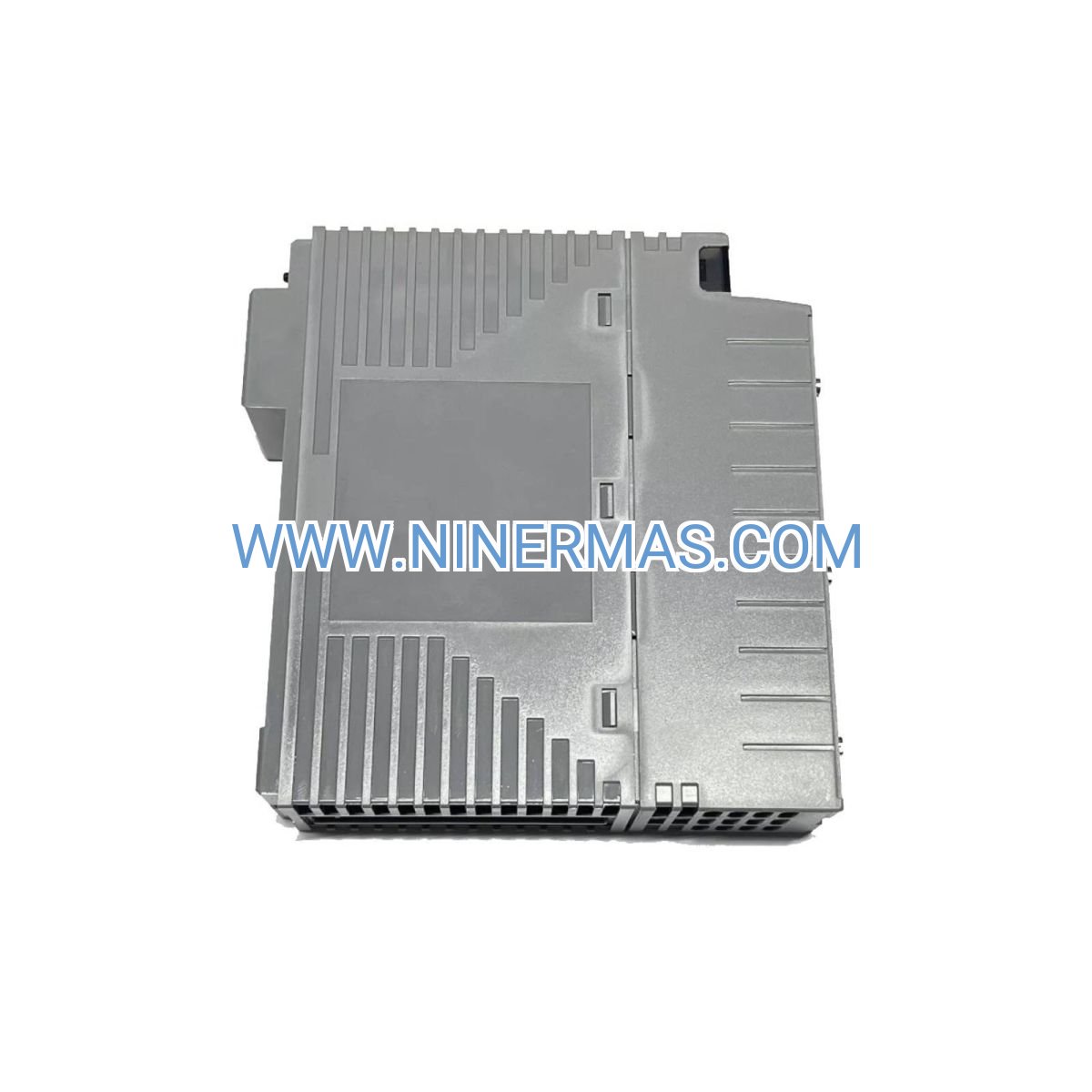
9907-164 Digital Governor (Industrial-Grade Turbine Speed Control)
The Woodward 9907-164 is a microprocessor-based turbine governor engineered for critical speed regulation in steam and gas turbine installations. Built on the field-proven 505 digital platform, this controller combines adaptive control algorithms with fail-safe protection logic to ensure stable operation across industrial power generation, mechanical drive, and marine propulsion systems. Whether managing grid-synchronized generators or variable-load compressor drives, the 9907-164 delivers consistent performance in environments where downtime translates directly to revenue loss.
Designed for plant engineers and OEMs requiring deterministic control response, this governor addresses three fundamental challenges: maintaining speed stability during load transients, coordinating multi-turbine installations, and providing comprehensive diagnostics without requiring process shutdown. Its dual-redundant architecture and hot-swappable I/O modules support continuous operation in 24/7 industrial facilities.
Key differentiators include sub-second overspeed detection, native support for Woodward actuator families, and field-programmable sequencing that eliminates custom PLC integration. With certifications spanning CE, UL508, and ATEX Zone 2, the 9907-164 meets global compliance requirements for hazardous area installations.
Core Features & Benefits
→ Adaptive PID Control Engine
Self-tuning algorithms automatically adjust to turbine inertia and load characteristics, reducing commissioning time by 40% compared to manual tuning methods while maintaining ±0.25% speed regulation accuracy.
→ Triple-Redundant Safety Architecture
Independent overspeed detection circuits with diverse sensor inputs provide SIL-2 rated protection, meeting insurance and regulatory requirements for unattended operation in critical infrastructure.
→ Multi-Protocol Connectivity
Simultaneous Modbus RTU, Ethernet/IP, and proprietary Woodward serial communication enables integration with legacy DCS systems and modern SCADA platforms without protocol converters.
→ Real-Time Predictive Diagnostics
Continuous monitoring of vibration signatures, bearing temperatures, and actuator response times generates early-warning alerts 72-96 hours before component failure, enabling scheduled maintenance windows.
→ Load-Sharing Coordination
Built-in droop control and cross-limiting functions synchronize up to 32 turbines in parallel operation, optimizing fuel efficiency across varying plant loads without external load-sharing controllers.
→ Non-Volatile Configuration Memory
Battery-backed parameter storage retains tuning settings, alarm thresholds, and custom logic during power interruptions, eliminating re-commissioning after maintenance outages.
Application Scenarios
Combined Cycle Power Generation
In CCGT facilities, the 9907-164 manages gas turbine acceleration from purge to synchronization, coordinates steam admission valve sequencing during mode transitions, and maintains frequency stability during grid disturbances. Operators benefit from automated startup sequences that reduce operator workload while ensuring consistent ignition timing and temperature ramp rates.
Industrial Cogeneration Systems
Cogeneration plants serving chemical processing or district heating networks use the governor to balance electrical output against thermal steam demand. The controller's configurable extraction pressure control maintains process steam headers within ±2 psi while adjusting generator load to match facility power consumption, maximizing overall system efficiency.
Offshore Oil & Gas Platforms
Mechanical drive turbines powering gas compression trains operate under the 9907-164's constant-speed control, compensating for suction pressure variations and ambient temperature swings. The governor's vibration monitoring detects bearing degradation in harsh marine environments, triggering maintenance alerts before catastrophic failure.
Marine Propulsion & Auxiliary Power
LNG carriers and naval vessels employ the 9907-164 for main propulsion turbine control, providing precise speed regulation during port maneuvering and emergency astern operations. Integration with bridge control systems enables remote speed setpoint adjustment and automated crash-stop sequences.
Biomass & Waste-to-Energy Plants
Steam turbines processing variable-quality fuel sources rely on the governor's adaptive control to maintain stable operation despite fluctuating steam conditions. The controller compensates for pressure and temperature variations caused by inconsistent feedstock, preventing trips that would interrupt waste processing operations.
Technical Parameters & Selection Guide
| Parameter | Specification |
|---|---|
| Control Platform | 505 Digital Governor Series |
| Speed Range | 1,000 – 20,000 RPM (configurable) |
| Regulation Accuracy | ±0.25% steady-state, ±0.5% transient |
| Analog Inputs | 16 channels (4-20mA, 0-10V, RTD) |
| Digital Inputs | 24 channels (dry contact, 24 VDC) |
| Analog Outputs | 8 channels (4-20mA, isolated) |
| Relay Outputs | 16 SPDT (5A @ 250 VAC) |
| Communication Ports | 2× RS-485, 1× Ethernet 10/100 |
| Operating Temperature | -30°C to +70°C (-22°F to +158°F) |
| Power Supply | 24 VDC ±10%, 3.5A nominal |
| Enclosure Rating | NEMA 4X / IP65 (panel-mount) |
| Dimensions (H×W×D) | 266 × 483 × 305 mm (10.5" × 19" × 12") |
| Weight | 4.1 kg (9.0 lbs) |
Selection Criteria: Choose the 9907-164 for applications requiring integrated overspeed protection, multi-turbine coordination, or retrofit compatibility with existing Woodward actuators (EPG, LSG, TG series). For single-turbine installations under 5 MW without load-sharing requirements, consider the 9907-162 variant. Applications demanding SIL-3 safety integrity should specify the 9907-167 with redundant processors.
Extended Functions
IoT Integration & Cloud Monitoring: Optional cellular gateway modules enable secure data transmission to Woodward's Compass cloud platform, providing remote access to performance trends, alarm history, and predictive maintenance recommendations. Plant managers receive mobile notifications for critical events and can authorize parameter changes through multi-factor authentication.
Advanced Control Modes: Beyond standard droop and isochronous control, the 9907-164 supports base-load, peak-shaving, and frequency-responsive modes for grid-interactive installations. Custom control strategies can be implemented using the integrated function block programming environment without external PLCs.
Customization Options: Field-configurable I/O assignments, user-defined alarm logic, and custom HMI screens adapt the controller to site-specific requirements. Woodward's engineering services provide application-specific programming for unique sequencing, interlocking, or regulatory compliance needs.
Delivery & Service Assurance
✓ Lead Time: Standard configurations ship within 3-5 business days. Custom-programmed units with application-specific logic require 10-15 business days for factory testing and documentation.
✓ Warranty Coverage: 12-month manufacturer warranty covers defects in materials and workmanship. Extended warranty plans available for up to 60 months with priority technical support.
✓ Technical Support: 24/7 global support hotline staffed by turbine control specialists. On-site commissioning services available in 40+ countries with guaranteed 48-hour response for critical failures.
✓ Documentation Package: Each unit includes installation manual, wiring diagrams, ToolKit configuration software license, and sample control logic templates. Video tutorials and online training modules accessible through customer portal.
Frequently Asked Questions
What actuator compatibility does the 9907-164 digital governor provide?
The controller natively supports Woodward EPG, LSG, and ProTech-GII actuators through dedicated output channels. Third-party actuators requiring 4-20mA or 0-10V signals connect via analog outputs with configurable scaling and fault detection.
How does the governor handle speed sensor failures during operation?
Dual-redundant speed inputs with automatic switchover maintain control authority if the primary sensor fails. The system generates immediate alarms and can execute configurable shutdown sequences if both sensors become invalid, preventing overspeed conditions.
Can this turbine speed controller integrate with existing plant DCS systems?
Yes, simultaneous Modbus RTU and Ethernet/IP connectivity allows parallel integration with legacy DCS and modern SCADA platforms. The controller exposes 200+ data points including speed, load, temperatures, and diagnostic codes through standard industrial protocols.
What commissioning time should be expected for typical installations?
Basic installations with standard Woodward actuators require 4-6 hours for sensor calibration, actuator stroke verification, and initial PID tuning. Complex multi-turbine installations with custom sequencing may require 2-3 days including factory acceptance testing.
Does the 9907-164 support remote parameter adjustment capabilities?
Authorized users can modify non-critical parameters (setpoints, alarm thresholds, PID gains) remotely via Ethernet connection using ToolKit software. Safety-critical settings require physical keyswitch authorization at the controller to prevent unauthorized changes.
What environmental conditions can this industrial governor withstand?
The NEMA 4X enclosure protects against dust, moisture, and corrosive atmospheres in outdoor or marine installations. Operating temperature range of -30°C to +70°C accommodates arctic and tropical climates without derating. Conformal coating on circuit boards provides additional protection in high-humidity environments.
Take the Next Step
Ready to upgrade your turbine control system with proven 505 platform technology? Our application engineers are available to discuss your specific requirements, provide compatibility verification for existing equipment, and develop customized control strategies. Contact us today for technical consultation, pricing quotations, or to schedule an on-site assessment of your facility.
© 2026 NINERMAS COMPANY LIMITED. All rights reserved.
Original Source: https://ninermas.com
Contact: sale@ninermas.com | +0086 187 5021 5667
Related products


Contact Info
-
Address:22 / F, South Wo Hang building, 148 Wing Lok Street, Sheung Wan, Western District, Hong Kong
-
Phone:+8618750215667
-
Email: