Description
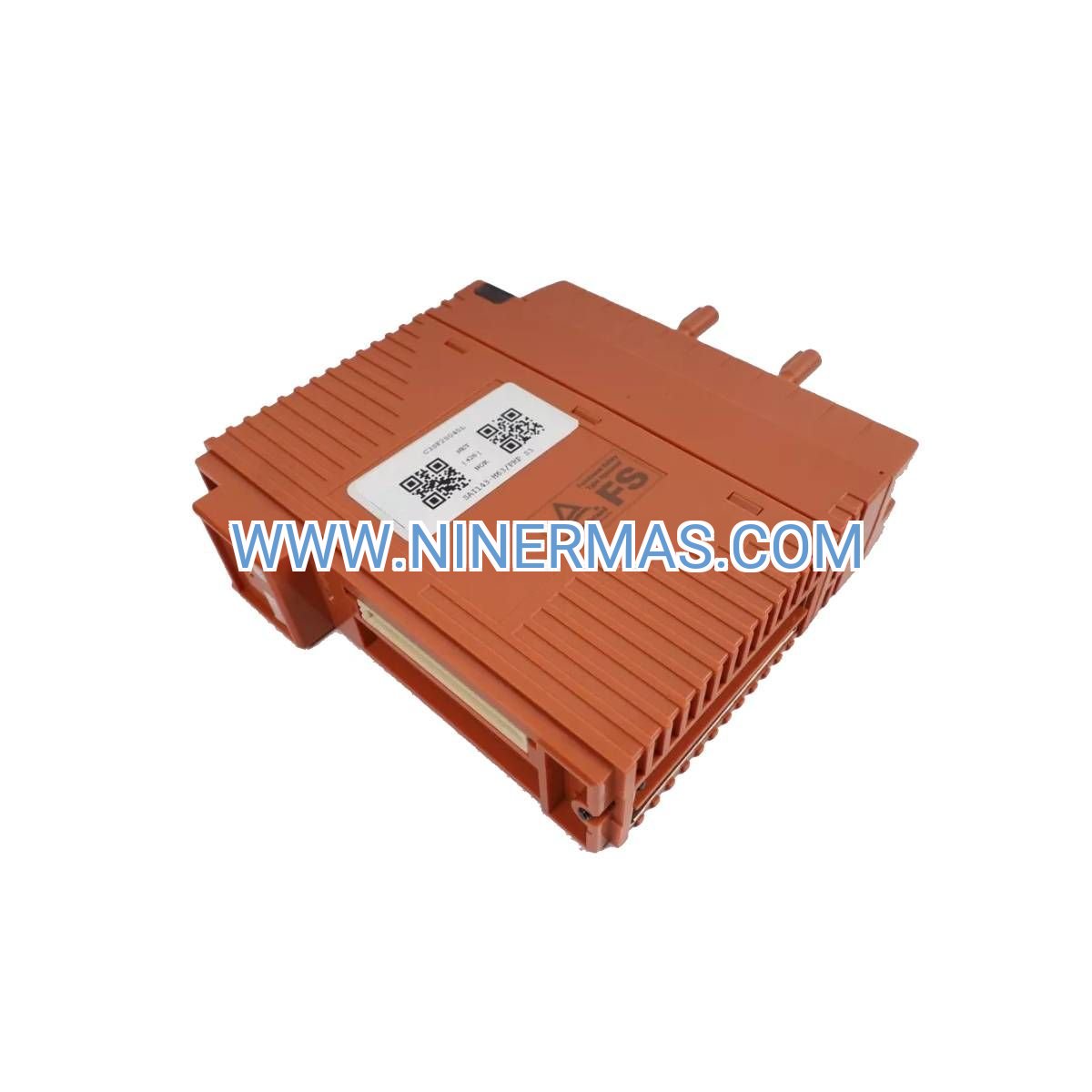
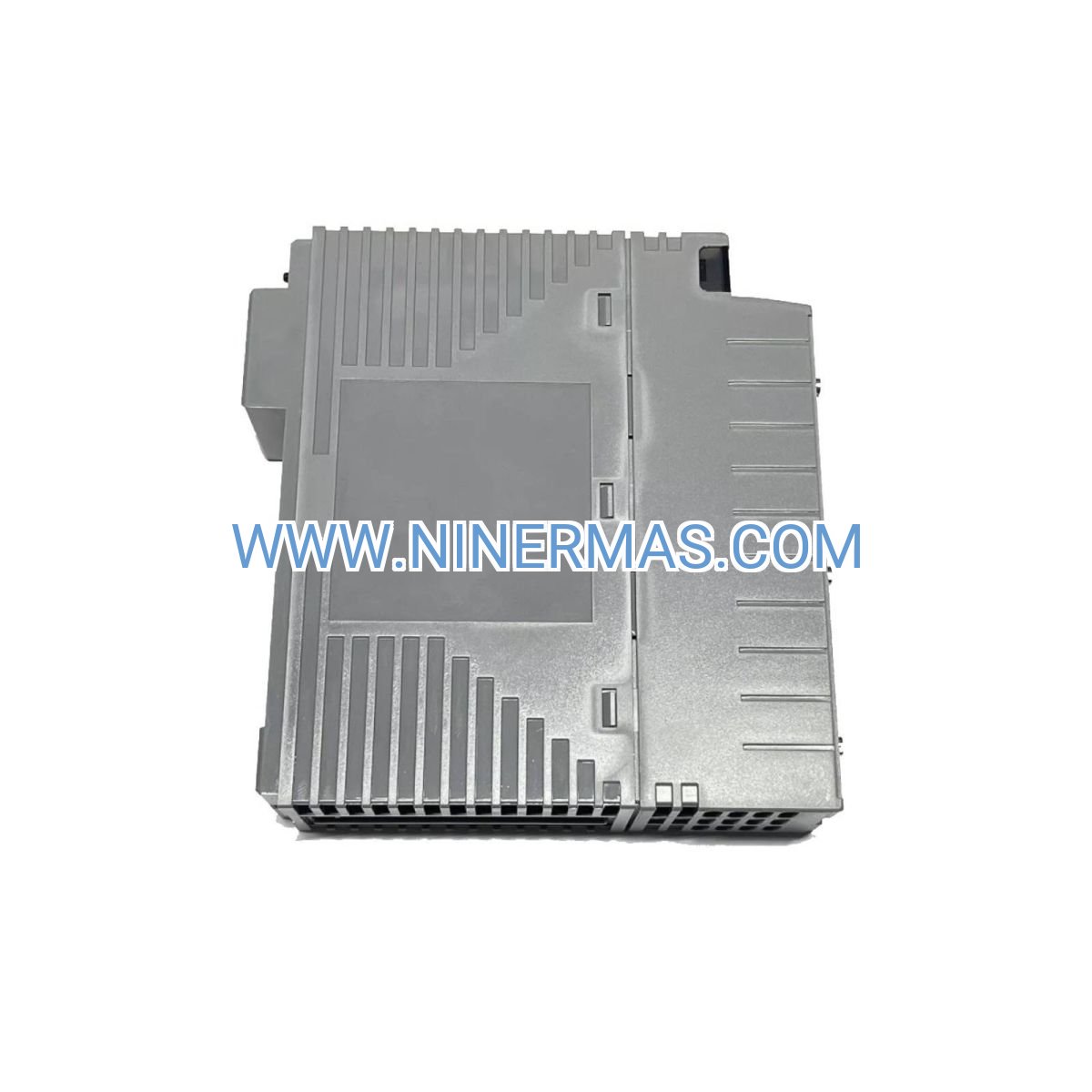
AAI135-H00 S1 Analog I/O Module (Industrial-Grade Current Loop Interface)
The AAI135-H00 S1 represents Yokogawa's commitment to precision signal conditioning in process automation. This dual-channel analog I/O module transforms 4-20 mA current signals with galvanic isolation, ensuring your critical control loops remain immune to electrical noise and ground potential differences. Designed for integration into CENTUM VP and STARDOM architectures, it bridges field instrumentation with supervisory control layers while maintaining signal fidelity across harsh industrial environments.
Process engineers face constant challenges with signal degradation, ground loops, and electromagnetic interference in multi-zone facilities. The AAI135-H00 S1 addresses these pain points through 1500V channel-to-ground isolation, protecting both upstream transmitters and downstream controllers from voltage transients. Whether you're retrofitting legacy systems or deploying greenfield automation projects, this module delivers the reliability demanded by pharmaceutical clean rooms, chemical batch reactors, and oil refinery operations.
Key differentiators include sub-100ms response time for dynamic process control, hot-swappable architecture for zero-downtime maintenance, and compliance with IEC 61131 standards. The compact DIN-rail form factor optimizes cabinet real estate while built-in diagnostics accelerate commissioning and troubleshooting workflows.
Core Capabilities & Technical Advantages
✓ Galvanic Isolation Technology
1500V DC isolation barrier eliminates ground loop currents and protects against common-mode voltage spikes up to 2500V surge rating. Reduces cross-talk in multi-channel installations by >80dB at 50Hz, critical for maintaining measurement accuracy in electrically noisy environments.
✓ Precision Signal Conversion
Achieves ±0.1% full-scale accuracy across -20°C to +60°C operating range with <50ppm/°C temperature coefficient. 16-bit ADC resolution provides 0.0015% granularity for demanding analytical applications like pH control and spectroscopy integration.
✓ Dual-Channel Architecture
Independent input/output channels support simultaneous transmit/receive operations without crosstalk. Each channel handles 4-20 mA sourcing or sinking configurations, compatible with 2-wire, 3-wire, and 4-wire transmitter topologies.
✓ Rapid Response Dynamics
Sub-100ms settling time enables closed-loop control of fast processes like pressure regulation and flow balancing. Configurable filtering (0.1-10 Hz) optimizes noise rejection versus response speed tradeoffs.
✓ Industrial Hardening
Conformal coating protects against humidity, salt spray, and chemical vapors per IEC 60068-2-52. Operates reliably in Class I Division 2 hazardous locations when paired with approved barriers.
→ Modular Serviceability
Hot-swap capability allows module replacement during live operations without system shutdown. Spring-cage terminals accept 14-22 AWG wire for vibration-resistant connections, reducing installation time by 40% versus screw terminals.
Industry Application Scenarios
Chemical Processing – Reactor Temperature Control
Monitor exothermic reactions using RTD transmitters feeding 4-20 mA signals to the AAI135. Isolation prevents ground loops between jacketed vessels and control room equipment, while fast response tracks rapid temperature excursions during catalyst addition phases.
Water Treatment – Multi-Stage Filtration
Acquire differential pressure signals from membrane filter banks to optimize backwash cycles. The module's accuracy maintains ±0.5 psi setpoint precision across 0-100 psi transmitter ranges, extending membrane life by 15-20%.
Oil & Gas – Pipeline Custody Transfer
Interface with Coriolis flow meters for fiscal measurement applications requiring ±0.15% uncertainty. Isolation meets API MPMS Chapter 21.2 requirements for separating field devices from custody transfer computers.
Pharmaceutical Manufacturing – Clean Room HVAC
Control differential pressure across HEPA filter arrays using 16-channel configurations. The module's low power dissipation (<3W) minimizes heat load in temperature-sensitive environments, supporting ISO Class 5 cleanroom specifications.
Food & Beverage – Pasteurization Loops
Regulate heat exchanger outlet temperatures with <0.5°C deviation using cascade control strategies. Galvanic isolation protects against stray currents in stainless steel piping systems common to CIP (clean-in-place) operations.
Technical Parameters & Selection Criteria
| Parameter | Specification | Selection Notes |
|---|---|---|
| Signal Range | 4-20 mA DC | Supports NAMUR NE43 fault detection |
| Channel Count | 2 (configurable I/O) | Scale to 32 channels per rack |
| Isolation Voltage | 1500V DC continuous | 2500V surge (1 minute test) |
| Accuracy | ±0.1% FS @ 25°C | ±0.15% across full temp range |
| Resolution | 16-bit (65,536 counts) | 0.24 μA per LSB |
| Response Time | <100 ms (90% step) | Configurable 0.1-10 Hz filter |
| Load Resistance | 0-600Ω (output mode) | Verify transmitter compliance |
| Power Supply | 24V DC ±10% | <3W per module consumption |
| Operating Temp | -20°C to +60°C | Derate above 50°C in enclosed panels |
| Humidity | 5-95% RH non-condensing | Conformal coating standard |
| Mounting | 35mm DIN rail (EN 50022) | Vertical or horizontal orientation |
| Dimensions | 90mm H × 25mm W × 120mm D | 12 modules per 19" rack |
| Certifications | CE, UL508, IEC 61010 | SIL2 capable with redundancy |
Selection Guidelines: Choose AAI135-H00 S1 when your application requires channel-to-channel isolation in multi-loop systems. For non-isolated applications with >8 channels, consider the AAI143 series for cost optimization. Verify transmitter output impedance remains <600Ω across temperature range to prevent loop errors. In hazardous areas, pair with MTL or Pepperl+Fuchs intrinsic safety barriers rated for your zone classification.
Extended Integration Features
HART Protocol Transparency
While the AAI135 operates as a pure analog interface, it maintains HART FSK signal integrity for digital communication with smart transmitters. Pair with Yokogawa's FIO modules for simultaneous analog control and HART diagnostics access.
Redundancy Configurations
Deploy in 1oo2 (one-out-of-two) voting architectures for SIL2-rated safety instrumented systems. Automatic switchover occurs within 50ms upon primary channel failure, meeting IEC 61511 proof test interval requirements.
Fieldbus Gateway Integration
Connect to FOUNDATION Fieldbus H1 segments via Yokogawa's ALF111 linking device, enabling hybrid analog/digital control strategies. Supports up to 16 FF devices per segment with AAI135 handling critical 4-20 mA backup signals.
Custom Calibration Services
Factory calibration certificates traceable to NIST standards available upon request. Field recalibration kits include precision current sources and step-by-step procedures for maintaining ±0.05% accuracy over 5-year intervals.
Delivery Timeline & Service Commitments
Standard Lead Time: 3-5 business days for stock items | 4-6 weeks for factory-configured modules with custom firmware
Warranty Coverage: 24-month manufacturer defect warranty | Extended 60-month plans available for critical infrastructure
Technical Support: 24/7 hotline access | Remote diagnostics via VPN | On-site commissioning assistance in APAC regions
Documentation Package: Installation manual | AutoCAD DWG panel layouts | CENTUM VP configuration templates | Loop calibration worksheets
Frequently Asked Questions
How does the AAI135-H00 S1 interface with existing CENTUM VP systems?
The module mounts in standard Yokogawa I/O racks (AFV10/AFV30 series) and auto-configures via the system's device manager. Import the GSD file into your engineering workstation, assign I/O tags, and download configurations over the Vnet/IP network. No manual DIP switch settings required—all parameters adjust through software.
What current loop power budget should I allocate per channel?
Each output channel sources up to 22 mA into 600Ω loads, requiring 13.2V compliance voltage minimum. For 2-wire transmitters, ensure your 24V DC supply provides 50 mA overhead per channel to account for transmitter quiescent current (typically 3.5-4 mA). Input channels consume <1 mA from the loop.
Can this module achieve energy savings compared to legacy relay-based systems?
Absolutely. The AAI135 consumes <3W versus 8-12W for equivalent electromechanical signal conditioners. In a 200-point system, this translates to 1.2 kW reduction in panel heat load, decreasing HVAC costs by approximately $800/year in climate-controlled facilities. Lower heat dissipation also extends adjacent component lifespan.
What are the physical installation requirements for DIN rail mounting?
Mount on 35mm × 7.5mm or 35mm × 15mm DIN rail per EN 50022. Maintain 10mm clearance above/below for convection cooling. Torque terminal screws to 0.5 Nm (4.4 lb-in) using a calibrated driver. For vibration-prone environments (>2G acceleration), add DIN rail end stops every 12 modules to prevent lateral creep.
Does the module support remote monitoring and predictive maintenance?
Yes, when integrated with Yokogawa's Exaquantum PIMS or OpreX Asset Operations software. The system logs channel health metrics including loop current deviation, isolation resistance trends, and power supply voltage. Algorithms predict module failure 30-90 days in advance based on degradation patterns, enabling proactive replacement scheduling.
How do I verify calibration accuracy after field installation?
Connect a precision current source (Fluke 707 or equivalent with ±0.01% accuracy) to input terminals. Inject 4.00, 12.00, and 20.00 mA test points and compare readings in the DCS against source values. Acceptable tolerance is ±0.02 mA (±0.1% of 20 mA span). For output verification, measure voltage across a 250Ω precision resistor—expect 1.000V, 3.000V, and 5.000V respectively.
Request Technical Consultation
Our application engineers provide complimentary system design reviews for projects requiring >50 I/O points. Submit your P&ID drawings and instrument datasheets to receive optimized module configurations, wiring diagrams, and budget quotations within 48 hours. For immediate assistance with compatibility questions or replacement part identification, contact our technical sales team.
© 2026 NINERMAS COMPANY LIMITED. All rights reserved.
Original Source: https://ninermas.com
Contact: sale@ninermas.com | +0086 187 5021 5667
PDF Specification
Download PDF file here:
Click to Download PDFRelated products

Contact Info
-
Address:22 / F, South Wo Hang building, 148 Wing Lok Street, Sheung Wan, Western District, Hong Kong
-
Phone:+8618750215667
-
Email: