Description
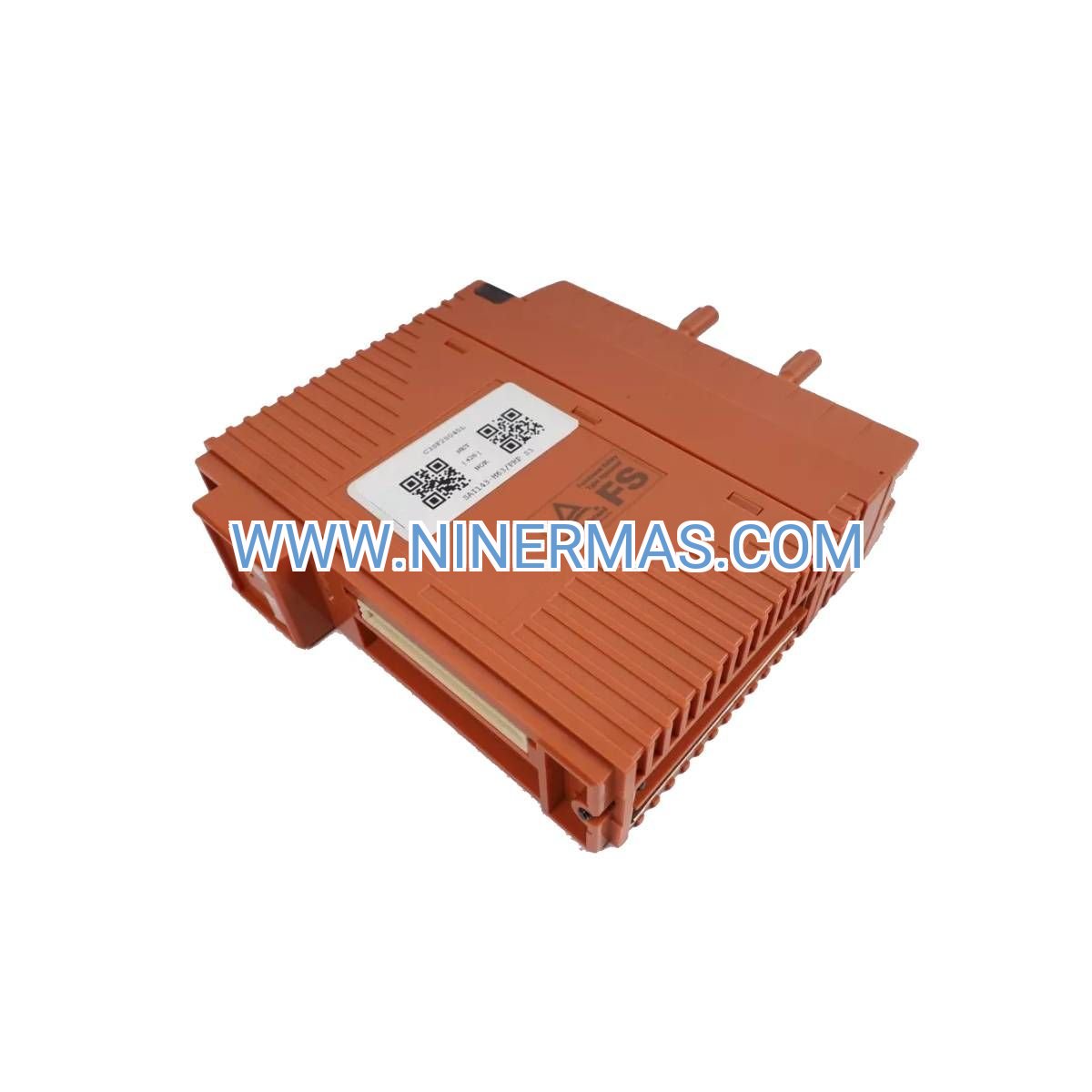
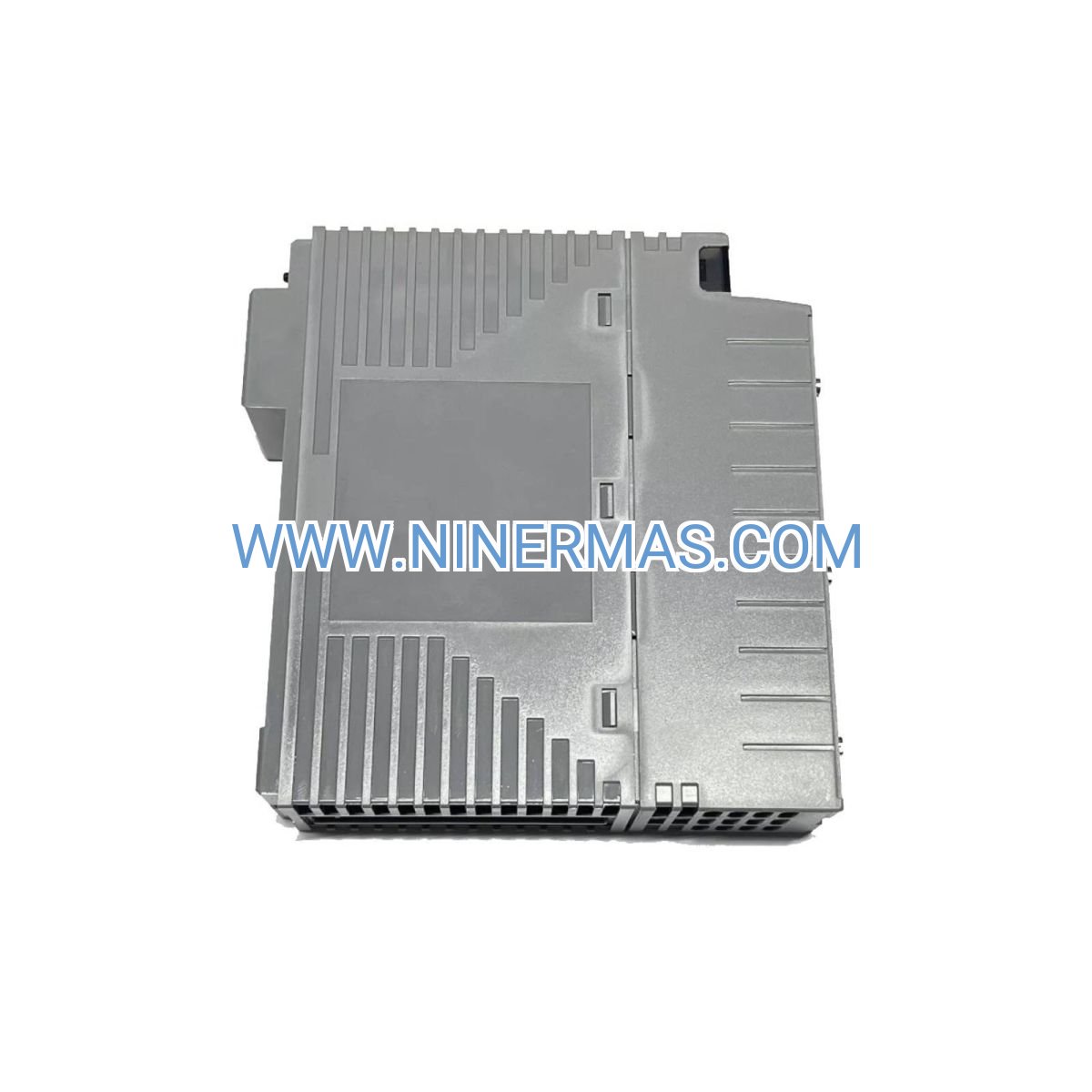
ABB DSQC 224 Analog I/O Module (Industrial-Grade Signal Interface)
The ABB DSQC 224 Analog I/O Module (Part No. YB560103BE/2) is a precision-engineered signal processing interface designed for ABB industrial robot control systems. This module bridges the gap between robot controllers and external analog devices—sensors, transducers, actuators, and process instruments—enabling real-time data acquisition and output control in demanding manufacturing environments. Whether you're operating welding cells, assembly lines, material handling systems, or quality inspection stations, the DSQC 224 delivers the accuracy and reliability required for mission-critical automation tasks.
Built for integration with ABB S4C, S4C+, and IRC5 controller platforms, this analog interface module addresses a fundamental challenge in modern robotics: converting continuous physical measurements into actionable control signals. Temperature variations, force feedback, distance measurements, pressure readings, and flow rates all require precise analog-to-digital conversion—and the DSQC 224 handles these tasks with 16-bit input resolution and sub-millisecond response times. For manufacturers seeking to implement adaptive control strategies, closed-loop process monitoring, or quality verification systems, this module provides the technical foundation for advanced automation capabilities.
The YB560103BE/2 variant offers proven compatibility across multiple ABB robot generations, making it an ideal choice for both new installations and retrofit projects. With comprehensive diagnostic features, software-based calibration, and robust EMI protection, this module minimizes commissioning time while maximizing long-term operational reliability.
Key Features & Technical Advantages
→ Multi-Channel Analog Acquisition
8 differential analog input channels with 16-bit resolution capture sensor data with ±0.1% full-scale accuracy. Configurable for ±10V, 0-10V, or 4-20mA current loop signals, supporting diverse sensor types without external signal conditioning.
→ Precision Analog Output Control
4 independent analog output channels (12-bit resolution) drive proportional valves, variable-frequency drives, and analog actuators. Output range selectable between ±10V and 0-10V to match equipment specifications.
✓ High-Speed Signal Conversion
Typical conversion time of 100 microseconds per channel enables real-time control loops for force-torque feedback, seam tracking, and adaptive welding applications where millisecond-level response is critical.
✓ Industrial-Grade EMI Immunity
Differential input architecture with superior common-mode rejection maintains signal integrity in electrically noisy environments—near welding equipment, high-power motor drives, and RF sources.
✓ Software-Configurable Calibration
RobotStudio-based setup eliminates manual potentiometer adjustments. Define scaling factors, offset corrections, and linearization curves through intuitive graphical interfaces; calibration data stored in non-volatile memory.
✓ Comprehensive Diagnostics
Channel-specific LED indicators and software-accessible fault registers accelerate troubleshooting. Detect open circuits, out-of-range signals, and communication errors without external test equipment.
Industrial Application Scenarios
Automotive Welding Quality Assurance
In spot welding cells producing vehicle body assemblies, the DSQC 224 monitors weld current and electrode force in real time. By interfacing with current transducers and load cells, the module enables adaptive weld schedules that compensate for material thickness variations and electrode wear. This prevents weak joints and reduces scrap rates in high-volume production lines processing 60+ welds per minute.
Electronics Assembly Force Control
During component insertion operations—pressing connectors onto PCBs, installing bearings into housings, or seating optical elements—the module processes force-torque sensor feedback to prevent over-insertion damage. Real-time force profiles trigger alarms when insertion resistance exceeds programmed thresholds, protecting delicate components worth hundreds of dollars each.
Material Handling Payload Optimization
Connect analog load cells and distance sensors to enable dynamic payload compensation in palletizing and machine tending applications. The robot adjusts acceleration profiles based on actual load weight, reducing cycle times for light payloads while preventing mechanical stress with heavy parts. Collision avoidance systems use analog proximity sensor data to slow approach speeds near obstacles.
Surface Finishing Precision
In grinding, polishing, and deburring cells, the DSQC 224 interfaces with contact force sensors to maintain consistent tool pressure against workpiece surfaces. Closed-loop force control delivers uniform surface finishes (Ra < 0.8 µm) across complex 3D geometries, eliminating manual rework and improving first-pass yield rates.
Pharmaceutical Packaging Verification
Integrate analog pressure transducers to verify blister pack seal integrity and flow meters to confirm liquid fill volumes in vial packaging lines. The module's high accuracy (±0.1% FS) ensures compliance with FDA validation requirements for critical quality parameters in sterile manufacturing environments.
Technical Specifications & Selection Guide
| Parameter | Specification |
|---|---|
| Part Number | YB560103BE/2 |
| Product Series | ABB DSQC 224 I/O Platform |
| Module Classification | Analog Input/Output Interface |
| Controller Compatibility | ABB S4C, S4C+, IRC5 |
| Analog Inputs | 8 channels, differential, 16-bit ADC |
| Analog Outputs | 4 channels, 12-bit DAC |
| Input Voltage Range | ±10V DC (configurable 0-10V, 4-20mA) |
| Output Voltage Range | ±10V DC / 0-10V selectable |
| Conversion Speed | 100 µs/channel typical |
| Accuracy | ±0.1% full scale @ 25°C |
| Operating Temperature | 0°C to +55°C (32°F to 131°F) |
| Protection Rating | IP20 (cabinet mounting) |
| Mounting Options | DIN rail / direct panel mount |
| Dimensions (L×W×H) | 160 × 100 × 30 mm |
| Weight | 0.3 kg |
| Country of Origin | Sweden |
Selection Criteria: Choose the DSQC 224 when your application requires more than 4 analog input channels or when interfacing with sensors using ±10V differential signals. For applications needing only 0-10V or 4-20mA inputs with fewer channels, consider the DSQC 256A sensor interface board. If your robot controller is IRC5 Compact or newer, verify firmware compatibility before ordering—some recent controller revisions may require updated module firmware (available via RobotWare updates).
Advanced Integration Capabilities
Modular I/O Architecture
The DSQC 224 mounts seamlessly within ABB robot controller cabinets alongside digital I/O boards, DeviceNet/PROFIBUS communication modules, and safety interface cards. Standard DIN rail mounting simplifies installation—no custom brackets or adapters required. The module communicates with the main controller via the internal I/O bus, eliminating external cabling between I/O modules.
RAPID Programming Integration
Access analog channel values directly in RAPID robot programs using standard I/O instructions. Implement conditional logic based on sensor readings—adjust welding parameters when material thickness sensors detect gauge variations, trigger quality alerts when measured dimensions fall outside tolerance bands, or switch between process recipes based on analog product identification signals. Interrupt-driven data acquisition supports time-critical control loops operating at sub-10ms update rates.
Remote Monitoring & Diagnostics
When connected to ABB's Ability™ Connected Services platform, analog channel data streams to cloud-based analytics dashboards for predictive maintenance and process optimization. Track sensor drift over time, identify degrading transducers before failures occur, and benchmark process parameters across multiple production cells. Historical data logging supports root cause analysis during quality investigations.
Delivery Timeline & Service Commitments
Standard Delivery: In-stock units ship within 2-3 business days via DHL/FedEx Express. Typical transit time to North America: 5-7 days; Europe: 4-6 days; Asia-Pacific: 3-5 days. All shipments include tracking numbers and signature confirmation.
Warranty Coverage: 12-month manufacturer warranty covers defects in materials and workmanship under normal operating conditions. Warranty service includes module replacement, firmware diagnostics, and configuration support through authorized ABB service centers worldwide.
Technical Support: Pre-sales application engineering assistance available to verify compatibility with your specific robot controller model and firmware version. Post-installation support includes RobotStudio configuration guidance, sensor wiring diagrams, and RAPID programming examples for common integration scenarios.
Documentation Package: Each module ships with installation manual, wiring terminal diagrams, RobotStudio configuration templates, and CE/UL compliance certificates. Downloadable resources include sensor integration application notes and troubleshooting flowcharts.
Frequently Asked Questions
How do I configure 4-20mA current loop sensors with the DSQC 224 analog inputs?
Install precision 250Ω termination resistors (not included with module) across the input terminals to convert 4-20mA current signals to 1-5V voltage for measurement. Configure the input channel in RobotStudio as "0-10V" mode and apply scaling factors to display engineering units (e.g., PSI, GPM, °C). Ensure sensor loop power supply provides adequate compliance voltage for cable resistance.
What is the maximum recommended cable length for analog sensor connections?
For voltage input signals (±10V, 0-10V), limit cable runs to 30 meters using shielded twisted-pair cable with drain wire grounded at the controller cabinet. Longer runs introduce noise pickup and voltage drop errors. Current loop inputs (4-20mA) tolerate cable lengths up to 300 meters due to inherent noise immunity—ideal for remote sensor installations in large work cells.
Does the module provide sensor excitation voltage for powered transducers?
No, the DSQC 224 does not include integrated sensor excitation outputs. Use external regulated 24V DC power supplies to energize active sensors and transducers. Ensure proper grounding—connect sensor power supply negative terminal to controller cabinet ground to establish common reference potential and prevent ground loop interference.
Can I use this module with non-ABB robot controllers or PLCs?
No, the DSQC 224 uses proprietary ABB communication protocols and is exclusively compatible with ABB S4C/IRC5 robot controllers. For integration with Siemens, Fanuc, KUKA, or other control systems, consider standalone analog I/O modules with standard fieldbus interfaces (PROFINET, EtherNet/IP, Modbus TCP).
How do I calibrate analog channels for specific sensor measurement ranges?
Calibration is performed entirely through RobotStudio software—no hardware adjustments required. Define input/output scaling factors, offset corrections, and multi-point linearization curves using the I/O configuration tool. For example, to display 0-100 PSI from a 4-20mA pressure transducer, set input scaling to convert 1-5V (after termination resistor) to 0-100 engineering units. Calibration parameters store in module non-volatile memory and survive power cycles.
What diagnostic features help troubleshoot analog signal issues?
Each input/output channel has a dedicated status LED indicating normal operation (green), out-of-range signal (yellow), or open circuit/fault condition (red). RobotStudio displays real-time channel values in engineering units, min/max captured values, and fault event logs. Use the built-in signal generator function to inject test signals and verify wiring continuity without external equipment.
Ready to Enhance Your Robot Control System?
The ABB DSQC 224 Analog I/O Module delivers the precision signal processing capabilities required for advanced automation applications. Whether you're implementing adaptive welding control, force-guided assembly, or real-time quality monitoring, this module provides the technical foundation for reliable, high-performance robot systems.
Contact our automation specialists today: Share your application requirements—sensor types, signal ranges, controller model—and receive tailored integration recommendations, wiring diagrams, and RAPID programming examples to accelerate your project timeline.
© 2026 NINERMAS COMPANY LIMITED. All rights reserved.
Original Source: https://ninermas.com
Contact: sale@ninermas.com | +0086 187 5021 5667
Related products

Contact Info
-
Address:22 / F, South Wo Hang building, 148 Wing Lok Street, Sheung Wan, Western District, Hong Kong
-
Phone:+8618750215667
-
Email: