Description
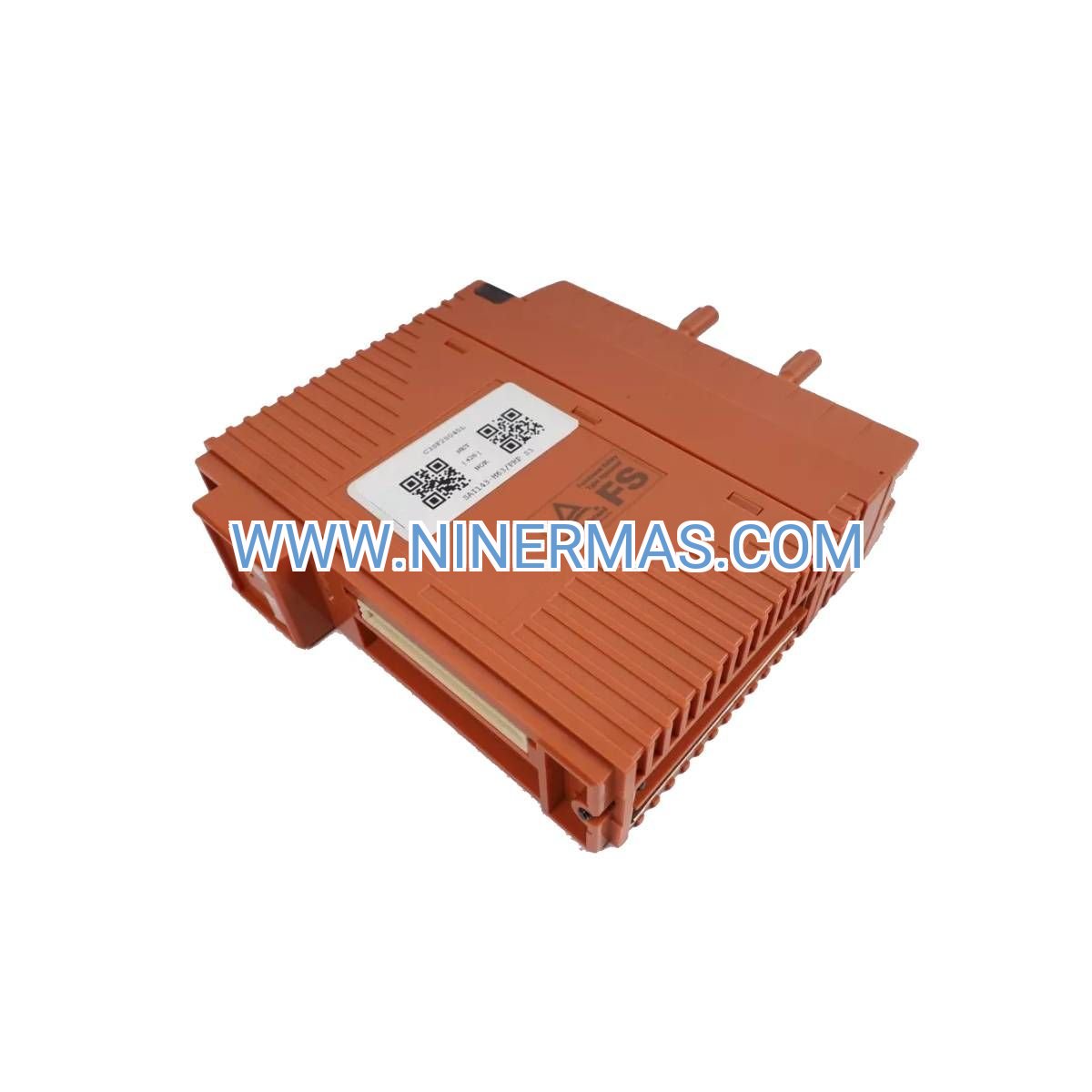
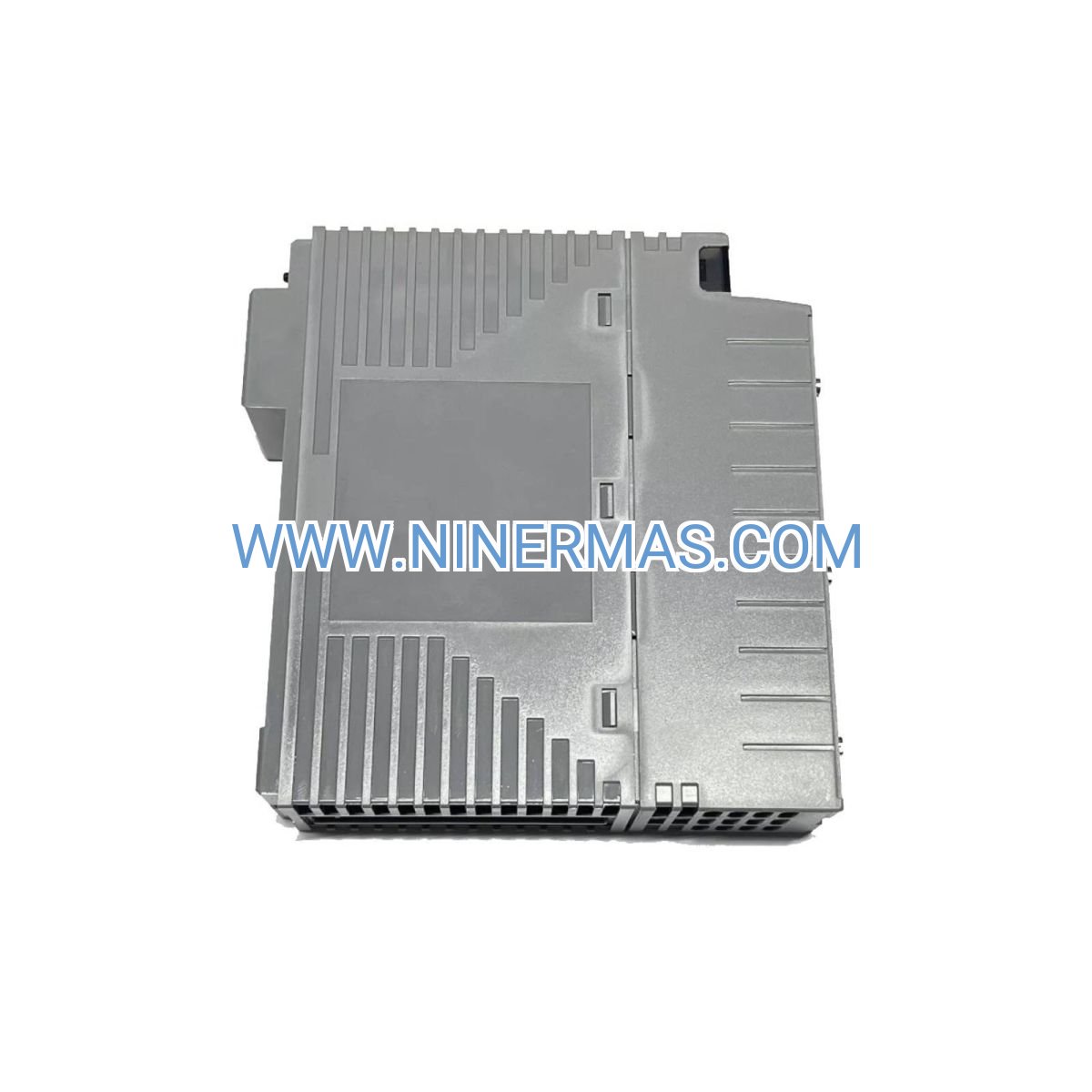
SPFCS01 Frequency Counter Module (Industrial-Grade MPU Signal Processor)
The SPFCS01 represents ABB's specialized solution for converting magnetic pickup sensor signals into actionable frequency data within demanding industrial environments. This S800 I/O-compatible module transforms raw MPU pulses into precise digital measurements spanning 3 to 12.5 KHz, enabling real-time rotational speed tracking for turbines, compressors, motors, and conveyor systems where operational reliability depends on accurate frequency monitoring.
Engineered for process industries requiring continuous uptime, the SPFCS01 addresses the critical challenge of translating mechanical motion into control system intelligence. Target users include instrumentation engineers managing turbomachinery installations, automation specialists designing anti-surge protection schemes, and maintenance teams responsible for predictive monitoring programs across oil & gas, power generation, and heavy manufacturing sectors.
Key advantages include factory-verified ±0.1% measurement precision eliminating field calibration overhead, integrated signal conditioning removing external amplifier requirements, and hot-swap capability enabling component replacement without process interruption—delivering measurable reductions in commissioning time, hardware costs, and unplanned downtime incidents.
Core Capabilities & Business Impact
→ Wide-Spectrum Frequency Capture (3-12.5 KHz)
Accommodates diverse sensor configurations from low-speed gearboxes to high-velocity turbine applications, eliminating the need for multiple module types and reducing spare parts inventory complexity.
→ Direct MPU Interface with Built-In Conditioning
Native magnetic pickup compatibility removes signal amplifier stages, cutting installation costs by 30-40% while improving system reliability through reduced component count and wiring complexity.
→ S800 I/O Ecosystem Integration
Seamless connectivity with AC 800M controllers via PROFIBUS DP and Modbus RTU protocols enables plug-and-play deployment within existing ABB automation architectures, accelerating project timelines by 2-3 weeks.
→ Extended Environmental Tolerance (-40°C to +70°C)
Operates reliably in extreme temperature zones typical of outdoor installations, arctic facilities, and high-heat process areas without auxiliary cooling or heating systems, reducing HVAC infrastructure expenses.
→ Continuous Self-Diagnostics with Fault Alerting
Autonomous detection of sensor disconnection, signal degradation, and out-of-range conditions triggers immediate operator notifications, preventing equipment damage and enabling proactive maintenance scheduling that cuts emergency repair costs by up to 60%.
✓ Hot-Swappable Architecture for Zero-Downtime Servicing
Field-replaceable design allows technicians to exchange modules during live operation, preserving production continuity in 24/7 processes where shutdown windows cost $50,000-$200,000 per hour in lost output.
Industry-Specific Deployment Scenarios
Steam Turbine Overspeed Protection (Power Generation)
Monitors turbine shaft RPM through gear tooth MPU sensors, feeding frequency data to emergency trip systems that prevent catastrophic overspeed events. Addresses the critical safety requirement of sub-100ms response times mandated by NFPA 85 and IEC 61511 standards, while providing continuous speed trending for performance optimization and bearing wear analysis.
Centrifugal Compressor Anti-Surge Control (Oil & Gas)
Tracks compressor speed as a key variable in surge detection algorithms, enabling real-time adjustment of recycle valves to maintain stable operation across varying process loads. Solves the operational challenge of protecting $2M+ compression assets from surge-induced mechanical damage while maximizing throughput efficiency—typical installations report 15-25% improvement in operating range flexibility.
Variable Frequency Drive (VFD) Feedback Verification (Manufacturing)
Provides independent speed confirmation for AC motors controlled by VFDs, detecting slip conditions and drive faults that could compromise product quality in precision processes like web handling, extrusion, and CNC machining. Delivers value through early fault detection that prevents scrap generation and unplanned line stoppages averaging $8,000-$15,000 per incident.
Conveyor Synchronization Networks (Material Handling)
Measures individual conveyor speeds within multi-belt systems, supplying data to master controllers that maintain precise speed ratios preventing material accumulation or gaps. Addresses the pain point of product damage and throughput bottlenecks in packaging lines, distribution centers, and mining operations—users report 20-30% reduction in jam-related downtime.
Generator Frequency Monitoring (Utility & Co-Generation)
Captures generator output frequency for grid synchronization verification and load-sharing calculations in parallel generation configurations. Solves compliance requirements for IEEE 1547 interconnection standards while enabling automatic load transfer schemes that improve power quality and reduce demand charges by 10-18% in peak-shaving applications.
Technical Parameters & Selection Criteria
| Parameter | Specification | Selection Guidance |
|---|---|---|
| Input Signal Type | Magnetic Pickup (MPU) | Verify sensor output is passive magnetic type, not Hall-effect or proximity switch |
| Frequency Measurement Range | 3 KHz - 12.5 KHz | Calculate expected frequency: (RPM × gear teeth) ÷ 60; ensure result falls within range |
| Measurement Accuracy | ±0.1% of reading | Suitable for applications requiring <0.5% total loop accuracy |
| Operating Temperature | -40°C to +70°C | Confirm cabinet ambient stays within range; consider ventilation for >50°C environments |
| Power Supply | 24 VDC (via S800 backplane) | Verify S800 power module capacity supports additional module load (typically 2-3W) |
| Communication Protocol | PROFIBUS DP / Modbus RTU | Match to existing controller network; PROFIBUS for AC 800M, Modbus for third-party PLCs |
| Mounting Method | S800 I/O rail (35mm DIN compatible) | Allocate 12.5mm width in cabinet layout; position near MPU cable entry to minimize wire runs |
| Environmental Protection | IP20 (enclosure-dependent) | Install in NEMA 12 or IP54+ cabinet for dusty/wet locations |
Selection Workflow: (1) Identify target equipment speed range and sensor tooth count to calculate frequency output, (2) Confirm frequency falls within 3-12.5 KHz window—if below 3 KHz, consider SPFEC12 low-frequency variant, (3) Verify compatibility with existing S800 I/O rack and controller communication protocol, (4) Assess cabinet environmental conditions against -40°C to +70°C operating envelope, (5) Plan cable routing to minimize MPU signal cable length (<50m recommended) and avoid high-voltage power cable proximity.
Advanced Integration Features
Dual-Channel Redundancy Support: Deploy paired SPFCS01 modules monitoring the same MPU sensor for 1oo2 (one-out-of-two) voting logic in SIL 2-rated safety instrumented systems, meeting IEC 61508 requirements for critical overspeed protection without requiring certified safety modules.
Analog Output Scaling: Configure frequency-to-analog conversion within AC 800M controller logic to drive legacy chart recorders or 4-20mA indicator panels, preserving existing operator interfaces during DCS migration projects.
Trend Data Logging: Leverage ABB's 800xA system integration to archive frequency measurements at 1-second intervals, building historical databases for vibration analysis correlation, bearing life prediction models, and energy efficiency benchmarking programs.
Remote Diagnostics via Ethernet/IP: Access module status and configuration parameters through plant-wide industrial Ethernet networks when paired with S800 communication modules (CI854A/CI856), enabling centralized troubleshooting from control room workstations and reducing field service dispatch frequency by 40-50%.
Delivery Timeline & Support Infrastructure
Standard Lead Time: 3-5 business days for in-stock units shipping from regional distribution centers; 4-6 weeks for factory-direct orders during high-demand periods (typically Q4 capital project season).
Custom Configuration Services: Factory pre-programming available for specific frequency ranges, alarm setpoints, and communication parameters—add 2-3 weeks to standard delivery but eliminates on-site commissioning time, particularly valuable for remote installations with limited technical support.
Warranty Coverage: 24-month manufacturer warranty covering defects in materials and workmanship; extended 60-month coverage available through ABB Service Agreements including advance replacement and annual health checks.
Technical Support Access: Tier 1 phone/email support (8AM-6PM local time, <4-hour response), Tier 2 application engineering consultation (scheduled sessions for complex integration questions), and on-site commissioning assistance available through ABB Authorized System Integrators.
Documentation Package: Includes installation manual with wiring diagrams, configuration software (Control Builder M integration libraries), dimensional drawings for panel layout, and sample ladder logic for common applications—all materials provided in PDF format with lifetime download access via ABB Library portal.
Frequently Asked Questions
Q: What cable specifications are required for magnetic pickup sensor connections to the SPFCS01 module?
A: Use twisted-pair shielded cable (Belden 8761 or equivalent) with 18-22 AWG conductors, maximum 50-meter length to preserve signal integrity. Shield must be grounded at module end only (not at sensor) to prevent ground loops. For runs exceeding 50m, consider installing an MPU signal amplifier at the sensor location.
Q: Can the SPFCS01 handle frequency measurements below 3 KHz or above 12.5 KHz for specialized applications?
A: The module's measurement range is fixed at 3-12.5 KHz; signals outside this window will trigger out-of-range faults. For low-speed applications (0.1-3 KHz), specify ABB's SPFEC12 frequency converter module. High-frequency requirements (>12.5 KHz) may require custom signal conditioning or alternative measurement technologies—consult ABB application engineering for recommendations.
Q: How much energy efficiency improvement can be achieved through precise speed monitoring with the SPFCS01 in variable-speed drive systems?
A: Accurate speed feedback enables closed-loop VFD control that maintains optimal operating points, typically reducing energy consumption by 8-15% compared to open-loop operation in fan and pump applications. Actual savings depend on load profile variability—systems with frequent speed changes (batch processes, demand-responsive HVAC) see higher benefits than constant-speed applications.
Q: What are the physical installation requirements and panel space allocation for integrating SPFCS01 into existing S800 I/O racks?
A: Module occupies one standard S800 slot (12.5mm width), mounts on 35mm DIN rail with snap-in retention clips requiring no tools. Minimum clearances: 50mm above/below for ventilation, 25mm front access for status LED visibility and terminal access. Typical installation time is 15-20 minutes including wiring and configuration upload.
Q: Does the SPFCS01 support remote monitoring and diagnostics for predictive maintenance programs?
A: Yes—when integrated with AC 800M controllers and 800xA DCS, the module exposes diagnostic data including signal strength, frequency trend history, and fault event logs accessible via Ethernet/IP networks. This enables condition-based maintenance strategies where frequency pattern changes trigger work orders before failures occur, reducing unplanned downtime by 35-50% in typical deployments.
Q: Are there specific safety certifications or compliance standards that the SPFCS01 meets for use in hazardous area installations?
A: The module carries CE marking for EMC and Low Voltage Directive compliance, suitable for general industrial use. For hazardous area installations (Class I Div 2, ATEX Zone 2), the module must be installed in appropriately rated enclosures (purged/pressurized or explosion-proof cabinets). The SPFCS01 itself is not intrinsically safe rated—for Zone 0/1 or Div 1 applications, use ABB's TB8x series barriers with remote I/O architecture.
Take the Next Step
Ready to enhance your turbomachinery monitoring or motor control precision? Contact our application specialists for a no-obligation technical consultation. We'll review your specific frequency measurement requirements, recommend optimal sensor pairings, and provide detailed integration guidance for your existing ABB or third-party control systems.
Request a formal quotation including volume pricing, delivery timelines, and commissioning support options. Our team responds to all inquiries within 4 business hours with preliminary budgets and technical feasibility assessments.
© 2026 NINERMAS COMPANY LIMITED. All rights reserved.
Original Source: https://ninermas.com
Contact: sale@ninermas.com | +0086 187 5021 5667
Related products

Contact Info
-
Address:22 / F, South Wo Hang building, 148 Wing Lok Street, Sheung Wan, Western District, Hong Kong
-
Phone:+8618750215667
-
Email: