


Description
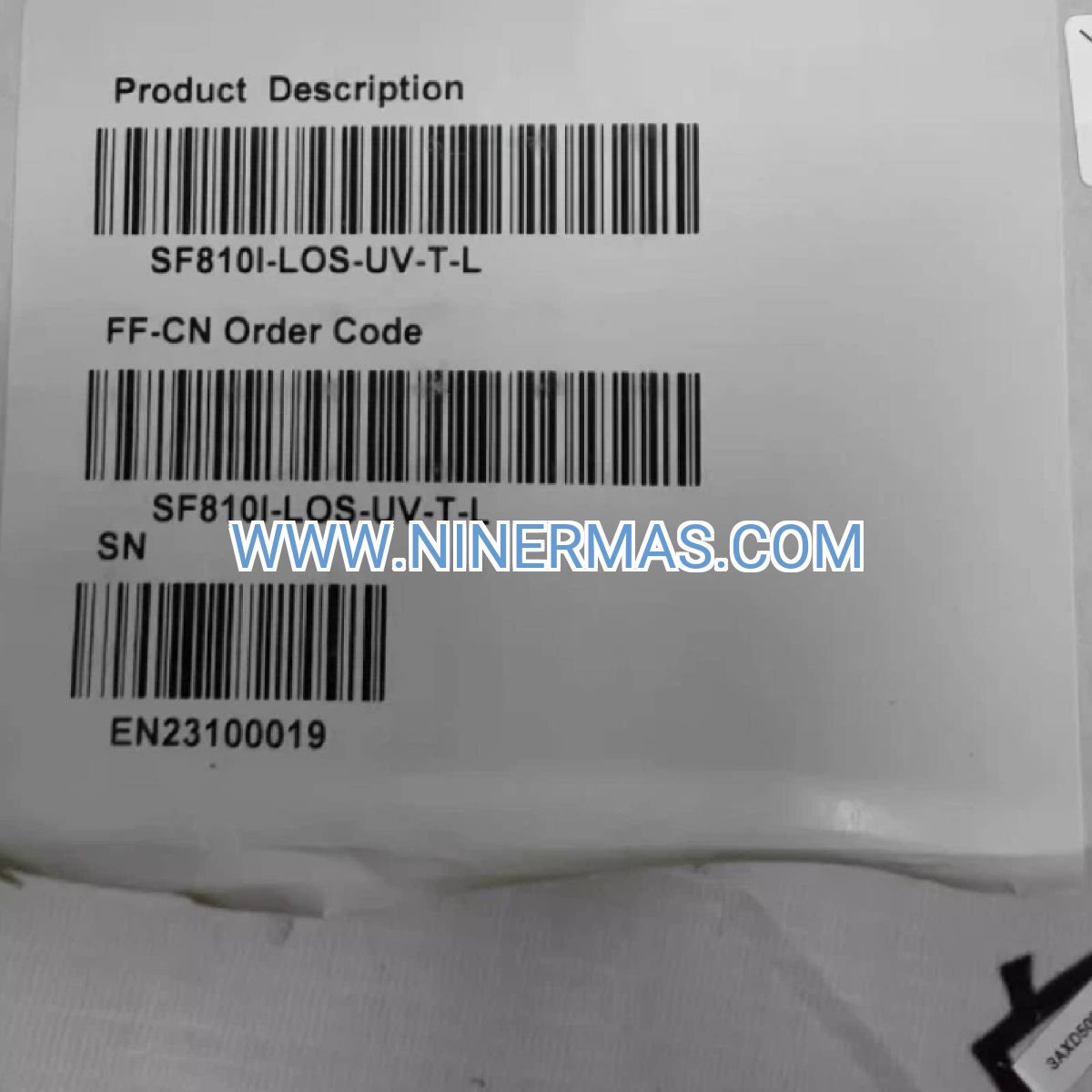
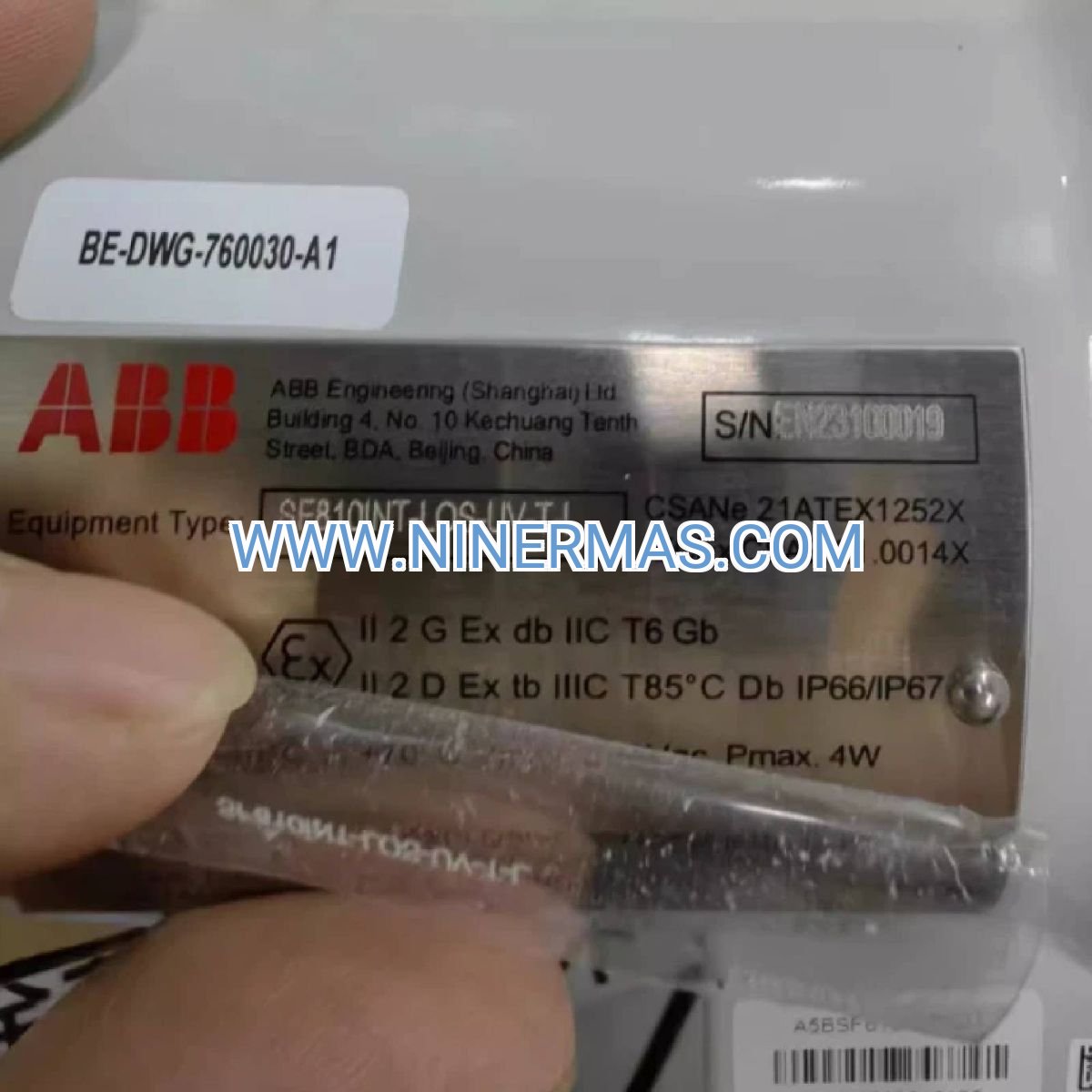
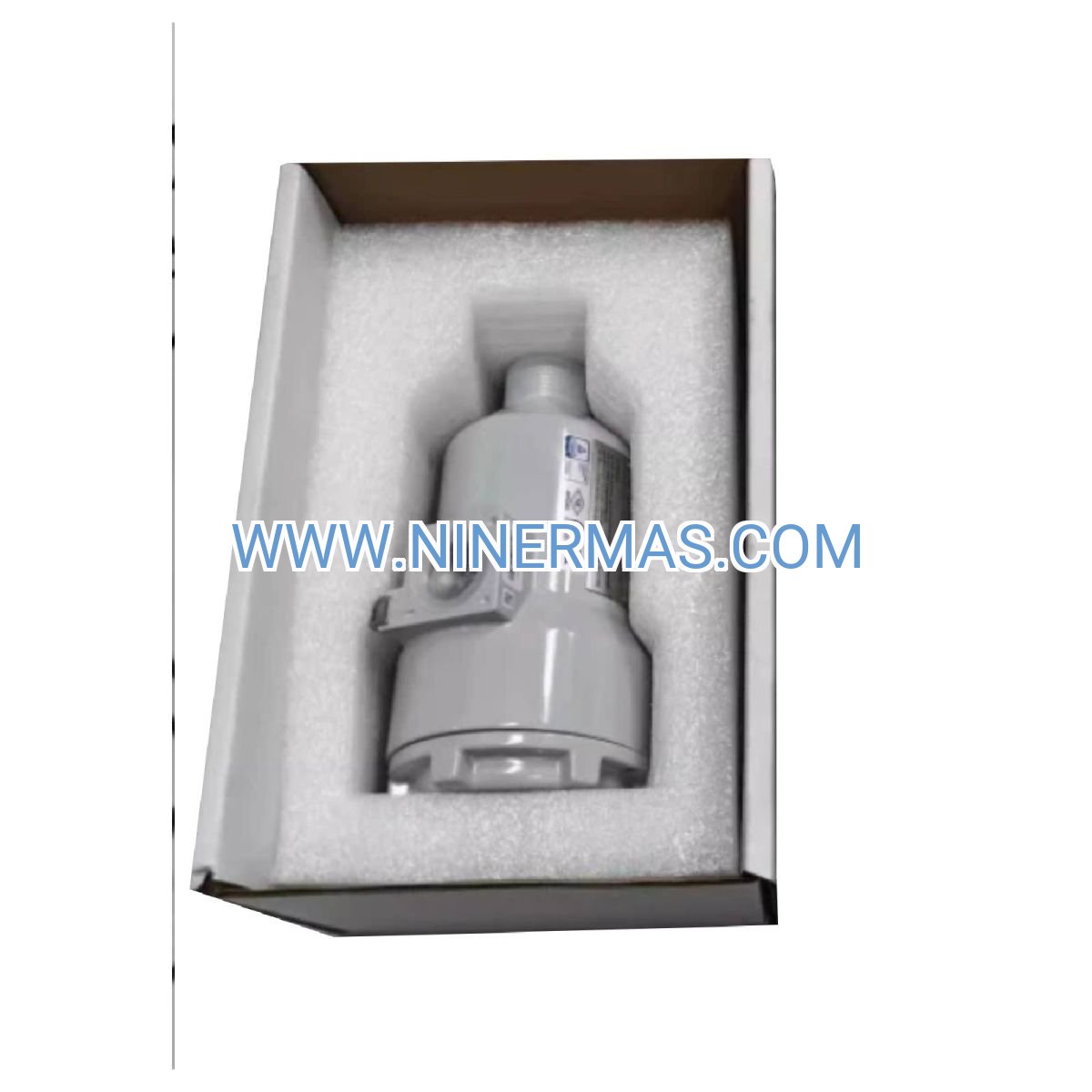
ABB SF810INT-LOS-UV-T-L Uvisor Flame Scanner (Industrial-Grade Multi-Fuel Detection)
The ABB SF810INT-LOS-UV-T-L Uvisor flame scanner delivers mission-critical flame monitoring for utility boilers, industrial furnaces, and process heaters operating on natural gas, fuel oil, or pulverized coal. Built around a solid-state UV photodiode sensor with intelligent signal processing, this integrated line-of-sight scanner provides fail-safe flame detection with adjustable response times from 0.2 to 4 seconds, ensuring both operational safety and combustion efficiency in demanding power generation and heavy industrial environments.
Designed for direct windbox installation, the SF810INT-LOS-UV-T-L combines ATEX Zone 1/21 explosion protection with dual redundant RS-485 communication (Profibus DP-V1 or Modbus), making it the preferred choice for SIL2-compliant burner management systems in coal-fired power plants, combined-cycle HRSGs, refinery heaters, and waste-to-energy facilities. Its maintenance-free SiC photodiode eliminates UV tube replacement costs while delivering reliable flame discrimination even in high-particulate environments.
Whether you're upgrading legacy flame detection systems or designing new combustion control architectures, the SF810INT scanner integrates seamlessly with ABB System 800xA and third-party DCS platforms, providing real-time flame quality analytics through 4-20 mA output and comprehensive diagnostics via dual communication channels. Contact our combustion safety specialists to configure the optimal scanner solution for your burner application.
Core Capabilities & Industrial Advantages
The SF810INT-LOS-UV-T-L addresses critical flame monitoring challenges across multiple fuel types and burner configurations:
- ✓ Universal Fuel Compatibility: Single scanner platform handles natural gas, light/heavy fuel oil, and pulverized coal flames without hardware changes. Automatic fuel recognition algorithms adapt sensitivity and frequency filtering to match combustion characteristics, reducing spare parts inventory and simplifying multi-fuel plant operations.
- → Adaptive Flame Failure Response: Field-adjustable FFRT from 0.2 to 4 seconds balances safety requirements with operational stability. Fast 0.2s response protects turbine components during rapid load changes in HRSG duct burners, while 2-4s settings prevent nuisance trips in coal-fired units with inherent flame pulsation.
- ✓ Dual Redundant Communication: Two independent RS-485 channels (Profibus DP-V1 up to 12 Mbit/s or Modbus up to 115.2 kbit/s) eliminate single-point communication failures. Simultaneous connection to primary DCS and backup burner management system ensures continuous flame status visibility even during network maintenance or controller failover.
- → Continuous Self-Diagnostics: Built-in autotune and fail-to-safe validation routines verify sensor integrity, optical path cleanliness, and signal processing accuracy every scan cycle. Predictive maintenance alerts via fault relay and communication channels reduce unplanned downtime by identifying lens fouling or purge air degradation before flame detection capability is compromised.
- ✓ Real-Time Flame Quality Analytics: Isolated 4-20 mA output provides continuous flame intensity and frequency data for combustion optimization. Trending flame signal strength enables predictive burner tuning, NOx reduction, and fuel efficiency improvements by correlating flame characteristics with emissions and heat rate performance.
- → Hazardous Area Certification: ATEX II 2GD Ex d IIC T6 approval permits installation in Zone 1 gas and Zone 21 dust atmospheres without additional enclosures. Flameproof construction withstands internal ignition events, making it suitable for coal mill areas, fuel oil pump rooms, and other potentially explosive locations near combustion equipment.
Target Applications & Problem-Solving Capabilities
1. Coal-Fired Utility Boilers (300-1000 MW)
Challenge: Wall-fired and tangential-fired boilers require reliable flame detection through heavy fly ash concentrations during startup, low-load operation, and fuel quality variations. False trips during mill changes or burner light-off sequences cause costly unit derates and grid stability issues.
SF810INT Solution: Line-of-sight UV sensor with 115 l/min air purge maintains clear optical path through particulate loading up to 50 g/Nm³. Intelligent frequency analysis discriminates between coal flame radiation (190-280 nm UV spectrum) and hot refractory glow, achieving >99.5% flame detection reliability with <0.1% false trip rate across load ranges from 30-100% MCR.
2. Combined-Cycle HRSG Duct Burners
Challenge: Supplementary firing systems in heat recovery steam generators demand ultra-fast flame failure detection (<0.5s) to prevent unburned fuel accumulation in turbine exhaust gas stream. Delayed response can cause catastrophic turbine blade damage from combustion instability or flame-out events during rapid load ramps.
SF810INT Solution: Configurable 0.2-second FFRT with dual relay outputs (flame + fault) enables immediate fuel valve closure upon flame loss. Analog output integration with gas turbine control system provides coordinated duct burner modulation during load transients, maintaining steam temperature ±5°C while preventing turbine over-temperature trips.
3. Refinery Process Heaters & Reformer Furnaces
Challenge: Crude heaters, catalytic reformers, and ethylene crackers operate 24/7 with minimal maintenance windows. Flame scanner failures require emergency shutdowns that disrupt downstream processing units, causing production losses exceeding $100K per hour in large refineries.
SF810INT Solution: Maintenance-free solid-state UV sensor eliminates scheduled tube replacements (typical UV tube life: 8,000-12,000 hours vs. SF810INT photodiode life: >100,000 hours). Dual communication channels enable online diagnostics and sensitivity adjustment without process interruption, extending mean time between maintenance (MTBM) from 18 months to >5 years.
4. Waste-to-Energy Incinerators
Challenge: Municipal solid waste combustion generates extreme dust loading (100-500 g/Nm³) and corrosive flue gas that rapidly fouls optical sensors. Variable waste composition causes flame instability and frequent scanner sensitivity adjustments to prevent false trips or missed flame-outs.
SF810INT Solution: IP66/IP67 sealed construction with high-flow air purge (adjustable 115-200 l/min) maintains lens cleanliness in harsh environments. Autotune function automatically compensates for gradual optical degradation, extending cleaning intervals from weekly to monthly while maintaining SIL2 safety integrity level throughout service life.
5. Biomass & Alternative Fuel Boilers
Challenge: Wood chip, agricultural residue, and refuse-derived fuel (RDF) boilers experience wide variations in flame characteristics during fuel changeovers. Scanners optimized for single fuel types generate excessive false trips or fail to detect flame loss when switching between biomass grades or co-firing with coal/gas.
SF810INT Solution: Multi-fuel algorithm library stores optimized detection parameters for up to 8 fuel types. Operator-selectable fuel profiles via digital inputs or communication commands enable instant scanner reconfiguration during fuel transitions, maintaining <1% false trip rate across biomass moisture content ranges from 15-50% and heating values from 8-20 MJ/kg.
Technical Parameters & Selection Criteria
| Specification Category | Parameter | Value/Range |
|---|---|---|
| Identification | Manufacturer Part Number | SF810INT-LOS-UV-T-L |
| Product Family | Uvisor SF810i Integrated Flame Scanner | |
| Configuration Type | Line-of-Sight (LOS) UV with Terminal Block | |
| Optical Sensor | Sensor Technology | Silicon Carbide (SiC) UV Photodiode |
| Spectral Response Peak | 280 nm (190-400 nm range) | |
| Viewing Angle | 15° cone (±7.5° from centerline) | |
| Optical Path Length | 0.5-3.0 meters (windbox to flame root) | |
| Fuel Compatibility | Primary Fuels | Natural gas, propane, fuel oil #2/#6, pulverized coal |
| Alternative Fuels | Biomass, RDF, process gases (with validation) | |
| Multi-Fuel Operation | Automatic fuel recognition (no manual switching) | |
| Safety Performance | Flame Failure Response Time | 0.2 / 0.5 / 1.0 / 2.0 / 4.0 seconds (selectable) |
| False Trip Rate | <0.1% (properly tuned installation) | |
| Safety Integrity Level | SIL2 capable (per IEC 61508) | |
| Communication | Protocol Options | Profibus DP-V1 OR Modbus RTU (field-selectable) |
| Profibus Speed | 9.6 kbit/s to 12 Mbit/s | |
| Modbus Speed | 9.6 to 115.2 kbit/s | |
| Communication Channels | 2× independent RS-485 (dual redundant) | |
| Diagnostic Data | Flame signal strength, frequency, fault codes, runtime hours | |
| I/O Signals | Relay Outputs | 2× fail-safe SPST-NO (flame + fault), 240 VAC/1.5A or 30 VDC/300 mA |
| Analog Output | 4-20 mA isolated (flame intensity), ±5% accuracy | |
| Digital Inputs | 2× isolated 24 VDC (purge air confirm, fuel valve status) | |
| Status Indication | Multi-color LED (green=normal, red=fault, amber=warning) | |
| Power Supply | Nominal Voltage | 24 VDC |
| Operating Range | 18-29 VDC (-25% / +20%) | |
| Power Consumption | 150 mA typical (3.6W), 4W maximum | |
| Inrush Current | 6A peak (10 ms duration) | |
| Air Purge | Minimum Flow Rate | 115 l/min (4.1 SCFM) |
| Recommended Pressure | 20-50 mm H2O (0.3-0.7 psi) | |
| Air Quality | Instrument air, -40°C dewpoint, <0.1 µm filtration | |
| Environmental | Operating Temperature | -40°C to +70°C |
| Storage Temperature | -40°C to +85°C | |
| Humidity | 5-95% RH non-condensing | |
| Vibration Resistance | IEC 60068-2-6: 10-150 Hz, 2g acceleration | |
| Physical | Dimensions (Ø × L) | 95 mm × 170-180 mm |
| Weight | 1.3 kg | |
| Enclosure Rating | IP66 / IP67 (dust-tight, temporary immersion) | |
| Certifications | Explosion Protection | ATEX II 2GD Ex d IIC T6 Gb/Db (Zone 1/21) |
| Safety Standards | EN 61010-1, EN 298, IEC 61508 (SIL2) | |
| EMC Compliance | IEC 61000-6-2 (immunity), IEC 61000-6-4 (emissions) | |
| Quality System | ISO 9001:2015 certified manufacturing | |
| Logistics | Country of Origin | Sweden |
| HS Code | 9031.80.90 (Measuring/checking instruments) |
Selection Guide: Choosing the Right Uvisor Configuration
When to Select SF810INT-LOS-UV-T-L:
- Direct windbox mounting with clear line-of-sight to flame root (0.5-3m optical path)
- Multi-fuel applications requiring gas, oil, and coal compatibility
- Ambient temperature at scanner location ≤70°C (use water-cooled version for higher temps)
- Profibus DP-V1 or Modbus communication required for DCS integration
- ATEX Zone 1/21 certification needed for hazardous area installation
Alternative Configurations:
- SF810INT-FOC-UV-T-L: Fiber optic version for remote mounting (scanner head separated from electronics by up to 30m fiber cable) - use when ambient temperature exceeds 70°C or space constraints prevent direct mounting
- SF810-LOS-IR-T-C-W: Infrared sensor for oil/gas-only applications with water cooling - preferred for refinery heaters with furnace temperatures >1200°C
- SF810INT-LOS-UV-T-C: Compact version without terminal block - use with FAU800 flame analysis unit for centralized multi-scanner systems
Advanced Integration & Customization Options
System 800xA Native Integration
The SF810INT scanner includes pre-configured function blocks for ABB System 800xA DCS, enabling drag-and-drop integration with combustion control strategies. Native Profibus DP-V1 support provides acyclic data exchange for online parameter adjustment, diagnostic retrieval, and firmware updates without interrupting cyclic flame status communication. Aspect objects deliver graphical flame signal trending, alarm management, and maintenance scheduling within the 800xA operator interface.
Third-Party DCS Compatibility
Modbus RTU protocol support ensures compatibility with Emerson DeltaV, Honeywell Experion, Siemens PCS7, and Yokogawa Centum systems. Standard Modbus register mapping provides access to 40+ diagnostic parameters including flame frequency (Hz), signal amplitude (%), lens contamination index, and cumulative operating hours. Generic Modbus drivers eliminate custom programming requirements for most industrial control platforms.
Predictive Maintenance Analytics
Continuous monitoring of flame signal quality, purge air pressure, and optical transmission enables condition-based maintenance scheduling. Trending algorithms detect gradual lens fouling (signal degradation >2% per week), purge air filter clogging (pressure drop >10%), and sensor aging (frequency shift >5 Hz) before flame detection capability is compromised. Integration with CMMS systems via OPC-UA or Modbus triggers automated work orders when maintenance thresholds are exceeded.
Cybersecurity Features
Password-protected configuration access prevents unauthorized parameter changes that could compromise safety functions. Audit logging records all configuration modifications with timestamp and user identification for compliance with NERC CIP, IEC 62443, and other industrial cybersecurity standards. Read-only Modbus registers can be isolated on separate RS-485 channel to provide flame status visibility to non-critical systems without exposing write access.
Custom Fuel Profiles
Factory or field programming of application-specific detection algorithms optimizes performance for non-standard fuels including process waste gases, syngas, hydrogen blends, and alternative biomass feedstocks. Custom profiles adjust UV spectral filtering, frequency analysis windows, and sensitivity curves to match unique combustion characteristics, achieving equivalent detection reliability to standard fuels after validation testing.
Delivery Timeline & Service Commitments
Standard Lead Times
- Stock Configuration (SF810INT-LOS-UV-T-L): 6-8 weeks from order confirmation to shipment
- Custom Fuel Profiles: Add 2-3 weeks for application engineering and factory validation
- Expedited Delivery: 3-4 weeks available for emergency replacements (subject to surcharge and availability)
- Bulk Orders (>10 units): Contact for project-specific delivery schedules
Warranty & Support
- Standard Warranty: 24 months from shipment date covering materials and workmanship defects
- Extended Warranty: 60-month coverage available for critical applications (quote upon request)
- Technical Support: Lifetime phone/email support for installation, commissioning, and troubleshooting
- Firmware Updates: Free software upgrades for feature enhancements and bug fixes during warranty period
- Calibration Services: Factory recalibration and certification available (typical turnaround: 2 weeks)
Documentation Package
Each SF810INT scanner ships with comprehensive technical documentation including:
- Installation manual with mounting dimensions and wiring diagrams
- Commissioning guide with step-by-step startup procedures
- Profibus/Modbus communication protocol specification
- Troubleshooting flowcharts and fault code reference
- Factory calibration certificate with test data
- ATEX certificate of conformity and declaration of conformity
- Spare parts list with recommended inventory for 5-year operation
Training & Commissioning Services
- Remote Commissioning Support: Video-assisted startup guidance included with purchase
- On-Site Commissioning: Factory-trained technician deployment available (travel costs apply)
- Operator Training: 4-hour webinar covering operation, maintenance, and troubleshooting
- Maintenance Training: 8-hour hands-on workshop for plant technicians (on-site or at regional training center)
Frequently Asked Questions
How does the SF810INT scanner differentiate between actual flame and hot refractory glow in coal-fired boilers?
The SF810INT employs dual-discrimination technology combining spectral filtering and frequency analysis. The UV photodiode's 280 nm peak response preferentially detects flame radiation while rejecting longer-wavelength refractory glow. Simultaneously, digital signal processing analyzes flame flicker frequency (typically 5-150 Hz for coal flames vs. <2 Hz for static hot surfaces). Adjustable sensitivity and frequency thresholds enable tuning for specific furnace conditions, achieving >99% flame discrimination accuracy even with furnace temperatures exceeding 1400°C.
What purge air quality and flow rate are required to maintain reliable operation in high-dust environments?
Minimum purge air specifications are 115 l/min (4.1 SCFM) at 20 mm H2O (0.3 psi) pressure with instrument-grade quality: -40°C pressure dewpoint and <0.1 µm particulate filtration. For severe dust loading (>50 g/Nm³ as in pulverized coal or waste incineration), increase flow to 150-200 l/min and verify purge air pressure switch confirms adequate flow before permitting burner ignition. Monthly inspection of purge air filter differential pressure prevents gradual flow degradation that can compromise lens cleanliness.
Can the SF810INT scanner be retrofitted into existing burner management systems using relay-based flame detection?
Yes, the SF810INT provides backward-compatible relay outputs (flame + fault) that directly replace legacy UV tube scanners or flame rods without BMS logic modifications. The fail-safe relay design (de-energized = no flame) matches conventional scanner behavior. Additionally, the 4-20 mA analog output and Profibus/Modbus communication enable phased migration to advanced diagnostics and predictive maintenance without immediate DCS programming changes. Mounting flange dimensions are compatible with most standard windbox penetrations (DN80/3" pipe size).
What is the expected service life and maintenance interval for the solid-state UV sensor?
The SiC photodiode sensor has a rated lifetime exceeding 100,000 operating hours (11+ years of continuous operation) with no degradation in UV sensitivity, compared to 8,000-12,000 hours for traditional UV tubes. Routine maintenance consists of quarterly lens cleaning (5-minute procedure) and annual calibration verification. No sensor replacement is required during typical 20-30 year boiler service life. This eliminates recurring tube replacement costs ($500-800 per scanner every 12-18 months) and reduces maintenance-related forced outages by 60-80% compared to tube-based systems.
How is the scanner configured for different fuel types when switching between gas, oil, and coal operation?
The SF810INT features automatic fuel recognition that adapts detection parameters based on real-time flame characteristics without manual intervention. For applications requiring explicit fuel selection (e.g., co-firing with rapid fuel transitions), digital inputs can trigger pre-programmed fuel profiles. Alternatively, Profibus/Modbus commands from the DCS enable coordinated fuel switching with burner control logic. Each fuel profile stores optimized sensitivity, frequency filtering, and FFRT settings validated during commissioning, ensuring consistent detection performance across all operating modes.
What communication bandwidth and update rate does the Profibus DP-V1 interface provide for flame monitoring data?
At maximum Profibus speed (12 Mbit/s), the SF810INT delivers cyclic flame status updates every 10-20 milliseconds with <5 ms jitter, suitable for fast-response burner control loops. Acyclic data exchange provides access to extended diagnostics (flame frequency, signal amplitude, fault codes) with 100-500 ms update rates depending on DCS master configuration. Dual independent RS-485 channels enable simultaneous connection to primary DCS (Profibus) and backup safety PLC (Modbus) without communication conflicts or bandwidth sharing.
Secure Your Combustion Safety Infrastructure
The ABB SF810INT-LOS-UV-T-L Uvisor flame scanner represents proven technology protecting billions of dollars in power generation and industrial process assets worldwide. Whether you're upgrading aging flame detection systems, designing new burner management architectures, or seeking SIL2-compliant safety solutions for hazardous area installations, our combustion control specialists provide application-specific guidance to optimize scanner selection, mounting configuration, and system integration.
Next Steps:
- Request technical datasheet with detailed specifications and dimensional drawings
- Schedule consultation with combustion safety engineer to review your burner application
- Obtain formal quotation including scanner, mounting hardware, and commissioning support
- Arrange factory acceptance testing for custom fuel profile validation
Contact our industrial automation team: Email sale@ninermas.com or call +0086 187 5021 5667 to discuss your flame detection requirements. Expedited delivery available for emergency replacements and critical project deadlines.
Related products

Contact Info
-
Address:22 / F, South Wo Hang building, 148 Wing Lok Street, Sheung Wan, Western District, Hong Kong
-
Phone:+8618750215667
-
Email:
