Description
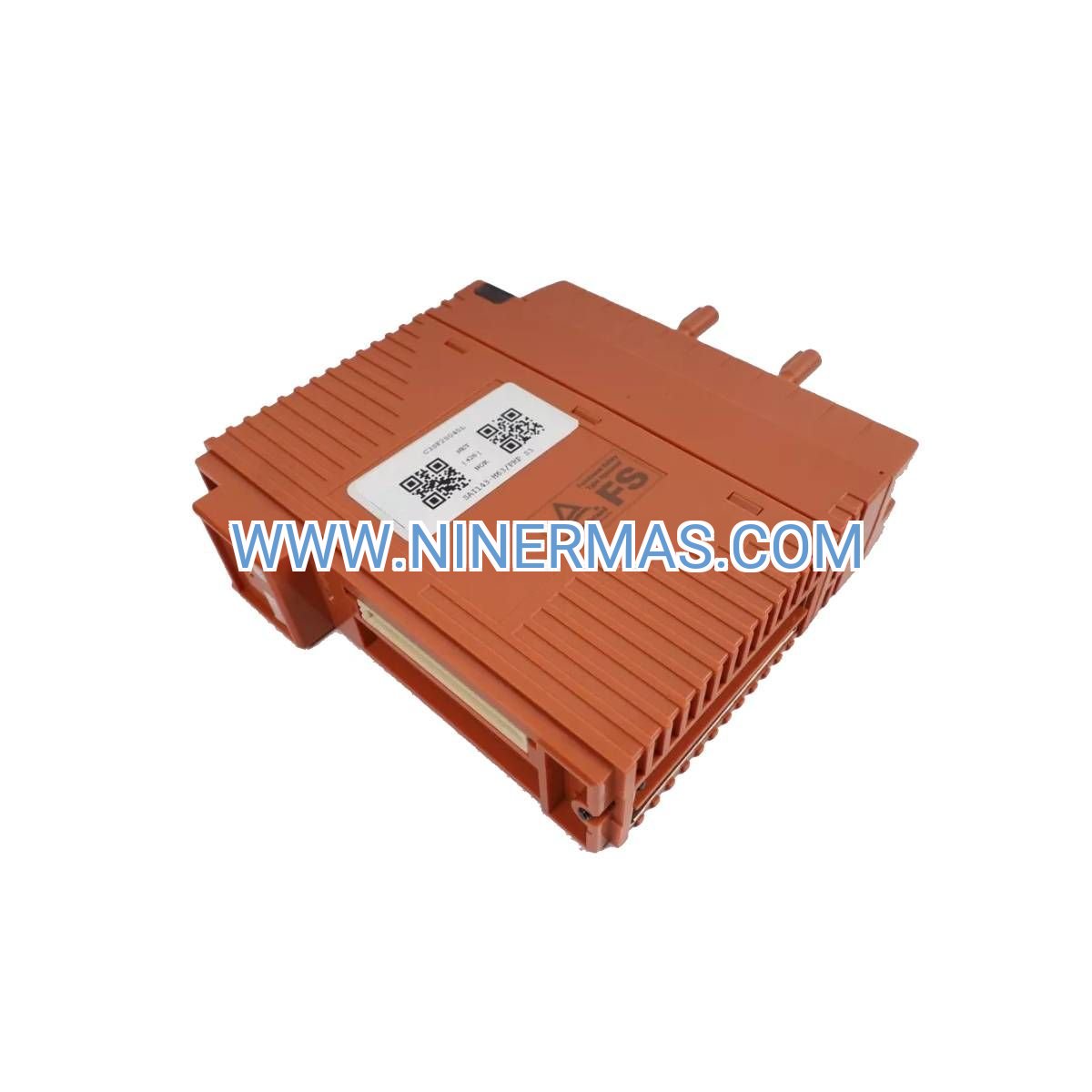
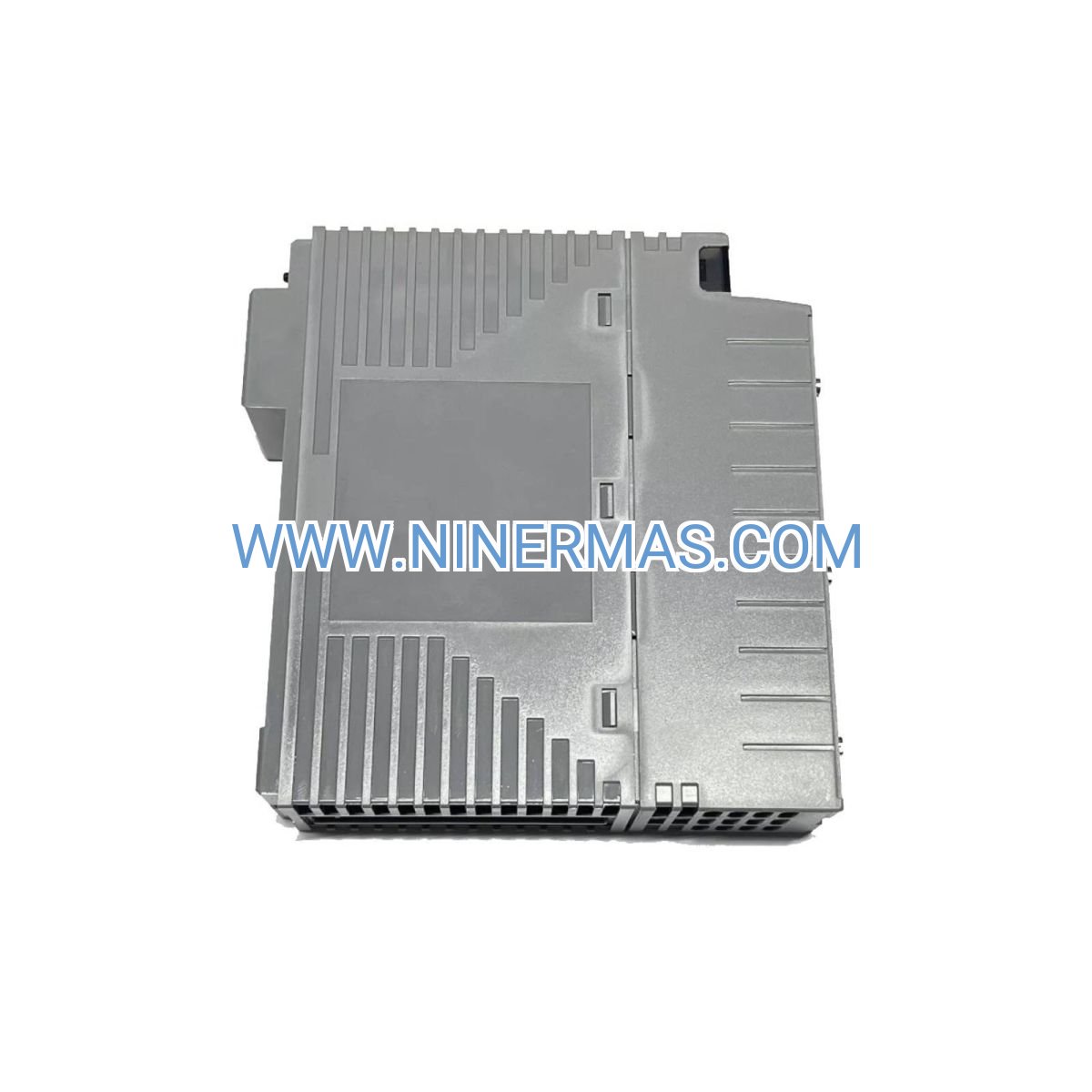
ABB SDCS-DSL-4 DCS-Link Interface Module (Industrial-Grade CAN Bus Solution)
The SDCS-DSL-4 is a high-performance DCS-Link communication interface engineered to establish reliable CAN bus connectivity between ABB DCS800 series DC drives and distributed control architectures. Designed for mission-critical industrial applications, this module facilitates synchronized multi-drive operation, advanced 12-pulse rectifier topologies, and centralized system diagnostics across manufacturing, mining, and process automation environments.
Built to withstand harsh industrial conditions, the SDCS-DSL-4 addresses the core challenge of coordinating multiple drive systems while maintaining deterministic communication timing. Whether you're managing paper mill tension control, metal rolling mill synchronization, or mining hoist dual-motor coordination, this interface delivers the precision and reliability your operation demands.
With proven compatibility across the DCS800 product family and compliance with international safety standards, the SDCS-DSL-4 represents a turnkey solution for engineers seeking to implement master-follower drive configurations, load-sharing topologies, or harmonic-optimized power distribution systems.
Core Features & Technical Advantages
✓ Native DCS-Link CAN Bus Protocol
Deterministic communication architecture ensures sub-millisecond response times for time-critical control loops, eliminating the latency issues common in Ethernet-based alternatives.
✓ DCS800 Series Integration
Plug-and-play compatibility with the complete DCS800 DC drive range reduces commissioning time by up to 40% compared to third-party communication solutions.
✓ 12-Pulse Configuration Support
Enables advanced rectifier topologies that reduce total harmonic distortion (THD) to below 5%, meeting stringent power quality requirements in sensitive industrial networks.
✓ Multi-Drive Synchronization Engine
Coordinates up to 16 drives on a single CAN bus segment with ±0.1% speed accuracy, critical for applications requiring precise tension or torque distribution.
✓ Industrial Environmental Rating
Operates reliably across -10°C to +50°C ambient temperatures with IP20 protection, suitable for factory floor installations without additional environmental enclosures.
✓ Dual Mounting Flexibility
Supports both DIN rail and panel mount configurations, adapting to existing control cabinet layouts without requiring custom mounting hardware.
Industry Application Scenarios
→ Paper & Pulp Manufacturing
In multi-section paper machines, the SDCS-DSL-4 synchronizes draw ratios between forming, press, and dryer sections. By maintaining precise speed relationships (typically ±0.05%), it prevents web breaks that cost $15,000-$50,000 per incident in lost production and material waste.
→ Metal Processing & Rolling Mills
Coordinates sequential rolling stands in hot strip mills where speed synchronization errors exceeding 0.2% cause surface defects. The module's deterministic communication ensures consistent material thickness and surface finish across production runs.
→ Mining Hoist Systems
Enables dual-motor hoist configurations where load imbalance exceeding 5% triggers mechanical stress and premature bearing failure. The SDCS-DSL-4's real-time torque balancing extends equipment lifespan by 30-50%.
→ Crane & Material Handling
Synchronizes bridge and trolley drives in overhead crane systems, eliminating the sway and positioning errors that reduce throughput in automated warehousing operations.
→ Test Stand & Dynamometer Applications
Provides the precise speed/torque coordination required for engine testing and product validation, where measurement accuracy directly impacts R&D cycle times.
Technical Parameters & Selection Guide
| Parameter | Specification |
|---|---|
| Communication Protocol | DCS-Link CAN bus (ISO 11898) |
| Baud Rate | 125 kbps (standard), configurable |
| Network Topology | Linear bus, up to 16 nodes |
| Cable Length (max) | 100 meters @ 125 kbps |
| Operating Temperature | -10°C to +50°C |
| Storage Temperature | -25°C to +70°C |
| Humidity Tolerance | 5-95% RH, non-condensing |
| Protection Class | IP20 |
| Mounting Options | DIN rail (35mm) / Panel mount |
| Power Supply | 24V DC ±10% (via drive backplane) |
| Power Consumption | < 5W typical |
| Certifications | CE, UL, cUL |
| MTBF | > 500,000 hours @ 40°C |
Selection Criteria: Choose the SDCS-DSL-4 when your application requires deterministic communication (< 5ms cycle time), you're implementing 12-pulse rectifier configurations for power quality compliance, or you need to coordinate more than 3 drives in a master-follower topology. For single-drive installations or applications tolerating > 20ms communication cycles, standard I/O interfaces may suffice.
Advanced Integration Capabilities
The SDCS-DSL-4 supports sophisticated control architectures beyond basic multi-drop communication. Engineers can implement cascaded speed control where a master drive's actual speed becomes the reference for follower drives, compensating for mechanical slip in belt-driven systems. The module's broadcast messaging capability allows simultaneous parameter updates across all network drives, reducing commissioning time for multi-zone production lines.
For Industry 4.0 implementations, the SDCS-DSL-4 integrates with ABB's DriveWindow software suite, enabling remote diagnostics, predictive maintenance analytics, and centralized parameter management. The module logs communication errors, node status changes, and performance metrics to internal memory, facilitating root-cause analysis during troubleshooting.
Custom protocol extensions support integration with third-party PLCs via gateway devices, allowing the DCS-Link network to function as a high-speed drive subnet within larger SCADA/MES architectures.
Delivery Timeline & Service Commitment
Standard Delivery: 3-5 business days for in-stock units (Asia-Pacific region)
Custom Configuration: 10-15 business days for pre-programmed or tested assemblies
Warranty Period: 12 months from delivery date, covering manufacturing defects
Technical Support: Email/phone support during business hours (GMT+8), 4-hour response SLA
Documentation Package: Installation manual, DCS-Link protocol specification, AutoCAD dimensional drawings, sample ladder logic
All units undergo factory acceptance testing including CAN bus signal integrity verification, temperature cycling, and protocol compliance validation before shipment.
Frequently Asked Questions
Q: How does the SDCS-DSL-4 interface with existing DCS800 drive control boards?
A: The module installs directly into the drive's communication slot (typically slot C or D depending on drive frame size). No external wiring is required between the SDCS-DSL-4 and the drive's main control board—all data exchange occurs via the internal backplane. You'll only need to connect the external CAN bus cable (shielded twisted pair) to the module's terminal block.
Q: What cable specifications are required for reliable DCS-Link communication?
A: Use shielded twisted pair cable with 120-ohm characteristic impedance (e.g., DeviceNet thick cable or equivalent). Cable cross-section should be minimum 0.34 mm² (22 AWG) for data pairs. Install 120-ohm termination resistors at both physical ends of the bus. Avoid running CAN bus cables parallel to high-voltage motor cables—maintain minimum 300mm separation or use separate cable trays.
Q: Can the SDCS-DSL-4 reduce energy consumption in multi-drive systems?
A: Indirectly, yes. By enabling precise load sharing between parallel drives, the module prevents the efficiency losses that occur when one drive operates at light load while another runs near capacity. In paper machine applications, customers report 3-7% energy savings after implementing coordinated section control versus independent drive operation. The 12-pulse configuration support also reduces reactive power consumption and associated utility penalties.
Q: What diagnostic capabilities does the module provide for troubleshooting communication issues?
A: The SDCS-DSL-4 features LED indicators for power status, CAN bus activity, and error conditions. Through the drive's control panel or DriveWindow software, you can access detailed diagnostics including: node address conflicts, bus-off events, message error counters, and individual node online/offline status. The module stores the last 50 communication errors with timestamps, invaluable for intermittent fault diagnosis.
Q: Is the SDCS-DSL-4 compatible with older DCS800 firmware versions?
A: The module requires DCS800 firmware version 5.2 or later for full functionality. Drives with earlier firmware can be field-upgraded—contact ABB service or our technical team for upgrade kit availability. Note that 12-pulse configuration features specifically require firmware 6.0+.
Q: How do I configure master-follower relationships between drives on the DCS-Link network?
A: Configuration is performed through the master drive's parameter menu (parameter group 50.xx for DCS-Link settings). You'll assign each drive a unique node address (1-16), designate one drive as the master (typically node 1), and configure follower drives to accept speed references from the master. The process takes approximately 15-20 minutes per drive for initial setup. Our technical documentation includes step-by-step configuration examples for common topologies.
Ready to Optimize Your Multi-Drive System?
Contact our industrial automation specialists to discuss your specific application requirements. We provide technical consultation on network topology design, cable routing recommendations, and integration with existing control systems. Request a detailed quotation or technical datasheet using the contact information below.
© 2026 NINERMAS COMPANY LIMITED. All rights reserved.
Original Source: https://ninermas.com
Contact: sale@ninermas.com | +0086 187 5021 5667
Related products

Contact Info
-
Address:22 / F, South Wo Hang building, 148 Wing Lok Street, Sheung Wan, Western District, Hong Kong
-
Phone:+8618750215667
-
Email: