


Description
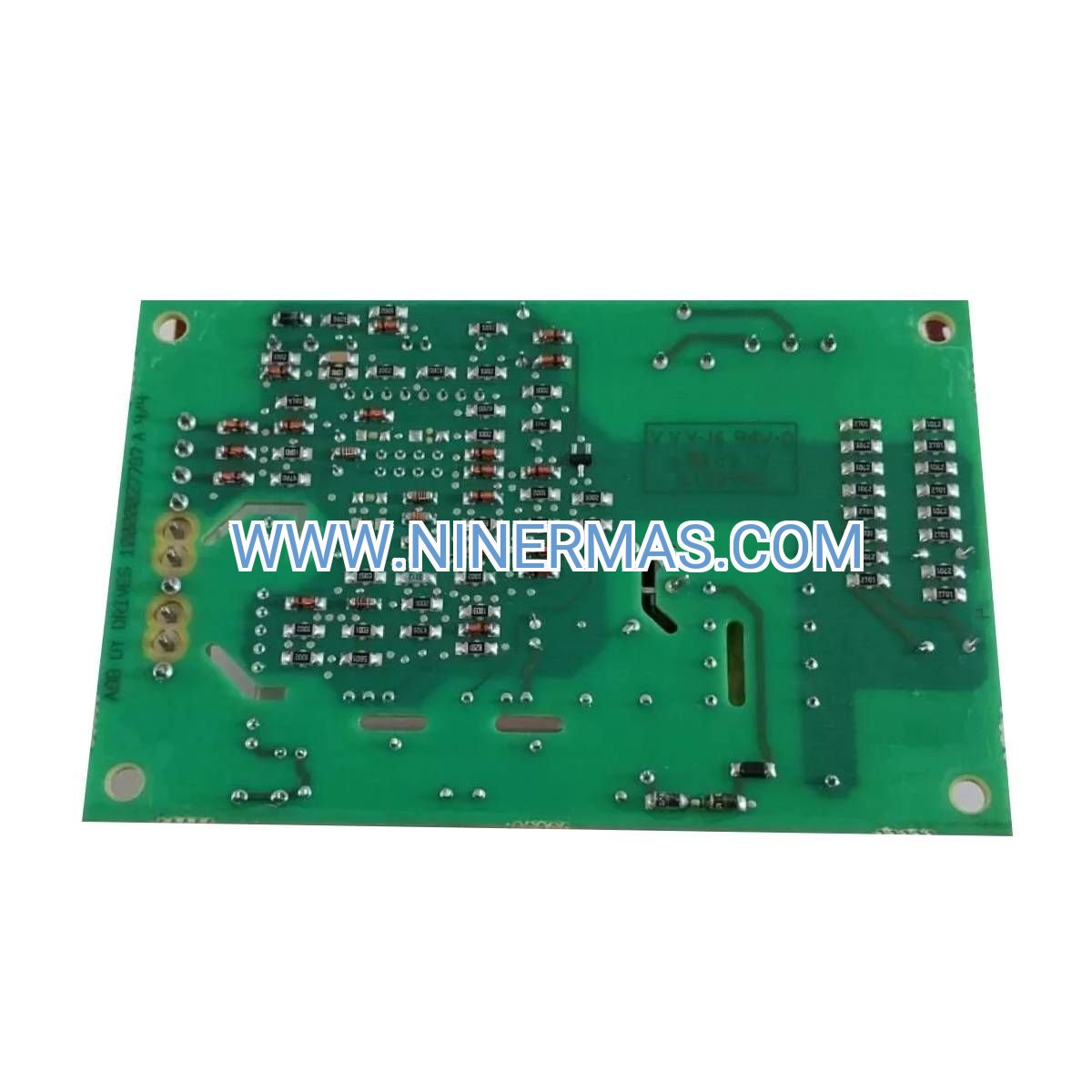
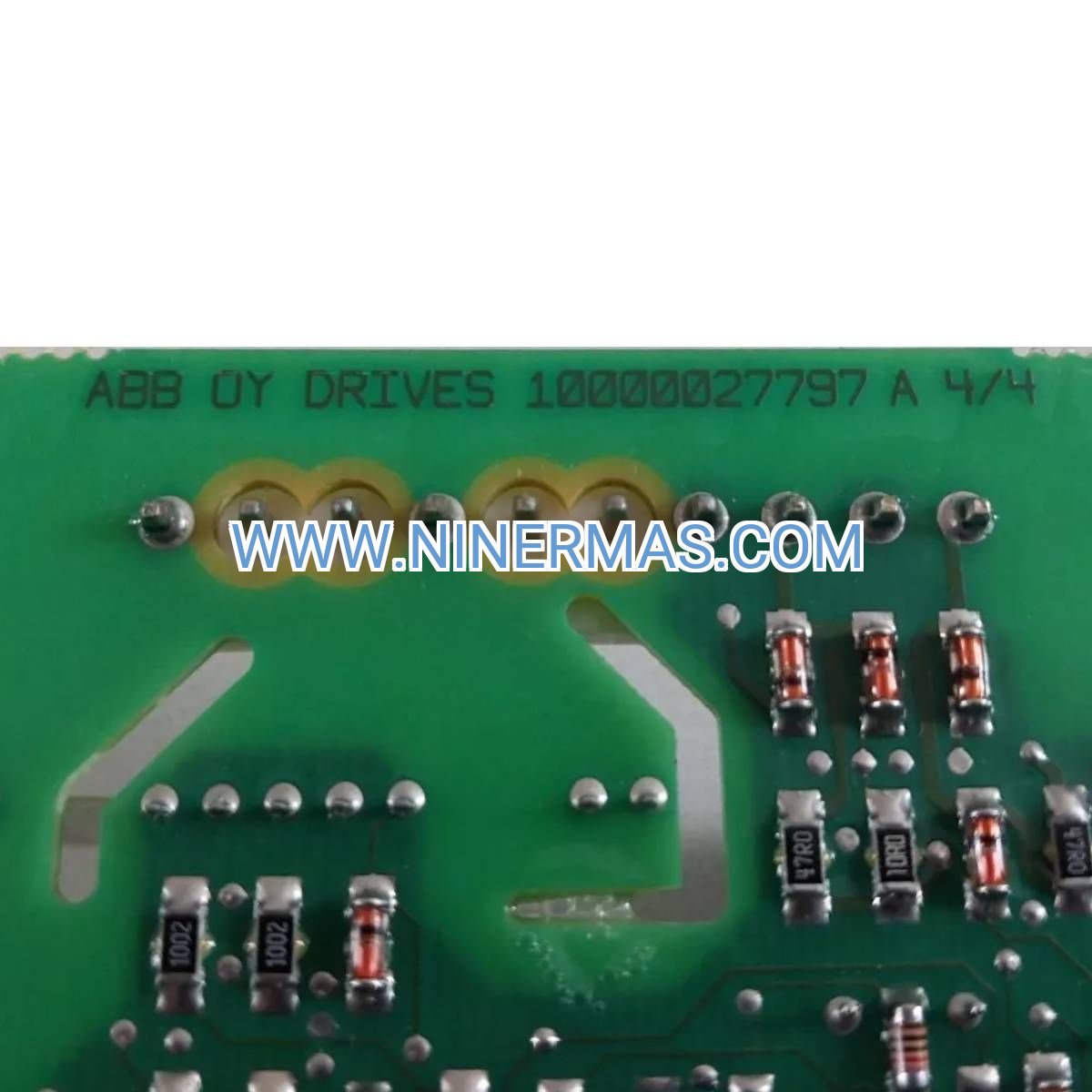
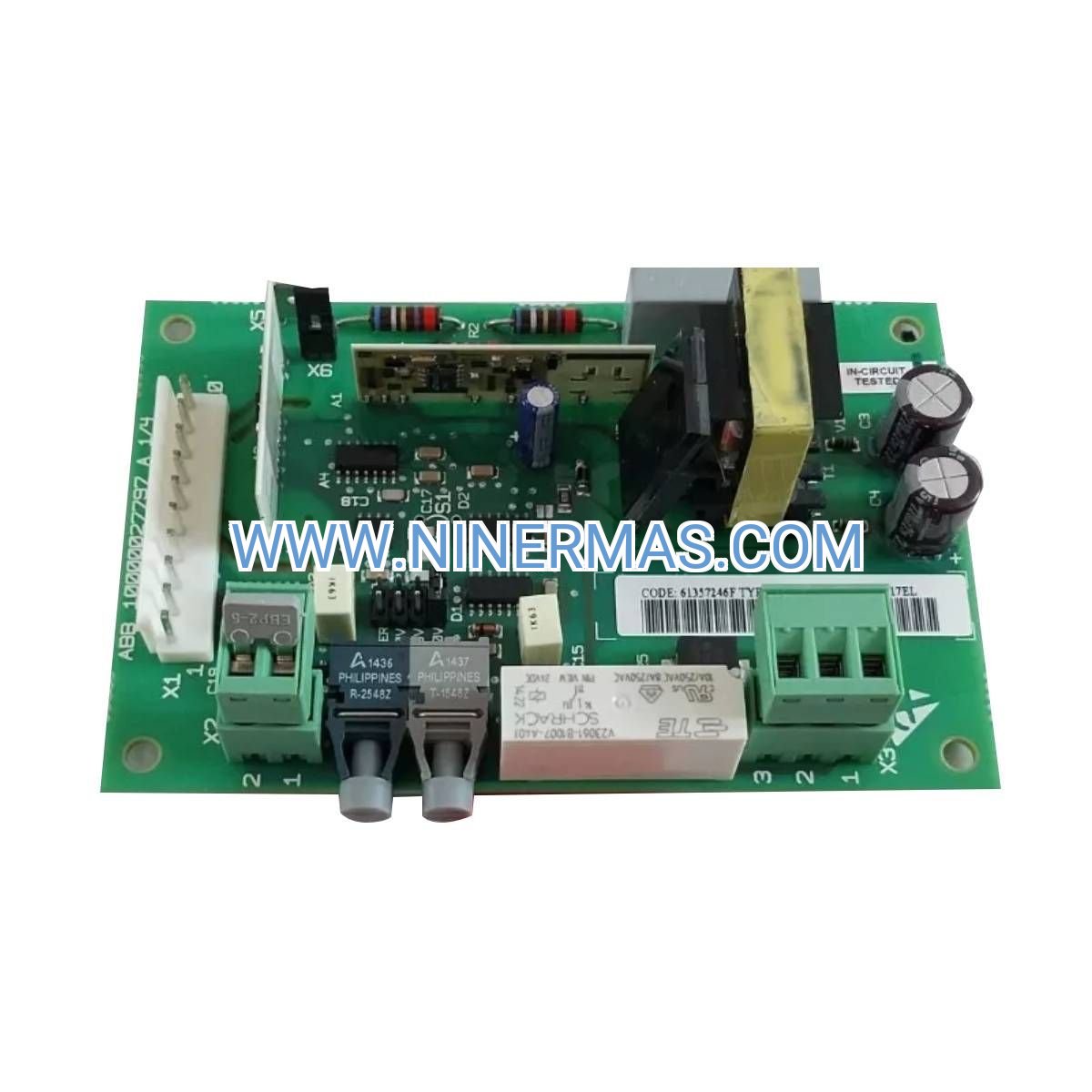
ABB NBRC-61C Braking Chopper Board (Industrial-Grade Regenerative Energy Controller)
The ABB NBRC-61C is a specialized braking chopper control module engineered to manage regenerative energy in variable frequency drive (VFD) systems. When motors decelerate or lower loads, they generate electrical energy that flows back into the drive—this board safely dissipates that energy through controlled switching, preventing DC bus overvoltage and protecting your drive infrastructure. Designed for continuous-duty industrial environments, the NBRC-61C combines rapid response times with robust thermal management to ensure reliable operation across crane systems, material handling equipment, and process machinery.
Target users include automation engineers specifying drive protection systems, maintenance teams managing legacy ABB installations, and OEMs integrating braking solutions into custom machinery. The board's standardized interface and proven reliability make it the go-to choice for applications where uncontrolled regenerative energy poses risks to equipment uptime and safety.
Key advantages include ultra-fast switching response (minimizing voltage spikes during emergency stops), integrated thermal monitoring (preventing component failure), conformal-coated PCB construction (resisting moisture and contaminants), and seamless compatibility with ABB ACS-series drives. Whether you're retrofitting aging equipment or designing new automation systems, the NBRC-61C delivers the precision and durability industrial operations demand.
Core Functions & Business Value
→ Regenerative Energy Dissipation: Converts kinetic energy from decelerating loads into controlled heat dissipation, eliminating DC bus overvoltage conditions that can trip drives or damage capacitors—reducing unplanned downtime by up to 40% in high-cycle applications.
→ Thermal Overload Protection: Built-in temperature sensors continuously monitor chopper resistor heat levels, automatically shutting down before thermal limits are exceeded—extending resistor lifespan by 2-3x compared to unprotected systems.
→ Fast-Switching Architecture: Sub-millisecond response to regenerative events ensures smooth deceleration profiles even during emergency stops—critical for crane operations where load stability directly impacts operator safety.
→ EMI-Optimized Design: Switching frequency tuned to minimize electromagnetic interference with adjacent control systems—eliminates the need for costly shielding upgrades in densely packed control cabinets.
✓ Diagnostic LED Indicators: Real-time status display (normal operation / thermal warning / fault condition) enables technicians to diagnose issues in under 5 minutes without specialized test equipment—cutting mean time to repair (MTTR) by 60%.
✓ Universal Mounting Options: Accepts both DIN rail and panel-mount configurations, simplifying integration into existing enclosures without custom fabrication—reducing installation labor costs by 30-50%.
Typical Application Scenarios
Overhead Crane & Hoist Systems: When lowering heavy loads, hoist motors operate in generator mode, producing regenerative energy that can exceed drive voltage ratings. The NBRC-61C activates instantly when DC bus voltage rises above setpoint, dissipating energy through external braking resistors while maintaining precise speed control. This prevents load drops caused by drive faults and eliminates the jerky motion associated with mechanical braking—improving operator confidence and reducing load damage claims.
High-Inertia Conveyor Networks: Distribution centers running continuous start-stop conveyor cycles generate repetitive regenerative pulses during deceleration zones. Without proper energy management, these pulses stress drive capacitors and trigger nuisance trips during peak throughput periods. The NBRC-61C handles up to 150 braking events per hour, maintaining stable DC bus voltage and enabling conveyor systems to achieve 99.5%+ uptime during seasonal demand spikes.
Machine Tool Spindle Control: CNC machining centers require rapid spindle deceleration between tool changes—regenerative energy from high-speed spindles (10,000+ RPM) can overwhelm standard drive braking circuits. The NBRC-61C's fast-switching capability manages these transient energy bursts, allowing cycle times to be reduced by 8-12 seconds per part without compromising drive reliability or requiring oversized drive ratings.
Elevator & Vertical Transport: Passenger and freight elevators generate significant regenerative energy during descent with loaded cars. The NBRC-61C works in tandem with elevator drives to smooth deceleration profiles, reducing passenger discomfort while meeting EN 81-20 safety standards for controlled stopping distances—particularly critical in high-rise installations where cable stretch affects braking precision.
Test Stand Dynamometers: Engine and motor test facilities subject drives to extreme regenerative loads during simulated braking events. The NBRC-61C's continuous-duty rating handles sustained braking cycles without derating, enabling test engineers to run full-power absorption tests for 8+ hour shifts—maximizing test cell utilization and accelerating product validation timelines.
Technical Parameters & Selection Guide
| Parameter | Specification | Notes |
|---|---|---|
| Voltage Range | 400-690V AC systems | Compatible with standard industrial power distribution |
| Switching Frequency | 4-8 kHz (optimized) | Balances efficiency with EMI suppression |
| Response Time | <2 milliseconds | From voltage detection to chopper activation |
| Thermal Monitoring | Integrated NTC sensor | Automatic shutdown at 90°C resistor temperature |
| Operating Temperature | -10°C to +50°C ambient | Derate above 40°C per installation manual |
| Protection Rating | IP20 (enclosure-mounted) | Requires NEMA 12 or IP54 cabinet for dusty environments |
| Mounting | DIN rail / panel mount | 35mm DIN rail or M4 screw terminals |
| Dimensions | 120mm × 85mm × 60mm | Compact footprint for space-constrained panels |
| Weight | 0.4 kg (board only) | Excludes external braking resistor assembly |
| Compliance | CE, UL508, RoHS | Meets North American and European standards |
Selection Criteria: Match the NBRC-61C to your drive's DC bus voltage rating and braking resistor specifications. For ACS550/ACS800 drives rated 15-75 kW, this board handles typical regenerative loads without external contactors. Applications with braking duty cycles exceeding 20% (ratio of braking time to total cycle time) should use resistors rated for continuous operation rather than intermittent duty. Consult ABB drive manuals for resistor ohm values and wattage ratings—undersized resistors will trigger thermal faults, while oversized resistors reduce braking effectiveness. In multi-drive systems, install one NBRC-61C per drive rather than sharing a single chopper across multiple units, as simultaneous regenerative events can exceed board ratings.
Extended Functions
Fieldbus Integration Readiness: While the NBRC-61C operates as a standalone hardware protection device, it interfaces with drive control systems that support Profibus DP, Modbus RTU, and EtherNet/IP networks. Drive parameters can be configured to log chopper activation frequency and thermal events, feeding data into predictive maintenance platforms that alert teams before resistor failure occurs.
Parallel Operation Capability: For ultra-high-power applications (100+ kW drives), multiple NBRC-61C boards can be paralleled with external load-sharing resistors, distributing thermal stress and enabling modular capacity expansion without replacing the entire braking system—ideal for retrofit projects where panel space is limited.
Customization Options: NINERMAS offers pre-configured NBRC-61C assemblies with matched braking resistors, thermal sensors, and wiring harnesses for specific drive models—reducing commissioning time from 4 hours to under 90 minutes and eliminating field wiring errors that void warranties.
Delivery Timeline & Service Assurance
Standard Lead Time: In-stock units ship within 24-48 hours via DHL/FedEx Express, with typical delivery to North America, Europe, and Asia-Pacific regions in 5-7 business days. Bulk orders (10+ units) may require 2-3 weeks for factory allocation.
Custom Configurations: Assemblies with integrated resistors and mounting brackets ship in 10-15 business days, including factory testing and documentation.
Warranty Coverage: 12-month warranty against manufacturing defects, covering component failure under normal operating conditions. Warranty excludes damage from overvoltage events, improper resistor sizing, or operation outside specified temperature ranges.
Technical Support: Direct access to application engineers via email (response within 4 business hours) and phone consultation for complex integration scenarios. Support includes resistor sizing calculations, thermal analysis, and troubleshooting guidance for field installations.
Documentation Package: Each unit includes installation manual (English/Chinese), wiring diagrams for common ABB drive models, resistor selection tables, and RoHS/CE compliance certificates. CAD drawings (DXF/STEP formats) available upon request for panel layout planning.
Frequently Asked Questions
Q: How do I connect the NBRC-61C to my existing ABB ACS550 drive?
A: The board connects to the drive's dedicated braking chopper terminals (typically labeled X2 or X3 depending on drive frame size). You'll need to install an external braking resistor between the chopper output terminals and configure drive parameter 26.01 (braking chopper enable) to "Yes." Detailed wiring diagrams for ACS550 frames R1-R6 are included in the installation manual. If your drive already has internal chopper components, consult ABB technical support before adding external chopper circuits to avoid conflicts.
Q: What braking resistor wattage and resistance value should I use with this chopper board?
A: Resistor specifications depend on your drive's DC bus voltage and the application's braking duty cycle. For a 400V drive (540V DC bus), typical resistor values range from 40-80 ohms with power ratings of 2-10 kW. High-cycle applications (conveyors, cranes) require continuous-duty resistors rated at 150% of calculated average braking power. Our technical team provides free resistor sizing calculations—send us your drive model, motor horsepower, and typical deceleration time for a customized recommendation.
Q: Can this chopper board reduce my facility's energy consumption?
A: The NBRC-61C dissipates regenerative energy as heat rather than recovering it, so it doesn't directly reduce energy costs. However, by preventing drive trips and enabling faster cycle times, it improves overall system efficiency. For energy recovery, consider ABB's active front-end (AFE) drives or DC bus regeneration units that feed energy back to the grid—these systems offer 15-30% energy savings in high-regenerative applications but cost 3-5x more than chopper-based solutions.
Q: What are the installation clearance requirements for proper cooling?
A: Maintain 50mm (2 inches) of clearance above and below the board for convective airflow. In enclosed panels, ensure ambient temperature stays below 40°C—use forced ventilation (panel fans) if internal temperatures exceed this threshold. The external braking resistor generates significant heat and must be mounted outside the control cabinet or in a separate ventilated compartment with at least 100mm clearance on all sides. Never mount resistors directly above sensitive electronics or PLC modules.
Q: Is remote monitoring of chopper status possible for predictive maintenance?
A: The NBRC-61C provides local LED status indication but doesn't have built-in communication ports. For remote monitoring, connect the board's fault relay output (if equipped) to your drive's digital input or PLC, then map that signal to your SCADA/HMI system. Advanced implementations use the drive's fieldbus connection to log chopper activation events and thermal warnings, triggering maintenance alerts when activation frequency exceeds baseline patterns—typically indicating resistor degradation or mechanical issues causing excessive braking.
Q: How does this board handle emergency stop (E-stop) situations?
A: During an E-stop event, the drive initiates maximum deceleration, generating peak regenerative energy. The NBRC-61C activates within 2 milliseconds, clamping DC bus voltage to safe levels while the motor coasts to a stop. For applications requiring controlled stopping distances (elevators, cranes), combine the chopper with mechanical brakes—the chopper manages electrical energy while mechanical brakes provide holding torque. Never rely solely on regenerative braking for safety-critical stopping functions; always implement redundant mechanical brake systems per ISO 13849 safety standards.
Ready to Protect Your Drive Investment?
Eliminate costly drive failures and unplanned downtime with the ABB NBRC-61C braking chopper board. Our team provides free application consultations, resistor sizing calculations, and installation support to ensure optimal performance from day one.
Contact our industrial automation specialists today:
? Email: sale@ninermas.com
? Phone: +0086 187 5021 5667
? Technical Resources: https://ninermas.com
Request a quote now and receive detailed integration drawings, compatibility verification for your specific drive model, and volume pricing for multi-unit projects. Same-day quotations for standard configurations, with engineering support included at no additional cost.
© 2026 NINERMAS COMPANY LIMITED. All rights reserved.
Original Source: https://ninermas.com
Contact: sale@ninermas.com | +0086 187 5021 5667
Related products

Contact Info
-
Address:22 / F, South Wo Hang building, 148 Wing Lok Street, Sheung Wan, Western District, Hong Kong
-
Phone:+8618750215667
-
Email:
