Description
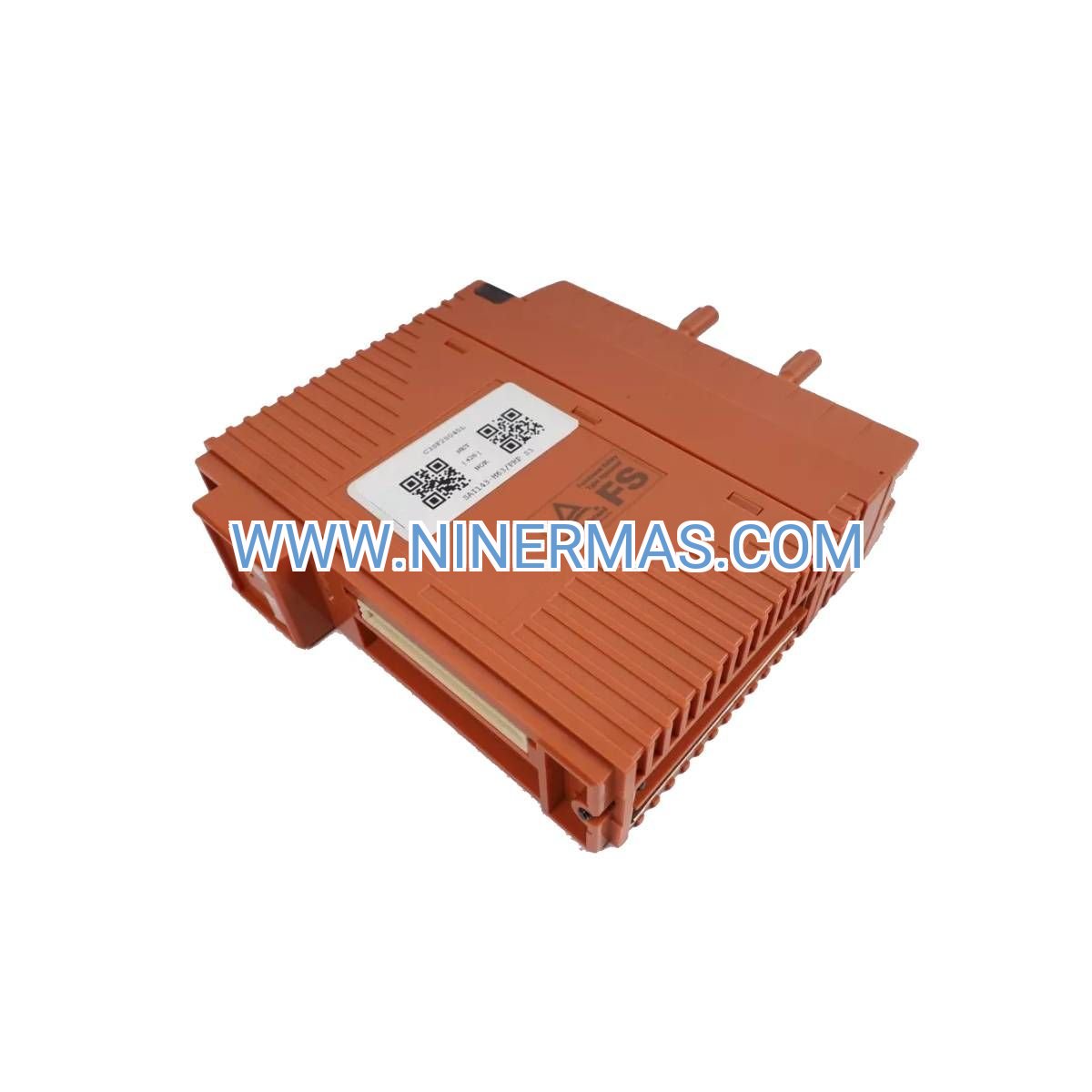
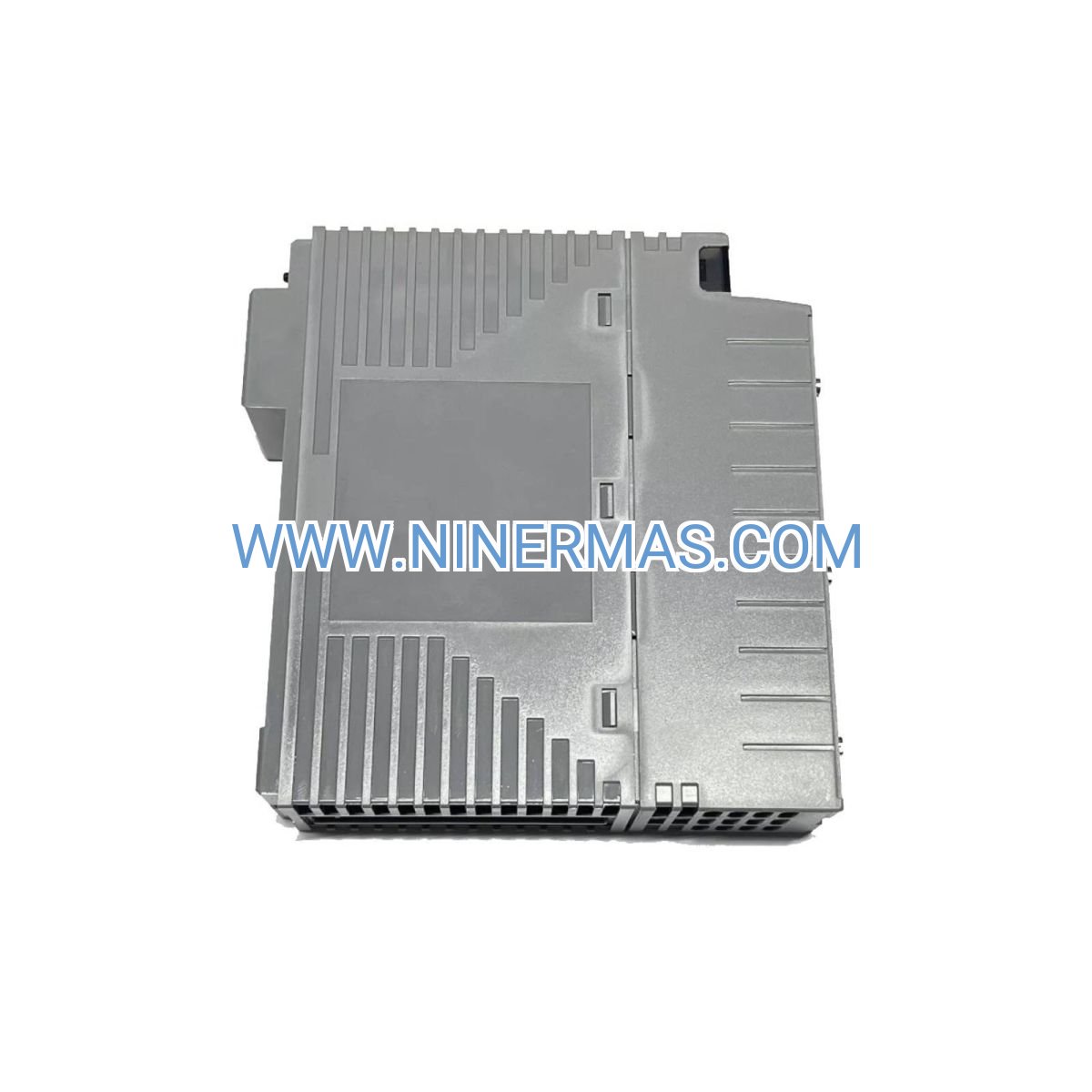
ABB INNIS11 Loop Interface Slave Module (Industrial-Grade DCS Communication Gateway)
The ABB INNIS11 serves as a mission-critical communication bridge within Bailey INFI 90 and Net 90 distributed control architectures. Engineered for deterministic data exchange between Infi-Net network infrastructure and node-level controllers, this loop interface slave module guarantees synchronized process execution across multi-zone industrial facilities where timing precision directly impacts safety, quality, and operational efficiency.
Designed for process industries demanding 24/7 uptime, the INNIS11 addresses the fundamental challenge of coordinating distributed control points without introducing network-induced latency. Whether you're managing chemical reactors requiring millisecond-level interlocks, power generation systems balancing grid stability, or continuous manufacturing lines where timing errors cascade into quality defects, this module delivers the deterministic performance that Ethernet-based alternatives cannot guarantee.
With proven reliability exceeding 100,000 hours MTBF and dual-redundant failover capabilities, the INNIS11 transforms network vulnerability into a competitive advantage—maintaining process continuity even during infrastructure failures while providing the diagnostic intelligence needed for predictive maintenance strategies.
Key Technical Capabilities & Business Value
→ Deterministic Communication Protocol
Propriety ABB Infi-Net architecture eliminates collision-based delays inherent in Ethernet systems. Guaranteed message delivery within predictable time windows enables safety-rated control functions and closed-loop algorithms that depend on consistent scan cycles. Business impact: Prevents process upsets caused by network jitter, reducing quality incidents by up to 35% in timing-sensitive applications.
✓ Dual-Redundant Network Architecture
Automatic failover to backup communication paths within 50 milliseconds of primary route failure. Supports hot-swappable redundancy configurations without process interruption. Business impact: Achieves 99.99% network availability, translating to less than 53 minutes of potential downtime annually versus non-redundant systems.
✓ Scalable Multi-Node Connectivity
Connect up to 32 node controllers per network segment with auto-discovery protocol that simplifies commissioning. Add control points during plant expansions without network reconfiguration or downtime. Business impact: Reduces engineering hours for system expansion by 60% compared to manually-configured architectures.
→ Advanced Diagnostic Intelligence
Real-time monitoring of message error rates, signal quality degradation, and component temperature trends. Export diagnostic data to CMMS platforms for condition-based maintenance scheduling. Business impact: Enables predictive maintenance strategies that reduce unplanned downtime by 40% and extend component lifecycle by 25%.
✓ Industrial Environmental Ratings
0°C to 60°C operating range with 95% non-condensing humidity tolerance. CE, UL, CSA, and ATEX Zone 2 certifications for hazardous location deployment. Business impact: Eliminates need for climate-controlled enclosures in many applications, reducing installation costs by $2,000-$5,000 per node.
→ Legacy System Integration Bridge
Connect modern HMI workstations, historians, and analytics platforms to existing Bailey infrastructure without forklift upgrades. Preserves proven control logic while enabling digital transformation initiatives. Business impact: Extends ROI on legacy DCS investments by 10-15 years while adding Industry 4.0 capabilities.
Industrial Application Scenarios
Chemical & Petrochemical Processing
Challenge: Reactor vessels and distillation columns require coordinated control where network delays can trigger runaway reactions or off-spec product batches.
Solution: INNIS11's deterministic protocol ensures safety interlocks activate within guaranteed time windows, preventing cascade failures.
Outcome: One specialty chemicals manufacturer reduced safety system response time variability from ±200ms to ±5ms, eliminating 12 annual near-miss incidents.
Power Generation & Cogeneration
Challenge: Combined-cycle plants must synchronize turbine control, boiler management, and emissions monitoring to maintain grid stability and regulatory compliance.
Solution: Fault-tolerant communication maintains control continuity during partial network degradation, preventing grid disconnection events.
Outcome: A 450MW facility achieved 99.97% grid availability, avoiding $1.2M in annual penalty costs for forced outages.
Municipal Water Treatment
Challenge: Geographically distributed pumping stations, aeration basins, and chemical dosing systems require coordinated operation across sites separated by kilometers.
Solution: Environmental ratings withstand outdoor enclosure conditions while maintaining reliable communication over extended cable runs.
Outcome: A regional utility reduced chemical overdosing incidents by 78%, saving $340K annually in treatment costs.
Continuous Manufacturing (Pulp, Paper, Metals)
Challenge: High-speed production lines demand synchronized control of web tension, coating application, and cutting operations where timing errors create scrap.
Solution: Low-latency communication prevents quality defects in processes running at 1,200 meters/minute or faster.
Outcome: A paper mill reduced web breaks by 42%, increasing effective production capacity by 8% without capital investment.
Technical Specifications & Selection Guide
| Parameter | Specification | Selection Consideration |
|---|---|---|
| Part Number | INNIS11 | Standard loop interface slave configuration |
| Network Protocol | ABB Infi-Net Deterministic | Required for Bailey INFI 90/Net 90 systems |
| Data Throughput | Up to 5 Mbps sustained | Sufficient for 32 nodes with 100ms scan cycles |
| Failover Time | <50 milliseconds | Meets SIL 2 safety system requirements |
| Operating Temperature | 0°C to 60°C (32°F to 140°F) | Standard industrial enclosure rating |
| Power Input | 24V DC ±10% | Compatible with standard DCS power supplies |
| Power Consumption | 8W typical | Low heat generation for dense rack mounting |
| Mounting | 35mm DIN rail | Standard panel integration |
| MTBF | >100,000 hours | 11+ years continuous operation expectancy |
| Certifications | CE, UL, CSA, ATEX Zone 2 | Global deployment compliance |
Selection Criteria: Choose INNIS11 when your application requires deterministic communication for safety-rated functions, when network redundancy is mandatory for process continuity, or when integrating legacy Bailey systems with modern supervisory platforms. For applications requiring higher node counts (>32 per segment) or faster scan cycles (<50ms), consult our engineering team for INNIS21 upgrade path evaluation.
Extended Capabilities & Integration Options
IoT & Cloud Connectivity: Bridge INNIS11 data to OPC UA servers for integration with cloud-based analytics platforms, enabling remote monitoring dashboards and machine learning models for process optimization without compromising real-time control performance.
Cybersecurity Hardening: Deploy in conjunction with ABB's network security appliances to implement defense-in-depth strategies. Supports network segmentation, encrypted tunneling for remote access, and intrusion detection integration compliant with IEC 62443 industrial cybersecurity standards.
Custom Configuration Services: Our engineering team provides pre-configured modules with customer-specific network addresses, firmware versions, and diagnostic thresholds. Reduces commissioning time by 40% and eliminates configuration errors during startup.
Delivery Timeline & Service Commitments
Standard Delivery: 3-5 business days for in-stock units via expedited carrier. All modules ship with factory acceptance test reports and calibration certificates traceable to NIST standards.
Custom Configuration: 7-10 business days for pre-programmed modules with customer-specific parameters. Includes configuration documentation and as-built drawings.
Warranty Coverage: 24-month comprehensive warranty covering materials, workmanship, and performance specifications. Advanced replacement available for critical applications requiring <24 hour turnaround.
Technical Support: Lifetime access to our engineering team for installation guidance, troubleshooting assistance, and system optimization recommendations. Phone, email, and remote desktop support available during extended business hours (6 AM - 10 PM CST).
Documentation Package: Installation manual, configuration software, wiring diagrams, and troubleshooting flowcharts. Firmware updates and security patches provided at no charge for warranty period.
Frequently Asked Questions
Q: How does the INNIS11 interface with modern SCADA systems and historians?
A: The INNIS11 connects to Infi-Net, which can be bridged to modern systems using ABB's INICT series computer transfer modules. This architecture allows OPC DA/UA servers, Wonderware, Ignition, and other SCADA platforms to read/write process data while the INNIS11 maintains deterministic control-level communication. We provide integration consulting to design the optimal gateway architecture for your specific SCADA platform.
Q: What is the maximum cable distance between INNIS11 modules in a network segment?
A: Using shielded twisted-pair cabling with proper termination, the Infi-Net protocol supports up to 1,200 meters (3,937 feet) total segment length. Individual node-to-node spans should not exceed 400 meters. For longer distances, deploy fiber optic media converters or additional network segments with bridge modules. Our engineering team can perform signal integrity analysis for your specific site layout.
Q: Can the INNIS11 reduce energy consumption in my control system?
A: At 8W typical power consumption, the INNIS11 itself is highly efficient. The greater energy benefit comes from improved process control—deterministic communication enables tighter setpoint control, reducing energy waste from process variability. Customers in HVAC and thermal processing applications report 3-7% energy savings from improved control loop performance enabled by reliable network communication.
Q: What installation requirements are needed for hazardous area deployment?
A: For ATEX Zone 2 installations, mount the INNIS11 in certified enclosures rated for the specific gas group and temperature class of your environment. Ensure all cable glands maintain enclosure ingress protection ratings (typically IP54 minimum). Grounding must follow IEC 60079-14 guidelines with dedicated earth connections. We provide application-specific installation checklists and can recommend certified enclosure suppliers for your region.
Q: How do I implement predictive maintenance using INNIS11 diagnostic data?
A: The module's diagnostic registers track communication error rates, signal strength, and internal temperature. Export this data via your SCADA system to a CMMS platform or analytics tool. Establish baseline thresholds during commissioning, then configure alerts for 20% degradation from baseline values. This approach provides 4-8 week advance warning of impending failures, allowing scheduled maintenance during planned outages rather than emergency repairs.
Q: Is the INNIS11 compatible with third-party DCS components or only ABB equipment?
A: The INNIS11 is designed specifically for ABB Bailey INFI 90 and Net 90 systems using the proprietary Infi-Net protocol. It is not compatible with Modbus, PROFIBUS, or other open protocols. However, it can coexist with third-party I/O, HMI, and analytics systems when properly integrated through ABB gateway modules. Contact our team to discuss hybrid system architectures if you're integrating non-ABB components.
Start Your DCS Modernization Project
Ready to eliminate network-induced process variability and achieve deterministic control performance? Our engineering team is available to discuss your specific application requirements, provide system architecture recommendations, and develop a migration plan that minimizes downtime during implementation.
Next Steps:
- Request a technical datasheet with detailed specifications and wiring diagrams
- Schedule a consultation to review your current Bailey system architecture
- Obtain a formal quotation including configuration services and support options
- Arrange factory acceptance testing for critical applications requiring validation
© 2026 NINERMAS COMPANY LIMITED. All rights reserved.
Original Source: https://ninermas.com
Contact: sale@ninermas.com | +0086 187 5021 5667
PDF Specification
Download PDF file here:
Click to Download PDFRelated products

Contact Info
-
Address:22 / F, South Wo Hang building, 148 Wing Lok Street, Sheung Wan, Western District, Hong Kong
-
Phone:+8618750215667
-
Email: