


Description
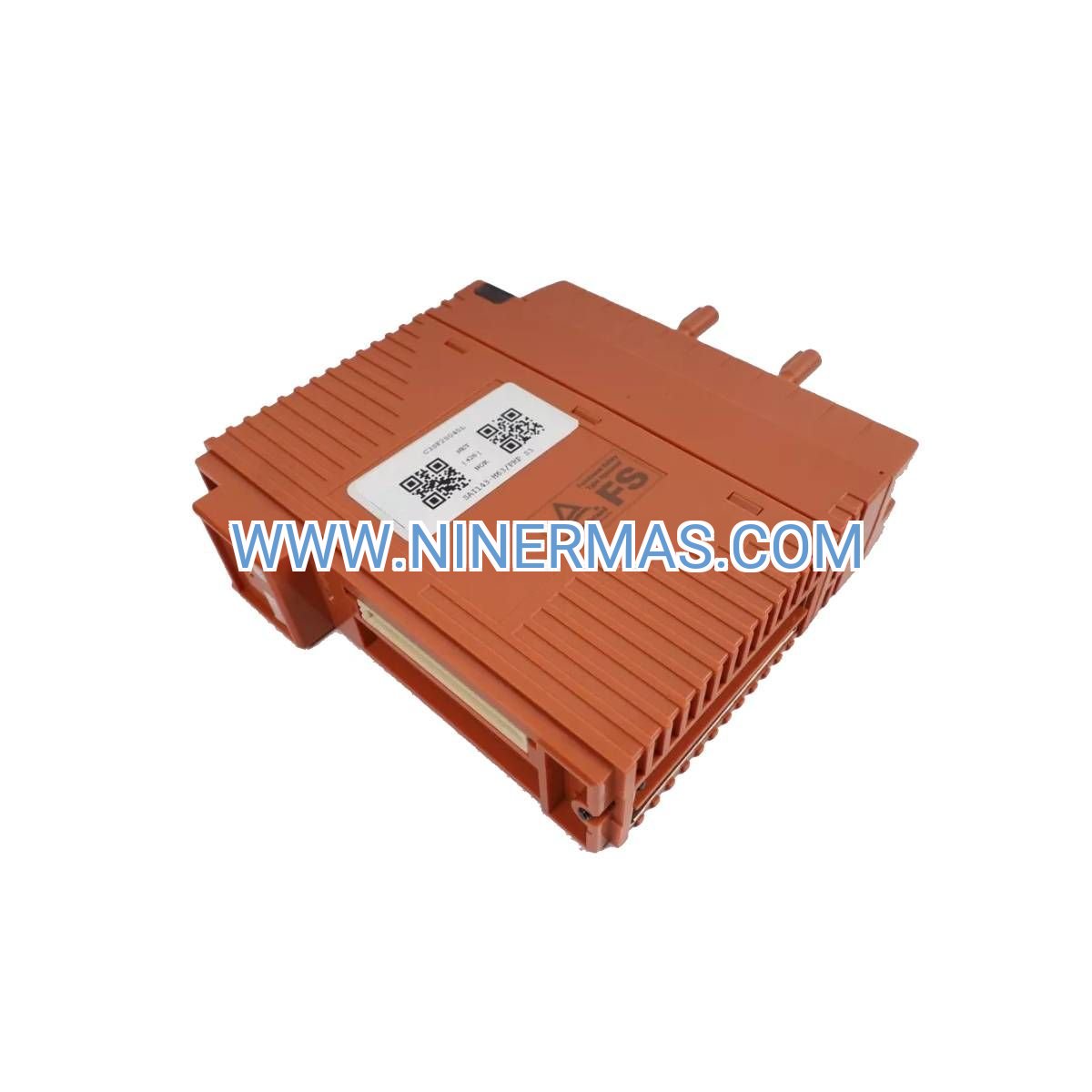
TC811E1023 Short Circuit Isolator Module (Industrial-Grade Fire Alarm Protection)
The TC811E1023 represents a critical safeguard in addressable fire detection infrastructure, engineered to contain short-circuit faults within segmented zones while preserving system-wide alarm capability. Designed for integration with Honeywell XLS and compatible intelligent panels, this isolator module delivers autonomous fault detection and isolation—ensuring that localized wiring failures never compromise life safety coverage across your facility.
Built for commercial high-rises, manufacturing complexes, healthcare campuses, and mission-critical environments, the TC811E1023 addresses a fundamental challenge: maintaining fire alarm loop integrity when physical damage or installation errors create short circuits. By automatically sectioning off compromised segments, the module prevents cascading failures that could disable entire detection zones during emergencies.
With UL/FM certification, NFPA 72 compliance, and ultra-low standby current draw, this isolator module integrates seamlessly into new installations or retrofit projects—providing the circuit resilience that code authorities and insurance underwriters demand for occupied structures.
Core Capabilities & Business Value
→ Autonomous Fault Containment: Microprocessor-controlled detection isolates short circuits within milliseconds, maintaining communication with devices on both sides of the fault zone—eliminating the need for manual intervention during critical events.
✓ System-Wide Continuity Assurance: Prevents single-point wiring failures from disabling entire signaling line circuits (SLC), ensuring code-compliant detection coverage remains operational across unaffected building areas.
→ Universal Panel Compatibility: Engineered to Honeywell XLS protocol standards with backward compatibility for legacy Notifier intelligent systems—simplifying integration across mixed-generation fire alarm infrastructures.
✓ Minimal Power Footprint: Draws ≤200 μA in standby mode, preserving system battery capacity during AC power outages and reducing load on central power supplies in large-scale deployments.
→ Rapid Commissioning: Zero-programming installation via series wiring—technicians simply insert the module at strategic loop points using standard 18-2 AWG fire alarm cable, reducing labor costs and deployment timelines.
✓ Regulatory Compliance Foundation: UL 864 listing and FM approval satisfy authority having jurisdiction (AHJ) requirements for commercial occupancies, healthcare facilities, and industrial sites subject to NFPA 72 inspection protocols.
Industry-Specific Deployment Scenarios
Commercial Real Estate & High-Rise Buildings: In multi-tenant office towers and mixed-use developments, the TC811E1023 protects fire alarm loops spanning 20+ floors and hundreds of devices. Strategic placement at riser transitions and floor-level branch points ensures that tenant improvement work or accidental damage in one suite doesn't trigger system-wide trouble conditions—maintaining detection capability in stairwells, corridors, and occupied spaces throughout the structure.
Manufacturing & Warehouse Operations: Industrial facilities with extended SLC runs across production zones, loading docks, and storage areas face elevated risk of mechanical damage to fire alarm wiring. Isolator modules positioned every 25-30 devices create fault-tolerant segments that preserve detection in undamaged areas—critical for facilities operating under FM Global property loss prevention standards or handling combustible materials.
Healthcare & Life Safety Institutions: Hospitals, surgical centers, and assisted living facilities require uninterrupted fire protection across patient care areas where evacuation capabilities are limited. The TC811E1023 works in concert with smoke detectors, pull stations, and notification appliances to maintain Joint Commission-compliant life safety systems—even when construction activities or equipment moves create temporary wiring faults.
Educational Campuses & Institutional Facilities: Universities, K-12 schools, and government buildings utilize isolator-segmented loops to minimize false alarm disruptions and maintain detection during renovation projects. By containing faults to specific wings or floor levels, facility managers avoid unnecessary evacuations while ensuring code-required coverage remains active in unaffected zones.
Data Centers & Mission-Critical Infrastructure: Colocation facilities and network operations centers deploy isolator modules to protect VESDA aspirating systems and conventional detection loops in raised-floor environments where cable routing changes frequently—preventing accidental shorts during server installations from compromising fire suppression pre-action system interfaces.
Technical Parameters & Selection Criteria
| Specification | Value | Selection Guidance |
|---|---|---|
| Model Designation | TC811E1023 | Verify compatibility with panel firmware version |
| System Architecture | Addressable/Intelligent SLC | Not compatible with conventional 2-wire systems |
| Operating Voltage Range | 15-32 VDC | Powered directly from SLC—no auxiliary supply required |
| Quiescent Current | ≤200 μA | Negligible impact on system battery calculations |
| Isolation Response Time | <50 ms | Faster than panel polling cycle—transparent operation |
| Environmental Rating | 0-49°C, 0-93% RH | Suitable for non-plenum indoor applications |
| Mounting Options | 1-gang box / surface bracket | Use plenum-rated boxes in air-handling spaces |
| Wiring Topology | Series (Class A/B compatible) | Install at branch points for optimal segmentation |
| Certifications | UL 864, FM 3210, NFPA 72 | Verify local AHJ acceptance before specification |
Sizing Recommendations: Deploy one isolator module for every 20-30 addressable devices, or at major circuit branch points where multiple zones converge. For Class A (Style 7) loops, install isolators symmetrically on both outbound and return paths. Consult NFPA 72 Section 23.6 for device count limits and isolation requirements specific to your panel model.
Advanced Integration & IoT Connectivity
Modern fire alarm systems increasingly interface with building automation networks (BACnet, Modbus) and cloud-based facility management platforms. The TC811E1023's isolation status can be monitored through compatible fire alarm control panels that expose device-level diagnostics via IP gateways—enabling predictive maintenance workflows that identify intermittent wiring faults before they escalate to full short-circuit conditions.
For facilities deploying integrated safety systems, isolator trouble signals can trigger automated responses: HVAC smoke control sequences, elevator recall protocols, or emergency lighting activation. When paired with networked fire panels and building management systems (BMS), the TC811E1023 becomes part of a comprehensive life safety ecosystem that coordinates detection, notification, and suppression subsystems.
Customization Options: While the TC811E1023 ships as a standalone module, system integrators can specify custom enclosures, extended-temperature variants, or marine-grade conformal coatings for harsh environments. Contact our engineering team for project-specific requirements involving corrosive atmospheres, extreme humidity, or seismic bracing needs.
Delivery Timelines & Service Commitments
Standard Lead Time: 3-5 business days for stock configurations; expedited same-day shipping available for emergency replacements and critical project deadlines.
Custom Configurations: 10-15 business days for modified enclosures, extended certifications, or bulk orders requiring factory programming.
Warranty Coverage: 12-month manufacturer defect protection covering materials and workmanship under normal operating conditions. Extended service agreements available for mission-critical installations.
Technical Support: Unlimited phone/email consultation during installation and commissioning phases. Our fire alarm specialists provide loop calculations, device placement guidance, and troubleshooting assistance to ensure first-time-right deployments.
Documentation Package: Each module ships with installation instructions, wiring diagrams, UL/FM certification sheets, and NFPA 72 compliance declarations—streamlining AHJ approval processes and final inspection sign-offs.
Frequently Asked Questions
How does the isolator module determine optimal placement in complex fire alarm topologies?
Position isolators at natural segmentation points: floor-level distribution boxes, riser transitions, or wherever SLC branches serve distinct building zones. The goal is creating fault-tolerant segments of 20-30 devices—small enough to limit outage scope, large enough to minimize module count and installation labor.
What diagnostic indicators confirm proper isolator operation during system commissioning?
Most intelligent fire panels display isolator status during walk-test mode. Technicians can verify functionality by intentionally shorting the SLC downstream of the module—the panel should report a trouble condition for the isolated segment while maintaining communication with upstream devices. Always restore normal wiring before leaving the site.
Can TC811E1023 modules retrofit into existing fire alarm systems without panel reprogramming?
Yes—isolators function as transparent circuit elements requiring no panel configuration changes. Simply wire them in series at desired locations using the same 18-2 AWG cable as the rest of the SLC. The panel automatically recognizes isolation events through standard protocol communication.
What maintenance intervals does NFPA 72 mandate for short circuit isolator modules?
NFPA 72 requires annual testing of isolator functionality as part of comprehensive fire alarm system inspections. Most authorities having jurisdiction (AHJ) accept panel-initiated isolator tests that simulate fault conditions—eliminating the need to physically short-circuit wiring during routine maintenance.
How do isolator modules interact with emergency voice evacuation systems sharing the same SLC?
In combined fire alarm/mass notification systems, isolators protect both detection devices and speaker circuits on shared signaling loops. When a fault occurs, the module isolates the compromised segment while preserving voice evacuation capability in unaffected zones—critical for high-rise buildings and large assembly occupancies.
Are there environmental limitations for isolator deployment in extreme temperature or humidity conditions?
Standard TC811E1023 modules operate reliably within 0-49°C and 0-93% RH (non-condensing). For applications exceeding these parameters—such as freezer warehouses, outdoor enclosures, or tropical climates—consult factory engineering for extended-range variants or protective housing solutions.
Secure Your Fire Alarm Investment
Don't let a single wiring fault compromise your entire life safety system. The TC811E1023 Short Circuit Isolator Module delivers the circuit resilience that code compliance and occupant protection demand—at a fraction of the cost of system-wide failures or false alarm fines.
Ready to specify isolator modules for your next project? Contact our fire alarm specialists for loop calculations, device counts, and integration guidance tailored to your facility's unique requirements. We provide same-day quotations, technical submittals, and expedited shipping to keep your projects on schedule.
© 2026 NINERMAS COMPANY LIMITED. All rights reserved.
Original Source: https://ninermas.com
Contact: sale@ninermas.com | +0086 187 5021 5667
PDF Specification
Download PDF file here:
Click to Download PDFRelated products

Contact Info
-
Address:22 / F, South Wo Hang building, 148 Wing Lok Street, Sheung Wan, Western District, Hong Kong
-
Phone:+8618750215667
-
Email:
