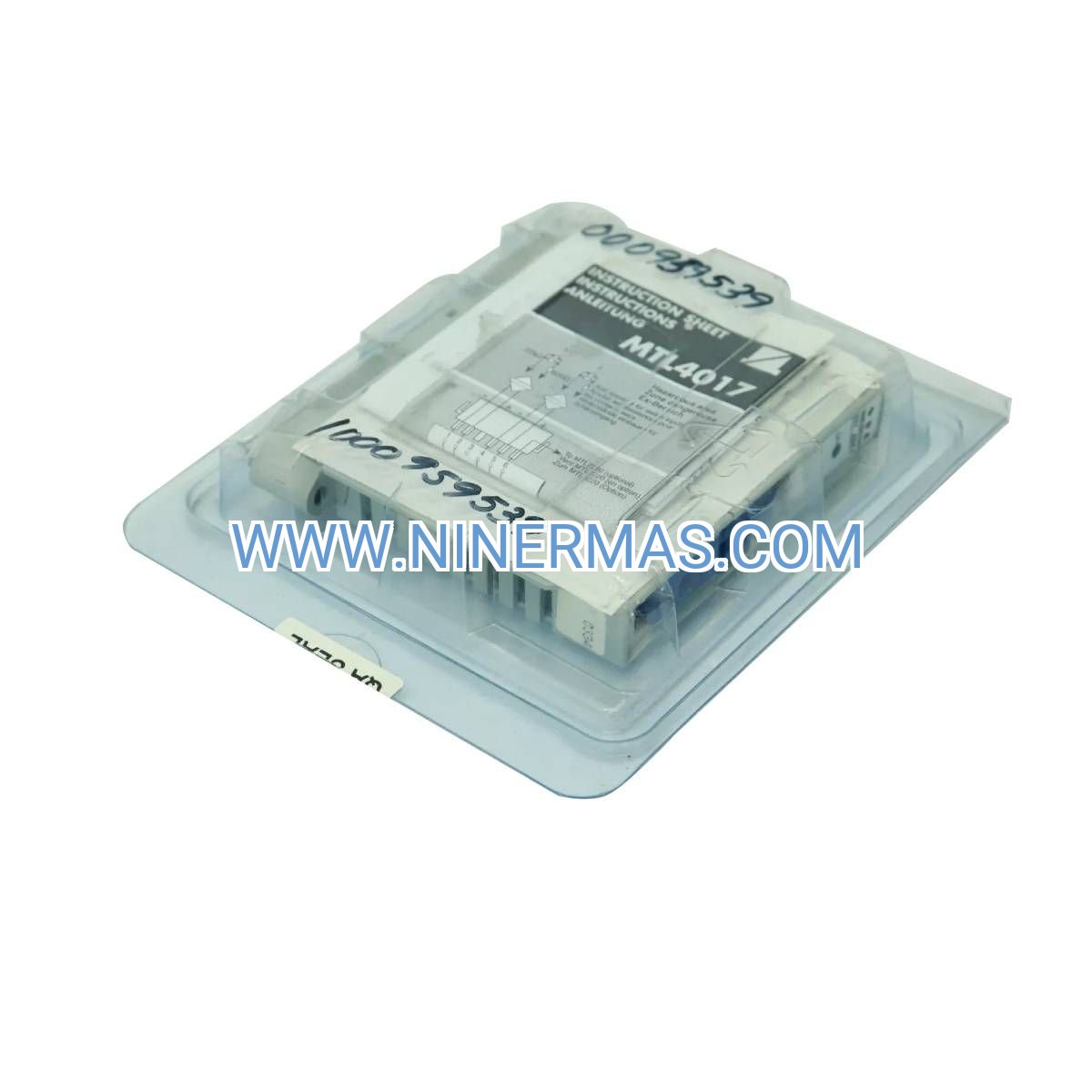
Multi-Point Temperature Probe for Tank Gauging | Honeywell MPT-ACC RTD Sensor
Description
Multi-Point Temperature Probe for Tank Gauging Systems (Industrial RTD Profiling Solution)
The Honeywell MPT-ACC is a precision multi-point temperature probe engineered for automatic tank gauging (ATG) applications, utilizing resistance temperature detector (RTD) technology to deliver continuous vertical temperature profiling across storage tanks. Through 16 independent measurement points and advanced signal processing, it enables accurate inventory calculation, thermal stratification monitoring, and compliance-ready custody transfer operations.
Designed for refineries, petrochemical terminals, chemical storage facilities, and bulk liquid distribution centers, this probe addresses critical challenges including temperature gradient uncertainty, inventory calculation errors, thermal expansion compensation requirements, and regulatory compliance for fiscal measurement. It integrates seamlessly with Enraf ATG systems and supports API MPMS Chapter 7 standards.
Built on proven field-tested architecture with customizable probe lengths, this solution delivers exceptional measurement stability, hazardous area certification (ATEX Zone 0), and maintenance-friendly design. Suitable for process engineers, instrumentation specialists, EPC contractors, and facility operators requiring reliable temperature data for inventory management, loss control, and operational safety. Contact our application engineers for site-specific configuration and technical consultation.
Core Features & Technical Advantages
- High-Resolution Temperature Profiling
Equipped with 16 independent RTD elements distributed along the probe length, providing detailed vertical temperature mapping with ±0.1°C accuracy (Class A RTD). Enables precise volume correction and thermal stratification analysis for custody transfer calculations. - Proven Measurement Reliability
Compared to single-point measurement systems, multi-point profiling reduces inventory uncertainty by up to 0.15%, directly improving fiscal accuracy and minimizing product loss claims in high-value liquid storage operations. - Flexible Integration & Compatibility
Native compatibility with Enraf 854 ATG and Raptor systems via digital communication protocols. Supports Modbus RTU/TCP and HART interfaces for integration with DCS, SCADA, and third-party inventory management platforms. - Comprehensive Hazardous Area Protection
ATEX Zone 0 certification (II 1 G Ex ia IIC T6 Ga) and IECEx approval for installation in explosive atmospheres. Intrinsically safe design eliminates ignition risk in flammable vapor environments, meeting global safety standards. - Robust Construction for Harsh Environments
316L stainless steel construction with hermetically sealed RTD junctions, rated for -40°C to +200°C operating range. Resistant to corrosive media, thermal cycling, and mechanical stress from product movement and tank operations. - Simplified Maintenance & Calibration
Hot-swappable electronics module and field-replaceable RTD elements reduce downtime. Factory calibration certificates traceable to national standards, with recommended recalibration intervals of 24–36 months under normal operating conditions.
Typical Application Scenarios
This multi-point temperature probe is engineered for applications demanding high-accuracy temperature measurement and regulatory compliance, particularly in:
- Crude Oil & Refined Product Storage
Ensures accurate API gravity correction and volume calculation in floating-roof and fixed-roof tanks storing gasoline, diesel, jet fuel, and crude oil. Supports custody transfer operations per API MPMS Chapter 7 and ISO 91-1 standards. - Petrochemical & Chemical Terminals
Monitors thermal stratification in tanks containing solvents, aromatics, and specialty chemicals. Prevents product quality issues from temperature-induced density variations and supports blending operation optimization. - LPG & Liquefied Gas Storage
Provides critical temperature data for pressure-temperature compensation in refrigerated and pressurized LPG, propane, and butane storage. Enhances safety monitoring and inventory accuracy in cryogenic applications. - Biofuel & Renewable Energy Facilities
Addresses unique measurement challenges in biodiesel, ethanol, and sustainable aviation fuel (SAF) storage, where temperature sensitivity and viscosity variations significantly impact volume calculations and transfer operations. - Marine & Offshore Platforms
Withstands vibration, motion, and corrosive marine environments in FPSO vessels, offshore loading terminals, and ship cargo tanks. Supports dynamic measurement requirements for vessel quantity calculations and cargo custody transfer.
Technical Specifications & Selection Guide
To facilitate engineering design and equipment selection, we provide standardized configurations with customization options for project-specific requirements:
| Parameter | Specification |
|---|---|
| Measurement Points | 16 independent RTD elements (Pt100/Pt1000 optional) |
| Accuracy | ±0.1°C (Class A per IEC 60751) |
| Probe Length | 1–30 meters (custom lengths available) |
| Operating Temperature | -40°C to +200°C (-40°F to +392°F) |
| Process Connection | 2" NPT, 3" or 4" flange (ANSI/DIN standards) |
| Hazardous Area Rating | ATEX Zone 0, IECEx, FM/CSA Class I Div 1 |
| Communication Protocol | Modbus RTU/TCP, HART, Enraf proprietary |
| Material Construction | 316L stainless steel probe, Hastelloy option for corrosive service |
| Enclosure Rating | IP66/IP67 (NEMA 4X equivalent) |
| Power Supply | 24 VDC (intrinsically safe barrier required for hazardous areas) |
Selection Recommendations: Proper sizing requires tank height, product type, operating temperature range, existing ATG system model, and hazardous area classification. For tanks exceeding 15 meters, consider dual-probe configurations for redundancy. Consult our instrumentation engineers with P&ID drawings and tank datasheets for optimized probe spacing and RTD element distribution.
Advanced Integration Capabilities
- Real-Time Data Analytics: Integration with cloud-based inventory management platforms enables predictive maintenance, trend analysis, and automated reporting for multi-site operations.
- Custody Transfer Compliance: Pre-configured measurement algorithms per API MPMS Chapter 7.2 and 7.3, supporting legal-for-trade applications and third-party verification requirements.
- Alarm & Safety Interlocking: Configurable high/low temperature alarms with relay outputs for integration with emergency shutdown (ESD) systems and fire protection logic.
- Wireless Monitoring Options: Available with WirelessHART adapters for retrofit installations where cable routing is impractical, maintaining intrinsic safety certification.
Delivery, Service & Quality Assurance
Standard catalog configurations ship within 4–6 weeks; custom-engineered probes require 8–12 weeks depending on length and material specifications. Each unit includes a minimum 24-month warranty covering materials and workmanship, with extended service agreements available for critical applications.
Comprehensive technical support includes remote commissioning assistance, on-site calibration verification (region-dependent), and lifetime access to firmware updates. Complete documentation package provided: dimensional drawings, wiring diagrams, calibration certificates (traceable to NIST/PTB), ATEX/IECEx certificates, and operation/maintenance manuals in English with optional translations.
All probes undergo 100% factory acceptance testing including RTD resistance verification, insulation resistance testing, pressure testing (where applicable), and communication protocol validation prior to shipment.
Frequently Asked Questions (FAQ)
Q: How does a multi-point temperature probe integrate with existing Enraf ATG systems?
A: The MPT-ACC connects directly to Enraf 854 ATG or Raptor systems via dedicated temperature input modules. Installation requires verifying compatible firmware versions, configuring probe length and RTD spacing parameters in the ATG controller, and performing a commissioning test per Enraf installation procedures. Our engineers provide pre-configured parameter files to simplify setup.
Q: What is the maximum number of measurement points available, and how are they distributed?
A: Standard configuration provides 16 RTD elements. For tanks exceeding 20 meters, we recommend custom spacing with concentrated points near the product surface and tank bottom where thermal gradients are most significant. Element distribution is optimized based on product type and historical temperature profile data.
Q: What level of accuracy improvement can be expected compared to single-point measurement?
A: In stratified storage conditions (common in crude oil and heavy fuel tanks), multi-point profiling typically reduces volume uncertainty by 0.10–0.15% compared to single-point or averaging methods. For a 100,000-barrel tank, this translates to 100–150 barrels of improved measurement confidence, directly impacting custody transfer reconciliation.
Q: What are the installation environment requirements and ingress protection ratings?
A: The probe is rated IP66/IP67 for outdoor installation with protection against dust ingress and temporary immersion. Operating ambient temperature range is -40°C to +70°C. For extreme climates or corrosive atmospheres (coastal/offshore), specify additional protective coatings and Hastelloy wetted materials.
Q: Does the system support remote monitoring and data integration with SCADA or cloud platforms?
A: Yes. The probe supports Modbus RTU/TCP and HART protocols for seamless integration with DCS/SCADA systems. For cloud connectivity, we offer gateway solutions supporting OPC UA, MQTT, and RESTful APIs, enabling remote diagnostics, historical trending, and integration with enterprise inventory management systems. All communication maintains cybersecurity best practices per IEC 62443 standards.
Q: What is the recommended calibration interval and maintenance schedule?
A: Under normal operating conditions (non-corrosive service, stable temperatures), recalibration is recommended every 24–36 months. For custody transfer applications or corrosive environments, annual verification is advised. Routine maintenance includes visual inspection of cable entries, verification of communication signals, and periodic comparison against portable reference thermometers. Detailed maintenance procedures are provided in the O&M manual.
Request Technical Consultation & Quotation
To receive a customized selection proposal, pricing quotation, or application engineering support, please provide the following project information: facility name and location, tank dimensions (diameter and height), product stored and operating temperature range, existing ATG system model and communication protocol, hazardous area classification, and any specific regulatory requirements (API, ISO, OIML). Our instrumentation specialists will deliver a comprehensive solution recommendation within 48 hours.
© 2026 NINERMAS COMPANY LIMITED. All rights reserved.
Original Source: https://ninermas.com
Contact: sale@ninermas.com | +0086 187 5021 5667
Related products


Contact Info
-
Address:22 / F, South Wo Hang building, 148 Wing Lok Street, Sheung Wan, Western District, Hong Kong
-
Phone:+8618750215667
-
Email: