



Description
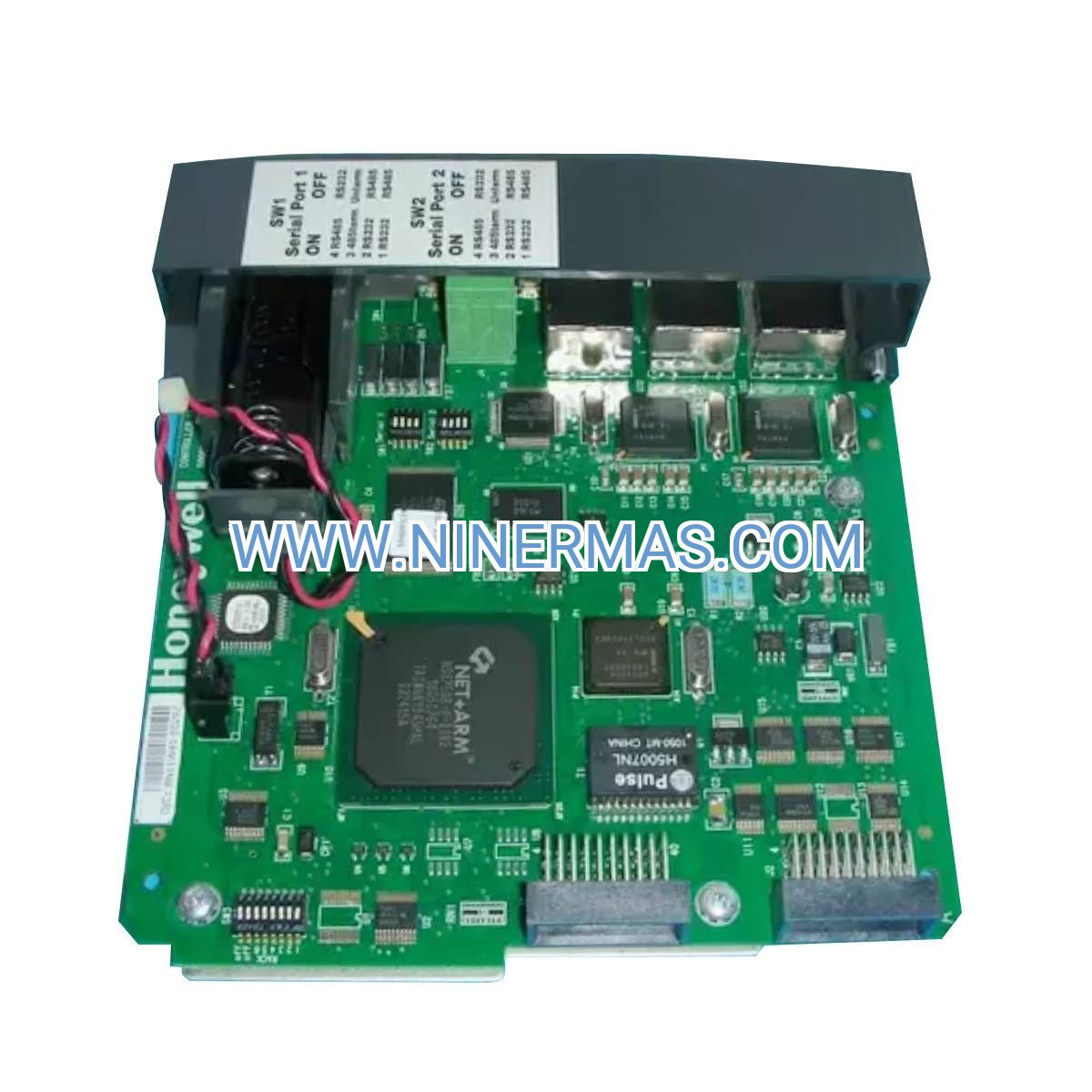
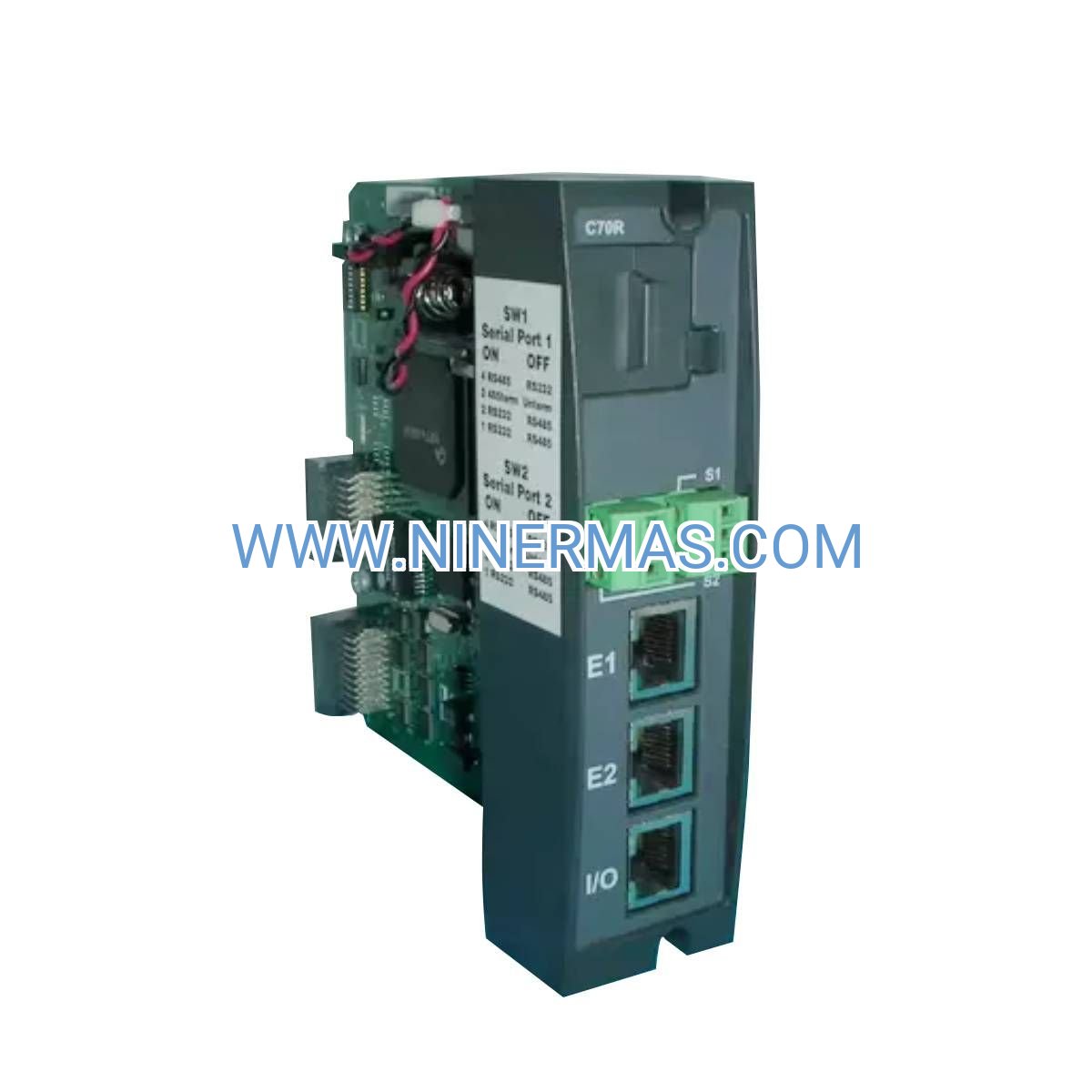
900C72R-0100-44 Redundant CPU Controller (Industrial-Grade Failover Protection)
The 900C72R-0100-44 represents Honeywell's advanced approach to mission-critical process automation, combining dual-CPU redundancy with intelligent failover logic to eliminate single points of failure in industrial control systems.
Designed for facilities where unplanned downtime translates to significant operational losses, this C70R-architecture controller ensures continuous process monitoring across chemical plants, power generation facilities, and automated manufacturing lines. Its hot-standby configuration transitions seamlessly between primary and backup processors without interrupting control loops or losing process data.
Whether you're upgrading legacy control infrastructure or designing new automation systems, the 900C72R-0100-44 delivers enterprise-grade reliability with simplified integration into existing Honeywell ecosystems and third-party SCADA platforms.
Core Capabilities & Business Value
✓ Dual-CPU Redundancy Architecture → Automatic failover within milliseconds ensures zero process interruption during CPU failures, protecting against production losses and safety incidents
✓ Hot-Standby Synchronization → Real-time state mirroring between primary and backup CPUs maintains process continuity without manual intervention or system resets
✓ Diagnostic Intelligence → Built-in health monitoring detects degraded components before failure, enabling predictive maintenance and reducing emergency repair costs
✓ Multi-Protocol Connectivity → Native support for Modbus, OPC, and proprietary Honeywell protocols simplifies integration with HMI systems, historians, and enterprise MES platforms
✓ Industrial-Hardened Design → Conformal-coated circuitry and extended temperature ratings (-20°C to +70°C) ensure reliable operation in harsh manufacturing environments
✓ Scalable I/O Expansion → Modular architecture supports up to 256 I/O points per controller, accommodating facility growth without complete system replacement
Industry Applications & Problem-Solving
Chemical Processing & Petrochemical Refineries
Maintains precise temperature and pressure control during exothermic reactions where controller failure could trigger runaway conditions. Redundant CPUs ensure continuous monitoring of safety interlocks and emergency shutdown systems.
Power Generation & Cogeneration Plants
Supports turbine control, boiler management, and emissions monitoring where grid stability depends on uninterrupted automation. Failover protection prevents costly forced outages and regulatory penalties.
Pharmaceutical Manufacturing (GMP Environments)
Provides validated control for cleanroom HVAC, fermentation vessels, and lyophilization processes. Audit-trail capabilities and deterministic failover meet FDA 21 CFR Part 11 requirements.
Food & Beverage Production Lines
Regulates pasteurization temperatures, CIP cycles, and packaging automation where product spoilage from control failures results in batch losses. Redundancy minimizes food safety risks.
Water Treatment & Municipal Infrastructure
Controls filtration systems, chemical dosing, and pump stations where service interruptions affect public health. Dual-CPU design ensures compliance with Safe Drinking Water Act mandates.
Technical Specifications & Selection Criteria
| Parameter | Specification |
|---|---|
| Model Number | 900C72R-0100-44 |
| CPU Architecture | C70R Redundant Processor |
| Failover Time | <50ms (bumpless transfer) |
| Memory Capacity | Program: 2MB | Data: 1MB |
| Scan Cycle | 10ms typical (deterministic) |
| Communication Ports | Ethernet (2x RJ45), RS-485 (1x) |
| Operating Temperature | -20°C to +70°C |
| Power Supply | 24VDC ±20% (redundant inputs) |
| Dimensions (H×W×D) | 120mm × 85mm × 75mm |
| Weight | 0.34 kg (0.75 lbs) |
| Certifications | UL/cUL, CE, ATEX Zone 2 |
Selection Guidelines: Choose the 900C72R-0100-44 when your application requires SIL 2-rated safety functions, sub-second failover response, or compliance with IEC 61508 functional safety standards. For non-critical applications with acceptable downtime windows, consider standard single-CPU models like the 900C70S series.
Advanced Integration Features
OPC UA Server Functionality
Built-in OPC UA server enables secure, encrypted communication with Industry 4.0 platforms, cloud historians, and mobile HMI applications without requiring middleware gateways.
Cybersecurity Hardening
Role-based access control (RBAC), encrypted firmware updates, and audit logging protect against unauthorized configuration changes and cyber threats in connected environments.
Custom Logic Blocks
Proprietary function block library supports complex control strategies including cascade loops, ratio control, and batch sequencing without external programming tools.
Remote Diagnostics Portal
Web-based interface provides real-time CPU health metrics, I/O status visualization, and alarm history accessible from any networked device without specialized software.
Delivery Timeline & Support Services
Standard Lead Time: 3-5 business days for in-stock units | 10-15 business days for factory-direct orders
Warranty Coverage: 12-month comprehensive warranty covering manufacturing defects and component failures
Technical Support: Lifetime access to application engineers for configuration assistance, troubleshooting, and system optimization
Documentation Package: Installation manual, wiring diagrams, sample ladder logic, and Modbus register maps included
Frequently Asked Questions
How does the redundant CPU configuration improve system uptime compared to single-CPU controllers?
The dual-CPU design eliminates the controller as a single point of failure. If the active CPU experiences a fault, the standby CPU assumes control within 50 milliseconds—faster than most processes can detect the transition. This architecture typically achieves 99.99% availability versus 99.5% for non-redundant systems.
Can I retrofit this controller into an existing HC900 system without reprogramming?
Yes, the 900C72R-0100-44 maintains backward compatibility with HC900 I/O modules and programming environments. Existing control logic can be migrated directly, though you'll need to configure redundancy parameters through the system setup utility.
What network bandwidth is required for redundant CPU synchronization?
The controllers use a dedicated synchronization link (typically 100Mbps Ethernet) separate from process communication networks. Bandwidth requirements range from 5-15 Mbps depending on program size and I/O count, ensuring synchronization doesn't impact HMI or SCADA traffic.
Does the controller support third-party I/O modules via Modbus RTU?
Yes, the RS-485 port supports Modbus RTU master functionality, allowing integration of up to 32 slave devices including VFDs, flowmeters, and third-party I/O racks. Scan rates are configurable from 100ms to 10 seconds per device.
How do I verify both CPUs are functioning correctly during commissioning?
The diagnostic web interface displays real-time health status for both CPUs, including sync status, memory utilization, and communication link quality. You can also perform manual failover tests through the maintenance menu to validate switchover behavior under controlled conditions.
What happens to I/O states during a CPU failover event?
All outputs maintain their last commanded state during the failover transition (bumpless transfer). The standby CPU continuously mirrors the active CPU's I/O table, ensuring no output glitches or unexpected state changes occur when control authority transfers.
Get Started with Your Automation Upgrade
Ready to eliminate downtime risks in your critical control systems? Our application engineers can help you assess compatibility with your existing infrastructure, size the appropriate I/O configuration, and develop a migration plan that minimizes disruption to ongoing operations.
Contact our team today: Share your process requirements, and we'll provide a detailed technical proposal including wiring diagrams, programming templates, and ROI analysis based on your current downtime costs.
© 2026 NINERMAS COMPANY LIMITED. All rights reserved.
Original Source: https://ninermas.com
Contact: sale@ninermas.com | +0086 187 5021 5667
Related products

Contact Info
-
Address:22 / F, South Wo Hang building, 148 Wing Lok Street, Sheung Wan, Western District, Hong Kong
-
Phone:+8618750215667
-
Email:
