


Description
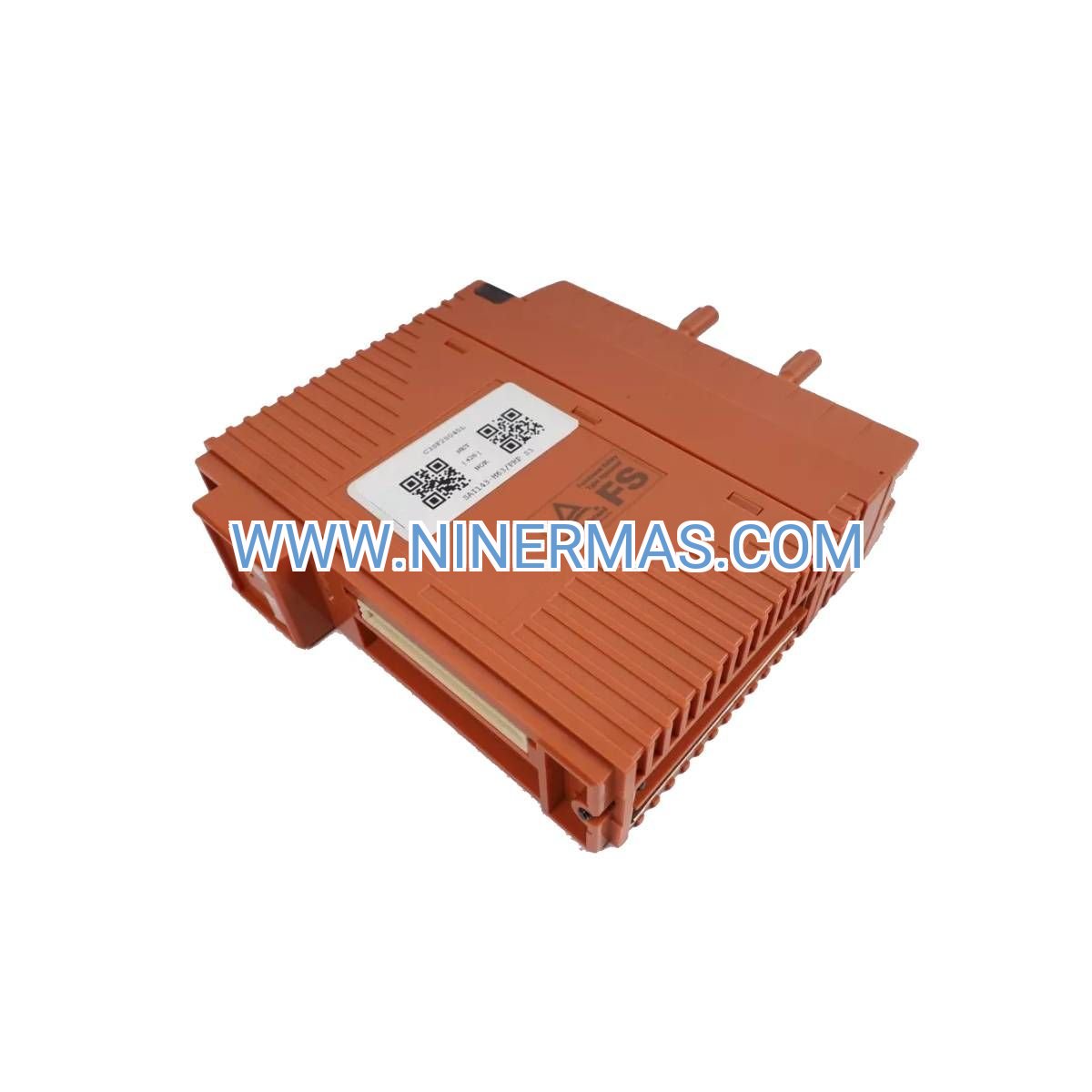
51197564-200 UCN Fiber Optic Extender (Industrial-Grade Network Extension)
The Honeywell 51197564-200 represents a mission-critical fiber optic extension solution engineered for Universal Control Network (UCN) architectures in process automation environments. This industrial-grade module transforms standard UCN electrical signals into optical transmission, enabling interference-free communication across extended distances while maintaining protocol integrity and real-time performance requirements.
Designed for facilities requiring distributed control system connectivity beyond conventional copper limitations, the 51197564-200 addresses electromagnetic interference challenges, ground loop isolation needs, and long-haul communication demands inherent in large-scale industrial operations. Target users include instrumentation engineers, DCS integrators, and plant automation teams managing Honeywell TDC 3000, Experion PKS, or legacy UCN-based control infrastructures.
Key advantages include transparent network extension without protocol conversion overhead, hot-swappable architecture minimizing planned downtime, multi-mode and single-mode fiber compatibility for deployment flexibility, and factory-validated performance ensuring plug-and-play reliability in mission-critical applications.
Core Features & Benefits
✓ Extended Transmission Range: Supports up to 2 kilometers via multi-mode fiber or 15 kilometers through single-mode configurations, eliminating distance constraints in campus-wide or multi-building facilities while preserving UCN timing specifications.
✓ Electromagnetic Immunity: Fiber optic transmission inherently rejects electrical noise, radio frequency interference, and ground potential differences—critical for installations near high-voltage equipment, VFD-heavy environments, or electrically harsh industrial zones.
✓ Hot-Swap Capability: Field-replaceable design allows module exchange during live operation with minimal network disruption, reducing mean time to repair (MTTR) and supporting predictive maintenance strategies without full system shutdowns.
✓ Dual Fiber Compatibility: Configurable for both 62.5/125μm multi-mode and 9/125μm single-mode fiber types, providing installation flexibility based on existing infrastructure, budget constraints, and distance requirements.
✓ Diagnostic LED Array: Front-panel indicators display power status, fiber link integrity, transmit/receive activity, and fault conditions—enabling rapid troubleshooting and reducing diagnostic time by up to 60% compared to non-visual modules.
✓ Industrial Hardened Construction: Conformal-coated PCBs, wide operating temperature range (0°C to 60°C), and vibration-resistant design ensure reliable operation in demanding environments including offshore platforms, heavy manufacturing, and outdoor enclosures.
Application Scenarios
→ Refinery & Petrochemical Complexes: Connect control rooms to remote process units across sprawling facilities where electrical conduit runs exceed practical limits. The 51197564-200 eliminates voltage drop concerns and provides intrinsic electrical isolation in hazardous classified areas, reducing installation costs by 30-40% versus copper-based solutions.
→ Power Generation Facilities: Link distributed control cabinets in coal-fired, combined-cycle, or nuclear plants where high-voltage switchgear creates severe EMI conditions. Fiber optic transmission ensures data integrity in electrically noisy environments, preventing communication errors that could trigger false alarms or process upsets.
→ Pharmaceutical Manufacturing: Extend UCN networks between clean rooms, utility areas, and central control systems while maintaining electrical isolation required by validation protocols. Supports FDA 21 CFR Part 11 compliant architectures through deterministic communication and audit trail capabilities.
→ Pulp & Paper Mills: Span large production floors connecting digester controls, recovery boilers, and paper machines to centralized DCS infrastructure. Addresses moisture, dust, and chemical exposure challenges through sealed fiber optic interfaces resistant to environmental contamination.
→ Water & Wastewater Treatment: Interconnect SCADA master stations with remote lift stations, clarifiers, and treatment basins distributed across municipal facilities. Fiber optic links prevent lightning-induced surges and provide galvanic isolation protecting sensitive control equipment.
Technical Parameters & Selection Guide
| Parameter | Specification |
|---|---|
| Part Number | 51197564-200 |
| Network Protocol | Universal Control Network (UCN) |
| Fiber Type Supported | Multi-mode (62.5/125μm) / Single-mode (9/125μm) |
| Maximum Distance | 2 km (MM) / 15 km (SM) |
| Connector Type | ST-style fiber optic (standard) |
| Operating Temperature | 0°C to 60°C (32°F to 140°F) |
| Power Input | 24 VDC ±10% nominal |
| Power Consumption | ≤ 5W typical |
| Mounting Options | DIN rail / Panel mount |
| Certifications | CE, UL508, CSA C22.2 |
| MTBF | > 100,000 hours |
Selection Criteria: Choose multi-mode fiber for distances under 2 km and cost-sensitive applications; select single-mode for maximum range (up to 15 km) or future-proofing against bandwidth upgrades. Verify existing UCN network voltage (24 VDC standard) and confirm ST connector compatibility with installed fiber infrastructure. For new installations, consider single-mode fiber to accommodate potential system expansions or higher data rate migrations.
Extended Functions
Redundant Network Topologies: Deploy in dual-redundant UCN configurations for fault-tolerant architectures meeting SIL 2/3 safety requirements. Supports automatic failover with sub-second switchover times, maintaining process continuity during primary link failures.
Network Diagnostics Integration: Compatible with Honeywell Station software for remote monitoring of fiber link quality, bit error rates, and signal strength metrics. Enables predictive maintenance through trend analysis of optical power levels and error statistics.
Custom Fiber Lengths: Available with factory-terminated fiber pigtails in custom lengths (1m to 50m) for direct cabinet-to-cabinet connections, eliminating field termination labor and reducing installation errors.
Delivery & Service Assurance
Lead Time: Standard stock items ship within 2-3 business days via express courier (DHL/FedEx). Custom configurations or bulk orders (10+ units) require 7-14 days for factory preparation and quality verification.
Warranty Coverage: Comprehensive 12-month manufacturer's warranty covering material defects, workmanship issues, and performance deviations from published specifications. Warranty includes free replacement and expedited shipping for confirmed failures.
Technical Support: Access to certified Honeywell DCS specialists for installation guidance, network troubleshooting, and integration assistance. Support available via email (response within 4 hours) and phone consultation for urgent issues.
Documentation Package: Each unit includes installation manual, fiber optic handling guidelines, LED diagnostic reference card, and compliance certificates (CE/UL/CSA). CAD drawings and 3D STEP files available for mechanical integration planning.
Frequently Asked Questions
Q: How do I determine if multi-mode or single-mode fiber is appropriate for my UCN extension project?
A: Multi-mode fiber suits distances under 2 km and offers lower component costs (~30% less than single-mode). Single-mode is mandatory for spans exceeding 2 km and provides superior bandwidth headroom for future system upgrades. Evaluate your current distance requirements plus 20% growth margin when selecting fiber type.
Q: Can the 51197564-200 extend UCN networks in hazardous area installations?
A: Yes, when installed in appropriately rated enclosures (Class I Div 2 or ATEX Zone 2), the module provides intrinsic electrical isolation between UCN segments. The fiber optic link eliminates spark risk and ground loop currents, making it ideal for Division 1/Zone 1 boundary applications when paired with certified barriers.
Q: What is the typical power consumption impact when adding fiber extenders to existing UCN networks?
A: Each 51197564-200 module draws approximately 5W from the 24 VDC supply—equivalent to one standard I/O card. For a typical point-to-point extension requiring two modules (transmit and receive ends), total power addition is ~10W, negligible compared to standard UCN power budgets.
Q: Does this fiber extender introduce latency that could affect real-time control loop performance?
A: The 51197564-200 adds less than 50 microseconds of propagation delay per link—insignificant for UCN networks operating at 5 Mbps with typical scan cycles of 100-500 milliseconds. Control loop stability remains unaffected even in cascaded multi-hop fiber configurations.
Q: Are there any special tools required for fiber optic cable installation and testing?
A: Basic installation requires ST connector cleaning tools and optical power meter for link verification. For professional deployments, we recommend OTDR (Optical Time Domain Reflectometer) testing to document fiber quality and identify potential issues before commissioning. Our technical team can provide fiber testing specifications and acceptance criteria.
Q: How does the hot-swap feature work, and what precautions should be observed during module replacement?
A: The module supports removal and insertion under power without damaging UCN network electronics. However, communication will be interrupted during the swap (typically 2-5 seconds). Best practice: schedule replacements during controlled maintenance windows, verify replacement module firmware compatibility, and document fiber connections before removal to ensure correct reconnection.
Ready to Extend Your UCN Network?
Contact our industrial automation specialists today for technical consultation, volume pricing, or custom fiber optic solutions tailored to your facility requirements. Our team provides complimentary network design review and fiber budget calculations to ensure optimal performance.
Request a Quote: Email your project specifications to sale@ninermas.com or call +0086 187 5021 5667 for immediate assistance.
© 2026 NINERMAS COMPANY LIMITED. All rights reserved.
Original Source: https://ninermas.com
Contact: sale@ninermas.com | +0086 187 5021 5667
Related products

Contact Info
-
Address:22 / F, South Wo Hang building, 148 Wing Lok Street, Sheung Wan, Western District, Hong Kong
-
Phone:+8618750215667
-
Email:
