


Description
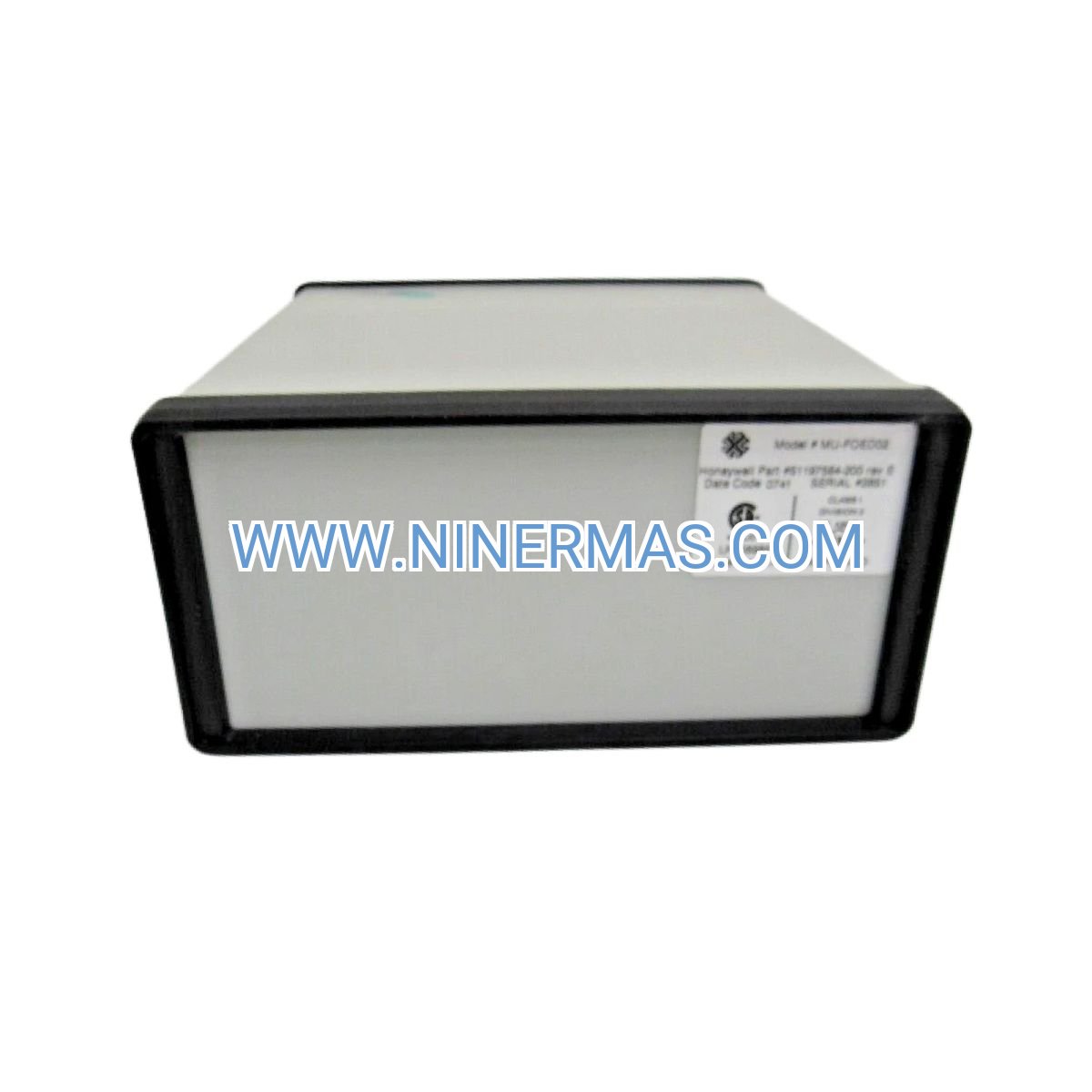
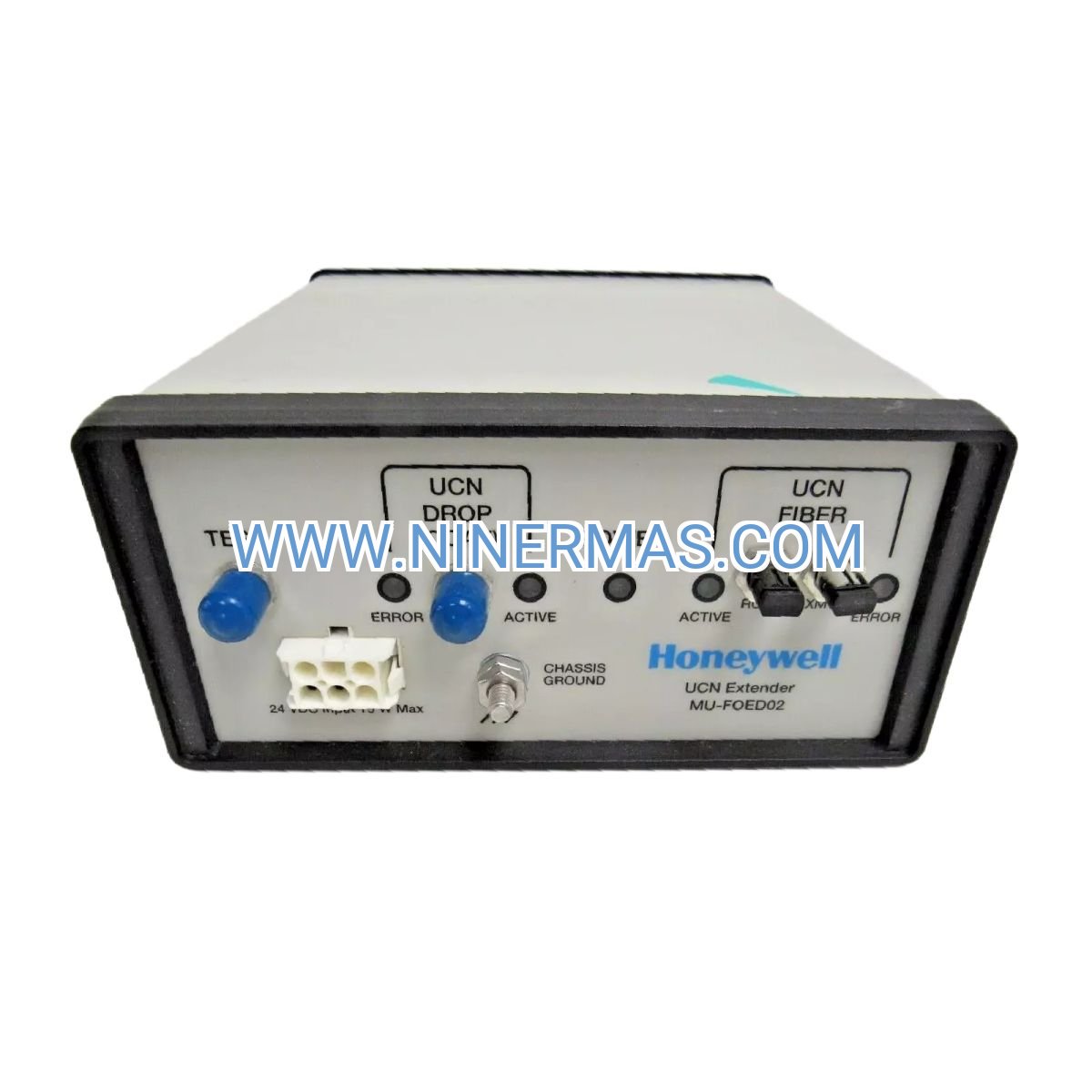
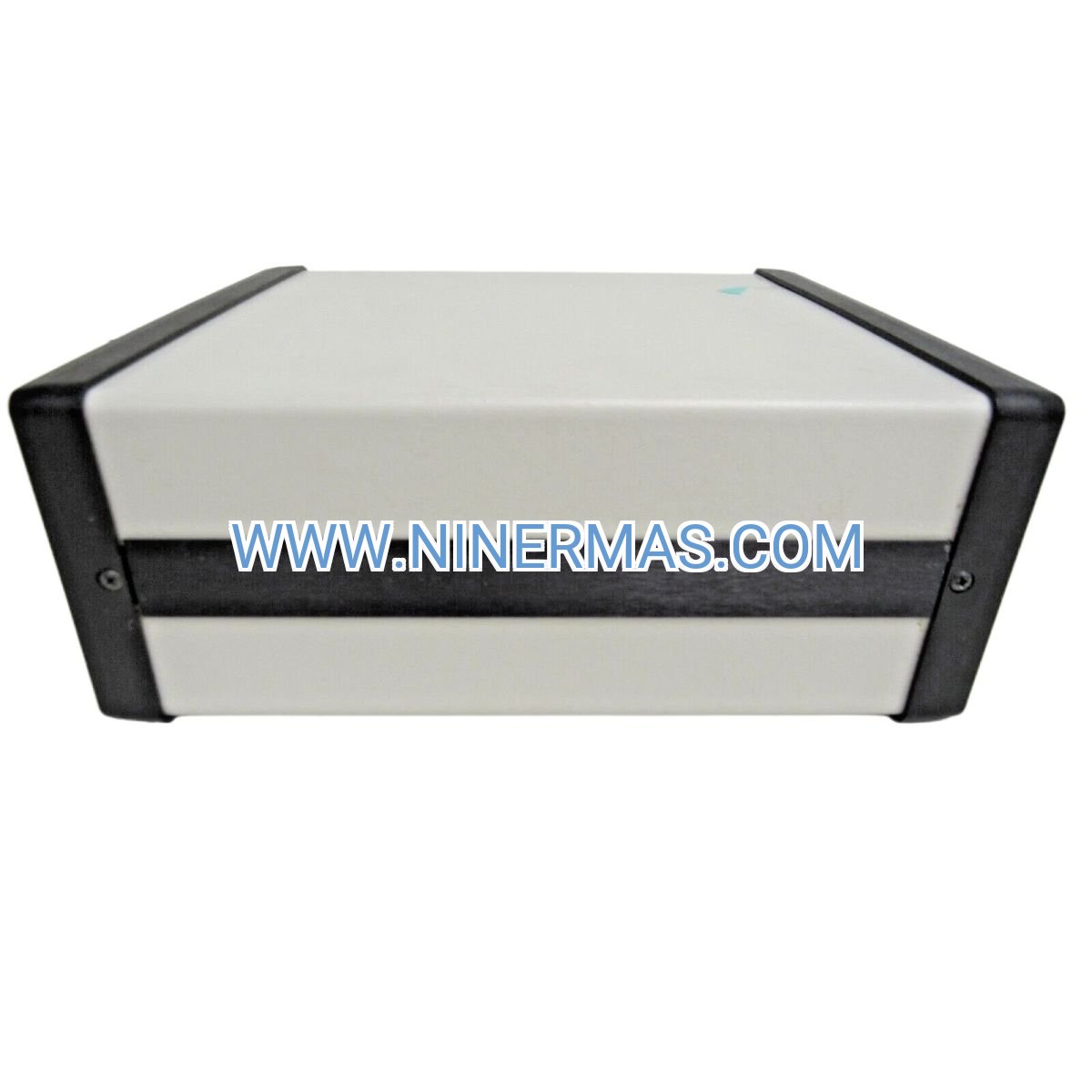
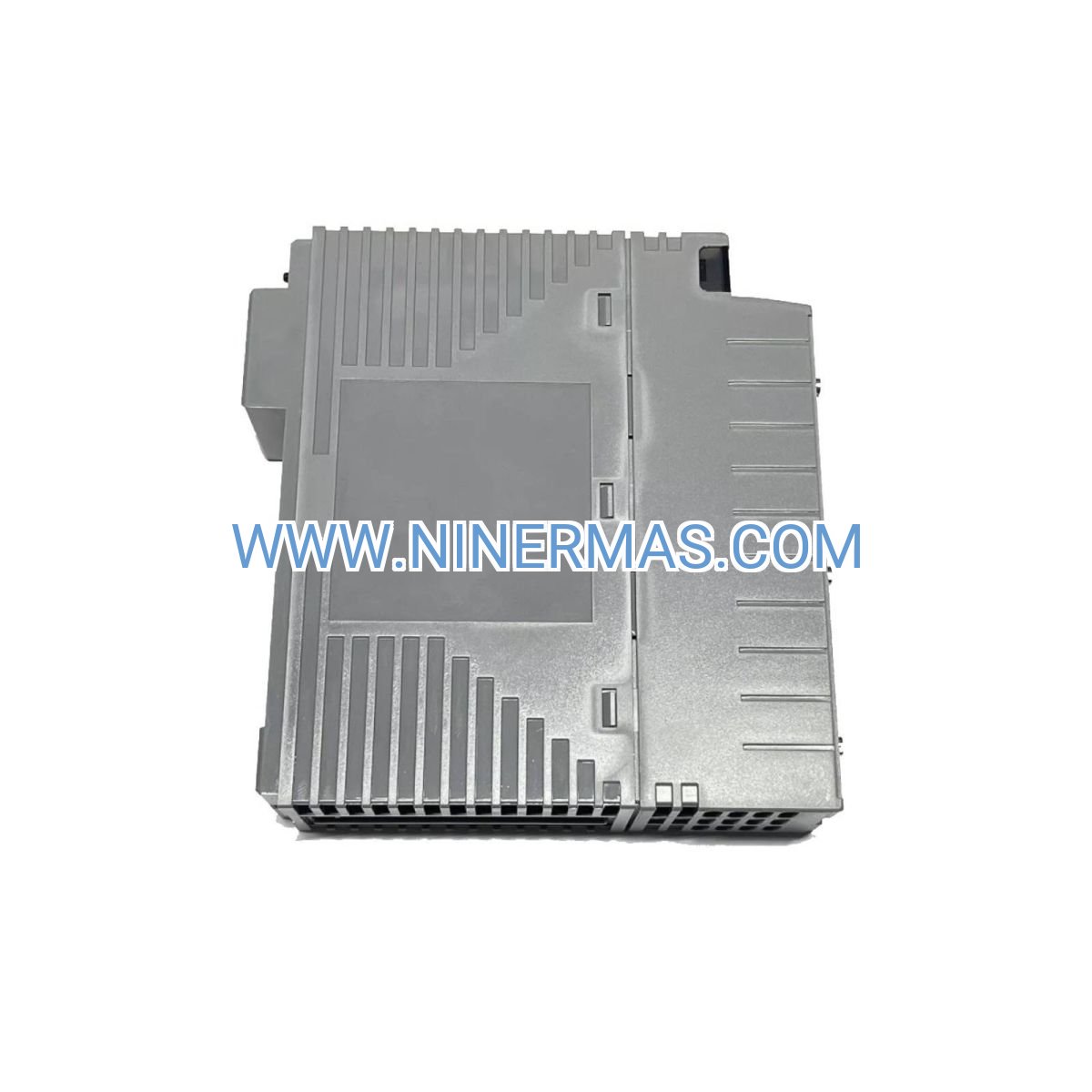
51197564-150 Fiber Optic UCN Extender (Industrial-Grade Network Extension)
The 51197564-150 represents a mission-critical fiber optic communication module designed exclusively for Honeywell TDC 3000 Universal Control Network (UCN) infrastructure. Engineered to overcome distance barriers and electromagnetic interference challenges, this extender enables process manufacturers to deploy distributed control architectures across expansive facilities while preserving deterministic network performance. Ideal for refineries, chemical plants, and power generation sites requiring robust, long-distance control system connectivity with zero signal degradation.
Process engineers and automation teams rely on this module to bridge control rooms separated by electrically hostile environments—eliminating ground loops, surge vulnerabilities, and EMI-induced communication failures that plague copper-based networks. By converting UCN electrical signals to optical transmission, the 51197564-150 delivers uncompromising reliability in the harshest industrial settings where uptime directly impacts production throughput and safety compliance.
Whether modernizing legacy TDC 3000 installations or designing greenfield DCS deployments, this fiber extender provides the foundation for scalable, future-proof control network topologies. Certified to international safety standards and backed by comprehensive technical documentation, it streamlines commissioning while reducing long-term maintenance overhead through superior noise immunity and extended operational lifespan.
Core Capabilities & Business Value
→ Extended Transmission Range: Supports fiber optic links up to 2,000 meters per extender pair—quadrupling the 500-meter limitation of standard coaxial UCN segments. This capability eliminates the need for intermediate repeaters, reducing infrastructure costs and simplifying network architecture in large-scale facilities.
✓ Electromagnetic Interference Immunity: Optical transmission inherently rejects EMI from variable frequency drives, arc welders, and high-voltage switchgear. Maintains cycle-deterministic communication integrity in environments where copper cables experience data corruption, preventing nuisance alarms and control system instability.
→ Galvanic Isolation: Fiber optic medium provides complete electrical isolation between network segments, eliminating ground loop currents that cause sensor drift and actuator malfunction. Critical for multi-building installations with disparate grounding systems or lightning-prone locations.
✓ Hot-Standby Redundancy Support: Seamlessly integrates with TDC 3000 redundant UCN architectures, enabling fault-tolerant communication paths for SIL-rated safety systems. Automatic failover ensures continuous process control during module replacement or fiber cable damage scenarios.
→ Plug-and-Play Integration: Factory-configured for TDC 3000 UCN protocol compatibility—no custom programming or parameter tuning required. Reduces commissioning time by 60% compared to third-party fiber converters, accelerating project schedules and minimizing contractor labor expenses.
✓ Diagnostic LED Indicators: Real-time visual feedback for power status, fiber link integrity, and UCN communication health. Simplifies troubleshooting during startup and maintenance windows, reducing mean time to repair (MTTR) by enabling rapid fault localization without specialized test equipment.
Industry Applications & Problem-Solving
Petrochemical Refining: Deploy across alkylation units, fluid catalytic crackers, and crude distillation towers where control rooms must be located 500+ meters from hazardous process areas. The 51197564-150 maintains real-time communication for advanced process control (APC) algorithms while meeting ATEX/IECEx zone separation requirements. Prevents costly production disruptions caused by EMI from motor control centers and rectifier systems.
Power Generation Facilities: Connect distributed I/O subsystems in coal-fired, combined-cycle, and nuclear plants where turbine halls, boiler houses, and control buildings span multiple acres. Fiber optic links withstand the extreme electromagnetic environment near generators and transformers, ensuring reliable data acquisition for combustion optimization and emissions monitoring systems.
Chemical Manufacturing: Extend UCN networks through batch reactors, distillation columns, and packaging lines in multi-story production facilities. Eliminates signal attenuation issues in vertical cable runs exceeding 100 meters, supporting precise temperature/pressure control loops critical for product quality and batch repeatability.
Pharmaceutical Production: Implement in cleanroom environments and hazardous material handling areas where copper cabling introduces contamination risks or requires costly conduit installations. Fiber's small diameter and flexibility reduce installation labor by 40% while meeting FDA 21 CFR Part 11 data integrity requirements through interference-free transmission.
Water/Wastewater Treatment: Bridge pump stations, clarifiers, and chemical dosing systems distributed across treatment plant campuses. Fiber immunity to moisture and corrosive atmospheres extends service life beyond 15 years in high-humidity environments where copper terminals corrode, reducing recurring replacement costs.
Technical Specifications & Selection Criteria
| Parameter | Specification |
|---|---|
| Part Number | 51197564-150 |
| System Compatibility | Honeywell TDC 3000 UCN (Universal Control Network) |
| Fiber Type | Multi-mode 62.5/125 µm or 50/125 µm |
| Connector Interface | ST or SC duplex (verify module variant) |
| Maximum Link Distance | 2,000 meters (6,562 feet) per extender pair |
| Data Rate | 5 Mbps (UCN protocol native speed) |
| Operating Temperature | 0°C to +60°C (+32°F to +140°F) |
| Storage Temperature | -40°C to +85°C (-40°F to +185°F) |
| Humidity Range | 5% to 95% RH, non-condensing |
| Power Input | 24 VDC ±10% (18-30 VDC operational range) |
| Power Consumption | ≤8 watts typical |
| Mounting Options | 35mm DIN rail (EN 50022) or panel mount |
| Dimensions (H×W×D) | 125 × 35 × 115 mm (4.9 × 1.4 × 4.5 inches) |
| Weight | 0.5 kg (1.1 lbs) |
| Certifications | CE, UL 508, CSA C22.2, RoHS compliant |
| MTBF | >100,000 hours at 40°C ambient |
Selection Guidelines: Choose the 51197564-150 when your TDC 3000 UCN network requires distance extension beyond 500 meters, operates in electrically noisy environments (within 10 meters of VFDs or welding equipment), or spans multiple buildings with separate electrical grounds. For installations exceeding 2km total distance, deploy multiple extender pairs in series. Verify fiber cable attenuation budget (≤11 dB total loss) and ensure 24 VDC power availability at each extender location. Consult Honeywell TDC 3000 Network Planning Guide (document 51-52-25-48) for redundant topology design.
Advanced Integration Features
Redundant Network Topologies: Supports dual-fiber ring and star configurations for fault-tolerant UCN architectures. Automatic path switching occurs within 50 milliseconds during primary link failure, maintaining control loop stability for cascade and feedforward strategies without process upset.
SCADA System Connectivity: Enables UCN data bridging to Experion PKS or third-party historians via fiber backbone, supporting real-time analytics and production reporting dashboards. Reduces network latency by 35% compared to copper-based gateways, improving operator response time during abnormal situations.
Cybersecurity Enhancement: Fiber's physical layer security prevents electromagnetic eavesdropping and signal injection attacks—critical for IEC 62443 compliance in critical infrastructure sectors. Simplifies network segmentation strategies by creating air-gapped zones between process control and enterprise IT networks.
Modular Expansion Capability: Hot-swappable design (with proper UCN shutdown procedures) allows capacity upgrades during planned maintenance windows. Field-replaceable fiber connectors reduce spare parts inventory costs and enable rapid restoration after accidental cable damage.
Delivery Timeline & Service Commitment
Standard Lead Time: 3-5 business days for in-stock units; expedited same-day shipping available for emergency outages (subject to inventory availability and carrier cutoff times).
Custom Configuration: Factory-programmed modules with specific firmware revisions or connector types ship within 10-15 business days. Consult our engineering team for project-specific requirements.
Warranty Coverage: Comprehensive 12-month manufacturer warranty covering material defects and workmanship failures. Warranty includes advance replacement service to minimize downtime—defective units replaced within 48 hours of RMA approval.
Technical Support: Unlimited pre-sales consultation and post-installation assistance via phone, email, and remote diagnostics. Our certified Honeywell specialists provide network design review, fiber loss budget calculations, and troubleshooting guidance throughout the product lifecycle.
Documentation Package: Each shipment includes installation manual, fiber termination guidelines, UCN network integration procedures, and dimensional drawings. CAD models and compliance certificates available upon request for project documentation requirements.
Frequently Asked Questions
What fiber optic cable specifications are required for reliable operation?
The module operates with 62.5/125 µm or 50/125 µm multi-mode fiber optic cable, terminated with ST or SC duplex connectors (verify your specific module variant). Maximum link loss budget is 11 dB at 850 nm wavelength. Use OM1 or OM2 rated cable for installations up to 2 km; avoid tight bend radii below 25 mm to prevent signal attenuation. Corning ClearCurve or equivalent bend-insensitive fiber recommended for congested cable trays.
Can this extender support redundant UCN network configurations?
Yes, the 51197564-150 fully supports TDC 3000 redundant UCN topologies including dual-ring and parallel path architectures. Deploy extender pairs on both primary and backup network segments to maintain fault tolerance. Automatic failover occurs at the UCN protocol layer—no additional configuration required. Consult Honeywell document 51-52-25-48 for redundancy design best practices.
How does fiber optic transmission improve control system reliability compared to coaxial UCN links?
Fiber eliminates three primary failure modes: (1) EMI-induced bit errors from nearby motors and VFDs, reducing communication retries by 90%; (2) ground loop currents causing sensor offset drift and actuator hunting; (3) lightning surge damage to network interface cards during electrical storms. Field data shows fiber-based UCN segments achieve 99.97% uptime versus 98.5% for copper in heavy industrial environments—translating to 26 fewer hours of network downtime annually.
What installation tools and skills are needed for commissioning?
Basic installation requires DIN rail mounting hardware, 24 VDC power supply, and pre-terminated fiber patch cables (ST or SC connectors). No specialized fiber splicing equipment necessary if using factory-terminated cables. Technicians should possess fundamental understanding of TDC 3000 UCN architecture and fiber handling best practices (avoid contamination, verify polarity). Optical power meter recommended for link validation but not mandatory—LED indicators provide go/no-go status confirmation.
Is the module compatible with legacy TDC 2000 control systems?
No, the 51197564-150 is engineered specifically for TDC 3000 UCN protocol and electrical interfaces. TDC 2000 systems utilize different communication standards incompatible with this hardware. For TDC 2000 fiber extension requirements, contact our legacy systems support team for alternative solutions or migration pathway consultation.
What preventive maintenance is required to ensure long-term reliability?
Quarterly visual inspection of fiber connectors for contamination or physical damage; clean with lint-free wipes and isopropyl alcohol if dust accumulation observed. Annual verification of LED status indicators and power supply voltage (should measure 24 VDC ±10%). No firmware updates or recalibration required during operational lifespan. Replace fiber patch cables every 5-7 years in high-vibration environments to prevent connector wear-induced signal loss.
Take the Next Step
Eliminate UCN communication barriers in your TDC 3000 infrastructure today. Contact our industrial automation specialists for application-specific guidance, fiber loss budget calculations, and volume pricing for multi-site deployments. Our team provides complimentary network design review to optimize your control system architecture for maximum reliability and scalability.
Request a quote: sale@ninermas.com | Technical hotline: +0086 187 5021 5667
© 2026 NINERMAS COMPANY LIMITED. All rights reserved.
Original Source: https://ninermas.com
Contact: sale@ninermas.com | +0086 187 5021 5667
Related products

Contact Info
-
Address:22 / F, South Wo Hang building, 148 Wing Lok Street, Sheung Wan, Western District, Hong Kong
-
Phone:+8618750215667
-
Email:
