Description
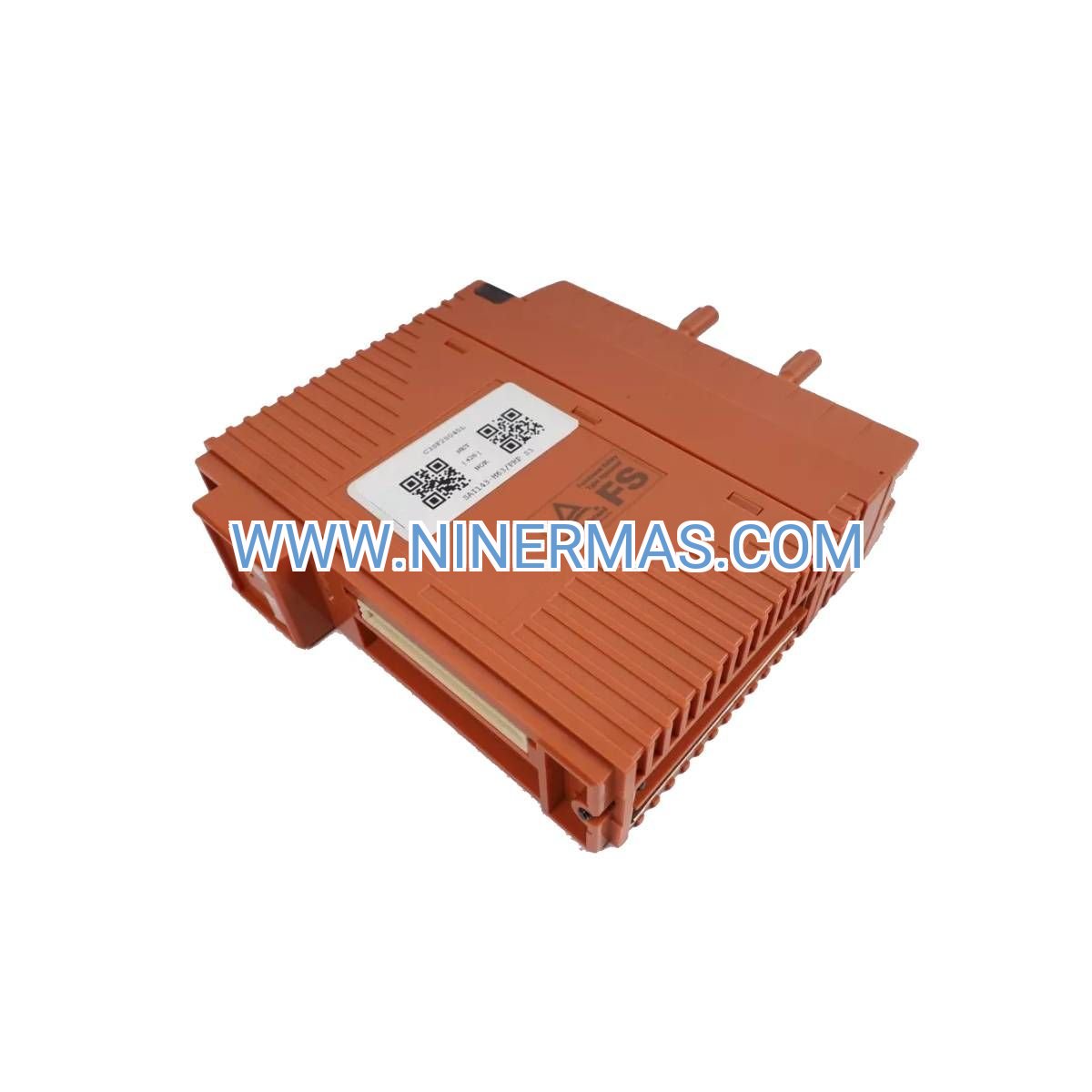
Honeywell 10020/1/1 FSC CPU Module – Industrial-Grade Safety Logic Solver
The Honeywell 10020/1/1 FSC CPU Module is a certified SIL 3 safety controller engineered for mission-critical industrial applications where process safety cannot be compromised. This dual-redundant central processing unit executes fail-safe logic with deterministic precision, protecting personnel, assets, and the environment across oil & gas, chemical processing, power generation, and manufacturing sectors.
Designed for seamless integration into Honeywell's Fail-Safe Controller (FSC) ecosystem, this CPU module serves as the intelligent core of emergency shutdown systems, fire & gas detection networks, and burner management platforms. Its triple modular redundancy architecture ensures continuous operation even during component failures, while comprehensive self-diagnostics maintain >99% fault coverage for regulatory compliance.
Whether you're upgrading legacy safety systems or designing new SIS installations, the 10020/1/1 delivers proven reliability backed by decades of field deployment. Contact our safety system specialists to configure the optimal solution for your application requirements.
Core Capabilities & Technical Advantages
✓ Certified Safety Integrity: Achieves SIL 3 certification per IEC 61508 standards, meeting the most stringent functional safety requirements for high-demand mode applications with proven failure rates and diagnostic coverage.
✓ Fault-Tolerant Architecture: Dual redundant processors with automatic cross-checking eliminate single points of failure, while hot-standby operation ensures seamless failover without process interruption or safety function degradation.
✓ Deterministic Performance: Configurable scan cycles from 10-100 ms guarantee predictable response times for time-critical safety actions, essential for rapid shutdown sequences and protective interlocks.
✓ Maintenance Without Downtime: Hot-swappable design allows CPU replacement during operation in redundant configurations, reducing maintenance windows and maximizing plant availability.
✓ Extensive I/O Scalability: Supports up to 2,048 digital and 512 analog I/O points through distributed architecture, accommodating complex safety systems with hundreds of field devices.
✓ Advanced Diagnostics: Continuous self-monitoring detects processor faults, memory errors, communication failures, and power anomalies with detailed event logging for rapid troubleshooting and compliance documentation.
Industry Applications & Use Cases
→ Petrochemical Emergency Shutdown: In offshore platforms and refinery units, the 10020/1/1 executes multi-level shutdown logic responding to process deviations, equipment failures, or manual activation. Integration with pressure transmitters, temperature sensors, and valve actuators creates comprehensive protection layers preventing catastrophic releases.
→ Fire & Gas Safety Systems: Chemical plants deploy this CPU as the central logic solver for fire and gas detection networks, processing inputs from hundreds of detectors and activating suppression systems, ventilation controls, and evacuation alarms within milliseconds of hazard detection.
→ Power Generation Protection: Turbine control systems utilize the module for overspeed protection, vibration monitoring, and emergency trip functions, safeguarding multi-million dollar assets while maintaining grid stability during abnormal conditions.
→ Pharmaceutical Clean Room Control: Sterile manufacturing environments rely on this controller for critical parameter monitoring, ensuring temperature, pressure, and contamination levels remain within validated ranges with full audit trail documentation.
→ Pipeline High Integrity Pressure Protection: HIPPS applications prevent pipeline overpressure by rapidly closing isolation valves based on real-time pressure monitoring, protecting infrastructure while avoiding costly pressure relief system activation.
Technical Specifications & Selection Criteria
| Specification | Value |
|---|---|
| Part Number | 10020/1/1 |
| Safety Certification | SIL 3 (IEC 61508), TÜV approved |
| CPU Architecture | Dual redundant with TMR voting |
| Program Memory | 512 KB flash, battery-backed |
| Data Memory | 256 KB RAM with ECC |
| Scan Cycle Range | 10-100 ms (user configurable) |
| Operating Temperature | -40°C to +70°C (-40°F to +158°F) |
| Power Requirements | 24V DC ±20%, 15W typical |
| Communication Interfaces | Modbus RTU, Ethernet/IP, OPC UA |
| Diagnostic Coverage | >99% (automatic self-test) |
| MTBF Rating | >100,000 hours (proven in field) |
| Environmental Rating | IP20 (requires enclosure for harsh environments) |
Selection Guidelines: Choose the 10020/1/1 for standard SIL 3 applications requiring up to 2,048 I/O points with scan times of 10-100 ms. For larger systems exceeding 2,048 points or requiring sub-10 ms response, consider the quad processor variant. Evaluate your I/O distribution requirements to determine the number of bus driver modules and rack configurations needed for optimal system architecture.
Advanced Integration & Connectivity Options
Industrial IoT Readiness: Native Ethernet/IP and OPC UA support enables seamless integration with modern SCADA platforms, historian databases, and cloud analytics services. Real-time process data, alarm status, and diagnostic information stream to supervisory systems for centralized monitoring and predictive maintenance programs.
Legacy System Compatibility: Modbus RTU serial communication maintains backward compatibility with existing field instrumentation and DCS infrastructure, protecting capital investments while enabling phased modernization strategies.
Cybersecurity Features: Built-in authentication, encrypted communications, and role-based access control protect safety systems from unauthorized modifications and cyber threats, meeting IEC 62443 industrial cybersecurity standards.
Custom Application Development: Program using IEC 61131-3 standard languages (FBD, LD, ST, SFC) with Honeywell's Safety Manager engineering suite. Pre-validated function blocks accelerate development while ensuring code correctness through integrated simulation and formal verification tools.
Delivery Timeline & Service Commitments
Standard Lead Time: 3-5 business days for in-stock units with expedited shipping available for urgent project requirements.
Custom Configuration: 7-10 business days for pre-programmed modules with customer-specific logic and I/O mapping.
Warranty Coverage: Comprehensive 12-month manufacturer warranty covering defects in materials and workmanship, with optional extended service agreements available.
Technical Support: Lifetime application engineering assistance including system design review, configuration guidance, troubleshooting support, and on-site commissioning services.
Documentation Package: Complete technical manuals, safety validation reports, IEC 61508 certification documents, and CAD drawings provided with every order for seamless project execution.
Frequently Asked Questions
How does the 10020/1/1 CPU module ensure continuous safety function availability?
The dual redundant processor architecture continuously cross-checks logic execution between both CPUs. If one processor detects a fault or discrepancy, the system automatically switches to the healthy processor while generating diagnostic alarms, maintaining safety functions without interruption.
What programming languages are supported for safety logic development?
The module supports all five IEC 61131-3 languages: Function Block Diagram (FBD), Ladder Diagram (LD), Structured Text (ST), Sequential Function Chart (SFC), and Instruction List (IL). Most safety applications utilize FBD for graphical clarity and ease of validation.
Can this CPU integrate with non-Honeywell field devices and control systems?
Yes, through standard Modbus RTU/TCP and Ethernet/IP protocols, the 10020/1/1 communicates with third-party transmitters, actuators, and DCS platforms from manufacturers like Yokogawa, Emerson, Siemens, and ABB.
What is the maximum physical distance between the CPU and remote I/O racks?
Using fiber optic bus driver modules, I/O racks can be located up to 2 kilometers from the CPU module, enabling distributed architectures across large process facilities while maintaining deterministic communication timing.
Does the module require specialized environmental conditions for installation?
The CPU operates reliably in industrial environments from -40°C to +70°C with IP20 rating. For harsh environments with dust, moisture, or corrosive atmospheres, install in NEMA 4X or IP65-rated enclosures with appropriate climate control.
How often should proof testing be performed to maintain SIL 3 certification?
Proof test intervals depend on your safety requirements specification (SRS) and calculated probability of failure on demand (PFD). Typical intervals range from 12-24 months, with automated diagnostic routines reducing manual testing burden while maintaining compliance.
Get Expert Guidance for Your Safety System Project
Designing safety instrumented systems requires deep expertise in functional safety standards, hazard analysis, and system architecture. Our certified safety engineers provide complimentary consultation to help you:
→ Determine the optimal CPU configuration for your SIL requirements
→ Calculate system reliability and proof test intervals
→ Design redundant architectures for maximum availability
→ Select compatible I/O modules and communication interfaces
→ Develop migration strategies from legacy safety systems
Contact our team today to discuss your application requirements and receive a detailed technical proposal with system architecture drawings, bill of materials, and project timeline.
© 2026 NINERMAS COMPANY LIMITED. All rights reserved.
Original Source: https://ninermas.com
Contact: sale@ninermas.com | +0086 187 5021 5667
Related products

Contact Info
-
Address:22 / F, South Wo Hang building, 148 Wing Lok Street, Sheung Wan, Western District, Hong Kong
-
Phone:+8618750215667
-
Email: