Description
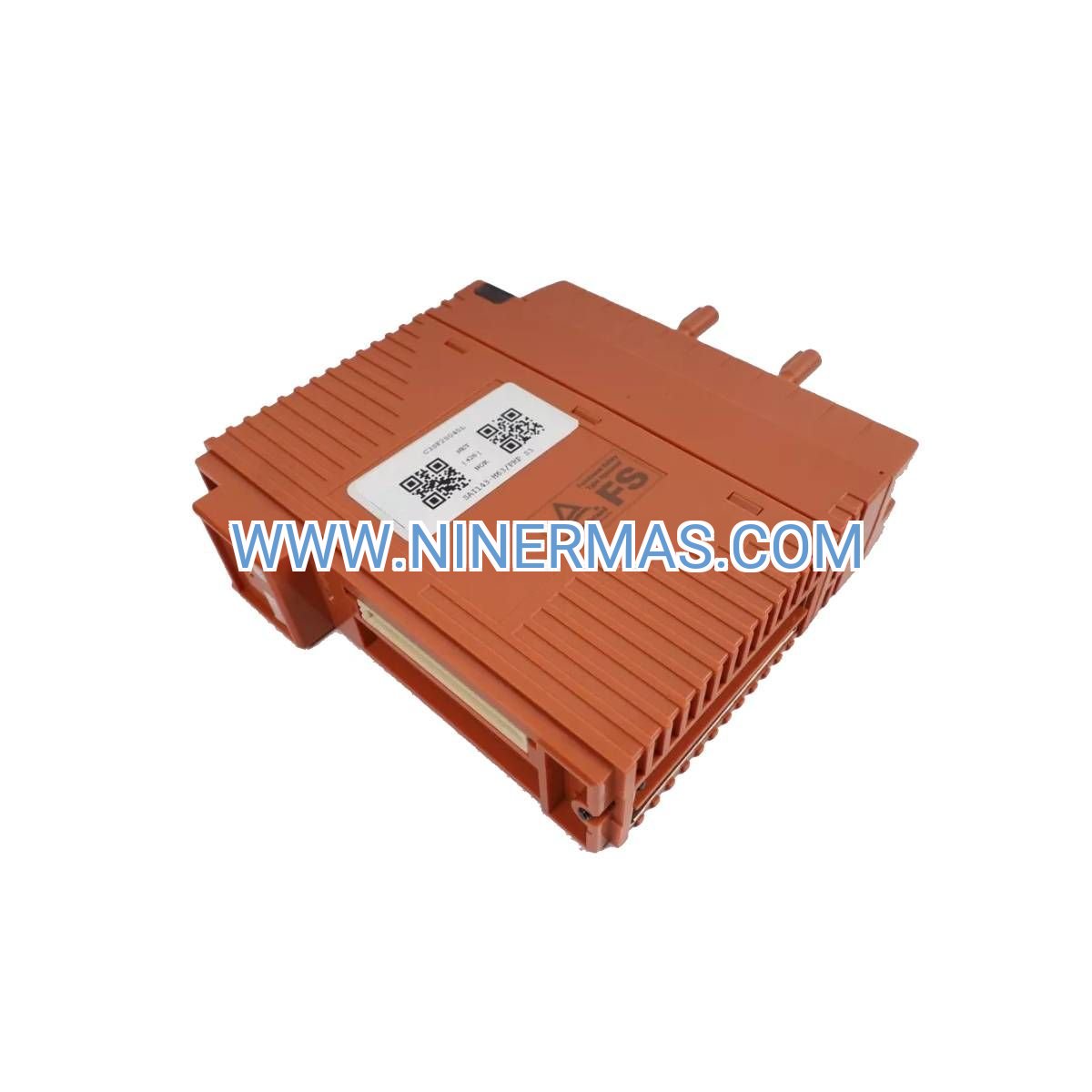
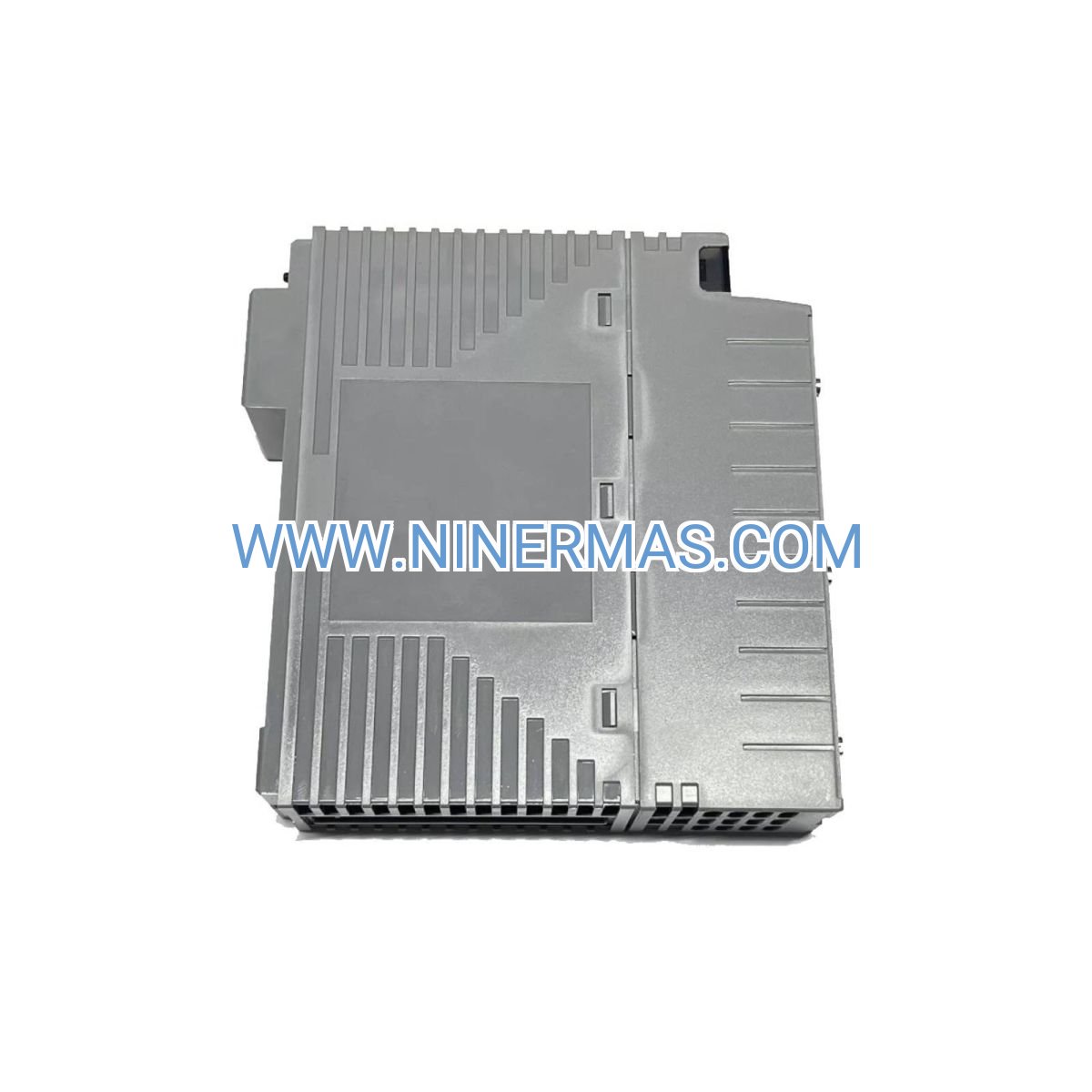
VE4032S1T2B1 KJ3201X1-EA1 Redundant Digital Output Terminal Assembly (Industrial-Grade DeltaV Interface)
The VE4032S1T2B1 KJ3201X1-EA1 represents a mission-critical field-wiring interface designed for high-availability process control environments. This redundant discrete terminal assembly bridges Emerson DeltaV 8-channel digital output modules to field actuators, solenoid valves, and control relays with fault-tolerant architecture that eliminates single points of failure in safety-instrumented systems.
Engineered for continuous operation in harsh industrial settings, this terminal block delivers reliable 24 VDC switching across eight independent channels while supporting dual I/O card configurations for seamless failover during maintenance cycles or component degradation. The hot-swappable design minimizes process downtime by allowing technicians to service I/O cards without breaking field connections—a critical advantage in 24/7 manufacturing operations where unplanned shutdowns cost thousands per hour.
Whether you're upgrading legacy DCS infrastructure, expanding existing DeltaV installations, or stocking critical spares for emergency response, the VE4032S1T2B1 delivers the performance consistency and regulatory compliance demanded by pharmaceutical, petrochemical, and power generation facilities worldwide.
Core Capabilities & Technical Advantages
→ Fault-Tolerant Redundancy: Dual I/O card support enables automatic switchover to backup channels within 100ms of primary card failure, maintaining process stability during hardware faults or scheduled maintenance without operator intervention.
→ Hot-Swap Serviceability: Field wiring remains undisturbed during I/O card replacement, reducing commissioning errors and cutting maintenance windows from hours to minutes—critical for batch processes with tight production schedules.
→ Integrated Electrical Protection: Onboard surge suppression and reverse-polarity safeguards protect sensitive DeltaV electronics from field-induced transients, reducing nuisance trips and extending controller lifespan in electrically noisy environments.
→ Visual Diagnostic Feedback: Per-channel LED indicators provide instant output state verification during commissioning and troubleshooting, eliminating guesswork when diagnosing field wiring issues or validating control logic.
→ Hazardous Area Certification: ATEX, IECEx, and UL approvals enable deployment in Zone 2/Division 2 classified locations, expanding system applicability to upstream oil & gas and chemical processing facilities with explosive atmosphere risks.
✓ Universal DeltaV Compatibility: Interfaces seamlessly with KJ3202X1, KJ3208X1, and legacy M-series digital output cards, protecting long-term investment in existing control infrastructure while supporting phased migration strategies.
Industrial Deployment Scenarios
Emergency Shutdown Systems (ESD): In refineries and chemical plants, the VE4032S1T2B1 forms the backbone of SIL 2/SIL 3 safety instrumented functions by driving redundant solenoid valves in 1oo2 voting configurations. Dual output channels actuate separate valve coils, ensuring critical isolation valves close even during single-channel failures—meeting IEC 61511 hardware fault tolerance requirements without complex external relay logic.
Pharmaceutical Batch Manufacturing: Cleanroom production lines leverage the terminal block's hot-swap capability to replace I/O cards between batch runs without contaminating sterile environments. Technicians service control cabinets located outside classified areas while field wiring to CIP valves and transfer pumps remains sealed, maintaining FDA 21 CFR Part 11 audit trails and reducing validation costs.
Water Treatment SCADA: Municipal water facilities deploy the VE4032S1T2B1 to control chemical dosing pumps, clarifier scrapers, and filter backwash valves across geographically distributed lift stations. The terminal block's -40°C to +70°C operating range withstands unheated equipment shelters in extreme climates, while 2A per-channel capacity directly drives high-current solenoid actuators without intermediate amplification.
Power Generation Auxiliary Systems: Coal-fired and combined-cycle plants utilize redundant terminal blocks for boiler feedwater control, ash handling systems, and cooling tower fan sequencing. The fault-tolerant architecture prevents forced outages caused by I/O card failures, protecting revenue streams where every hour of unplanned downtime represents $50,000+ in lost generation capacity.
Food & Beverage CIP Systems: Dairy processing and brewery operations integrate the VE4032S1T2B1 into clean-in-place (CIP) skids controlling pneumatic diverter valves and spray ball actuators. Laser-etched terminal labels and color-coded wiring zones accelerate troubleshooting during sanitation cycles, reducing mean time to repair (MTTR) when production schedules demand rapid changeover between product runs.
Technical Parameters & Selection Criteria
| Catalog Number | VE4032S1T2B1 / KJ3201X1-EA1 |
| Terminal Type | Redundant Discrete Digital Output Interface |
| Channel Count | 8 independent output circuits |
| Nominal Voltage | 24 VDC switching (18-30 VDC operating range) |
| Current Rating | 2A maximum per channel (module-dependent) |
| Wire Gauge | 12-24 AWG (0.25-2.5 mm²) with screw-clamp termination |
| Operating Temperature | -40°C to +70°C (-40°F to +158°F) |
| Storage Temperature | -40°C to +85°C (-40°F to +185°F) |
| Humidity Tolerance | 5% to 95% RH non-condensing |
| Mounting Method | 35mm DIN rail (EN 50022 standard) |
| Redundancy Architecture | Dual I/O card support with automatic failover |
| Diagnostic Indicators | Green LED per channel (output energized state) |
| Certifications | UL, CE, ATEX, IECEx, FM, CSA |
| Hazardous Area Rating | Zone 2 / Division 2 (Class I, Div 2, Groups A-D) |
| MTBF | >500,000 hours (Telcordia SR-332 prediction) |
| Service Life | 20+ years continuous industrial operation |
Selection Guidelines: Choose the VE4032S1T2B1 when your application requires fault-tolerant digital output control with hot-swap serviceability. For non-redundant installations where cost optimization outweighs availability requirements, consider the VE4002S1T2B1 simplex terminal block. Applications demanding intrinsic safety barriers for Zone 0/Division 1 field devices should specify galvanic isolators between the terminal block and hazardous area wiring.
Advanced Integration Features
Redundancy Coordination: When paired with dual KJ3202X1 or KJ3208X1 output cards, the terminal block automatically routes control signals from the active primary module to field devices. DeltaV's built-in redundancy manager monitors card health via internal diagnostics, transferring output control to the secondary card upon detecting communication loss, power supply degradation, or self-test failures—all without requiring custom function block programming.
EMI/RFI Hardening: Integrated common-mode chokes and differential-mode capacitors attenuate high-frequency noise coupled from VFD motor drives, welding equipment, and radio transmitters. The terminal block maintains signal integrity in environments with field strengths up to 10 V/m (80 MHz - 1 GHz), preventing false output triggering that could compromise batch recipe execution or safety interlock logic.
Shield Grounding Architecture: A dedicated shield termination bar provides 360-degree cable shield continuity, draining induced currents to chassis ground without creating ground loops through signal commons. This design meets IEC 61000-5-2 earthing guidelines for industrial process measurement and control equipment, reducing susceptibility to lightning-induced surges and electrostatic discharge events.
Thermal Management: The terminal block's aluminum housing dissipates heat generated by high-current loads (e.g., 2A solenoid coils) through convection cooling, eliminating the need for forced ventilation in ambient temperatures up to 70°C. Thermal derating curves in the product datasheet guide engineers in calculating maximum simultaneous channel loading for elevated temperature installations.
Commissioning & Configuration Workflow
Installation begins with DIN rail mounting within DeltaV carrier assemblies, positioning the terminal block adjacent to compatible digital output cards. A keyed 50-pin connector on the terminal block's rear panel mates with the I/O card, preventing incorrect module insertion through mechanical coding. Field cables terminate on numbered screw terminals using ferrule-crimped wire ends for vibration-resistant connections that comply with European wiring standards (DIN 46228).
During system configuration in DeltaV Control Studio, engineers assign each terminal block channel to control module outputs, specifying fault-state behavior (energized/de-energized), diagnostic alarm thresholds, and output type (sourcing/sinking). The terminal block operates as a passive wiring interface requiring no firmware updates or software configuration—simplifying spare parts management and reducing commissioning complexity compared to intelligent I/O systems.
Pre-startup verification involves manually activating outputs through DeltaV Operate while observing terminal block LEDs and measuring voltage at field device terminals. This loop check confirms correct wiring polarity, adequate power supply capacity, and proper output card functionality before transferring control to automated sequences—preventing costly startup delays caused by wiring errors discovered during initial process runs.
Delivery Timeline & Service Commitment
Standard Lead Time: 3-5 business days for in-stock units shipping to North America, Europe, and Asia-Pacific industrial hubs. Expedited same-day dispatch available for emergency breakdown situations where production losses justify premium freight costs.
Custom Configurations: 10-15 business days for factory-configured assemblies with pre-terminated field cables, custom labeling, or integrated surge protection modules—ideal for large-scale DCS expansions requiring consistent documentation and reduced field labor.
Warranty Coverage: 24-month manufacturer's warranty covering material defects and workmanship failures. Extended warranty programs available for critical spares inventory where long-term availability assurance justifies incremental cost.
Technical Support: Complimentary pre-sales engineering assistance for wiring diagram review, redundancy architecture design, and hazardous area classification verification. Post-sales support includes troubleshooting guidance, replacement part cross-referencing, and obsolescence management for legacy DeltaV systems.
Documentation Package: Each terminal block ships with installation instructions, dimensional drawings, wiring diagrams, and certification declarations. Digital resources include 3D CAD models (STEP format), loop wiring templates, and spare parts lists for long-term maintenance planning.
Frequently Asked Questions
Q: Can the VE4032S1T2B1 terminal block interface with third-party digital output modules from other DCS vendors?
A: No—the terminal block's 50-pin connector and signal mapping are proprietary to Emerson DeltaV I/O cards. Attempting to mate non-DeltaV modules risks electrical damage and voids warranty coverage. For multi-vendor control systems, specify universal terminal blocks with standardized screw terminals.
Q: What is the maximum cable length between the terminal block and field devices for reliable 24 VDC output switching?
A: Cable runs up to 300 meters (1000 feet) are feasible using 18 AWG wire, assuming field device coil resistance >500Ω and acceptable voltage drop <2V. For longer distances or high-current loads, increase wire gauge to 14 AWG or deploy local I/O racks closer to field equipment.
Q: Does the terminal block support pulse-width modulation (PWM) for proportional valve control applications?
A: The VE4032S1T2B1 is optimized for discrete on/off switching. While compatible output cards can generate PWM signals up to 100 Hz, the terminal block's screw terminals and internal wiring introduce inductance that may distort high-frequency waveforms. For precision analog control, specify 4-20mA analog output modules instead.
Q: How do I verify proper redundancy operation during factory acceptance testing (FAT)?
A: Simulate primary card failure by removing the active I/O card while monitoring output state via terminal block LEDs and field device response. Failover to the secondary card should occur within 100ms without output glitches. DeltaV diagnostic displays confirm redundancy status and log switchover events for audit trail documentation.
Q: Are replacement terminal blocks backward-compatible with legacy M-series DeltaV controllers installed in the early 2000s?
A: Yes—the VE4032S1T2B1 maintains mechanical and electrical compatibility with M3, M5, and MD controllers through consistent 50-pin connector pinouts. However, verify that legacy power supplies provide adequate current capacity for modern high-density I/O configurations before retrofitting terminal blocks.
Q: What preventive maintenance tasks extend terminal block service life in corrosive or high-vibration environments?
A: Quarterly inspection of screw terminal tightness (re-torque to 0.5 Nm), annual verification of LED functionality, and biennial contact resistance measurement (<0.1Ω per terminal) prevent degradation-related failures. In marine or chemical processing environments, apply conformal coating to exposed PCB traces for enhanced corrosion resistance.
Order Your VE4032S1T2B1 Terminal Block Today
Secure your DeltaV system's uptime with genuine Emerson terminal blocks backed by factory certifications and global technical support. Our inventory management ensures immediate availability for emergency replacements, while volume pricing programs support large-scale modernization projects. Contact our industrial automation specialists to discuss your specific application requirements, obtain detailed wiring diagrams, or request a formal quotation for multi-unit orders.
© 2026 NINERMAS COMPANY LIMITED. All rights reserved.
Original Source: https://ninermas.com
Contact: sale@ninermas.com | +0086 187 5021 5667
PDF Specification
Download PDF file here:
Click to Download PDFRelated products

Contact Info
-
Address:22 / F, South Wo Hang building, 148 Wing Lok Street, Sheung Wan, Western District, Hong Kong
-
Phone:+8618750215667
-
Email: