


Description
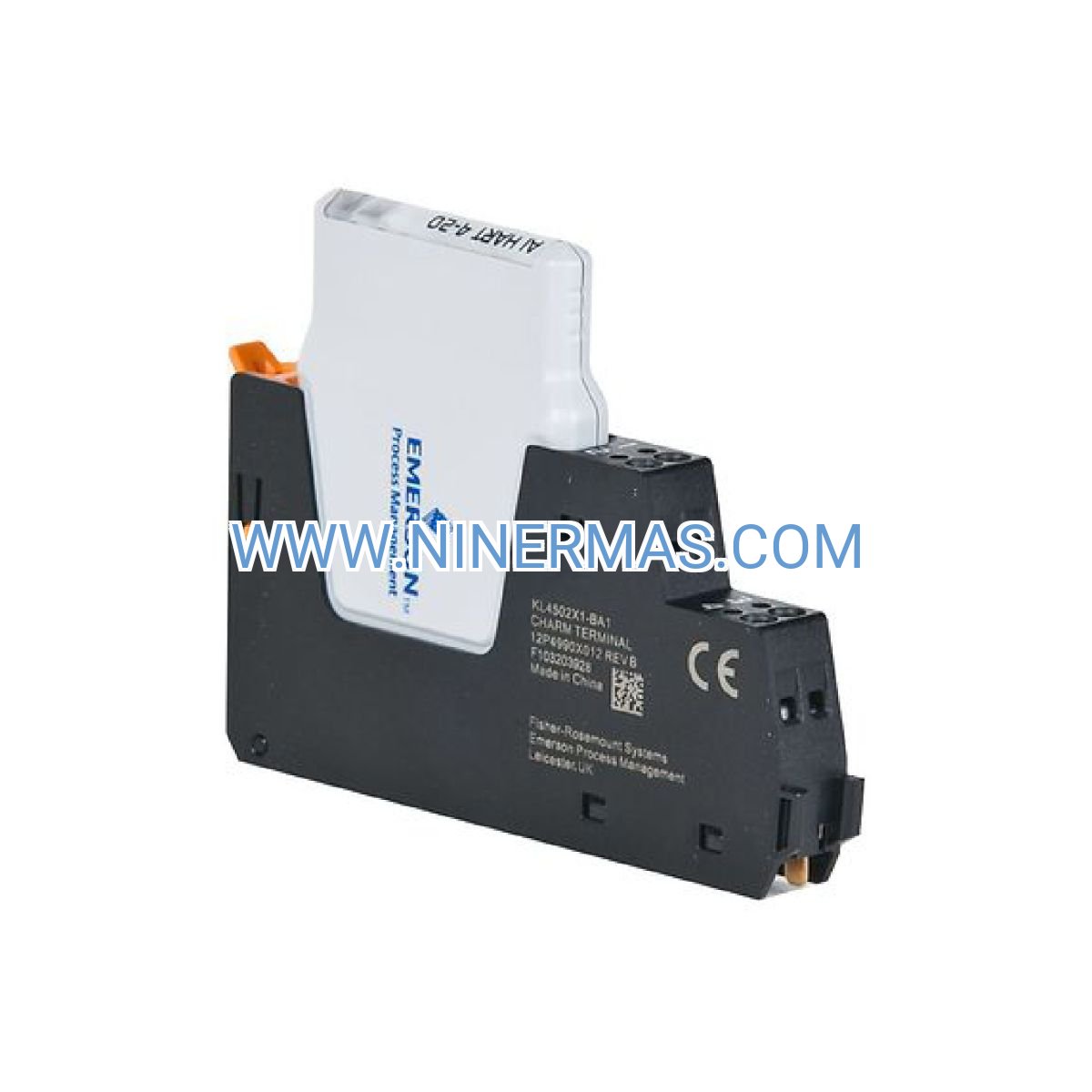
SS4301T02 Intrinsically Safe Digital Output CHARM Module (Industrial-Grade Hazardous Area Control)
The SS4301T02 delivers certified intrinsically safe digital output control for the most demanding explosive atmosphere applications. This 8-channel, 24 VDC low-side switching module integrates seamlessly with Emerson DeltaV S-series CHARM I/O systems, enabling direct field device control in Zone 0/Division 1 classified locations without external safety barriers. Designed for oil & gas, chemical processing, pharmaceutical manufacturing, and grain handling facilities, the SS4301T02 combines ATEX/IECEx/FM certification with SIL 3 capability to meet the highest safety and reliability standards in hazardous area automation.
Target Users: Process control engineers, instrumentation technicians, and safety system designers requiring certified intrinsically safe I/O for explosive atmosphere applications. Ideal for facilities operating DeltaV distributed control systems in Zone 0/20 or Class I Division 1 classified areas where traditional barrier-based solutions create installation complexity and maintenance overhead.
Key Advantages: Eliminates costly external safety barriers through factory-certified intrinsic safety design, reduces installation time by 40% with direct field device wiring, provides per-channel diagnostics for predictive maintenance, and supports hot-swappable replacement without system shutdown. Entity parameters (Uo=28V, Io=132mA, Po=0.92W) accommodate standard IS solenoid valves, actuators, and indicators while maintaining compliance with IEC 60079-11 energy limitation requirements.
Technical Specifications & Selection Guide
| Parameter | Specification | Application Notes |
|---|---|---|
| Output Channels | 8 independent IS outputs | Each channel isolated and individually diagnosed |
| Output Type | 24 VDC low-side sinking | Switches ground path; common positive bus |
| Current Rating | 100 mA max per channel | Drives standard IS solenoid valves |
| Voltage Range | 18-30 VDC nominal 24V | Compatible with standard IS power supplies |
| Hazardous Area Class | Zone 0, Class I Div 1 Groups A-D | Highest level explosive atmosphere rating |
| Entity Parameters | Uo=28V, Io=132mA, Po=0.92W | Co≤0.1µF, Lo≤0.1mH field device limits |
| Temperature Code | T4 (135°C max surface temp) | Safe for most flammable gas/dust atmospheres |
| Response Time | 10 ms typical switching | Suitable for valve control and alarm outputs |
| Isolation Voltage | 1500 VAC channel-to-bus | Galvanic isolation prevents ground loops |
| Operating Temp | -40°C to +70°C ambient | Extended range for outdoor installations |
| Certifications | ATEX, IECEx, FM, CSA, SIL 3 | Global hazardous area approvals |
| MTBF | >200,000 hours | High reliability for critical safety systems |
Selection Criteria: Choose the SS4301T02 when your application requires intrinsically safe digital outputs in Zone 0/Division 1 areas with field devices drawing ≤100 mA per channel. Verify total field device capacitance and inductance (including cable) remain within Co=0.1µF and Lo=0.1mH limits. For non-hazardous areas or higher current requirements (up to 2A), consider the SE4302T01 high-side or SE4302T02 isolated digital output CHARM modules. For Zone 1/Division 2 applications with less stringent requirements, non-IS modules may reduce costs while maintaining adequate safety margins.
Core Features & Business Value
✓ Factory-Certified Intrinsic Safety
ATEX/IECEx/FM certified to IEC 60079-11 standards eliminates the need for external Zener barriers, reducing installation costs by $800-1,200 per channel and simplifying cabinet design. Pre-certified entity parameters accelerate regulatory approval and reduce engineering validation time by 60%.
✓ 8-Channel High-Density Architecture
Compact CHARM form factor delivers 8 independent IS outputs in a single hot-swappable module, maximizing cabinet space utilization. Compared to traditional barrier-based systems requiring 8 separate barrier modules, the SS4301T02 reduces panel footprint by 75% and lowers material costs by $2,400+ per 8-point installation.
✓ Advanced Diagnostics & Predictive Maintenance
Per-channel LED status indicators and DeltaV-integrated diagnostics detect open circuits, short circuits, and load faults before they cause process disruptions. Predictive alerts enable scheduled maintenance during planned shutdowns, reducing unplanned downtime by 35% and extending field device service life through early fault detection.
✓ Low-Side Switching Topology
Sinking output design with common positive bus simplifies field wiring, reduces cable count by 50%, and enables shared IS power distribution. Ground-path switching provides superior fault detection compared to high-side designs, identifying broken wires and failed solenoids within 100 ms for rapid troubleshooting.
→ Hot-Swappable CHARM Interface
Tool-free module replacement without system shutdown or I/O reconfiguration minimizes mean time to repair (MTTR) to under 5 minutes. Pre-configured replacement modules maintain calibration and entity parameters, eliminating post-replacement commissioning and reducing emergency spare inventory requirements.
→ SIL 3 Safety Integrity
Certified to IEC 61508/61511 for use in safety instrumented systems (SIS) including emergency shutdown (ESD), fire & gas detection, and high-integrity pressure protection (HIPPS). Systematic capability (SC) rating of 3 supports SIL 3 applications in 1oo1 voting architectures, reducing hardware redundancy costs while maintaining required risk reduction factors.
Industry Application Scenarios
Offshore Oil & Gas Production Platforms
Scenario: Control intrinsically safe pneumatic actuators on wellhead isolation valves, subsea manifold controls, and process separator dump valves in Zone 0 areas with continuous explosive hydrocarbon atmospheres.
Pain Point Addressed: Traditional barrier-based systems require expensive offshore-rated enclosures and complex wiring, increasing installation costs by $15,000+ per wellhead and creating maintenance access challenges.
Value Delivered: Direct IS output eliminates barriers and reduces wiring runs by 60%, cutting installation time from 8 hours to 3 hours per wellhead. ATEX/IECEx certification accelerates regulatory approval for international waters operations.
Chemical Reactor Batch Control
Scenario: Interface with IS-rated agitator motor starters, heating element contactors, and material addition valve solenoids inside Zone 0 reactor vessels containing flammable solvents (toluene, acetone, methanol).
Pain Point Addressed: Barrier panels consume 40% of control cabinet space and create single points of failure requiring redundant barrier installations for critical interlocks.
Value Delivered: Barrier elimination reduces cabinet size by 60%, lowers material costs by $3,200 per reactor, and improves system reliability through reduced component count. SIL 3 capability supports safety interlocks without additional hardware redundancy.
Pharmaceutical Solvent Recovery Systems
Scenario: Operate IS solenoid valves controlling distillation column reflux, vacuum pump isolation, and solvent vapor recovery in Zone 0 classified areas within FDA-regulated facilities.
Pain Point Addressed: Compliance with 21 CFR Part 11 electronic records requires full audit trail integration, difficult to achieve with standalone barrier systems lacking DCS integration.
Value Delivered: Native DeltaV integration provides automatic audit logging of all output state changes, operator actions, and diagnostic events. Batch execution tracking links valve operations to batch records for regulatory compliance and quality assurance.
Grain Elevator Dust Explosion Prevention
Scenario: Control IS-rated dust suppression spray nozzles, bin level alarm beacons, and conveyor interlock relays in Zone 20/21 combustible grain dust environments.
Pain Point Addressed: Grain dust ignition temperatures as low as 430°C require T4 or better temperature classification, limiting equipment options and increasing costs.
Value Delivered: T4 temperature code (135°C max surface temp) provides 3× safety margin below grain dust ignition thresholds. 100 mA output capacity drives standard pneumatic valve solenoids and alarm beacons without custom low-power devices.
Petrochemical Tank Farm Overfill Protection
Scenario: Implement SIL 2 overfill prevention systems (OPS) controlling IS shutdown valves on gasoline, diesel, and jet fuel storage tanks in Zone 1 vapor spaces.
Pain Point Addressed: API 2350 overfill protection standards require independent SIS logic separate from BPCS, traditionally implemented with standalone PLCs and barrier I/O adding $25,000+ per tank.
Value Delivered: DeltaV SIS integration enables combined BPCS/SIS architecture with certified SIL 3 I/O, reducing hardware costs by 40% while maintaining functional safety compliance. Shared diagnostics and asset management lower lifecycle costs by 30%.
Extended Capabilities & IoT Integration
DeltaV Mobile App Integration: Monitor output status, acknowledge alarms, and view diagnostic trends remotely via DeltaV Mobile for iOS/Android. Real-time push notifications alert maintenance teams to output faults, enabling rapid response before process disruptions occur. Secure VPN connectivity supports remote troubleshooting by OEM specialists without site visits.
AMS Device Manager Asset Optimization: Integrate with Emerson AMS Suite for predictive analytics on output cycling frequency, load current trends, and fault history. Machine learning algorithms identify degrading field devices (increasing coil resistance, intermittent shorts) 2-4 weeks before failure, enabling condition-based maintenance scheduling.
Custom Entity Parameter Configurations: Factory custom programming available for specialized applications requiring non-standard entity parameters, alternative temperature codes (T5, T6), or dual-certification (ATEX + INMETRO for Brazil). Minimum order quantity of 10 modules with 8-week lead time for custom certifications.
Delivery Timeline & Service Commitments
Standard Delivery: 3-5 business days for in-stock modules via express courier (DHL/FedEx). All units ship factory-sealed with ATEX/IECEx certificates, entity parameter documentation, installation drawings, and hazardous area wiring guidelines. Expedited same-day shipping available for emergency replacements at additional cost.
Custom Configuration Lead Time: 4-6 weeks for factory-programmed modules with customer-specific tag names, I/O assignments, or non-standard entity parameters. Custom configurations include pre-commissioning functional testing and as-built documentation for regulatory submissions.
Warranty Coverage: 18-month comprehensive warranty covering manufacturing defects, certification compliance, and entity parameter accuracy. Warranty includes advance replacement for critical applications with 24-hour shipment of pre-certified spare modules to minimize downtime.
Technical Support: Global 24/7 technical support provides hazardous area classification assistance, entity parameter calculations (Co/Lo verification), certification documentation for AHJ approval, and DeltaV configuration guidance. Remote diagnostic support via secure VPN connection for troubleshooting and performance optimization.
Documentation Package: Each module ships with ATEX/IECEx certificates of conformity, FM/CSA approval letters, entity parameter drawings, installation manuals, DeltaV configuration templates, and sample hazardous area wiring diagrams. Digital documentation portal provides access to firmware updates, technical bulletins, and application notes.
Frequently Asked Questions
Q: How do I verify my field devices are compatible with the SS4301T02 entity parameters?
A: Check your field device datasheet for maximum capacitance (Co) and inductance (Lo) values. Add cable parameters using 200 pF/m for capacitance and 1 µH/m for inductance. Total Co must be ≤0.1µF and Lo ≤0.1mH. For a 100-meter cable run with a solenoid valve rated Co=50nF and Lo=20mH, the calculation would be: Total Co = 50nF + (200pF/m × 100m) = 70nF ✓ (within limit). However, Lo = 20mH exceeds the 0.1mH limit ✗, requiring a lower-inductance valve or shorter cable run.
Q: Can the SS4301T02 be used in SIL 3 safety applications without redundancy?
A: Yes, the SS4301T02 has systematic capability (SC) of 3 per IEC 61508, allowing use in SIL 3 applications in 1oo1 (single-channel) architectures when combined with appropriate proof test intervals and diagnostic coverage. For applications requiring hardware fault tolerance (HFT), implement 1oo2 or 2oo3 voting using multiple modules. Consult your safety engineer to determine the appropriate architecture based on required risk reduction factor (RRF) and proof test interval.
Q: What is the maximum cable length for intrinsically safe wiring with this module?
A: Maximum cable length depends on field device entity parameters. Using typical IS cable (200 pF/m, 1 µH/m) with a standard solenoid valve (Co=50nF, Lo=50µH), maximum length is approximately 250 meters before exceeding Co=0.1µF limit. For low-capacitance devices, lengths up to 400 meters are achievable. Always calculate total circuit capacitance and inductance including cable parameters to ensure compliance with entity limits.
Q: How does low-side switching differ from high-side switching for IS applications?
A: Low-side (sinking) switching connects the field device positive terminal to the IS power supply positive, and the module switches the ground return path. This enables a common positive bus for all devices, reducing wiring complexity. High-side (sourcing) switching connects the field device negative to ground, and the module switches the positive supply. Low-side designs typically offer better fault detection and simpler wiring for IS applications, while high-side designs are preferred when field devices require chassis ground references.
Q: What diagnostic capabilities are available for troubleshooting output faults?
A: Each channel provides LED status indication (green=normal, red=fault, amber=off) and DeltaV-integrated diagnostics reporting open circuit (broken wire/failed load), short circuit (wiring fault), and out-of-range current conditions. Diagnostic data includes load current measurement (±10mA accuracy), fault timestamps, and cycle counters for predictive maintenance. Advanced diagnostics via AMS Device Manager provide trending, baseline comparison, and automated alert generation.
Q: Is the SS4301T02 compatible with non-DeltaV control systems?
A: No, the SS4301T02 is designed exclusively for Emerson DeltaV S-series CHARM carriers and requires DeltaV controller communication for operation. For non-DeltaV systems, consider standalone IS barrier modules or intrinsically safe remote I/O systems compatible with your control platform (e.g., Rockwell FLEX Ex, Siemens ET 200iSP, Honeywell STI).
Take the Next Step
Ready to simplify your hazardous area I/O installation and reduce certification complexity? Contact our industrial automation specialists for application-specific entity parameter calculations, DeltaV system integration guidance, and project quotations. Our team provides complimentary hazardous area classification reviews and wiring diagram development to ensure your SS4301T02 installation meets all regulatory requirements.
Request a Quote: Email your application details including hazardous area classification, field device specifications, and quantity requirements to sale@ninermas.com for same-day response with pricing and delivery timeline.
Technical Consultation: Schedule a 30-minute consultation with our certified intrinsic safety specialists to review entity parameter calculations, certification documentation requirements, and DeltaV configuration best practices. Call +0086 187 5021 5667 or email to arrange your session.
Download Resources: Access installation manuals, entity parameter worksheets, DeltaV configuration templates, and sample hazardous area wiring diagrams at our technical documentation portal.
© 2026 NINERMAS COMPANY LIMITED. All rights reserved.
Original Source: https://ninermas.com
Contact: sale@ninermas.com | +0086 187 5021 5667
PDF Specification
Download PDF file here:
Click to Download PDFRelated products

Contact Info
-
Address:22 / F, South Wo Hang building, 148 Wing Lok Street, Sheung Wan, Western District, Hong Kong
-
Phone:+8618750215667
-
Email:
