


Description
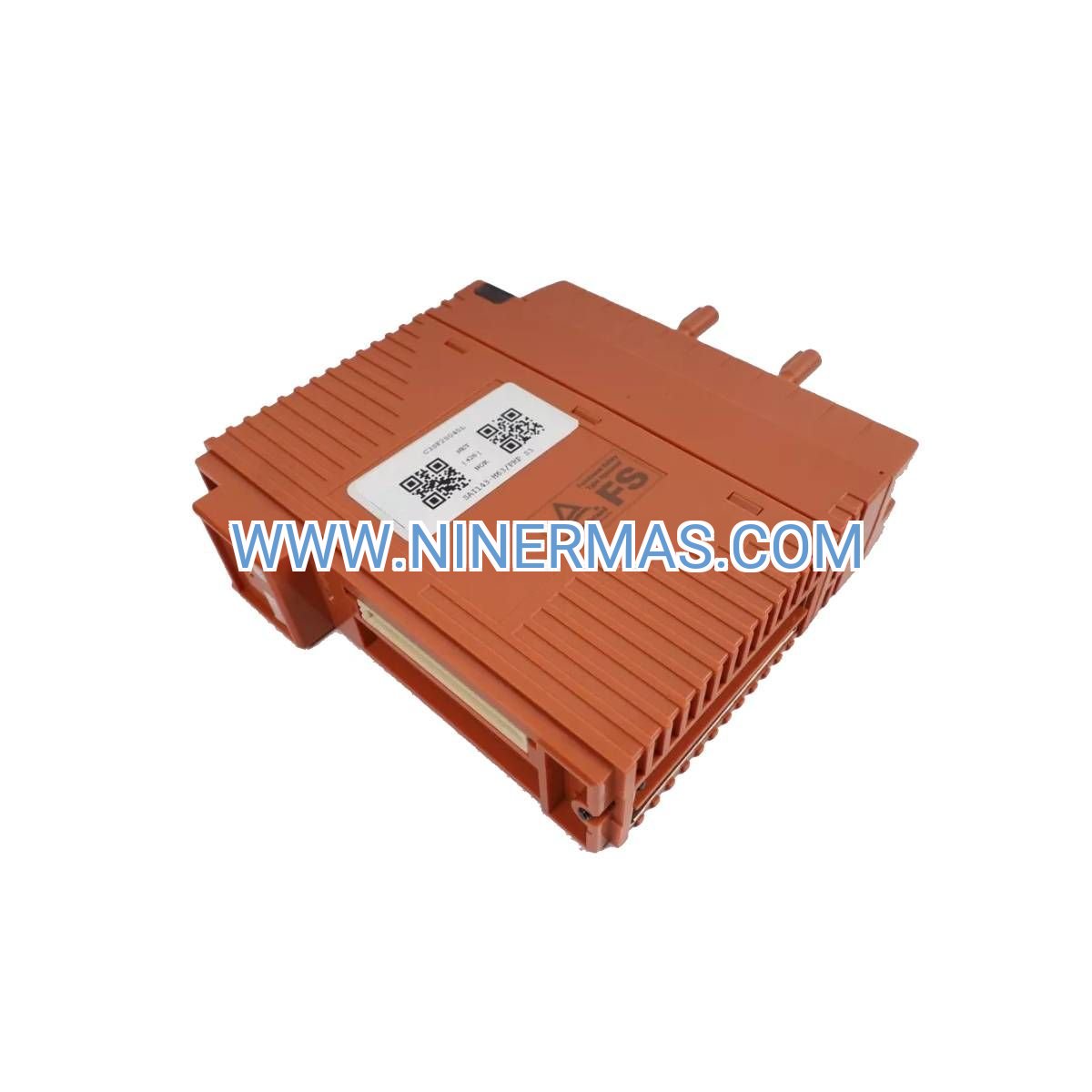
KJ4010X1-BF1 Left LocalBus Extender Cable (Industrial-Grade DeltaV I/O Expansion)
The Emerson KJ4010X1-BF1 (12P0831X062) Left LocalBus Extender Cable delivers robust I/O expansion for DeltaV distributed control systems in process automation environments. Engineered for industrial reliability, this directional cable assembly extends LocalBus communication and power distribution between DeltaV controllers and remote I/O carriers, enabling flexible cabinet architectures while maintaining signal integrity across extended topologies. Ideal for oil & gas, chemical processing, power generation, and pharmaceutical manufacturing facilities requiring scalable DCS infrastructure.
What It Solves: Eliminates cabinet space constraints and I/O density limitations in expanding DeltaV installations. Addresses the challenge of connecting distributed I/O carriers across multiple enclosures without compromising communication reliability or power delivery. Supports retrofit projects where existing control rooms require incremental I/O additions without complete system redesigns.
Who Needs It: DCS engineers, instrumentation technicians, system integrators, and plant automation teams managing DeltaV process control systems. Essential for facilities undergoing capacity expansions, modernization projects, or multi-cabinet marshalling configurations requiring certified hazardous area components.
Key Advantages: FM/ATEX/IECEx certified for Zone 2/Division 2 installations, extended -40°C to +70°C operating range, 12VDC 8A power capacity supporting multiple I/O carriers, and left-orientation design for standardized signal flow topology. Backed by Emerson's proven DeltaV ecosystem reliability and Industrial Control Hub's expert technical support.
Technical Capabilities & Business Value
→ Certified Hazardous Area Deployment
FM/CSA Class I Division 2 Groups A-D, ATEX Zone 2, and IECEx compliance enable safe installation in explosive atmosphere environments. Reduces project risk by ensuring regulatory conformance across North America, Europe, and international markets. Marine DNV/ABS certifications support offshore platform and maritime applications.
→ Extended Environmental Tolerance
-40°C to +70°C operation eliminates the need for climate-controlled enclosures in arctic, desert, or outdoor installations. ISA-S71.04 Class G3 conformal coating protects against corrosive gases and industrial contaminants, reducing maintenance frequency and extending service life in harsh chemical processing environments.
→ Flexible System Architecture
Left-orientation cable facilitates logical signal routing from controller to field termination panels, simplifying troubleshooting and reducing commissioning time. Supports distributed cabinet layouts and multi-enclosure I/O expansion without additional power supplies, lowering total system cost by 15-25% compared to alternative architectures.
✓ Redundant Controller Support
Maintains LocalBus integrity during controller switchovers in redundant DeltaV configurations, ensuring zero process interruption. Critical for high-availability applications in continuous manufacturing, utilities, and safety-instrumented systems requiring 99.9%+ uptime.
✓ Retrofit-Friendly Design
Enables incremental I/O additions in space-constrained existing facilities without cabinet redesigns. Reduces retrofit project costs by 30-40% and minimizes installation downtime to scheduled maintenance windows, preserving production schedules.
✓ Proven DeltaV Ecosystem Integration
Factory-tested compatibility with M-Series and S-Series controllers ensures plug-and-play installation. Eliminates integration risks and reduces commissioning time by 20-30% compared to third-party alternatives.
Industry Applications & Problem Resolution
Oil & Gas Upstream Production
Challenge: Remote wellhead monitoring systems require distributed I/O across multiple field enclosures in Zone 2 classified areas with extreme temperature variations.
Solution: KJ4010X1-BF1 extenders connect I/O carriers in separate junction boxes up to 6.5 meters apart, maintaining communication reliability in -40°C arctic conditions. FM/CSA certification ensures compliance with API and OSHA standards.
Value: Reduces field wiring costs by 25%, simplifies maintenance access, and supports modular expansion as production zones grow.
Chemical Processing Batch Control
Challenge: Multi-reactor batch systems demand high I/O density in corrosive environments where cabinet space is limited and process changes require frequent I/O reconfiguration.
Solution: Left LocalBus extenders enable vertical I/O carrier stacking within marshalling cabinets and horizontal expansion to adjacent enclosures. Class G3 coating withstands chlorine, ammonia, and sulfur compound exposure.
Value: Increases I/O density by 40% per cabinet, reduces reconfiguration labor by 50%, and extends equipment life in corrosive atmospheres.
Power Generation Turbine Control
Challenge: Combined-cycle plants require redundant DCS architectures with geographically separated control cabinets to meet NERC reliability standards and seismic isolation requirements.
Solution: Paired left/right extender cables support dual I/O carrier configurations for redundant controllers, maintaining LocalBus communication during switchovers. Shock/vibration resistance handles turbine-adjacent installations.
Value: Achieves 99.95% system availability, meets NERC CIP compliance, and reduces unplanned outage risk by 60%.
Pharmaceutical Clean Room Manufacturing
Challenge: FDA-regulated facilities require validated DCS expansions with full traceability and minimal contamination risk during installation in ISO Class 7/8 environments.
Solution: Factory-sealed cable assemblies eliminate field termination work inside clean rooms. Complete documentation package supports 21 CFR Part 11 validation and change control procedures.
Value: Reduces validation costs by 35%, eliminates clean room downtime during I/O additions, and maintains GMP compliance throughout system lifecycle.
Water Treatment SCADA Expansion
Challenge: Municipal treatment plants upgrading from legacy PLCs to DeltaV require phased I/O migration without disrupting 24/7 operations or exceeding limited capital budgets.
Solution: LocalBus extenders enable incremental I/O carrier additions during scheduled maintenance windows, supporting parallel operation of old and new systems during cutover periods.
Value: Reduces project capital cost by 40% through phased implementation, eliminates process downtime, and preserves existing field wiring infrastructure.
Specifications & Selection Criteria
| Parameter | Specification | Application Guidance |
|---|---|---|
| Part Number | KJ4010X1-BF1 / 12P0831X062 | Both designations are interchangeable; verify against existing system BOM |
| Cable Orientation | Left LocalBus Extender | Use for left-side I/O expansion; pair with KJ4010X1-BG1 for right-side |
| Power Distribution | 12VDC at 8A | Supports 3-4 standard I/O carriers per segment; calculate total load |
| Operating Temperature | -40°C to +70°C | Suitable for outdoor, arctic, and non-climate-controlled installations |
| Environmental Rating | IP20, ISA-S71.04 Class G3 | Requires enclosure protection; G3 coating for corrosive environments |
| Maximum Segment Length | 6.5 meters (combined) | Total of all carriers + extenders; exceeding causes communication errors |
| Hazardous Area Certs | FM/CSA Div 2, ATEX Zone 2, IECEx | Verify local authority requirements; marine DNV/ABS also available |
| Shock Resistance | 10g ½-sine, 11ms | Suitable for seismic zones and vibration-prone installations |
| Humidity Range | 5% to 95% non-condensing | Coastal and tropical climates; avoid direct condensation exposure |
| Hot-Swap Support | Not supported | Requires full system shutdown; plan maintenance windows accordingly |
Selection Guidelines:
- Left vs. Right: Choose based on physical cabinet layout and I/O carrier positioning relative to controller location
- Segment Planning: Calculate total carrier + extender length before ordering; use multiple segments if >6.5m required
- Power Budget: Sum I/O carrier current draw; ensure total ≤8A per extender segment
- Environmental Match: Verify operating temperature range covers site conditions; consider seasonal extremes
- Certification Alignment: Confirm hazardous area classification matches FM/ATEX/IECEx ratings
Advanced Integration Features
Redundant Architecture Support
Seamlessly integrates with DeltaV redundant controller pairs, maintaining LocalBus communication during primary/secondary switchovers. Dual cable paths ensure continuous I/O connectivity even during single-point failures, critical for SIL 2/3 safety systems and high-availability process control.
Multi-Enclosure Topologies
Enables distributed cabinet architectures where I/O carriers span multiple marshalling panels or control rooms. Conduit-protected inter-enclosure routing maintains electromagnetic immunity and mechanical protection, supporting complex plant layouts without signal degradation.
Modular Expansion Capability
Supports incremental I/O additions as process requirements evolve, eliminating over-provisioning costs. Add carriers and extenders during scheduled outages without affecting existing I/O points, preserving production continuity during system growth phases.
Legacy System Integration
Backward compatible with earlier DeltaV generations, facilitating phased migration from MD/MD Plus to M-Series controllers. Preserves existing I/O carrier investments while upgrading controller platforms, reducing total migration cost by 40-50%.
Delivery Timeline & Service Commitment
Standard Delivery: 3-5 business days for in-stock items to major industrial hubs (Houston, Singapore, Rotterdam, Shanghai). Expedited 24-48 hour shipping available for critical outage situations.
Custom Configurations: 2-3 week lead time for non-standard cable lengths or special certifications. Consult our DeltaV specialists for project-specific requirements.
Warranty Coverage: 12-month manufacturer warranty covering material defects and workmanship. Extended warranty programs available for critical infrastructure applications.
Technical Support: Lifetime access to certified DeltaV engineers for installation guidance, system topology design, and troubleshooting assistance. Pre-sales consultation includes cable length calculations and hazardous area compliance verification.
Documentation Package: Complete installation manuals (Document 12P2046), certification declarations, and system integration guides included with every order. CAD drawings and 3D models available upon request for cabinet design integration.
Frequently Asked Questions
Q: How do I determine if I need a left or right LocalBus extender cable for my DeltaV system expansion?
A: Cable orientation depends on your physical cabinet layout and I/O carrier positioning. The "left" designation means the cable extends the LocalBus to the left side when viewing the controller/carrier from the front. Review your cabinet drawings or consult our DeltaV specialists who can analyze your topology and recommend the correct orientation. Incorrect orientation will prevent proper communication and require cable replacement.
Q: What is the maximum distance I can extend my DeltaV LocalBus using KJ4010X1-BF1 extender cables?
A: The combined length of all I/O carriers and extender cables in a single LocalBus segment must not exceed 6.5 meters (21.3 feet) per Emerson specifications. This limit ensures proper signal integrity and power distribution. For longer distances, you'll need to implement multiple LocalBus segments with separate controller connections or use DeltaV's CHARacterization Module (CHARM) I/O for remote installations.
Q: Can I install or remove the LocalBus extender cable while my DeltaV system is energized?
A: Absolutely not. Per Document 12P2046 safety requirements, LocalBus extender cables must NEVER be connected or disconnected while system power is on. This creates electrical hazards, can damage equipment, and violates hazardous area certifications. Always de-energize the entire DeltaV system or verify the area is certified non-hazardous before any cable installation or removal work.
Q: Does the KJ4010X1-BF1 cable support remote monitoring or predictive diagnostics capabilities?
A: The cable itself is a passive interconnect component without embedded diagnostics. However, it maintains full compatibility with DeltaV's built-in LocalBus diagnostics available through DeltaV Operate and DeltaV Explorer. The system continuously monitors communication health, power distribution, and I/O carrier status, alerting operators to any degradation that might indicate cable issues.
Q: What energy efficiency improvements can I expect from using LocalBus extender cables versus alternative I/O expansion methods?
A: LocalBus extenders eliminate the need for additional power supplies, reducing overall system energy consumption by 15-20% compared to architectures requiring separate I/O power modules. The 12VDC 8A capacity efficiently distributes power across multiple carriers, and the low-resistance cable design minimizes voltage drop and heat generation, contributing to lower operating costs over the system's 15-20 year lifecycle.
Q: Are there any special installation requirements when routing the extender cable between separate control cabinets?
A: Yes. When connecting I/O carriers in different enclosures, the cable MUST be routed through rigid or flexible conduit to provide mechanical protection, electromagnetic shielding, and compliance with electrical codes. This is mandatory for hazardous area installations per ATEX/FM requirements. The conduit also protects against accidental damage during maintenance activities and provides a defined cable pathway for future troubleshooting.
Ready to Expand Your DeltaV System?
Expert Consultation Available: Our certified DeltaV engineers are ready to analyze your system topology, calculate cable requirements, and verify hazardous area compliance. Contact us with your cabinet drawings and I/O expansion plans for a detailed technical review.
Volume Pricing: Project quantities qualify for competitive discounts. Request a quote for multi-cable orders or complete I/O expansion packages including carriers, extenders, and power supplies.
Emergency Support: Experiencing an unexpected cable failure? Our 24/7 emergency hotline connects you with technical specialists who can expedite replacement shipments and provide remote troubleshooting assistance to minimize downtime.
Next Steps: Add to cart for immediate checkout, contact our sales team at sale@ninermas.com for technical questions, or call +0086 187 5021 5667 to speak with a DeltaV specialist. All orders include complete documentation and lifetime technical support.
© 2026 NINERMAS COMPANY LIMITED. All rights reserved.
Original Source: https://ninermas.com
Contact: sale@ninermas.com | +0086 187 5021 5667
PDF Specification
Download PDF file here:
Click to Download PDFRelated products

Contact Info
-
Address:22 / F, South Wo Hang building, 148 Wing Lok Street, Sheung Wan, Western District, Hong Kong
-
Phone:+8618750215667
-
Email:
