Description
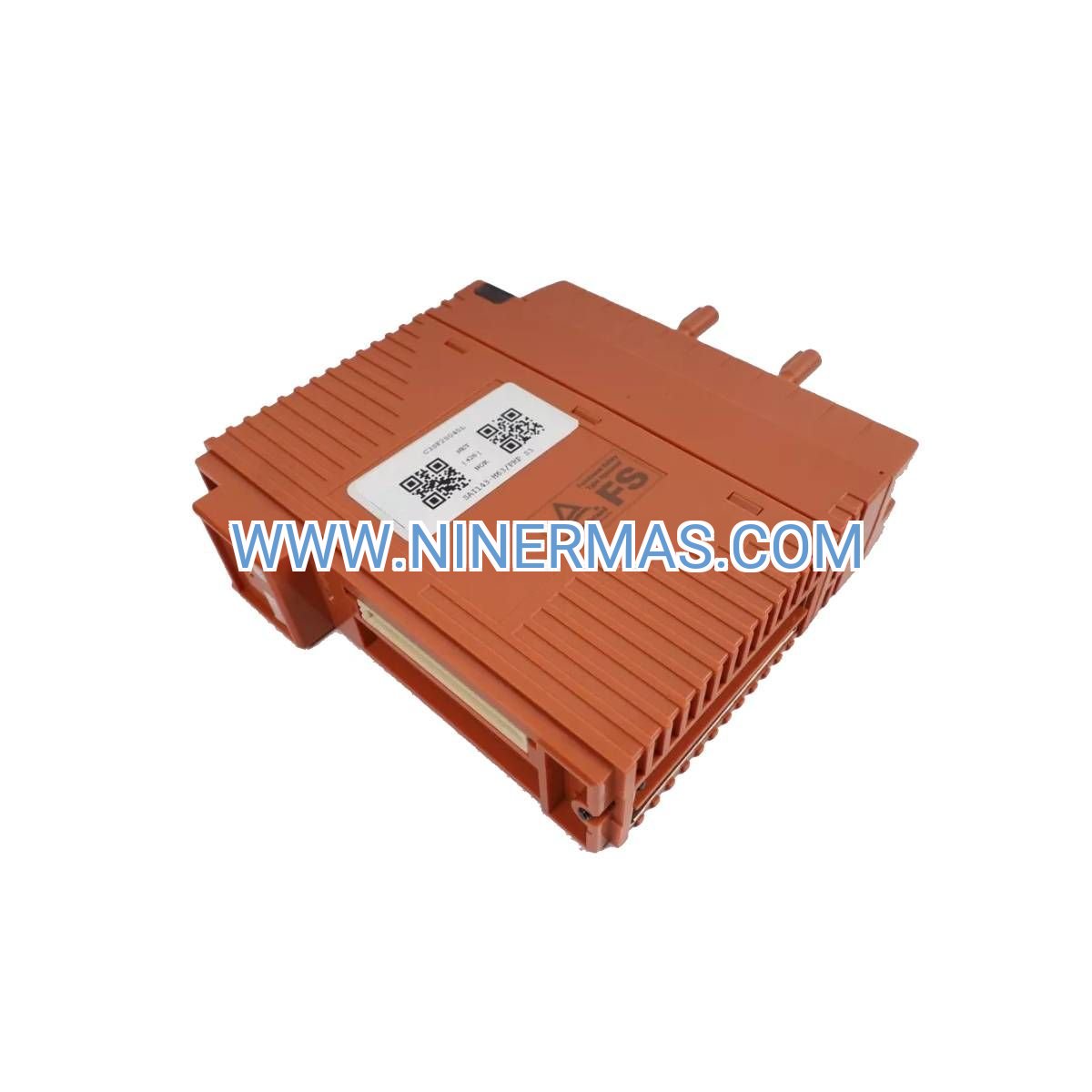
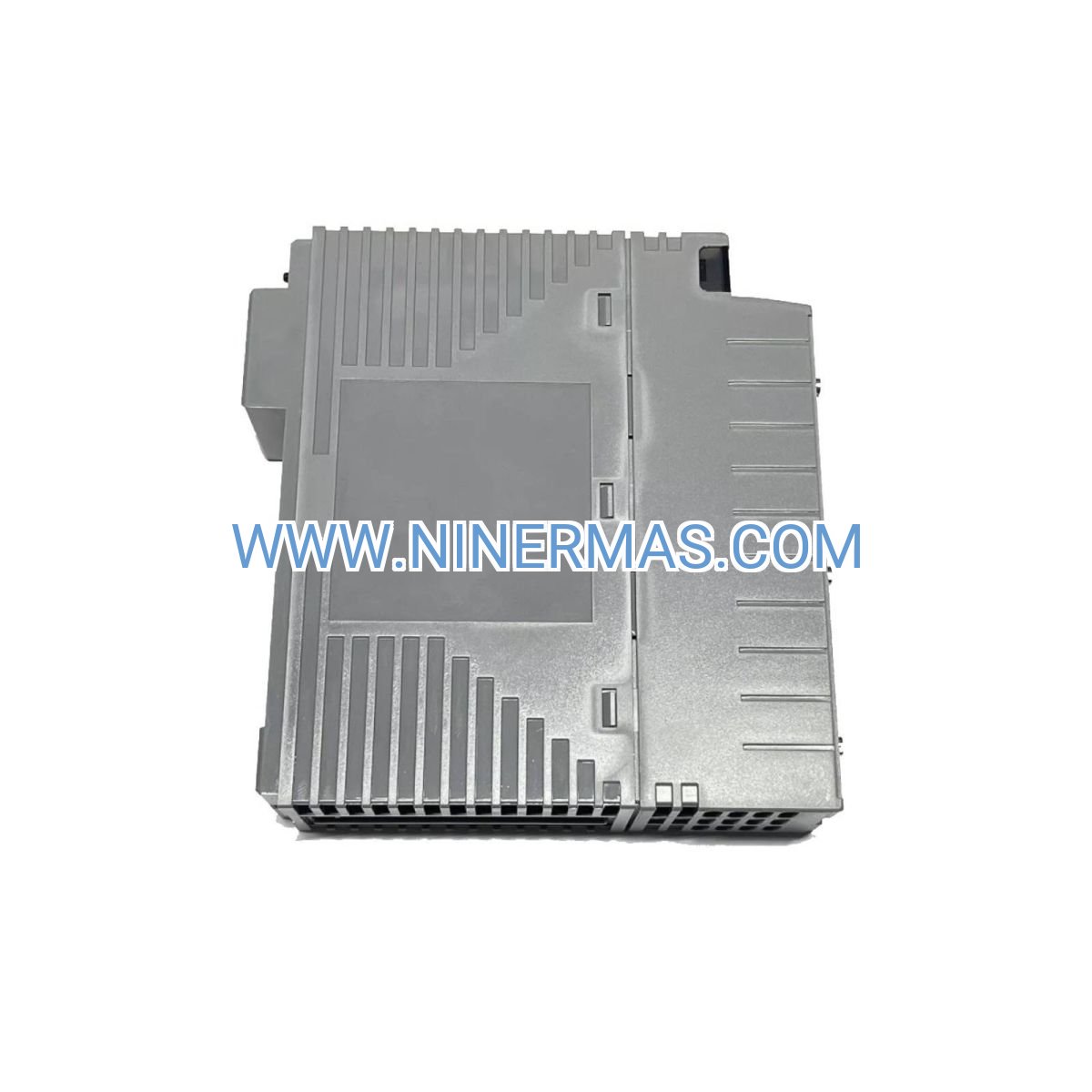
KJ4001X1-NB1 LocalBus Dual Left Extender (Industrial-Grade DeltaV I/O Expansion Cable)
The Emerson KJ4001X1-NB1 (alternate designation 12P3368X012) is a factory-assembled horizontal LocalBus dual left cable extender engineered for flexible DeltaV distributed control system I/O architectures. This specialized interconnect cable enables simultaneous branching to two I/O carriers positioned on the left side of your controller or power supply, delivering both 12VDC power distribution and high-speed digital communication through dual pre-wired connectors. Designed for oil & gas refineries, chemical processing plants, pharmaceutical manufacturing, and power generation facilities, this extender supports asymmetric cabinet layouts where I/O density is concentrated on one side, reducing cable clutter and simplifying troubleshooting in complex process control installations.
Key Features & Industrial Benefits
→ Dual Left Branching Architecture: Single extender cable with two left-side connectors eliminates the need for separate cables to each I/O carrier, reducing installation time by up to 40% and minimizing potential wiring errors during commissioning.
→ Robust Power Delivery: Supplies 12VDC at 8A maximum current capacity across both connected I/O carriers, supporting high-density analog modules, HART-enabled CHARMs, and discrete I/O cards without voltage drop concerns within the 6.5-meter system length limit.
→ Extreme Environment Tolerance: Operates reliably from -40°C to +70°C with IP20 protection and ISA-S71.04-1985 Class G3 conformal coating, withstanding corrosive atmospheres, temperature cycling, and airborne contaminants common in heavy industrial environments.
→ Global Hazardous Area Compliance: FM/CSA Class I Division 2, ATEX Zone 2, IECEx, and DNV/ABS marine certifications enable deployment in classified locations worldwide, from offshore platforms to onshore petrochemical complexes, without costly re-certification.
→ Vibration & Shock Resistant: Engineered to withstand 10g shock loads and 0.5g continuous vibration (16-150 Hz), making it ideal for installations near rotating equipment, compressor stations, and offshore platforms subject to wave motion and mechanical stress.
✓ Pre-Assembled Quality: Factory-terminated dual connectors eliminate field wiring errors and ensure consistent signal integrity across all installations, reducing commissioning time and improving first-time-right installation rates.
Application Scenarios & Problem-Solving Capabilities
Refinery Distillation Unit Control: In crude oil distillation towers requiring 200+ I/O points distributed across multiple temperature zones, the KJ4001X1-NB1 enables logical grouping of I/O carriers by process area. For example, one dual left extender can power both the overhead vapor zone carrier and the upper reflux zone carrier, while another handles the feed preheat and bottom product zones. This architecture reduces cabinet width requirements by 30% compared to linear single-cable layouts, critical when retrofitting control systems into existing equipment rooms with limited space.
Chemical Batch Reactor Monitoring: Multi-product batch plants producing specialty chemicals often require flexible I/O configurations to accommodate different recipes. The dual left extender allows engineers to add I/O capacity incrementally as new product lines are introduced, without rewiring the entire LocalBus chain. A pharmaceutical manufacturer can start with two I/O carriers for basic temperature and pressure monitoring, then add two more carriers for advanced analytical instrumentation (pH, conductivity, dissolved oxygen) by simply connecting an additional dual left extender to the existing LocalBus network.
Offshore Platform Space Optimization: On offshore oil & gas platforms where equipment room real estate costs $50,000+ per square meter, horizontal cabinet expansion using dual left extenders maximizes I/O density within limited footprints. A North Sea platform operator reduced their control cabinet count from 12 to 8 by utilizing dual left extenders to create compact, side-by-side I/O carrier arrangements, saving 4 square meters of climate-controlled space while maintaining full redundancy and serviceability.
Power Plant Turbine Control: Gas turbine and steam turbine control systems require rapid I/O scanning for vibration monitoring, bearing temperature surveillance, and emergency shutdown logic. The dual left extender's high-speed LocalBus communication (up to 1 Mbps) ensures deterministic I/O updates every 100ms, meeting the stringent response time requirements for turbine protection systems while allowing flexible cabinet layouts that separate high-voltage starter circuits from low-voltage instrumentation.
Water Treatment SCADA Expansion: Municipal water treatment facilities expanding from 500 to 1,000+ I/O points can use dual left extenders to add new I/O carriers for additional clarifiers, filtration trains, and chemical dosing systems without disrupting existing control logic. The 6.5-meter system length accommodates large control rooms where I/O carriers are distributed across multiple cabinet sections, while the 12VDC 8A power budget supports energy-efficient 4-20mA transmitters and low-power discrete sensors.
Technical Specifications & Selection Parameters
| Specification | Value | Engineering Notes |
|---|---|---|
| Model Number | KJ4001X1-NB1 / 12P3368X012 | Both designations are identical products |
| Configuration | Horizontal Dual Left | Two I/O carriers positioned left of power source |
| Power Rating | 12VDC @ 8A max | Combined load for both connected carriers |
| Max System Length | 6.5 meters total | Includes all carriers + extender cables |
| Operating Temp | -40°C to +70°C | Suitable for Arctic and desert climates |
| Shock Rating | 10g ½-sine, 11ms | Offshore platform and seismic zone rated |
| Vibration | 0.5g (16-150 Hz) | Compressor room and turbine hall approved |
| Humidity Range | 5-95% non-condensing | Tropical and coastal installation compatible |
| Hazardous Area | FM/CSA Div 2, ATEX Zone 2 | See Document 12P2046 for installation rules |
| Marine Cert | DNV, ABS approved | Offshore platform and shipboard use |
System Design & Selection Guide
When to Choose Dual Left vs. Dual Right Extenders:
Select the KJ4001X1-NB1 dual left extender when your I/O carriers are positioned to the left of your DeltaV controller or LocalBus power supply. This typically occurs in cabinet layouts where the controller is mounted on the right side of the enclosure, with I/O carriers arranged in a left-to-right sequence. Conversely, if your I/O carriers are positioned to the right of the controller, specify the KJ4001X1-NA1 dual right extender instead. Mixing left and right extenders in the same LocalBus chain is permissible, but verify total system length remains ≤6.5 meters.
Power Budget Calculation Example:
A typical 8-wide I/O carrier populated with four 8-channel analog input cards (KJ3002X1-BA1, 0.5A each) and four 8-channel discrete output cards (KJ2005X1-BA1, 0.3A each) consumes approximately 3.2A total. If both I/O carriers connected to the dual left extender have similar configurations, total current draw would be 6.4A, leaving 1.6A margin below the 8A maximum. Always add 20% safety margin for inrush current during power-up and future module additions.
Cable Length Planning:
Measure the physical width of each I/O carrier (typically 220mm for 8-wide carriers) and add the length of all extender cables. For example: Controller (220mm) + Extender 1 (500mm) + Carrier 1 (220mm) + Dual Left Extender (400mm) + Carrier 2 (220mm) + Carrier 3 (220mm) = 1,780mm total. This configuration remains well within the 6,500mm limit, allowing additional expansion if needed.
Advanced Integration & Customization Options
Redundant LocalBus Architectures: For critical applications requiring fault tolerance, deploy dual redundant LocalBus chains using separate dual left extenders on each redundant controller. This configuration ensures continued operation if one LocalBus chain fails, with automatic switchover to the backup path within 100ms. Pharmaceutical batch reactors, nuclear power plant safety systems, and offshore emergency shutdown systems commonly employ this architecture.
Mixed I/O Carrier Types: The KJ4001X1-NB1 supports any combination of DeltaV I/O carriers, including 4-wide, 8-wide, and 12-wide carriers, as well as specialized carriers like the VE4070 LocalBus Isolator. This flexibility allows engineers to optimize cabinet layouts by mixing high-density analog carriers with lower-density discrete I/O carriers based on field termination requirements.
Future-Proof Expansion: When designing new DeltaV systems, install dual left extenders even if only one I/O carrier is initially required. The unused second connector provides a pre-wired expansion point for future capacity additions without requiring cabinet rewiring or LocalBus power supply upgrades. This strategy reduces lifecycle costs and minimizes downtime during plant expansions.
Integration with FOUNDATION Fieldbus: DeltaV I/O carriers connected via dual left extenders can host FOUNDATION Fieldbus linking devices, enabling seamless integration of smart field instruments. A single dual left extender can power one carrier with conventional 4-20mA I/O and another carrier with FF H1 linking devices, creating a hybrid architecture that leverages existing wiring infrastructure while adding digital communication capabilities.
Installation Best Practices & Common Pitfalls
Critical Installation Rules:
• Never Hot-Plug: Always de-energize LocalBus power before inserting or removing extender cables. Hot-plugging can damage controller backplane circuitry and corrupt I/O module firmware, requiring costly repairs and extended downtime.
• Verify Connector Orientation: The dual left extender has keyed connectors that only fit in the correct orientation, but forcing misaligned connectors can bend pins. Always align the connector key with the carrier socket before applying insertion force.
• Maintain Shield Continuity: Ensure both connectors are fully seated to maintain LocalBus shield continuity. Partial insertion creates high-impedance shield connections that allow common-mode noise to corrupt communication signals, causing intermittent I/O errors.
• Conduit Protection: All inter-enclosure cables MUST be installed in rigid or flexible conduit rated for the environmental conditions. Exposed cables are vulnerable to physical damage, rodent intrusion, and UV degradation in outdoor installations.
• Document As-Built Configuration: Maintain detailed drawings showing extender cable routing, connector assignments, and power budget calculations. This documentation is essential for troubleshooting, future expansions, and regulatory compliance audits.
Delivery Timeline & Service Commitment
Standard Lead Time: In-stock KJ4001X1-NB1 extenders ship within 24-48 hours to North America, Europe, and Asia-Pacific destinations. Express shipping options available for emergency outage situations requiring next-day delivery.
Warranty Coverage: 12-month manufacturer warranty covering defects in materials and workmanship. Extended warranty programs available for critical applications requiring 3-5 year coverage.
Technical Support: Unlimited access to certified DeltaV application engineers for system design consultation, power budget analysis, cable length calculations, and troubleshooting assistance. Remote support available 24/7 for emergency situations.
Documentation Package: Each order includes installation instructions, hazardous area certification documents (Document 12P2046), and system design guidelines. CAD drawings and 3D models available upon request for cabinet layout planning.
Frequently Asked Questions
Q: Can I use the KJ4001X1-NB1 dual left extender in a right-side configuration?
A: No. The dual left extender is specifically designed for left-side branching. Using it in a right-side configuration may cause mechanical interference or connector damage. For right-side applications, specify the KJ4001X1-NA1 dual right extender instead.
Q: What happens if I exceed the 6.5-meter maximum system length?
A: Exceeding the 6.5m limit can cause communication errors, power delivery issues, and intermittent I/O failures due to voltage drop and signal attenuation. Always calculate total system length (carriers + cables) before installation and maintain at least 10% margin below the maximum.
Q: How do I calculate the power budget for my dual left extender configuration?
A: Sum the current consumption of all I/O modules in both carriers connected to the dual left extender. Module current ratings are listed in the DeltaV I/O module datasheets. Ensure total consumption remains below 8A with at least 20% margin for inrush current and future additions.
Q: Is the KJ4001X1-NB1 compatible with legacy DeltaV M-series controllers?
A: Yes. The dual left extender is compatible with both legacy M-series and current S-series DeltaV controllers, as well as all DeltaV I/O carrier types (4-wide, 8-wide, 12-wide). Verify your controller firmware is at minimum revision level per Emerson compatibility matrices.
Q: Can I install the dual left extender in outdoor enclosures?
A: The KJ4001X1-NB1 is rated IP20 for control room environments. For outdoor installations, mount it inside a NEMA 4X or IP65-rated enclosure with climate control to maintain the -40°C to +70°C operating temperature range and protect against moisture ingress.
Q: What is the difference between KJ4001X1-NB1 and 12P3368X012?
A: These are identical products with different part number designations. KJ4001X1-NB1 is the current Emerson catalog number, while 12P3368X012 is an alternate designation used in some regional markets and legacy documentation. Both numbers reference the same dual left extender cable.
Order Your KJ4001X1-NB1 Dual Left Extender Today
Optimize your DeltaV I/O architecture with genuine Emerson KJ4001X1-NB1 dual left LocalBus extenders. Our extensive inventory ensures rapid delivery for both routine expansions and emergency outage situations. Contact our DCS specialists for system design assistance, power budget calculations, and volume pricing for multi-unit projects.
Ready to expand your DeltaV system? Request a quote now or speak with a certified automation engineer to discuss your specific I/O architecture requirements. We provide complete project support from initial design through commissioning and beyond.
© 2026 NINERMAS COMPANY LIMITED. All rights reserved.
Original Source: https://ninermas.com
Contact: sale@ninermas.com | +0086 187 5021 5667
PDF Specification
Download PDF file here:
Click to Download PDFRelated products

Contact Info
-
Address:22 / F, South Wo Hang building, 148 Wing Lok Street, Sheung Wan, Western District, Hong Kong
-
Phone:+8618750215667
-
Email: