Description
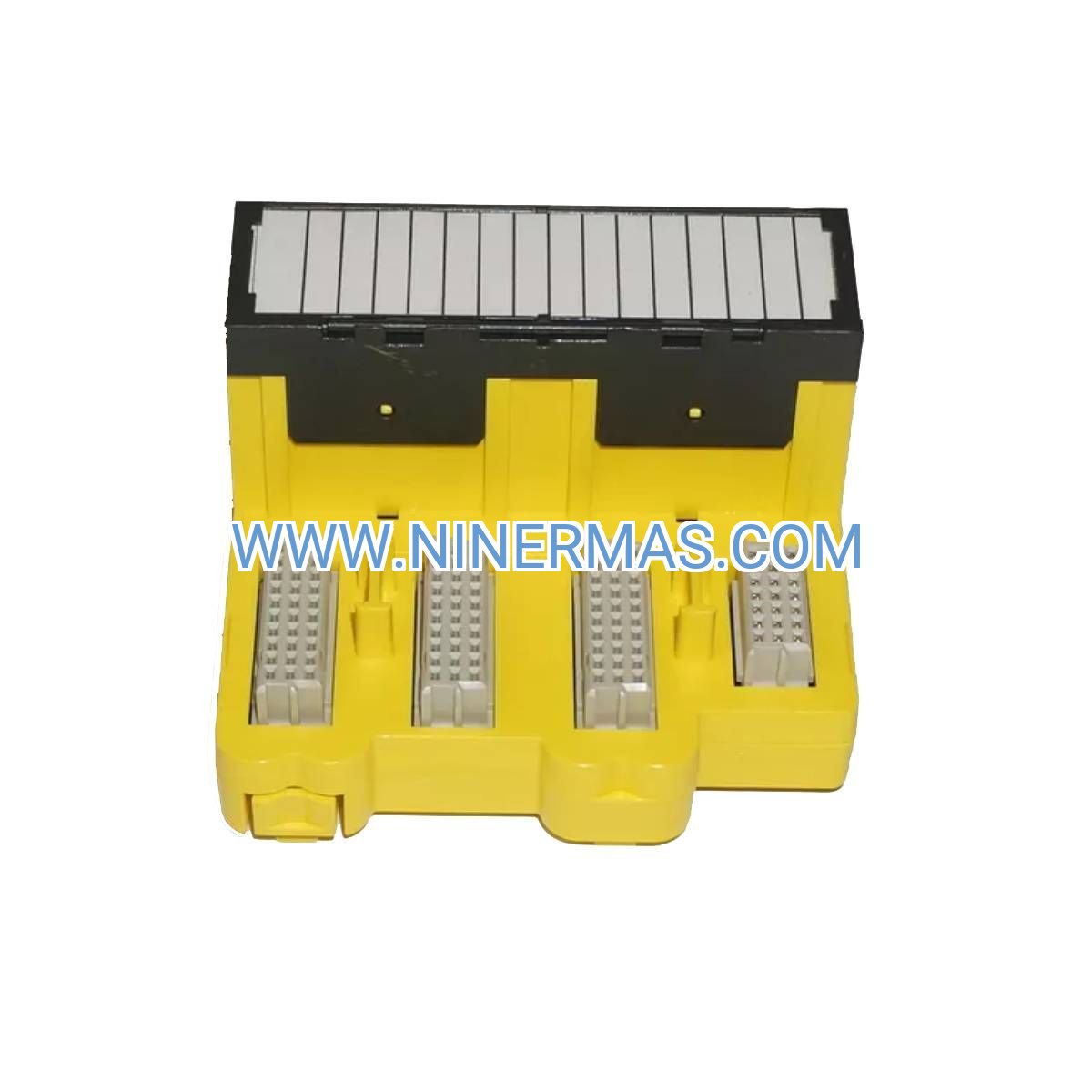
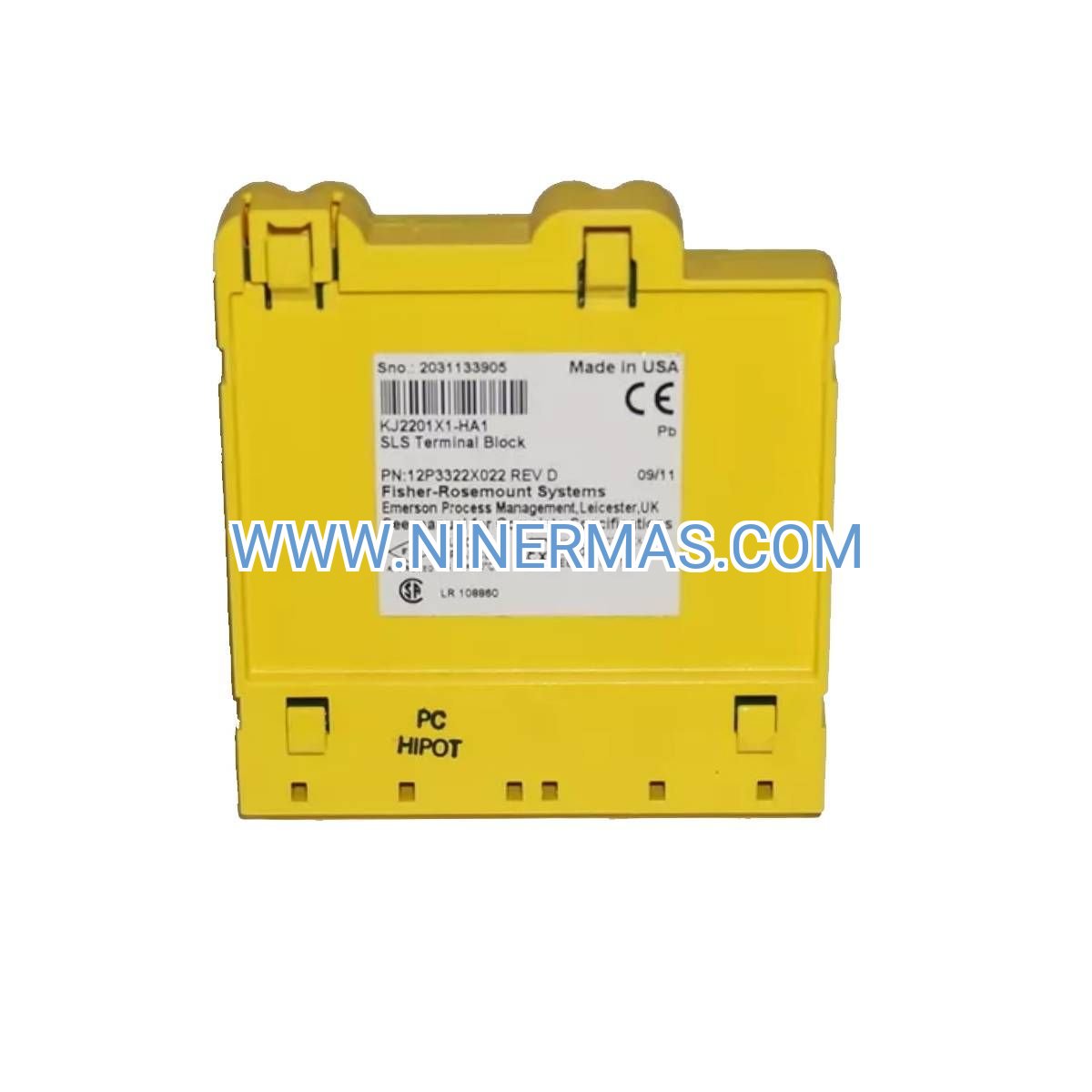
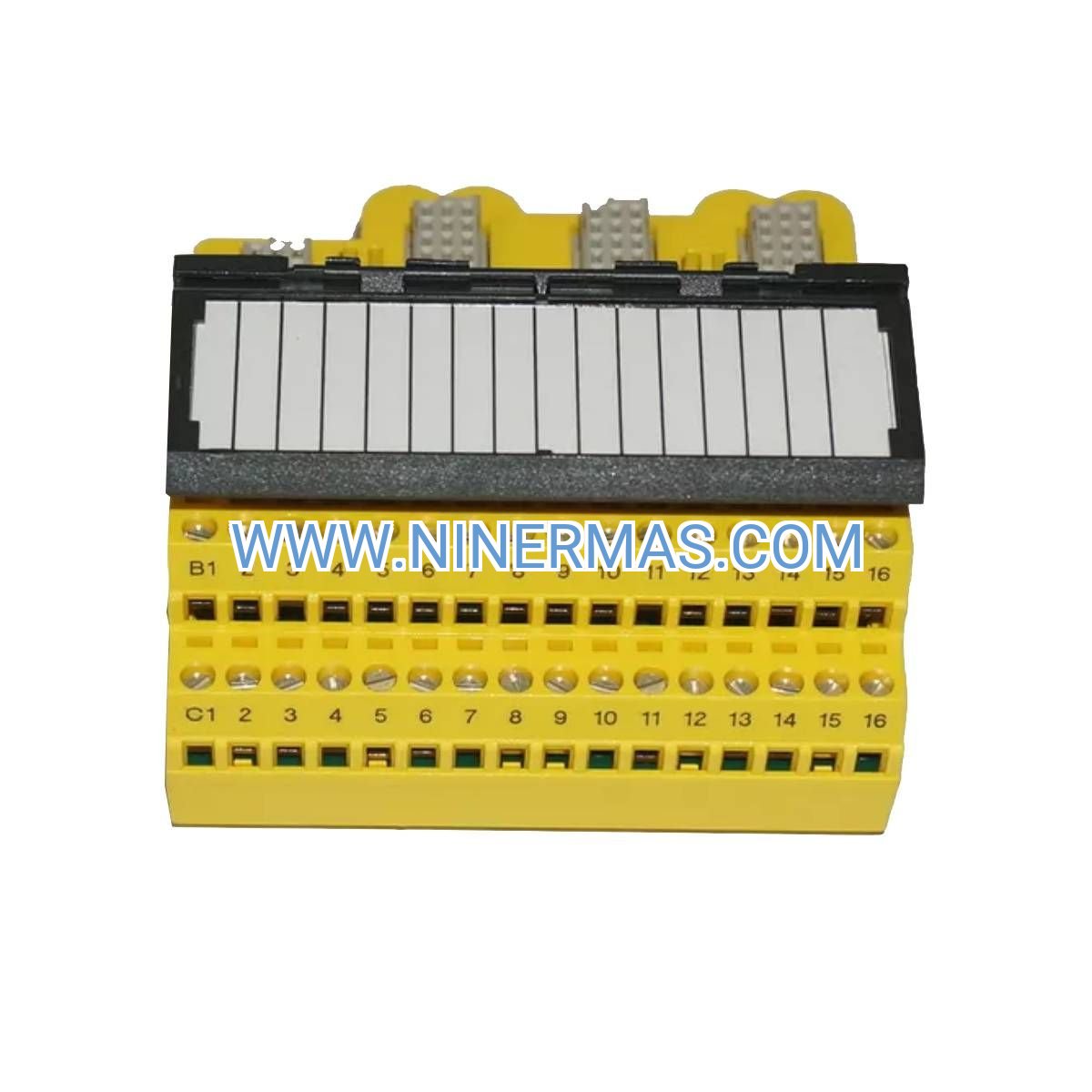
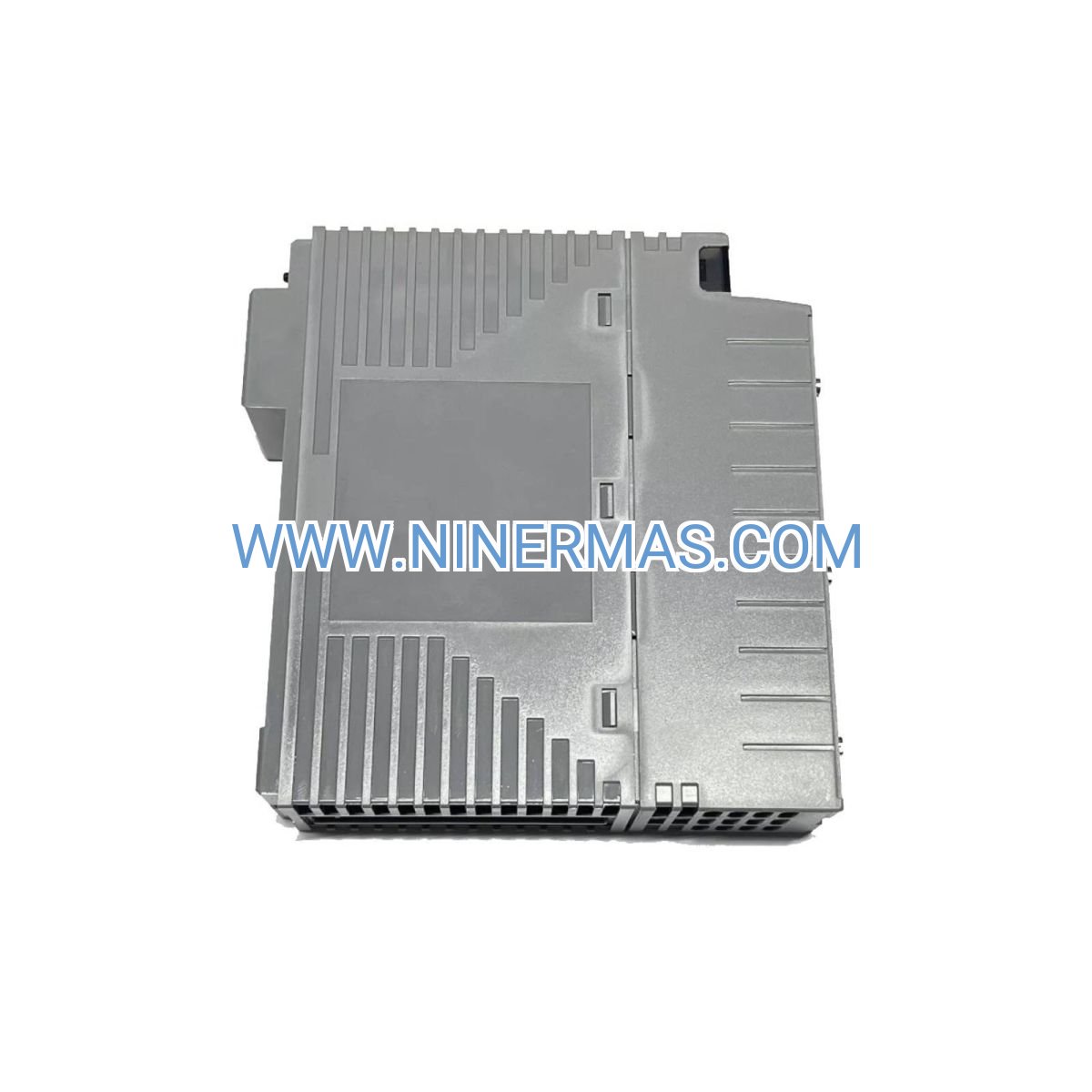
KJ2201X1-HA1 Terminal Block Assembly (Industrial-Grade Safety Interface)
The KJ2201X1-HA1 represents a mission-critical wiring interface designed for Safety Instrumented Systems within Emerson's DeltaV architecture. Engineered to deliver fail-safe field termination for SLS 1508 safety controllers, this terminal block assembly ensures uncompromising reliability in environments where process safety cannot be negotiated. Whether protecting personnel in chemical processing facilities or preventing catastrophic equipment failures in oil refineries, this component serves as the trusted bridge between hazardous area instrumentation and your safety logic infrastructure.
Built for engineers and maintenance teams managing high-consequence industrial operations, the KJ2201X1-HA1 addresses the fundamental challenge of maintaining signal integrity and electrical isolation in safety-critical circuits. Its SIL 3 certification under IEC 61508 standards provides documented proof of functional safety performance, while the modular design enables rapid replacement during scheduled turnarounds without disturbing field wiring—minimizing downtime and reducing maintenance risk.
With captive screw terminals rated for 10A continuous operation and compatibility with 14-22 AWG conductors, this terminal block delivers the mechanical robustness and electrical performance demanded by modern safety systems. The color-coded terminal arrangement and integrated isolation barriers combine to create an installation that's both error-resistant and maintenance-friendly, supporting your facility's long-term safety integrity requirements.
Engineering Features & Operational Advantages
→ Functional Safety Certification: Achieves Safety Integrity Level 3 (SIL 3) compliance per IEC 61508 with TÜV approval, providing quantified risk reduction for emergency shutdown and fire & gas systems. This certification enables use in applications requiring systematic failure rates below 10⁻⁸ dangerous failures per hour.
→ Hot-Swap Capability: Modular architecture permits terminal block removal and replacement during planned maintenance windows without breaking field wire connections. This design reduces mean time to repair (MTTR) by 60-75% compared to traditional hardwired installations, supporting higher system availability.
→ Electrical Isolation Protection: Integrated galvanic isolation barriers shield logic solver electronics from field-side voltage transients, ground loops, and fault currents up to 250V AC/DC. This protection extends controller lifespan and prevents nuisance trips caused by electrical noise.
✓ Wide Environmental Range: Operates reliably across -40°C to +70°C ambient temperatures with flame-retardant UL94 V-0 housing material, suitable for both climate-controlled control rooms and harsh industrial enclosures subject to temperature extremes.
✓ Visual Verification System: Color-coded terminal blocks with permanent laser-etched labeling enable rapid installation quality checks and simplify troubleshooting during commissioning or proof testing cycles. This feature reduces human error during safety system modifications.
✓ DIN Rail Mounting: Standard 35mm DIN rail compatibility ensures seamless integration with DeltaV SIS horizontal carriers (VE4050 series), supporting both simplex and redundant system topologies without custom mounting hardware.
Industrial Application Scenarios
Emergency Shutdown Systems (ESD) in Upstream Oil & Gas:
In offshore platforms and onshore production facilities, the KJ2201X1-HA1 provides the critical interface between wellhead pressure transmitters, emergency isolation valves, and SLS 1508 safety controllers. When abnormal conditions are detected—such as overpressure events or gas releases—the terminal block ensures millisecond-level signal transmission to initiate automated shutdown sequences, protecting personnel and preventing environmental incidents. The SIL 3 rating meets regulatory requirements for high-demand mode safety functions in hydrocarbon processing.
Fire & Gas Detection in Chemical Manufacturing:
Chemical plants handling flammable or toxic materials deploy this terminal block to connect multi-point gas detectors, flame scanners, and deluge valve actuators to centralized safety logic. The electrical isolation prevents ground faults in one detection zone from compromising the entire safety system, while the hot-swap design allows detector circuit maintenance without taking the entire fire protection system offline—critical for continuous process operations.
Burner Management in Power Generation:
Utility-scale boilers and combined-cycle gas turbines rely on the KJ2201X1-HA1 to interface flame monitoring systems, fuel valve position switches, and ignition transformers with burner management safety controllers. The terminal block's 10A current rating handles solenoid valve coil loads directly, eliminating external relay requirements and reducing potential failure points in the safety chain.
High Integrity Pressure Protection (HIPPS) Systems:
Pipeline operators use this component to terminate ultra-fast pressure transmitter signals and rapid-closure valve feedback circuits in HIPPS applications designed to prevent pipeline rupture. The terminal block's response time characteristics support overall system reaction times under 2 seconds, meeting API RP 14C requirements for pressure protection systems.
Machine Safety in Automated Manufacturing:
Automotive and packaging facilities integrate the KJ2201X1-HA1 into safety PLC systems controlling robotic work cells, where it connects safety-rated light curtains, enabling devices, and emergency stop circuits. The terminal block supports both normally energized and de-energized circuit designs required for Category 4 / PLe safety functions per ISO 13849.
Technical Parameters & Selection Criteria
| Parameter | Specification | Selection Guidance |
|---|---|---|
| Model Designation | KJ2201X1-HA1 | Verify compatibility with SLS 1508 logic solver variant |
| Safety Integrity Level | SIL 3 (IEC 61508) | Match or exceed required SIL for safety function |
| Terminal Type | Screw clamp, captive design | Suitable for solid or ferrule-terminated conductors |
| Wire Gauge Range | 14-22 AWG (0.5-2.5 mm²) | Ensure field wiring falls within this range |
| Voltage Rating | 250V AC/DC maximum | Verify field device supply voltages do not exceed rating |
| Current Capacity | 10A per terminal | Calculate total load current for valve/relay circuits |
| Operating Temperature | -40°C to +70°C | Confirm enclosure ambient stays within limits |
| Mounting Method | 35mm DIN rail (TS35) | Requires DeltaV SIS horizontal carrier (VE4050 series) |
| Housing Material | Flame-retardant thermoplastic | UL94 V-0 rating meets most electrical code requirements |
| Torque Specification | 0.5-0.6 Nm (4.4-5.3 lb-in) | Use calibrated torque screwdriver during installation |
Selection Considerations: When specifying the KJ2201X1-HA1, verify that your safety function's required SIL does not exceed SIL 3, and confirm that the terminal block's systematic capability (SC) rating aligns with your overall SIS architecture. For redundant configurations (1oo2 or 2oo3 voting), order matched pairs to ensure identical electrical characteristics. Always consult the DeltaV SIS Planning Guide to determine the correct combination of logic solver modules, terminal blocks, and carrier assemblies for your specific application.
Advanced Integration Capabilities
Diagnostic Monitoring: The KJ2201X1-HA1 integrates with DeltaV SIS diagnostic capabilities to provide continuous health monitoring of field wiring circuits. The system can detect open circuits, short circuits, and out-of-range signals, generating maintenance alerts before failures impact safety function availability. This predictive capability supports condition-based maintenance strategies and helps maintain target SIL performance throughout the safety lifecycle.
Redundancy Architecture Support: In dual-channel safety systems, paired terminal blocks enable 1oo2 (one-out-of-two) voting logic where either channel can safely shut down the process. The design ensures that a single terminal block failure does not create a common-cause vulnerability, maintaining the required probability of failure on demand (PFD) for SIL 3 applications.
Flexible Circuit Topologies: The terminal arrangement accommodates both normally energized (de-energize to trip) and normally de-energized (energize to trip) safety circuit designs. This flexibility supports diverse field device types including dry contact switches, 4-20mA transmitters, and discrete solenoid outputs without requiring external signal conditioning.
Delivery Timeline & Service Commitment
Standard Delivery: 5-7 business days for in-stock units to major industrial hubs (Houston, Singapore, Rotterdam, Shanghai). Expedited 2-3 day shipping available for critical outage support.
Custom Configurations: Pre-wired terminal block assemblies with customer-specified wire markers and ferrules available with 10-15 business day lead time. Ideal for large projects requiring consistent installation quality across multiple panels.
Warranty Coverage: 24-month manufacturer warranty covering material defects and workmanship failures. Warranty includes replacement parts and technical support for troubleshooting installation issues.
Technical Documentation: Each shipment includes TÜV SIL 3 certificate, IEC 61508 compliance declaration, installation manual with wiring diagrams, and proof test procedures. Digital documentation package available via secure download for project engineering teams.
Application Support: Pre-sales engineering assistance for system architecture review, SIL verification calculations, and component selection. Post-installation support includes remote diagnostics and on-site commissioning services in select regions.
Frequently Asked Questions
Q: Can the KJ2201X1-HA1 terminal block interface directly with 4-20mA HART transmitters in SIL 3 applications?
A: Yes, the terminal block supports 4-20mA analog signals and is transparent to HART digital communication. However, ensure that your transmitter itself carries the appropriate SIL rating and that loop power supplies meet isolation requirements. For SIL 3 applications, use transmitters certified to at least SIL 2 in a 1oo2 configuration, or SIL 3-rated transmitters in simplex arrangements.
Q: What is the maximum cable run distance supported between field devices and the KJ2201X1-HA1 terminal block?
A: Maximum cable length depends on signal type and environmental noise levels. For discrete 24V DC signals, runs up to 1000 meters (3280 feet) are typical with shielded cable. For 4-20mA analog signals, distances up to 1500 meters are achievable with proper loop resistance calculations. Always verify that total loop resistance (cable + device) does not exceed the transmitter's maximum load specification.
Q: How does the hot-swap capability work during maintenance activities?
A: The terminal block separates from the logic solver module via a keyed connector interface. During maintenance, you power down the associated logic solver channel, disconnect the terminal block from the module, and slide it off the DIN rail—all while field wiring remains landed on the terminal screws. Install the replacement terminal block, reconnect to the logic solver, and restore power. This process typically takes 10-15 minutes versus 2-3 hours for traditional rewiring.
Q: Are there specific torque requirements for terminal screw connections to maintain SIL 3 certification?
A: Yes, terminal screws must be torqued to 0.5-0.6 Nm (4.4-5.3 lb-in) using a calibrated torque screwdriver or torque-limiting bit. Under-torquing can result in high-resistance connections that generate heat and potential signal loss, while over-torquing may damage the terminal block housing or strip threads. Document torque values during commissioning and re-verify during proof test intervals.
Q: Can this terminal block be used in Zone 1 or Division 1 hazardous area enclosures?
A: The KJ2201X1-HA1 itself is not intrinsically safe or explosion-proof rated. It must be installed in a purged/pressurized enclosure (Type X or Z purging per IEC 60079-2) or in a safe area control room. For hazardous area installations, use approved intrinsic safety barriers or isolators between field devices in the hazardous zone and the terminal block in the safe area.
Q: What preventive maintenance is required to maintain SIL 3 performance over the safety lifecycle?
A: Perform visual inspection for physical damage, corrosion, or loose connections during annual proof tests. Re-torque terminal screws if any are found loose. Verify continuity of all circuits and check for proper isolation resistance (>10 MΩ) between isolated channels. Replace terminal blocks showing signs of thermal damage, cracked housings, or corroded terminals. Typical service life is 15-20 years under normal industrial conditions.
Order Your KJ2201X1-HA1 Terminal Block Today
Ensure your safety instrumented systems maintain the highest levels of functional safety and operational reliability. Contact our technical sales team for application-specific guidance, SIL verification support, or volume pricing for multi-unit projects. We provide complete documentation packages, expedited global shipping, and post-installation technical support to keep your critical safety systems performing as designed.
Request a Quote: Email your system requirements and delivery timeline to our engineering team for a detailed proposal including component selection verification and compliance documentation.
© 2026 NINERMAS COMPANY LIMITED. All rights reserved.
Original Source: https://ninermas.com
Contact: sale@ninermas.com | +0086 187 5021 5667
PDF Specification
Download PDF file here:
Click to Download PDFRelated products

Contact Info
-
Address:22 / F, South Wo Hang building, 148 Wing Lok Street, Sheung Wan, Western District, Hong Kong
-
Phone:+8618750215667
-
Email: