Description
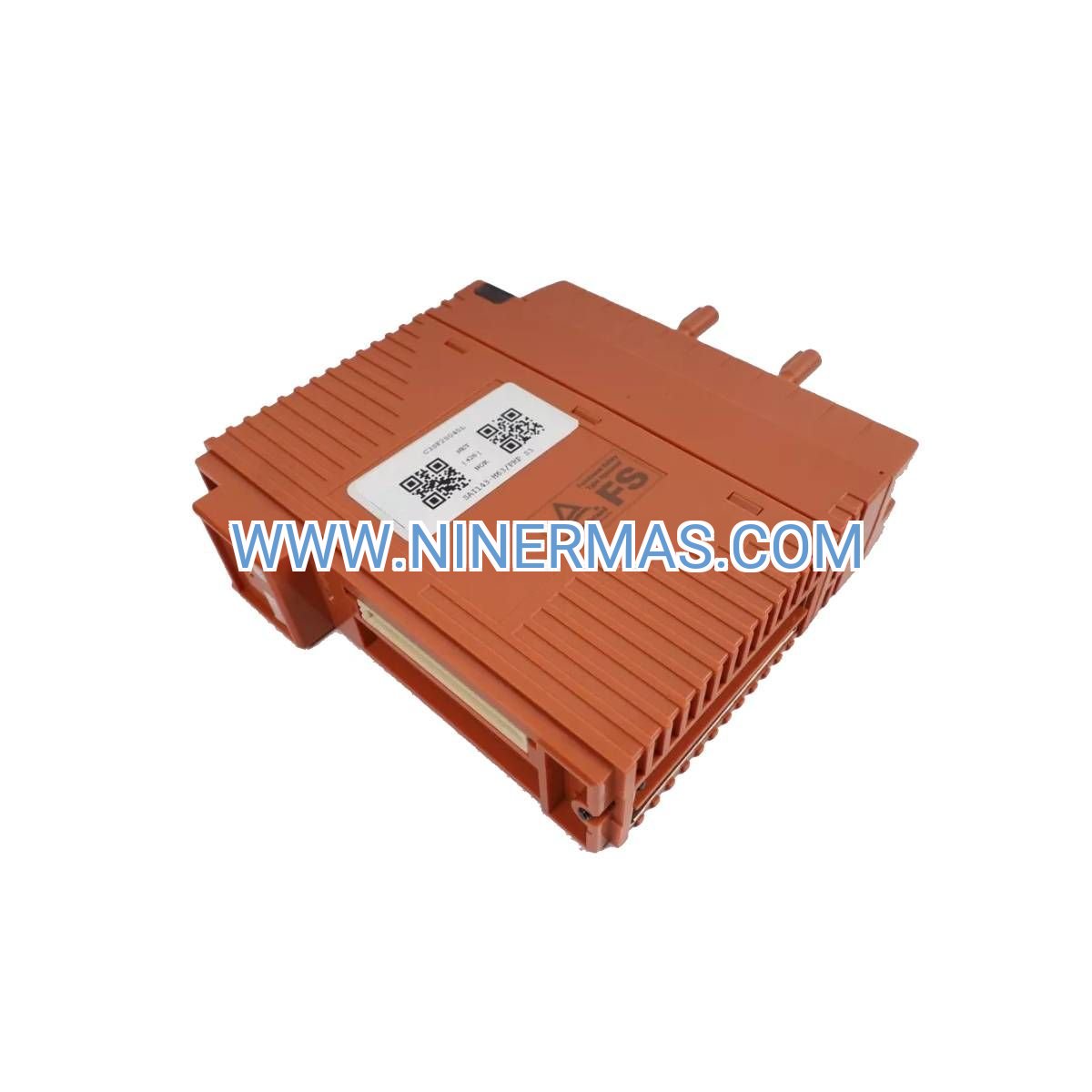
KJ2201X1-BA1 Safety Logic Solver (Industrial-Grade SIL 3 Controller)
The KJ2201X1-BA1 (Part Number: 12P3162X122) is an industrial-grade safety logic solver engineered for mission-critical process safety applications requiring IEC 61508 SIL 3 certification. This controller serves as the computational core of DeltaV Safety Instrumented Systems (SIS), executing safety logic with triple modular redundancy (TMR) architecture to protect personnel, assets, and the environment in high-hazard industries including oil & gas, petrochemical, power generation, and pharmaceutical manufacturing.
Designed for applications where failure is not an option, this logic solver addresses the fundamental challenge of maintaining continuous safety protection while accommodating online maintenance, system diagnostics, and configuration changes. Target users include safety engineers, control system integrators, plant operators, and EPC contractors responsible for designing, implementing, and maintaining safety instrumented functions (SIF) that prevent catastrophic incidents such as overpressure events, toxic releases, fires, and explosions.
Key advantages include proven-in-use safety logic libraries that accelerate project delivery, deterministic 100ms scan cycles that ensure predictable emergency response, hardware fault tolerance that eliminates single points of failure, and seamless integration with DeltaV DCS for unified plant-wide control and safety visualization. With over 150,000 hours MTBF per processing channel and diagnostic coverage exceeding 99%, the KJ2201X1-BA1 delivers the reliability and availability demanded by safety-critical applications.
Core Features & Benefits
- ✓ IEC 61508/61511 SIL 3 Certification: Independently certified for use in safety instrumented functions with probability of failure on demand (PFDavg) better than 10-4, meeting regulatory requirements for high-demand safety applications across global jurisdictions.
- ✓ Triple Modular Redundancy (TMR) Architecture: Three independent 32-bit RISC processors execute identical safety logic with 2oo3 voting, automatically isolating failed modules without spurious trips or loss of safety protection—enables online module replacement during operation.
- ✓ Deterministic 100ms Logic Execution: Fixed scan cycle guarantees predictable response times for time-critical safety functions, supporting up to 2,048 safety I/O points with consistent performance regardless of logic complexity or system loading.
- ✓ Advanced Diagnostic Coverage (>99%): Continuous self-diagnostics monitor processor health, memory integrity, communication paths, and power supplies with automatic fault annunciation—reduces proof test intervals and maximizes system availability.
- ✓ Hot-Swappable Modular Design: Field-replaceable modules with automatic configuration download enable maintenance without system shutdown, minimizing production interruptions and supporting 24/7 continuous process operations.
- → Integrated Safety & Control Platform: Native integration with DeltaV DCS provides unified engineering environment, common operator interface, and consolidated alarm management—reduces training requirements and operational complexity compared to standalone safety systems.
Application Scenarios
Emergency Shutdown Systems (ESD) - Offshore Oil & Gas Platforms:
Offshore production facilities face unique challenges with limited personnel, harsh environmental conditions, and high consequence scenarios. The KJ2201X1-BA1 executes coordinated shutdown sequences across multiple process units, managing hundreds of ESD valves, motor-operated valves, and critical interlocks. Achieves sub-second response from hazard detection to final element actuation, preventing escalation of process upsets into major accidents. Redundant architecture ensures safety protection remains active even during module failures or maintenance activities.
Fire & Gas Detection Systems - Petrochemical Refineries:
Refineries require sophisticated fire and gas detection logic to protect against hydrocarbon releases and ignition sources across vast processing areas. This safety controller integrates inputs from flame detectors, combustible gas sensors, toxic gas monitors, and manual call points to execute complex cause-and-effect matrices with configurable voting (1oo2, 2oo3, 2oo4). Triggers fire suppression systems, HVAC isolation, emergency depressurization, and personnel mustering protocols based on multi-zone detection logic, reducing false alarms while ensuring rapid response to genuine hazards.
Burner Management Systems (BMS) - Power Generation Boilers:
Power plant boilers and industrial furnaces demand precise control of fuel-air ratios and ignition sequences to prevent furnace explosions. The KJ2201X1-BA1 implements NFPA 85/86 compliant burner management logic, monitoring flame safeguard systems, fuel valve interlocks, purge sequences, and trip conditions. Proven-in-use safety function blocks reduce engineering time by 40% compared to custom logic development, while maintaining full compliance with international boiler safety standards.
High Integrity Pressure Protection (HIPPS) - Pipeline Overpressure Prevention:
Pipeline systems require ultra-fast pressure relief to prevent mechanical failures and environmental releases. This logic solver executes HIPPS algorithms with total loop response times under 2 seconds from pressure sensor detection to isolation valve closure, preventing activation of mechanical relief valves and associated emissions. Supports partial stroke testing (PST) of shutdown valves without process interruption, maintaining proof test compliance while maximizing production uptime.
Pharmaceutical Batch Processing - Contamination Prevention:
Pharmaceutical manufacturing requires safety interlocks to prevent cross-contamination between product batches and protect personnel from hazardous materials. The controller manages clean-in-place (CIP) sequences, material transfer interlocks, and containment system monitoring with full audit trail capabilities for FDA 21 CFR Part 11 compliance. Deterministic scan cycles ensure consistent batch-to-batch processing and regulatory documentation.
Technical Parameters & Selection Guide
| Parameter | Specification | Notes |
|---|---|---|
| Part Number | 12P3162X122 | Factory configuration code |
| Model Designation | KJ2201X1-BA1 SLS 1508 | Logic Solver, TMR configuration |
| Safety Integrity Level | SIL 3 (IEC 61508/61511) | PFDavg < 10-4 |
| Processor Architecture | Triple redundant 32-bit RISC | 2oo3 voting logic |
| Program Memory | 16 MB per channel | Supports complex safety logic |
| Data Memory | 8 MB per channel | Event buffering and diagnostics |
| I/O Capacity | Up to 2,048 points | Digital and analog safety I/O |
| Logic Scan Cycle | 100 ms (fixed) | Deterministic execution |
| Communication | Dual redundant Ethernet (100 Mbps) | Engineering and HMI access |
| Safety Bus | Proprietary fault-tolerant fieldbus | SIS I/O module connectivity |
| Power Input | 24 VDC (18-32 VDC range) | Dual redundant inputs |
| Power Consumption | 25 W typical / 35 W max | Low heat dissipation |
| Operating Temperature | -40°C to +70°C | Extended industrial range |
| Diagnostic Coverage | > 99% | Automatic fault detection |
| MTBF | > 150,000 hours @ 40°C | Per processing channel |
| Certifications | ATEX/IECEx Zone 2, FM/CSA Class I Div 2 | Hazardous area approvals |
| Dimensions (H×W×D) | 280 mm × 220 mm × 180 mm | Standard DIN rail mounting |
| Weight | Approximately 1 kg | Shipping weight may vary |
Selection Criteria: Choose the KJ2201X1-BA1 when your application requires SIL 3 certification, I/O counts between 128-2048 points, integration with existing DeltaV infrastructure, or compliance with IEC 61511 safety lifecycle requirements. For smaller systems (under 128 I/O), consider simplex SLS configurations. For applications requiring SIL 4 or quadruple redundancy, consult factory engineering for custom architectures. Verify compatibility with existing DeltaV system version—controller requires DeltaV v11.3 or later for full feature support.
Extended Functions
Partial Stroke Testing (PST) Integration: Built-in support for automated partial stroke testing of shutdown valves and actuators without process interruption. Configurable test sequences verify valve movement to intermediate positions (typically 10-20% travel), detecting mechanical degradation before complete failure. Test results automatically logged for proof test documentation and regulatory compliance.
Cybersecurity Features: Implements defense-in-depth security architecture with role-based access control (RBAC), encrypted communication channels, and audit logging of all configuration changes. Supports network segmentation strategies per IEC 62443 industrial cybersecurity standards, protecting safety systems from unauthorized access and cyber threats.
Predictive Maintenance Analytics: Advanced diagnostics track processor loading, communication health, and I/O module performance trends. Predictive algorithms identify degrading components before failure, enabling condition-based maintenance scheduling that maximizes uptime while maintaining safety integrity.
Remote Monitoring Capabilities: Secure remote access enables off-site safety system monitoring, alarm notification, and diagnostic troubleshooting. Reduces mean time to repair (MTTR) by allowing expert support personnel to diagnose issues remotely before dispatching field technicians, particularly valuable for offshore and remote facility locations.
Delivery & Service Assurance
Lead Time: Standard configuration units typically ship within 4-6 weeks from order confirmation. Custom configurations with specialized I/O requirements or factory acceptance testing (FAT) may require 8-12 weeks. Expedited delivery available for critical project schedules—contact sales for fast-track options.
Warranty Coverage: 18-month comprehensive warranty from shipment date covering hardware defects, safety function performance, and diagnostic system operation. Warranty includes firmware updates, technical support access, and replacement parts shipping. Extended warranty programs available for long-term asset protection.
Technical Support: Global 24/7 technical support hotline staffed by certified safety system engineers. Support services include safety logic design review, hazard analysis (HAZOP/LOPA) assistance, SIL verification calculations, proof test procedure development, and on-site commissioning support. Regional service centers provide rapid response for emergency repairs and system upgrades.
Documentation Package: Each unit ships with SIL 3 certificate, installation manual, safety manual, proof test procedures, and configuration backup files. Digital documentation portal provides access to application notes, firmware release notes, and training materials. Custom documentation available for project-specific requirements.
Frequently Asked Questions
Q1: How does the KJ2201X1-BA1 integrate with existing DeltaV control systems?
A: The safety logic solver connects to DeltaV operator stations via dual redundant Ethernet links, providing real-time safety system status on standard DeltaV graphics. Safety logic is programmed using DeltaV SIS Studio with the same IEC 61131-3 function blocks familiar to DeltaV users. Safety I/O appears on the same network as control I/O, enabling unified alarm management and historian integration. No separate safety HMI required for basic operations.
Q2: What I/O capacity and expansion options are available for growing safety systems?
A: Base configuration supports 128 safety I/O points, expandable to 2,048 points through hot-swappable I/O carriers and modules. Each I/O carrier accommodates up to 8 modules in various configurations (digital input, digital output, analog input, analog output). System expansion performed online without safety logic interruption. I/O modules support both simplex and redundant configurations depending on required safety integrity level.
Q3: Can this safety controller reduce energy consumption in shutdown valve systems?
A: Yes—the controller's partial stroke testing (PST) capability maintains valve operability without full closure cycles, reducing compressed air or hydraulic fluid consumption by up to 60% compared to traditional proof testing. Advanced diagnostics identify valve friction and wear trends, enabling predictive maintenance that prevents energy-wasting emergency repairs. Low power consumption (25W typical) minimizes UPS sizing requirements for backup power systems.
Q4: What are the installation requirements for hazardous area applications?
A: The KJ2201X1-BA1 carries ATEX/IECEx Zone 2 and FM/CSA Class I Division 2 certifications for installation in hazardous areas with explosive atmospheres. Requires mounting in suitable enclosure (Type 4X/IP66 minimum) with proper grounding and cable gland sealing. Maintain ambient temperature within -40°C to +70°C range. Consult installation manual for specific clearance requirements and ventilation guidelines. Intrinsically safe barriers required when connecting to Zone 0/Division 1 field devices.
Q5: Does the system support remote monitoring for offshore platform applications?
A: Absolutely—secure remote access via encrypted VPN tunnels enables shore-based safety engineers to monitor system health, review alarm histories, and perform diagnostic troubleshooting without offshore visits. Remote capabilities include real-time I/O status, diagnostic event logs, and configuration backup downloads. All remote access sessions logged for cybersecurity audit compliance per IEC 62443 standards. Bandwidth requirements minimal (typically <100 kbps) for satellite or cellular connectivity.
Q6: How frequently must proof testing be performed to maintain SIL 3 certification?
A: Proof test intervals depend on application-specific PFD calculations but typically range from 12-24 months for SIL 3 functions. The controller's >99% diagnostic coverage significantly extends allowable proof test intervals compared to lower diagnostic coverage systems. Partial stroke testing (PST) of final elements can be performed monthly or quarterly without process shutdown, providing continuous validation of safety function availability between full proof tests. Consult safety manual and perform SIL verification calculations for your specific application.
Take the Next Step
Ready to enhance your facility's process safety with proven SIL 3 technology? Contact our safety system specialists for application-specific consultation, SIL verification support, and project quotations. Our team can review your P&IDs, assist with safety requirements specification (SRS) development, and provide budgetary estimates for complete safety instrumented system solutions.
Request a Quote: Email your project requirements to sale@ninermas.com or call +0086 187 5021 5667 to speak with a safety system engineer.
© 2026 NINERMAS COMPANY LIMITED. All rights reserved.
Original Source: https://ninermas.com
Contact: sale@ninermas.com | +0086 187 5021 5667
PDF Specification
Download PDF file here:
Click to Download PDFRelated products

Contact Info
-
Address:22 / F, South Wo Hang building, 148 Wing Lok Street, Sheung Wan, Western District, Hong Kong
-
Phone:+8618750215667
-
Email: