


Description
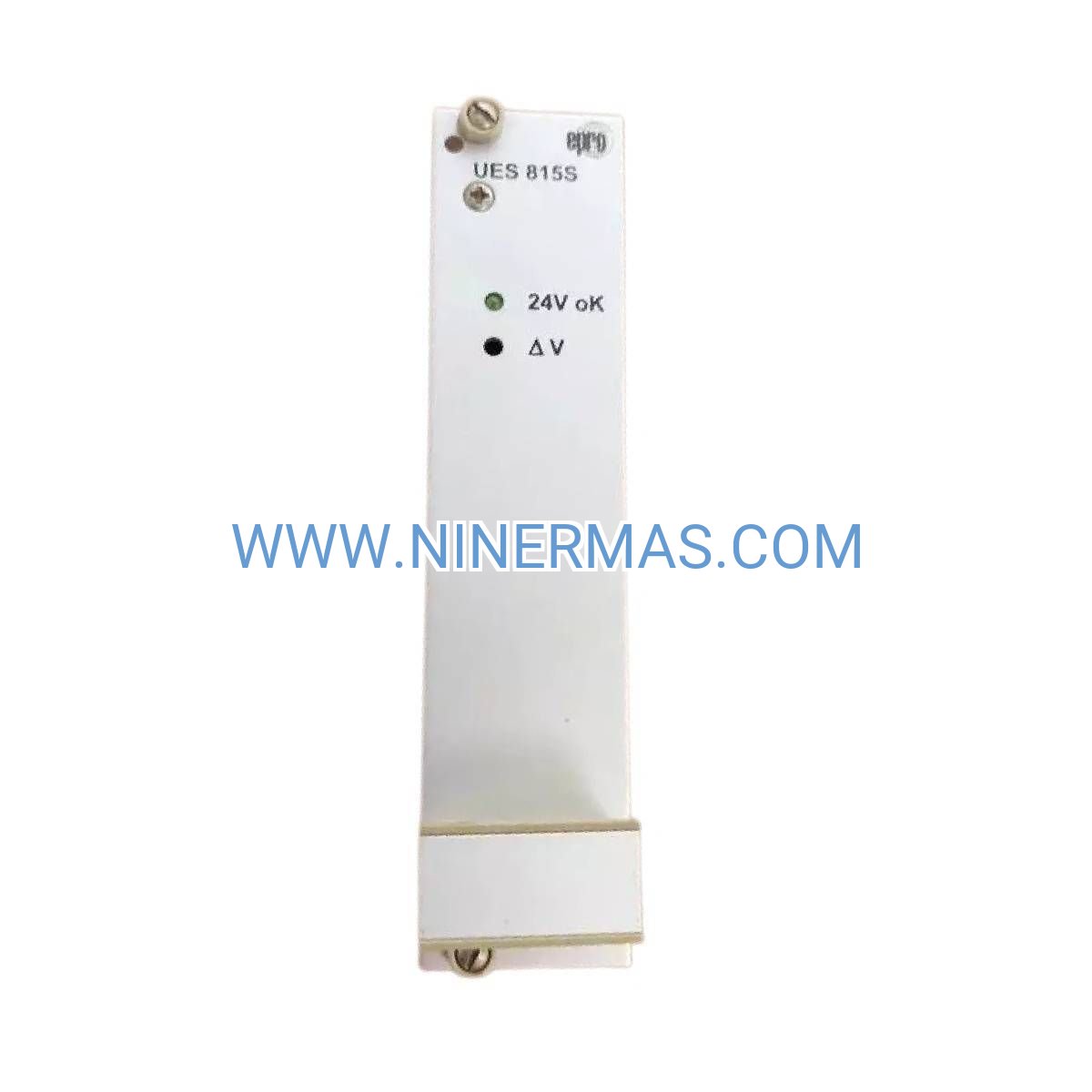
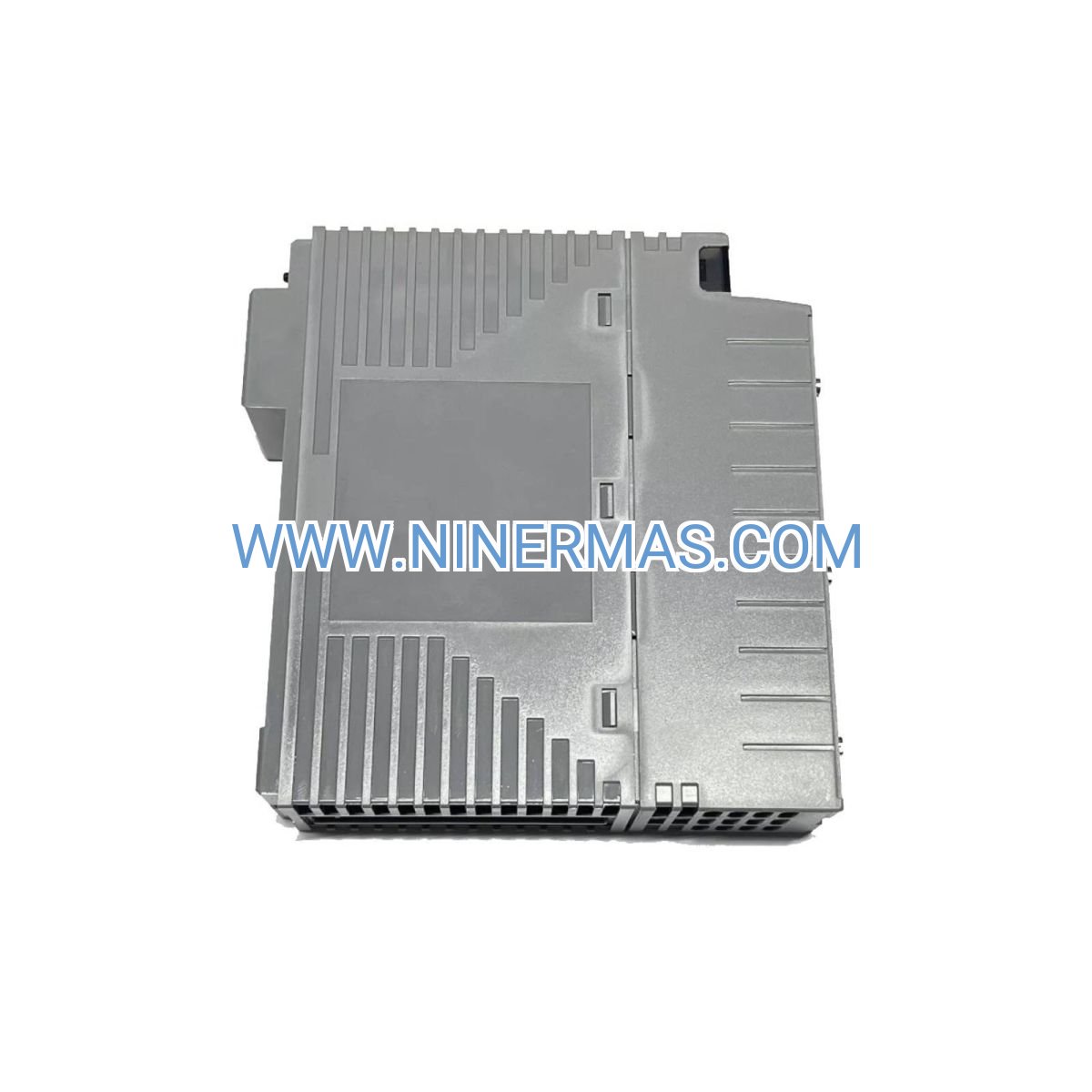
UES815S-24A Servo Drive (Industrial-Grade Motion Controller)
The UES815S-24A represents a breakthrough in servo drive technology, combining 24-ampere continuous output with intelligent auto-tuning capabilities. Engineered for manufacturers who demand microsecond-level response times and zero-drift positioning, this drive transforms complex motion sequences into repeatable, production-ready operations. Whether you're synchronizing multi-axis packaging lines or coordinating robotic assembly cells, the UES815S-24A delivers the torque precision and network flexibility that modern automation requires.
Built for engineers managing high-mix production environments, this servo controller eliminates the traditional trade-off between performance and ease of integration. Its adaptive algorithms automatically compensate for load variations, while dual-port Ethernet architecture ensures your motion network stays operational even during cable failures or switch maintenance.
From CNC machining centers requiring 0.001° positioning accuracy to conveyor systems handling variable product weights, the UES815S-24A provides the control foundation that keeps production targets on schedule and quality metrics within specification.
Core Capabilities & Business Impact
→ Adaptive Load Compensation
Real-time inertia detection adjusts control parameters automatically, reducing commissioning time from days to hours while maintaining ±0.1% speed regulation across 10:1 load variations.
→ Multi-Protocol Fieldbus Integration
Native support for Modbus RTU, CANopen, and EtherCAT eliminates gateway costs and latency penalties, enabling 1ms update cycles for time-critical motion coordination across mixed-vendor automation architectures.
→ Certified Functional Safety
IEC 61508 SIL 2 / ISO 13849-1 PLd Safe Torque Off (STO) function integrates directly with safety PLCs, reducing panel space and wiring complexity while meeting machinery directive requirements without external safety relays.
✓ Redundant Network Topology
Dual Ethernet ports support ring configurations with <50ms failover, protecting production schedules against single-point communication failures in mission-critical applications.
✓ Extended Environmental Range
Conformal coating option and -10°C to +50°C operating window enable deployment in food processing, chemical handling, and outdoor material handling applications without climate-controlled enclosures.
✓ Lifecycle Assurance Program
15-year spare parts commitment and backward-compatible firmware updates protect capital equipment investments, with migration paths to next-generation platforms that preserve existing motor and feedback infrastructure.
Industry Applications & Problem Resolution
Precision Machining Centers
Maintains ±2 arc-second positioning accuracy during high-speed tool changes and feed rate transitions. Vibration suppression algorithms eliminate resonance-induced surface finish defects on aluminum aerospace components and medical device housings.
Packaging & Converting Lines
Synchronizes registration marks across web speeds from 10 to 600 meters/minute with <0.5mm cumulative error. Electronic gearing function coordinates multiple servo axes without mechanical linkages, reducing changeover time for different package formats by 70%.
Automated Material Handling
Handles payload variations from 5kg to 500kg without manual tuning adjustments. Predictive current limiting prevents nuisance trips during emergency stops, while S-curve profiling reduces mechanical stress on gearboxes and linear guides.
Process Industry Automation
Integrates with DeltaV and Ovation DCS platforms for coordinated motion in batch reactors, centrifuge systems, and continuous extrusion processes. Torque monitoring detects bearing wear and lubrication degradation 2-4 weeks before catastrophic failure.
Robotic Work Cells
Provides the deterministic response required for pick-and-place operations with ±0.05mm repeatability. Supports absolute encoder feedback for instant position recovery after power interruptions, eliminating re-homing sequences that delay production restart.
Technical Parameters & Selection Criteria
| Parameter | Specification | Selection Notes |
|---|---|---|
| Continuous Current | 24 Amperes RMS | Match to motor rated current; 150% overload for 2 seconds |
| Input Voltage | 3-phase 380-480VAC ±10% | Verify facility voltage stability; requires 40A supply breaker |
| Control Modes | Torque / Speed / Position | Position mode requires encoder feedback; torque mode for tension control |
| Feedback Types | Resolver, Incremental, Absolute | Absolute encoder recommended for vertical axes and power-loss recovery |
| Communication | Modbus RTU/TCP, CANopen, EtherCAT | EtherCAT provides <1ms cycle time for synchronized multi-axis systems |
| Enclosure Rating | IP20 (chassis mount) | Requires NEMA 12 or IP54 cabinet; conformal coating available for harsh environments |
| Ambient Temperature | -10°C to +50°C | Derate current 2.5% per °C above 40°C; forced ventilation recommended |
Sizing Recommendations: Calculate total inertia ratio (load + coupling + motor) to ensure <10:1 for optimal tuning response. For applications with frequent direction reversals, verify peak torque requirements don't exceed 150% of continuous rating for more than 10% duty cycle. Consult motor torque-speed curves to confirm operating point falls within continuous thermal zone.
Advanced Integration Features
Industry 4.0 Connectivity: Built-in OPC UA server exposes real-time performance metrics (torque, velocity, position error, bus voltage, thermal state) to SCADA and MES platforms without proprietary gateways. MQTT publish/subscribe enables edge analytics for predictive maintenance algorithms that detect bearing degradation, encoder signal quality deterioration, and power supply aging.
Custom Motion Profiles: 64-segment cam table memory stores complex motion sequences for electronic camming applications. Supports flying shear, registration correction, and electronic gearing with 1:10,000 ratio resolution. Profile generator accepts G-code input for direct CNC integration.
Modular Expansion: Optional I/O modules add 16 digital inputs and 8 relay outputs for local limit switches, brake control, and auxiliary equipment coordination. Analog input cards enable torque reference from load cells or tension transducers with 16-bit resolution.
Delivery Timeline & Service Commitment
Standard Lead Time: 3-5 business days for stock configurations (24A drive with Modbus RTU). Custom configurations with specific fieldbus cards or conformal coating ship within 10-12 business days from order confirmation.
Warranty Coverage: 24-month comprehensive warranty covering materials, workmanship, and firmware defects. Advance replacement program provides next-business-day shipment of exchange units to minimize production downtime.
Technical Support: Unlimited access to application engineers via phone, email, and remote desktop assistance. Commissioning support includes parameter optimization, network configuration, and tuning verification. On-site startup services available for complex multi-axis installations.
Documentation Package: Includes installation manual, quick-start guide, parameter reference, CAD mounting drawings (STEP/DWG), and sample PLC code for common fieldbus protocols. Firmware update utility and configuration backup software provided at no additional cost.
Frequently Asked Questions
What fieldbus protocol provides the fastest update rate for multi-axis synchronization?
EtherCAT delivers <1ms cycle times with deterministic performance, making it ideal for applications requiring tight coordination between 4+ servo axes. Modbus TCP typically operates at 10-50ms cycles, suitable for single-axis or loosely coupled systems.
Can this servo drive handle vertical axis applications without external brake control?
Yes, the integrated brake output provides controlled DC voltage for electromagnetic holding brakes. The drive monitors brake engagement status and prevents motion commands until mechanical lock is confirmed, meeting safety requirements for Z-axis and lift applications.
What energy savings can I expect compared to hydraulic motion systems?
Typical installations achieve 40-60% energy reduction versus hydraulic power units, with additional savings from regenerative braking that returns energy to the DC bus. Standby power consumption is <25W compared to 500-1500W for hydraulic pump motors.
How do I connect this drive to an existing Allen-Bradley ControlLogix PLC?
Use the EtherNet/IP adapter module (ordered separately) for native integration with ControlLogix over standard Ethernet infrastructure. Alternative: Modbus TCP provides basic speed/position control without additional hardware, though with reduced diagnostic visibility.
Does the drive support remote monitoring for predictive maintenance programs?
Built-in web server provides real-time dashboards showing thermal loading, capacitor health, fan runtime, and error history. MQTT telemetry streams data to cloud platforms like AWS IoT or Azure IoT Hub for machine learning analysis of degradation patterns.
What installation clearances are required for proper thermal management?
Maintain 100mm (4") top clearance for convection cooling and 50mm (2") side clearance for airflow. For ambient temperatures above 40°C or enclosed cabinets, install 120mm axial fan providing 150 CFM across heatsink fins.
Get Precision Motion Control for Your Application
Ready to eliminate motion control bottlenecks and reduce commissioning time? Contact our automation specialists to discuss your torque requirements, network architecture, and integration timeline. We'll provide application-specific sizing calculations, sample configurations, and ROI analysis comparing servo solutions to your current motion technology.
Request a technical consultation: Share your motor specifications, load profile, and control system details to receive a customized integration plan within 24 hours.
© 2026 NINERMAS COMPANY LIMITED. All rights reserved.
Original Source: https://ninermas.com
Contact: sale@ninermas.com | +0086 187 5021 5667
Related products

Contact Info
-
Address:22 / F, South Wo Hang building, 148 Wing Lok Street, Sheung Wan, Western District, Hong Kong
-
Phone:+8618750215667
-
Email:
