
Description
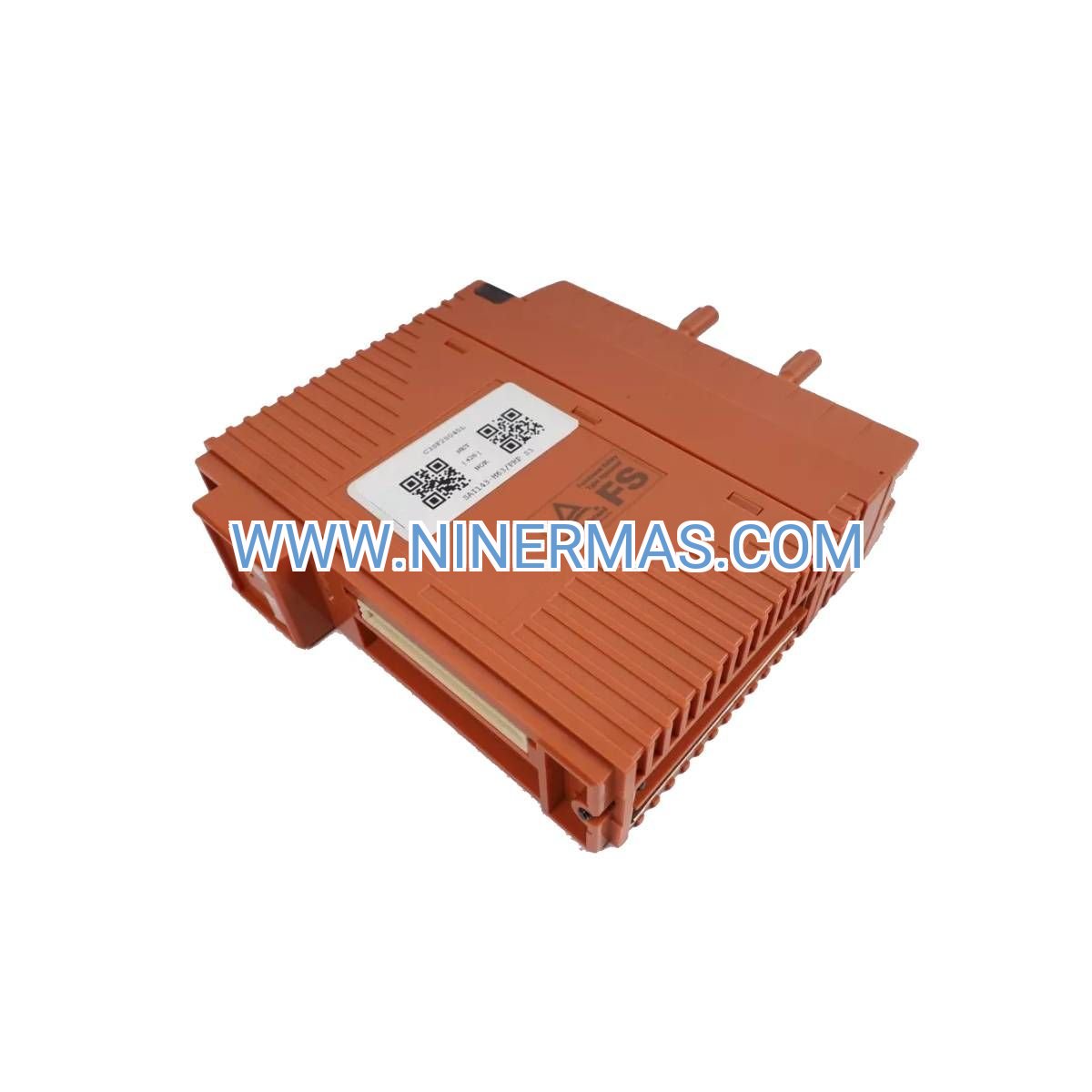
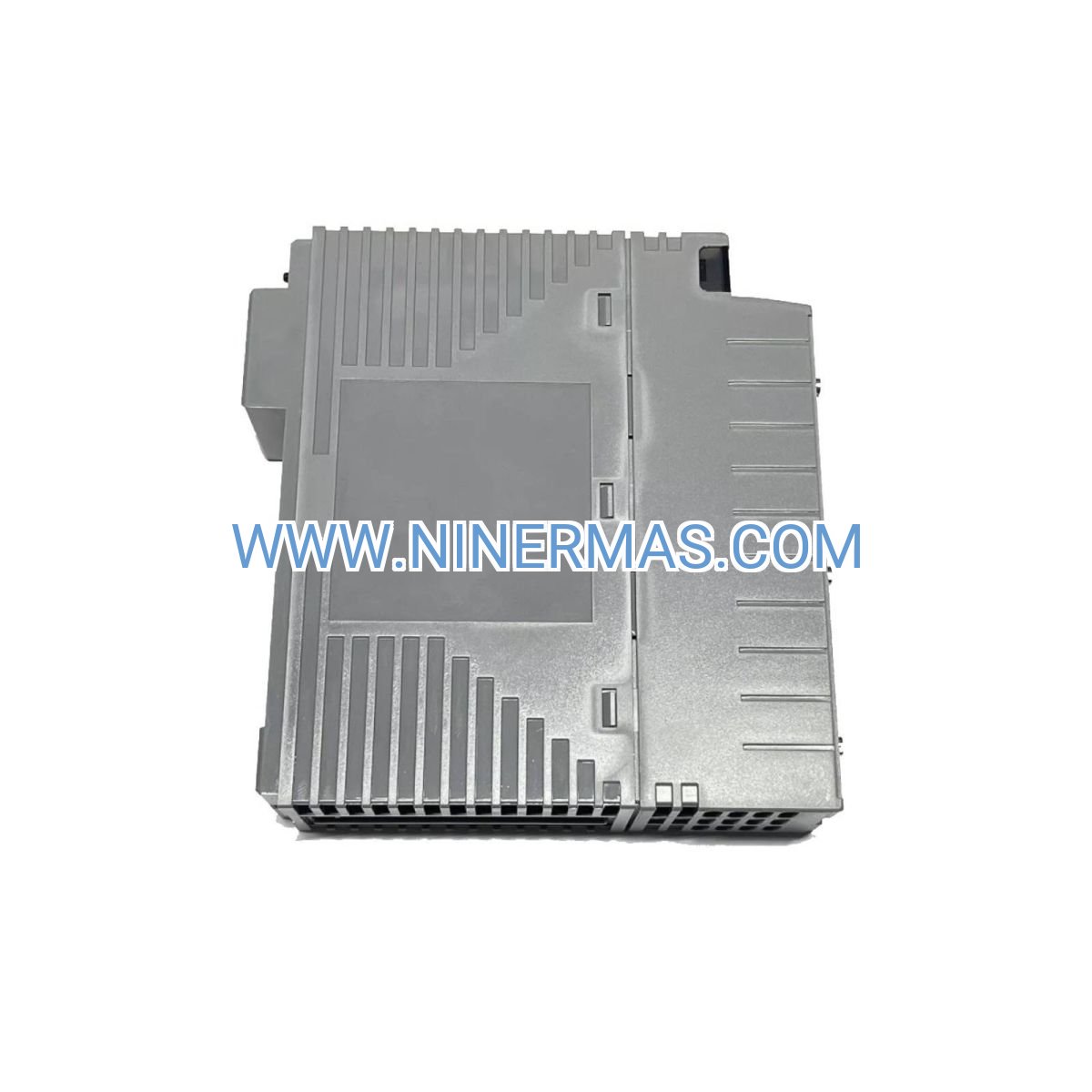
DF9011 Speed Monitoring System (Industrial-Grade Turbomachinery Protection)
The DF9011 represents a critical safety component in modern turbomachinery protection architectures, delivering continuous rotational speed surveillance with fail-safe alarm capabilities. Engineered for power generation facilities, petrochemical complexes, and process industries where equipment overspeed can result in catastrophic mechanical failure, this monitoring system combines dual-input redundancy with configurable relay logic to meet stringent safety integrity requirements. Industrial operators rely on the DF9011 to safeguard steam turbines, gas compressors, centrifugal pumps, and generator sets against destructive overspeed conditions that threaten personnel safety and production continuity.
Designed for integration into emergency shutdown systems and distributed control networks, the module processes sensor signals from magnetic pickups, proximity probes, and optical encoders with exceptional accuracy across a 0-30,000 RPM measurement span. Its sub-100-millisecond alarm response time provides the rapid protection activation essential for preventing turbine blade liberation, bearing seizure, and coupling disintegration during governor failures or load rejection events. Process engineers specify the DF9011 when machinery protection demands exceed the capabilities of standard PLC-based monitoring, requiring dedicated hardware with proven reliability in safety-critical applications.
Whether you're commissioning a new combined-cycle power plant, retrofitting aging refinery equipment with modern protection systems, or upgrading offshore platform machinery monitoring to current API standards, the DF9011 delivers the precision measurement, diagnostic intelligence, and fail-safe operation that critical infrastructure demands. Contact our application engineers to configure a protection solution tailored to your specific turbomachinery requirements.
Core Capabilities & Technical Advantages
→ Dual-Channel Redundant Architecture
Two independent speed measurement channels operate simultaneously with selectable 1oo2 or 2oo2 voting logic, eliminating single-point failures in safety instrumented systems. This redundancy architecture achieves IEC 61508 SIL 2 certification, meeting the safety integrity requirements for turbine overspeed protection in accordance with API 670 machinery protection standards. Each channel processes sensor inputs independently, with continuous cross-validation detecting sensor degradation, wiring faults, or signal quality issues before they compromise protection system reliability.
✓ Universal Sensor Interface Technology
Accepts signals from passive magnetic pickups (8-24V AC), active magnetic sensors (NPN/PNP), eddy current proximity probes (200mV-24V), and optical encoders without external signal conditioning modules. Automatic sensor type detection and adaptive input filtering eliminate the need for field configuration during commissioning, reducing installation time and configuration errors. Input frequency range extends from DC to 20 kHz, accommodating gear tooth counts from 1 to 120 teeth for flexible sensor mounting options.
✓ Precision Measurement with Digital Signal Processing
Achieves ±0.01% accuracy across the full 0-30,000 RPM range through advanced frequency-to-digital conversion algorithms that reject electromagnetic interference, mechanical vibration artifacts, and gear tooth irregularities. Configurable averaging windows (50ms to 10 seconds) balance response speed against measurement stability, while digital filtering eliminates false alarms from transient electrical noise in high-EMI industrial environments. Extended range capability to 100,000 RPM supports high-speed turbomachinery applications including microturbines and turbochargers.
✓ Configurable Multi-Setpoint Alarming
Four independent alarm thresholds with adjustable hysteresis (0.1-10% of setpoint) and time delays (0-999 seconds) enable complex protection schemes including overspeed trip, overspeed alarm, underspeed warning, and zero-speed detection. Each setpoint drives a dedicated SPDT relay output rated 5A @ 250V AC, providing hardwired trip signals to emergency shutdown valves, turbine trip solenoids, and circuit breakers. Programmable pickup and dropout delays prevent nuisance trips from momentary speed fluctuations during load changes or startup sequences.
✓ Integrated Diagnostic & Fault Detection
Continuous self-diagnostics monitor power supply voltage, internal processor operation, sensor signal quality, and relay coil continuity with dedicated fault relay output for integration into plant alarm systems. Sensor fault detection identifies open circuits, short circuits, and weak signal conditions with adjustable sensitivity thresholds, enabling predictive maintenance before sensor failures cause protection system unavailability. Front-panel LED indicators provide instant visual status of all alarm conditions, sensor health, and system faults for rapid troubleshooting.
✓ Industrial-Hardened Construction
IP20-rated enclosure with optional IP65 front panel protection withstands harsh industrial environments including temperature extremes (-20°C to +70°C), humidity, and vibration. Conformal-coated circuit boards resist moisture, chemical vapors, and corrosive atmospheres common in offshore platforms, chemical plants, and power generation facilities. Universal power supply input (24V DC ±20% or 110-240V AC) with reverse polarity protection and transient suppression ensures reliable operation in electrically noisy environments with poor power quality.
Industry-Specific Application Solutions
Steam Turbine Overspeed Protection Systems
Serves as primary or backup overspeed detection in turbine protection schemes meeting NFPA 85 boiler protection requirements and API 612 steam turbine standards. The DF9011's dual-channel architecture with 2oo2 voting provides the fail-safe operation mandated for emergency trip systems, preventing catastrophic turbine failures during governor malfunctions, load rejection events, or control system failures. Sub-100ms response time ensures trip valve activation before rotor speed exceeds 110% of rated speed, the threshold where centrifugal forces can cause blade liberation and casing penetration. Integration with turbine control systems via 4-20mA analog outputs enables speed feedback for governor control, startup sequencing, and load ramping.
Gas Compressor Surge & Overspeed Monitoring
Monitors compressor shaft speed in real-time to detect surge conditions, antisurge valve failures, and mechanical coupling issues in centrifugal compressor trains. The module's high accuracy enables precise speed control integration with variable speed drives, optimizing compressor efficiency while maintaining safe operating margins below surge and stonewall limits. Underspeed alarms detect driver failures, coupling slippage, or mechanical binding before equipment damage occurs, while overspeed protection prevents compressor wheel burst during recycle valve malfunctions or process upsets. Analog outputs interface directly with antisurge controllers and DCS systems for continuous speed trending and performance analysis.
Generator Synchronization & Load Management
Tracks generator rotor speed during startup, synchronization, and load changes in power plants, cogeneration facilities, and emergency backup generator systems. The DF9011 provides speed feedback to automatic voltage regulators (AVR) and governor control systems, ensuring smooth grid connection and load sharing between parallel generators. Overspeed protection prevents generator damage during loss-of-load events or automatic transfer switch operations, while underspeed alarms detect prime mover failures or fuel supply interruptions. Relay outputs trigger circuit breaker trip commands and lockout relays, isolating failed generators from the electrical grid to prevent backfeed and equipment damage.
Critical Pump & Motor Speed Control
Monitors pump and motor speeds in refineries, chemical plants, and water treatment facilities where process stability depends on precise rotational speed control. The module detects cavitation-induced speed fluctuations, coupling failures, and VFD malfunctions, triggering alarms before equipment damage or process upsets occur. Integration with SCADA systems enables remote monitoring of distributed pump stations, with speed trending data supporting predictive maintenance programs and energy optimization initiatives. Overspeed protection prevents pump impeller damage during check valve failures or discharge valve slam events, while underspeed alarms detect motor overload, bearing failures, or electrical supply issues.
Wind Turbine Pitch Control & Brake Systems
Measures rotor speed in wind turbine pitch control systems, providing feedback for blade angle adjustment to optimize power generation and prevent overspeed during high wind conditions or grid disconnection events. The module's wide speed range accommodates variable-speed turbine designs from 5 RPM to 30 RPM rotor speeds, while relay outputs trigger pitch actuators and mechanical brake systems during emergency shutdown sequences. Dual-channel redundancy meets the safety requirements for turbine protection systems in accordance with IEC 61400 wind turbine standards, ensuring reliable overspeed protection even with single-channel sensor or electronics failures.
Technical Specifications & Selection Parameters
| Parameter | Specification | Application Notes |
|---|---|---|
| Speed Measurement Range | 0-30,000 RPM standard 0-100,000 RPM extended | Standard range covers 99% of industrial turbomachinery; extended range for microturbines and high-speed spindles |
| Measurement Accuracy | ±0.01% of reading | Exceeds API 670 requirement of ±0.2% for machinery protection systems |
| Input Channels | Dual independent inputs | Supports 1oo2 or 2oo2 voting logic for SIL 2 safety applications |
| Sensor Compatibility | Magnetic pickup, proximity probe, optical encoder | Auto-detection eliminates manual sensor type configuration |
| Alarm Response Time | <100 milliseconds | Critical for turbine overspeed protection before mechanical damage |
| Relay Outputs | 4 × SPDT, 5A @ 250V AC | Hardwired trip signals for emergency shutdown systems |
| Analog Outputs | 2 × 4-20mA or 0-10V DC | DCS/PLC integration for speed feedback and trending |
| Power Supply | 24V DC ±20% or 110-240V AC | Universal input for global installations |
| Operating Temperature | -20°C to +70°C | Suitable for outdoor enclosures and non-climate-controlled areas |
| Safety Certification | SIL 2 (IEC 61508), CE, UL508, ATEX Zone 2 | Meets global safety standards for machinery protection |
Selection Criteria for Your Application:
Choose the DF9011 when your machinery protection requirements include: (1) Turbomachinery operating above 1,000 RPM requiring sub-second alarm response, (2) Safety instrumented functions requiring SIL 2 certification with redundant measurement channels, (3) Integration with existing DCS/PLC systems via analog outputs and discrete relay contacts, (4) Compliance with API 670, NFPA 85, or IEC 61511 machinery protection standards, (5) Harsh industrial environments with temperature extremes, electrical noise, or poor power quality. For applications requiring communication protocols beyond Modbus, consider the DF9011-COM variant with Profibus DP or EtherNet/IP interfaces.
Advanced Integration & Customization Options
The DF9011 supports optional Modbus RTU/TCP communication for remote configuration, diagnostics, and data logging without consuming analog I/O points in your control system. Modbus registers provide access to real-time speed values, alarm status, setpoint values, and diagnostic counters, enabling integration with SCADA systems, plant historians, and predictive maintenance platforms. The module's hot-swap capability with configuration retention allows field replacement during scheduled maintenance windows without system shutdown, critical for continuous process industries with high downtime costs.
Custom firmware configurations are available for specialized applications including: (1) Acceleration rate monitoring for detecting coupling failures and mechanical binding, (2) Speed deviation alarms for parallel shaft monitoring in gearbox applications, (3) Frequency ratio monitoring for belt-driven equipment slip detection, (4) Pulse-per-revolution output for synchronization with other machinery protection systems. Factory-configured modules ship with customer-specific setpoints, scaling, and relay logic pre-programmed, reducing commissioning time and eliminating field configuration errors.
Delivery Timeline & Comprehensive Support
Standard Lead Time: 3-5 business days for stock configurations with common voltage and output options. Custom-configured modules with specialized firmware or non-standard certifications ship within 10-15 business days after order confirmation.
Warranty Coverage: 24-month manufacturer warranty covering defects in materials and workmanship under normal operating conditions. Extended warranty programs available for critical applications requiring guaranteed replacement and advanced exchange services.
Technical Support: Lifetime application engineering support including sensor selection guidance, wiring diagram review, setpoint calculation assistance, and troubleshooting support via phone and email. On-site commissioning services available for complex multi-channel installations and safety system integration projects.
Documentation Package: Comprehensive installation manual with wiring diagrams, configuration software (Windows compatible), USB programming cable, factory calibration certificate with NIST-traceable measurement data, and quick start guide with common application examples. CAD drawings (DXF/STEP) and panel cutout templates available for download.
Frequently Asked Questions
Q: Can the DF9011 monitor two different machines simultaneously with its dual inputs?
A: No, the dual inputs are designed for redundant monitoring of a single machine to achieve fail-safe operation. For monitoring two separate machines, you need two DF9011 modules. The dual-channel architecture uses voting logic (1oo2 or 2oo2) to compare both sensor inputs from the same shaft, detecting sensor failures and ensuring alarm reliability even if one channel fails. This redundancy is essential for safety instrumented systems meeting SIL 2 requirements.
Q: What sensor mounting distance and gear tooth count are recommended for optimal accuracy?
A: For magnetic pickups, maintain 0.5-2.0mm gap between sensor tip and gear teeth, using a 60-tooth gear for speeds below 1,000 RPM and 30-tooth gear for higher speeds. Proximity probes require 1-2mm gap to a ferrous target with minimum 8mm width. Optical encoders should provide 60-1,000 pulses per revolution depending on speed range. The module automatically adapts to tooth counts from 1 to 120, but higher tooth counts improve low-speed accuracy and response time. Consult the installation manual for sensor-specific mounting guidelines and gap verification procedures.
Q: How does the DF9011 achieve energy efficiency in continuous monitoring applications?
A: The module consumes only 15W maximum power, significantly lower than PLC-based monitoring systems requiring multiple I/O modules, power supplies, and communication cards. Its dedicated hardware design eliminates the processing overhead of general-purpose controllers, reducing energy consumption while improving response time. For battery-backed UPS systems, the low power draw extends backup runtime during power outages, ensuring continuous protection during grid failures. The module's high efficiency also reduces cooling requirements in control panels, lowering HVAC energy costs in climate-controlled equipment rooms.
Q: What installation requirements ensure reliable operation in high-EMI environments?
A: Route sensor cables through grounded metal conduit separated from AC power lines by minimum 300mm to prevent electromagnetic interference. Use twisted-pair shielded cable (Belden 8760 or equivalent) with shields grounded at the module end only to prevent ground loops. Install the module in a grounded metal enclosure with ferrite beads on power supply leads if located near VFDs, welders, or RF transmitters. The module's internal filtering rejects common-mode noise up to 2,000V/μs, but proper cable routing and grounding practices are essential for reliable operation in electrically noisy industrial environments.
Q: Can the DF9011 interface with legacy DCS systems using 1-5V DC analog inputs?
A: Yes, the module's analog outputs are configurable for 0-10V DC, 0-5V DC, 1-5V DC, 4-20mA, or 0-20mA ranges through front-panel programming or PC configuration software. For legacy systems with non-standard input ranges, external signal conditioning modules or scaling resistors may be required. The module provides galvanic isolation between analog outputs and internal circuitry, preventing ground loops when interfacing with multiple control systems. Consult our application engineers for specific legacy system integration requirements and scaling calculations.
Q: What remote monitoring capabilities are available for distributed machinery installations?
A: The optional Modbus RTU/TCP interface enables remote access to real-time speed values, alarm status, setpoint configuration, and diagnostic data over RS-485 or Ethernet networks. SCADA systems can poll the module at 1-second intervals for continuous speed trending and alarm logging without consuming analog I/O points. The Modbus interface also supports remote setpoint adjustment and configuration changes, eliminating the need for on-site visits during commissioning or process optimization. For wireless monitoring, the module integrates with industrial IoT gateways supporting Modbus-to-cloud protocols, enabling smartphone access to machinery speed data and alarm notifications.
Take Action: Protect Your Critical Machinery Today
Don't wait for a catastrophic overspeed event to compromise your turbomachinery assets and production schedules. The DF9011 speed monitoring system delivers the precision measurement, fail-safe protection, and diagnostic intelligence your critical equipment demands. Our application engineering team is ready to review your machinery protection requirements, recommend optimal sensor configurations, and provide detailed integration guidance for your specific installation.
Next Steps: Contact us at sale@ninermas.com or call +0086 187 5021 5667 to discuss your turbomachinery protection needs. Request a detailed quotation including sensor recommendations, wiring diagrams, and configuration specifications tailored to your application. Ask about our commissioning support services and extended warranty programs for mission-critical installations.
© 2026 NINERMAS COMPANY LIMITED. All rights reserved.
Original Source: https://ninermas.com
Contact: sale@ninermas.com | +0086 187 5021 5667
Related products

Contact Info
-
Address:22 / F, South Wo Hang building, 148 Wing Lok Street, Sheung Wan, Western District, Hong Kong
-
Phone:+8618750215667
-
Email: