Description
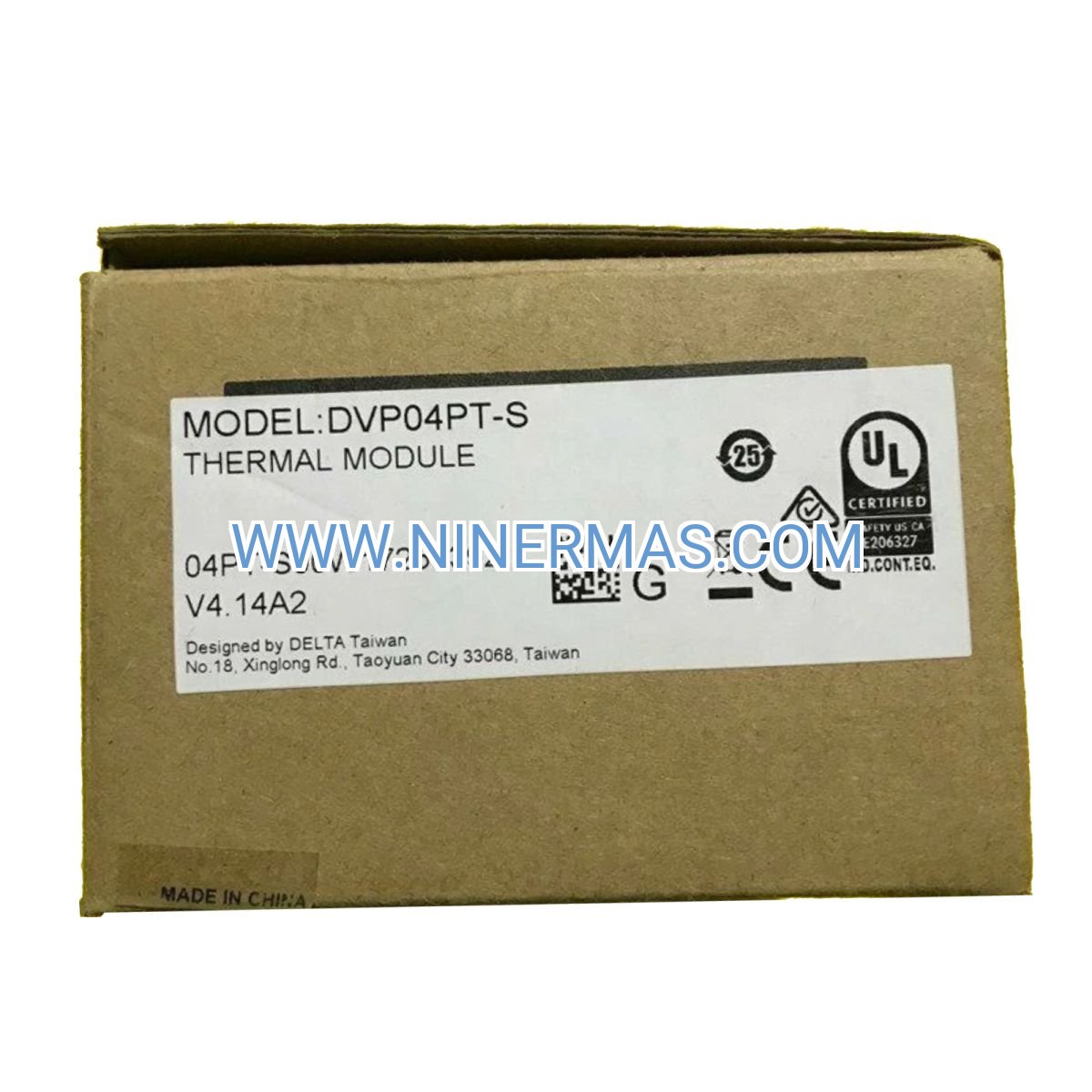
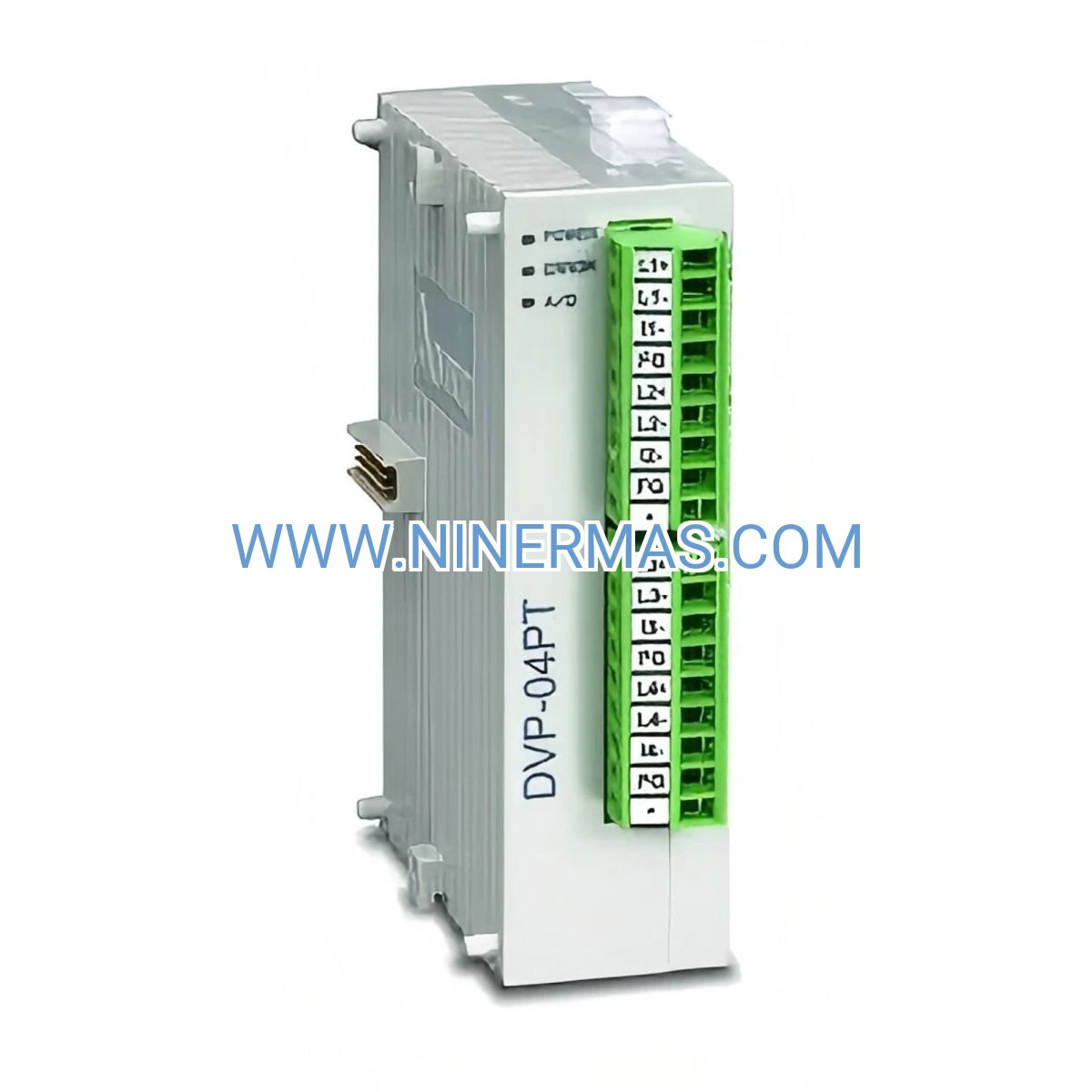
DVP04PT-S 4-Channel PT100 RTD Input Module – Industrial-Grade Temperature Acquisition for Process Automation
Engineered for demanding industrial environments, the DVP04PT-S is a precision 4-channel RTD input module designed to interface 3-wire PT100 resistance temperature detectors with DVP-series programmable logic controllers. Delivering 14-bit resolution and ±0.5% full-scale accuracy across an extended -200°C to 600°C measurement span, this module serves critical temperature monitoring needs in chemical processing, pharmaceutical manufacturing, food safety applications, and energy management systems.
Key Features & Technical Advantages
The DVP04PT-S combines robust hardware design with intelligent signal processing to deliver reliable temperature data in harsh industrial conditions:
- → Multi-Channel Capability: Four independent PT100 RTD inputs per module enable simultaneous monitoring of multiple process zones, reducing hardware costs and panel space requirements
- → Wide Measurement Span: -200°C to 600°C (-328°F to 1112°F) coverage accommodates cryogenic storage, ambient monitoring, and high-temperature processes with a single module type
- → High-Resolution Conversion: 14-bit analog-to-digital conversion provides 0.1°C (0.18°F) granularity for precise process control and regulatory compliance documentation
- → Proven Accuracy: ±0.5% full-scale error at 25°C ambient, ±1% across 0-55°C operating range ensures measurement integrity for quality-critical applications
- → 3-Wire RTD Compensation: Automatic lead resistance cancellation maintains accuracy over cable runs up to 100 meters, simplifying field installation
- → Industrial Communication: RS-485 MODBUS ASCII/RTU protocol enables integration with SCADA systems, HMIs, and distributed control architectures
Application Scenarios & Industry Solutions
✓ Chemical Batch Reactor Temperature Profiling
Monitor inlet, outlet, jacket, and core temperatures in jacketed vessels and distillation columns. The 4-channel architecture eliminates the need for multiple single-channel modules, reducing wiring complexity and improving system reliability. Configurable averaging (K1-K4096) filters process noise while maintaining fast response to thermal excursions that could indicate runaway reactions or equipment malfunctions.
✓ Pharmaceutical Sterilization & Cold Chain Validation
Track autoclave chamber temperatures during sterilization cycles to generate audit trails for FDA 21 CFR Part 11 compliance. The 0.1°C resolution supports validation studies requiring tight temperature uniformity documentation. Extended -200°C capability also covers cryogenic storage monitoring for biologics and vaccine cold chain applications.
✓ Food Processing Pasteurization & Retort Control
Ensure food safety by measuring product temperatures in continuous pasteurizers, batch retorts, and tunnel ovens. The module's self-diagnostic capabilities detect sensor failures before they compromise product quality, while the 200ms-per-channel response time enables rapid detection of temperature deviations during critical come-up and hold phases.
✓ HVAC Chiller & Boiler Energy Management
Interface with immersion RTDs in chilled water loops, hot water boilers, and glycol circuits for building automation systems. RS-485 MODBUS connectivity simplifies integration with energy management platforms, enabling centralized temperature trending, alarm management, and optimization of heating/cooling sequences to reduce energy consumption.
✓ Plastics Extrusion Barrel Zone Monitoring
Control barrel temperatures in plastic extrusion lines, injection molding machines, and blow molding equipment. Fast 200ms response per channel enables tight PID control of heating zones, preventing material degradation and maintaining consistent melt viscosity for high-quality finished products.
Technical Specifications & Performance Data
| Parameter | Specification |
|---|---|
| Model Number | DVP04PT-S |
| Analog Input Channels | 4 per module |
| Sensor Compatibility | 3-wire PT100Ω RTD (DIN 43760, JIS C1604-1989, 3850 PPM/°C) |
| Measurement Range | -200°C to 600°C (-328°F to 1112°F) |
| ADC Resolution | 14-bit (0.1°C / 0.18°F) |
| Measurement Accuracy | ±0.5% FS @ 25°C; ±1% FS @ 0-55°C operating range |
| RTD Excitation Current | 1mA constant current source |
| Conversion Time | 200ms × number of active channels |
| Power Requirements | 24VDC ±10% (20.4-26.4VDC) |
| Communication Interface | RS-485 MODBUS ASCII/RTU (4800-115200 bps) |
| Isolation | Digital/analog isolated; channels share common ground |
| Operating Temperature | 0°C to 55°C (32°F to 131°F) |
| Storage Temperature | -25°C to 70°C (-13°F to 158°F) |
| Humidity Range | 5% to 95% RH, non-condensing |
Advanced Signal Processing & Diagnostics
Configurable Digital Averaging
The module incorporates programmable averaging functions (CR#2 to CR#5, range K1 to K4096) that filter electrical noise and process fluctuations. Engineers can optimize the averaging constant based on application requirements: higher values (K1024-K4096) provide stable readings for slow-changing processes like environmental chambers, while lower values (K1-K16) enable faster response to transient conditions during batch operations or startup sequences.
Continuous Self-Diagnostics
Built-in diagnostic routines monitor sensor integrity in real-time, detecting open circuits, short circuits, and out-of-range conditions. Status flags alert operators to sensor failures through PLC logic or SCADA alarms, enabling predictive maintenance strategies that prevent quality excursions and unplanned downtime. Diagnostic data is accessible via MODBUS registers for integration with asset management systems.
Flexible Data Formatting
Temperature data is output as 2's complement 16-bit integers (13 significant bits) with digital conversion ranges of K-2000 to K6000 (Celsius) or K-3280 to K11120 (Fahrenheit). This direct mapping simplifies ladder logic programming and HMI display configuration, eliminating the need for complex scaling calculations in user applications.
System Integration & Expansion Guidelines
DVP-PLC Compatibility: The DVP04PT-S integrates seamlessly with DVP-series PLCs including DVP-ES2, DVP-EX2, DVP-SS2, and DVP-SX2 models. Modules are numbered 0 to 7 based on physical position (0 = closest to MPU, 7 = farthest), with up to 8 analog modules supported per main processing unit for a maximum of 32 temperature inputs per PLC.
I/O Point Conservation: Unlike discrete I/O expansion modules, the DVP04PT-S does not consume digital I/O points, preserving discrete inputs and outputs for switches, relays, and other on/off devices. This architecture maximizes system I/O capacity while minimizing hardware costs.
Network Topology: RS-485 MODBUS enables multi-drop configurations with up to 32 modules on a single communication bus. Daisy-chain wiring with 120Ω termination resistors at network endpoints ensures signal integrity over extended cable runs. Note: RS-485 communication is disabled when the module is connected in series with DVP04AD-S analog input modules.
Hot-Swap Limitations: Module replacement requires system power-down; the DVP04PT-S is not hot-swappable. Plan maintenance windows accordingly and maintain spare modules for critical applications requiring high availability.
Installation Best Practices & Wiring Standards
- Sensor Cable Selection: Use 3-wire shielded cable rated for the installation environment; ground shield at module end only to prevent ground loops
- Maximum Cable Length: Up to 100 meters between module and RTD sensor with proper wire gauge (18-22 AWG recommended for runs >50m)
- Terminal Connections: Screw terminals accept 14-22 AWG wire; torque to 0.5-0.6 N⋅m per manufacturer specifications
- Power Supply Design: Dedicated 24VDC supply recommended; avoid sharing with high-current inductive loads (motors, solenoids) that generate electrical noise
- RS-485 Network: Install 120Ω termination resistors at both ends of RS-485 bus; use twisted-pair shielded cable for communication wiring
- Environmental Protection: Mount module in NEMA-rated enclosure; maintain ambient temperature within 0-55°C operating range
PT100 RTD Sensor Technology Benefits
Platinum resistance temperature detectors offer significant advantages over thermocouples and thermistors for industrial temperature measurement:
✓ Superior Linearity: Near-linear resistance vs. temperature characteristics simplify calibration and improve measurement accuracy across the full span
✓ Long-Term Stability: Platinum sensing elements maintain calibration for years without drift, reducing maintenance costs and recalibration frequency compared to thermocouples
✓ Wide Temperature Coverage: -200°C to 600°C range accommodates cryogenic to high-temperature applications with a single sensor type, reducing spare parts inventory
✓ Interchangeability: DIN 43760 standard ensures PT100 sensors from different manufacturers are interchangeable without system recalibration
✓ 3-Wire Lead Compensation: Automatic cancellation of lead wire resistance maintains accuracy over long cable runs, unlike 2-wire RTD configurations
Delivery, Warranty & Technical Support
Lead Time: Standard stock items ship within 1-3 business days; custom configurations available with 2-4 week lead time
Warranty Coverage: 12-month manufacturer warranty covering defects in materials and workmanship; extended warranty options available
Technical Support: Application engineering assistance for sensor selection, loop calibration, and troubleshooting; MODBUS register maps and ladder logic examples provided
Documentation Package: Installation manual, wiring diagrams, dimensional drawings, and compliance certificates included with each shipment
Frequently Asked Questions
What is the difference between 2-wire, 3-wire, and 4-wire PT100 RTD connections?
The DVP04PT-S supports 3-wire PT100 RTDs, which provide automatic compensation for lead wire resistance. 2-wire RTDs are susceptible to measurement errors caused by cable resistance, while 4-wire RTDs offer the highest accuracy but require more complex wiring. For most industrial applications with cable runs under 100 meters, 3-wire RTDs provide an optimal balance of accuracy and installation simplicity.
Can I mix Celsius and Fahrenheit temperature units on different channels?
No, the temperature unit (Celsius or Fahrenheit) is configured globally for all four channels via CR#0 register. All channels on a single DVP04PT-S module must use the same temperature scale. If your application requires mixed units, use separate modules configured for each scale or perform unit conversion in PLC ladder logic.
How do I calculate the total system response time for multi-channel applications?
The module's conversion time is 200ms multiplied by the number of active channels. For example, if all four channels are enabled, the total scan time is 800ms (4 × 200ms). This means each channel is updated approximately 1.25 times per second. For faster response, reduce the number of active channels or use multiple modules with fewer channels enabled per module.
What is the maximum number of DVP04PT-S modules I can connect to a single PLC?
Up to 8 analog modules (including DVP04PT-S) can be connected to a single DVP-series PLC main processing unit, providing a maximum of 32 temperature inputs. Modules are addressed 0-7 based on physical position. For larger systems requiring more than 32 temperature points, consider using multiple PLCs or upgrading to a distributed I/O architecture with remote I/O racks.
Does the module require external termination resistors for the RTD sensors?
No, the DVP04PT-S provides internal 1mA constant current excitation for the PT100 sensors and does not require external termination resistors at the sensor end. However, the RS-485 MODBUS communication network does require 120Ω termination resistors at both ends of the communication bus to prevent signal reflections.
Can I use this module with 4-wire PT100 RTD sensors?
The DVP04PT-S is designed specifically for 3-wire PT100 RTDs. While it may be possible to connect 4-wire RTDs by shorting the appropriate sense leads, this configuration is not officially supported and may result in reduced accuracy. For applications requiring 4-wire RTD inputs, consult with our technical team for alternative module recommendations.
Order Your DVP04PT-S Module Today
Ready to upgrade your temperature monitoring system? Contact our sales team for pricing, volume discounts, and technical consultation. We maintain extensive inventory of DVP-series modules and PT100 RTD sensors to support your project timeline.
Request a Quote: Email your application requirements, quantity needed, and delivery location for a customized quotation within 24 hours.
Technical Consultation: Schedule a call with our application engineers to discuss sensor selection, wiring strategies, and system integration for complex multi-zone temperature control applications.
© 2026 NINERMAS COMPANY LIMITED. All rights reserved.
Original Source: https://ninermas.com
Contact: sale@ninermas.com | +0086 187 5021 5667
PDF Specification
Download PDF file here:
Click to Download PDFRelated products

Contact Info
-
Address:22 / F, South Wo Hang building, 148 Wing Lok Street, Sheung Wan, Western District, Hong Kong
-
Phone:+8618750215667
-
Email: