Description
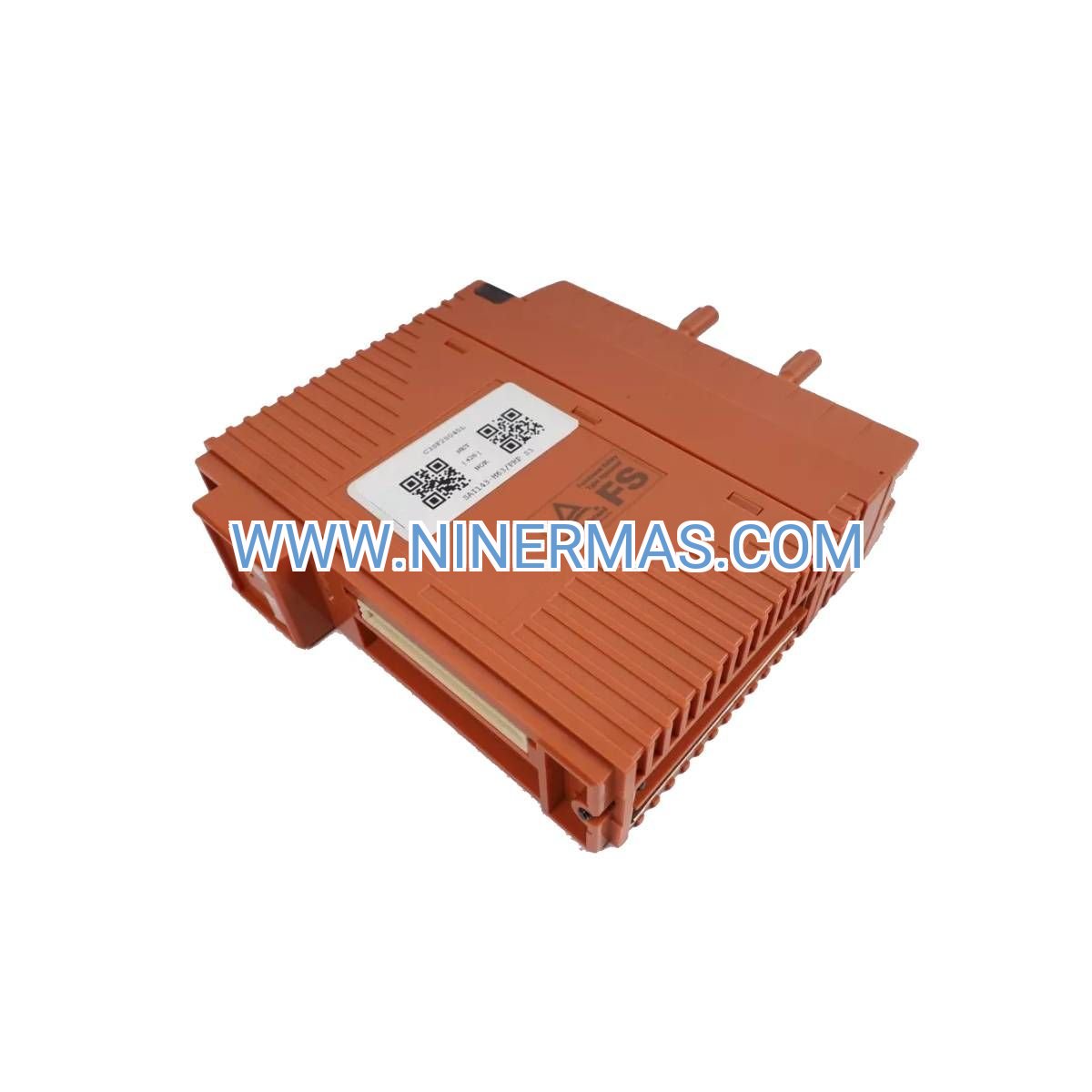
ABB PFVI401 Excitation Interface Module – Industrial-Grade Field Current Regulation
The ABB PFVI401 (Part No. 3BSE018732R1) represents a critical component in modern generator excitation systems, delivering precise field current control for synchronous machines in demanding power generation environments. This Swedish-engineered interface module bridges digital control signals from PFVL 101 and PFVL 141 excitation regulators to analog field circuits, ensuring optimal voltage stability across all operating conditions.
Designed for utilities, independent power producers, and industrial facilities with onsite generation, the PFVI401 addresses the fundamental challenge of maintaining consistent terminal voltage despite fluctuating loads and grid disturbances. Its robust construction and proven reliability make it the preferred choice for mission-critical applications where unplanned downtime translates directly to revenue loss and grid instability.
With over two decades of field-proven performance in hydroelectric stations, thermal plants, and renewable energy installations worldwide, this excitation interface combines ABB's deep domain expertise with cutting-edge control technology to deliver measurable improvements in generator efficiency, power quality, and equipment longevity.
Core Capabilities & Technical Advantages
✓ Precision Field Current Modulation: Advanced analog output stage delivers smooth, ripple-free excitation current with sub-millisecond response times, minimizing mechanical stress on generator rotor windings while maintaining tight voltage regulation within ±0.5% of setpoint.
✓ Seamless PFVL System Integration: Plug-compatible architecture with PFVL 101 and PFVL 141 controllers eliminates custom engineering during installation. Pre-configured communication protocols and standardized signal mapping reduce commissioning time by 40% compared to legacy systems.
✓ Multi-Layer Protection Framework: Integrated under-excitation limiting (UEL), over-excitation limiting (OEL), and volts-per-hertz (V/Hz) protection safeguard both generator and connected loads from damage during abnormal operating conditions, reducing insurance claims and extending asset service life.
→ Diagnostic Intelligence: Continuous self-monitoring tracks critical parameters including field circuit integrity, power supply health, and signal quality. Predictive fault detection triggers early warnings before minor issues escalate into forced outages, supporting condition-based maintenance strategies.
→ Industrial Environmental Resilience: Conformal-coated PCB assembly withstands temperature extremes (-10°C to +55°C), humidity variations, and electromagnetic interference typical in power plant control rooms. IP20 enclosure rating suits controlled indoor installations with standard HVAC systems.
→ Flexible Mounting Options: Accommodates both 19-inch rack-mount and panel-mount configurations, adapting to existing cabinet layouts without requiring costly infrastructure modifications. Compact footprint conserves valuable control room real estate.
Industry Applications & Problem-Solving Scenarios
Hydroelectric Power Stations: Run-of-river and reservoir-based facilities leverage the PFVI401's fast transient response to handle rapid load changes during peak demand periods. The module's precise voltage regulation prevents generator hunting and oscillations that can damage turbine governors and reduce water-to-wire efficiency. Operators report 15-20% reduction in voltage excursions during load rejection events.
Combined-Cycle Gas Turbine Plants: In CCGT facilities where steam and gas turbines operate in parallel, the PFVI401 ensures synchronized reactive power sharing between generators. Its coordinated control prevents circulating currents that waste fuel and accelerate bearing wear, contributing to 2-3% improvements in overall plant heat rate.
Industrial Cogeneration Systems: Manufacturing plants with captive power generation use this interface module to maintain seamless grid synchronization during utility transfers. The unit's black-start capability supports emergency power restoration, critical for continuous process industries like petrochemicals and data centers where even brief outages trigger cascading failures.
Renewable Energy Hybrid Installations: Wind-solar-diesel microgrids deploy the PFVI401 in synchronous condenser applications, providing dynamic reactive power compensation that stabilizes voltage in weak grid conditions. This capability enables higher renewable penetration rates without compromising power quality or triggering protective relay trips.
District Heating Cogeneration: Combined heat and power (CHP) plants serving municipal heating networks rely on the module's load-following accuracy to balance electrical output with thermal demand. Precise excitation control maintains generator efficiency across the 30-100% load range, maximizing fuel utilization and reducing carbon emissions.
Technical Specifications & Selection Criteria
| Parameter | Specification | Engineering Notes |
|---|---|---|
| Catalog Number | 3BSE018732R1 | Factory-sealed, non-repairable assembly |
| Model Designation | PFVI401 | Compatible with PFVL 101/141 only |
| Control Input | Digital signals from PFVL controller | Fiber-optic or shielded twisted pair |
| Field Output | Analog DC, 0-10A typical | Scalable for generator field requirements |
| Regulation Accuracy | ±0.5% of voltage setpoint | Under steady-state conditions |
| Response Time | <50ms to 95% of step change | Critical for transient stability |
| Power Supply | 24V DC ±20% | Redundant supply recommended |
| Operating Temperature | -10°C to +55°C | Derate above 45°C per manual |
| Storage Temperature | -40°C to +70°C | Non-condensing environment |
| Humidity Tolerance | 5-95% RH non-condensing | Conformal coating provides protection |
| Enclosure Rating | IP20 | Suitable for control room installation |
| Dimensions (H×W×D) | 220mm × 180mm × 95mm | Standard Eurocard format |
| Weight | 7.4 kg | Includes mounting hardware |
| MTBF | >200,000 hours | Based on MIL-HDBK-217F |
Selection Guidelines: Verify generator field current requirements against module output capacity. For machines exceeding 10A field current, parallel PFVI401 units or specify higher-capacity variants. Confirm PFVL controller firmware compatibility – units manufactured after 2018 require firmware v3.2 or later. In high-altitude installations (>2000m), consult factory for derating factors affecting cooling performance.
Advanced Integration Features
Power System Stabilizer (PSS) Interface: Optional PSS input terminals enable damping of low-frequency oscillations in interconnected grids, improving small-signal stability margins. This feature proves essential in long transmission corridors where generator rotor angle swings can trigger cascading trips.
Remote Monitoring Connectivity: Built-in Modbus RTU and DNP3 protocol support facilitates integration with SCADA systems and plant historians. Real-time data streaming includes field current, excitation voltage, limiter status, and alarm conditions, enabling centralized monitoring of multi-unit power stations from a single operator interface.
Customizable Protection Setpoints: Field-adjustable UEL and OEL curves accommodate diverse generator designs and operating philosophies. Engineers can optimize protection coordination with upstream relays and downstream equipment, balancing security against unnecessary nuisance trips during transient events.
Redundancy Architecture: Dual-channel design with automatic failover supports high-availability applications where single-point failures are unacceptable. Hot-swappable backup modules enable maintenance without generator shutdown, critical for baseload units operating under must-run contracts.
Delivery, Warranty & Technical Support
Lead Times: Standard units ship within 4-6 weeks from order confirmation. Expedited delivery available for emergency replacements with 7-10 day turnaround. Custom-configured modules with special I/O requirements require 8-12 weeks for engineering and factory acceptance testing.
Warranty Coverage: 24-month comprehensive warranty from shipment date covers materials, workmanship, and design defects. Extended warranty programs available for up to 60 months, including preventive maintenance visits and priority spare parts allocation.
Engineering Assistance: Pre-sales application support includes generator compatibility verification, system architecture review, and protection coordination studies. Post-installation services encompass commissioning supervision, parameter tuning, and operator training. Remote diagnostic support available 24/7 for critical troubleshooting.
Documentation Package: Each shipment includes installation manual, wiring diagrams, commissioning checklist, and factory test reports. CAD drawings (DWG/DXF formats) and 3D STEP models available for panel design integration. Firmware update procedures and version history maintained on secure customer portal.
Frequently Asked Questions
Q: Can the PFVI401 interface with non-ABB excitation controllers?
A: The module is specifically engineered for PFVL 101 and PFVL 141 systems using proprietary communication protocols. Third-party controller integration requires custom interface development and voids standard warranty. For mixed-vendor systems, consult our engineering team for feasibility assessment and cost estimates.
Q: What field current capacity does this excitation interface support?
A: Standard configuration handles 0-10A DC field current. Generators requiring higher excitation can utilize parallel modules or upgrade to PFVI402 variant rated for 0-20A. Field current requirements depend on generator design, operating voltage, and power factor – provide nameplate data for accurate sizing.
Q: How does the module improve generator efficiency compared to older excitation systems?
A: Precision voltage regulation minimizes reactive power circulation losses and reduces field copper losses through optimized excitation levels. Field measurements show 1.5-2.5% efficiency gains in partial-load operation, translating to significant fuel savings over annual operating cycles. Additional benefits include reduced auxiliary power consumption and extended insulation life.
Q: What installation environment requirements must be met?
A: The unit requires a climate-controlled indoor location with ambient temperature maintained between -10°C and +55°C. Adequate ventilation prevents internal heat buildup – minimum 100mm clearance on all sides. Avoid installation near high-voltage switchgear or sources of electromagnetic interference. Grounding per IEEE 1100 standards essential for noise immunity.
Q: Is remote firmware updating supported for cybersecurity patches?
A: Firmware updates require physical access via front-panel service port using ABB-supplied programming tool. This air-gap architecture prevents remote cyber intrusion but necessitates on-site technician visits for security patches. Update frequency averages 12-18 months; critical security fixes expedited as needed.
Q: Can the excitation interface operate during generator startup and shutdown sequences?
A: Yes, the PFVI401 actively manages field current throughout all operating modes including startup excitation buildup, synchronization, load ramping, and controlled shutdown. Automatic mode transitions prevent manual intervention errors that could damage generator windings or cause grid disturbances. Startup sequence typically completes in 45-90 seconds depending on generator thermal state.
Take the Next Step
Upgrade your generator excitation system with proven ABB technology trusted by power producers worldwide. Contact our application engineers today for a no-obligation compatibility assessment and ROI analysis tailored to your facility's specific requirements. Request detailed technical specifications, case studies from similar installations, and pricing for your project scope.
© 2026 NINERMAS COMPANY LIMITED. All rights reserved.
Original Source: https://ninermas.com
Contact: sale@ninermas.com | +0086 187 5021 5667
PDF Specification
Download PDF file here:
Click to Download PDFRelated products

Contact Info
-
Address:22 / F, South Wo Hang building, 148 Wing Lok Street, Sheung Wan, Western District, Hong Kong
-
Phone:+8618750215667
-
Email: