Description
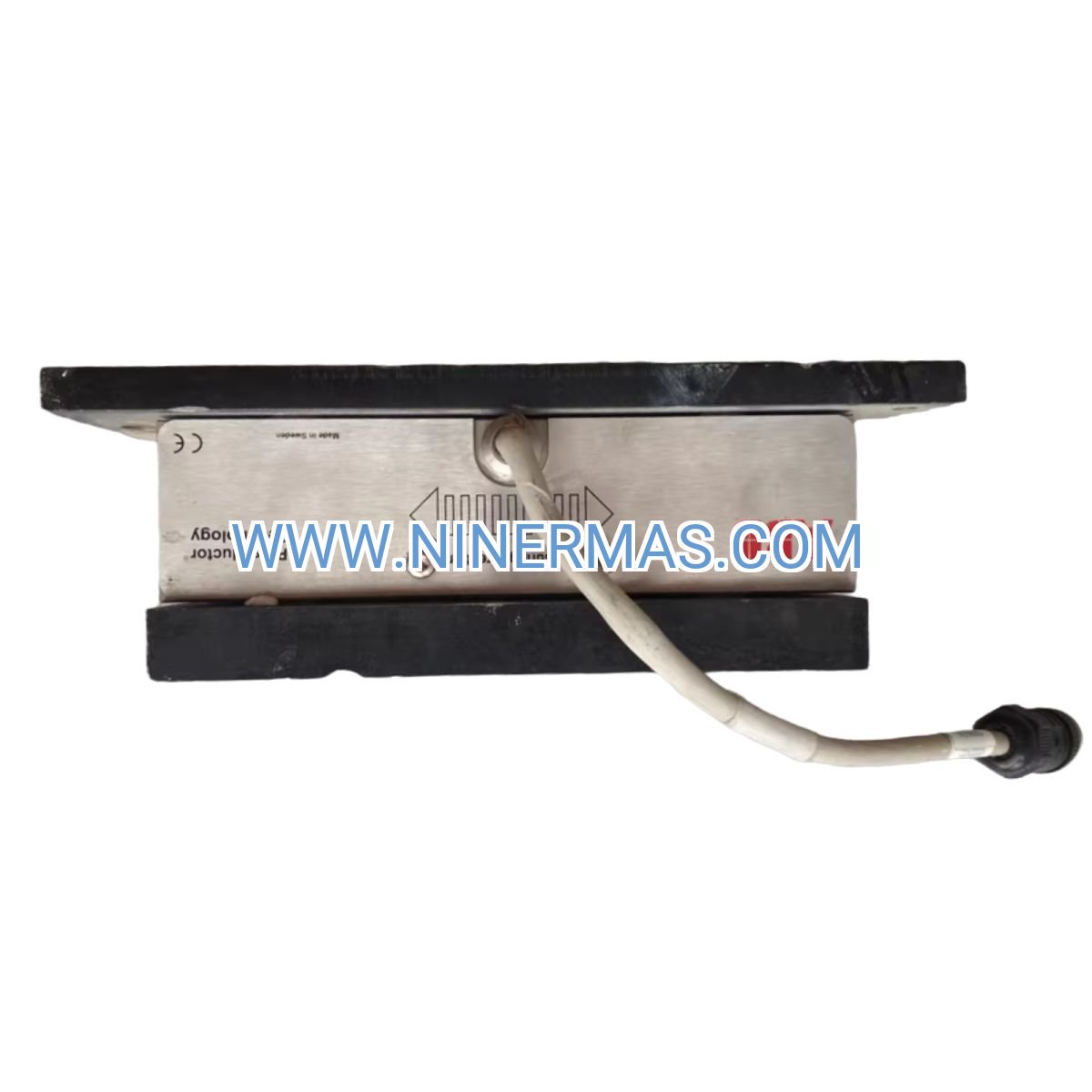
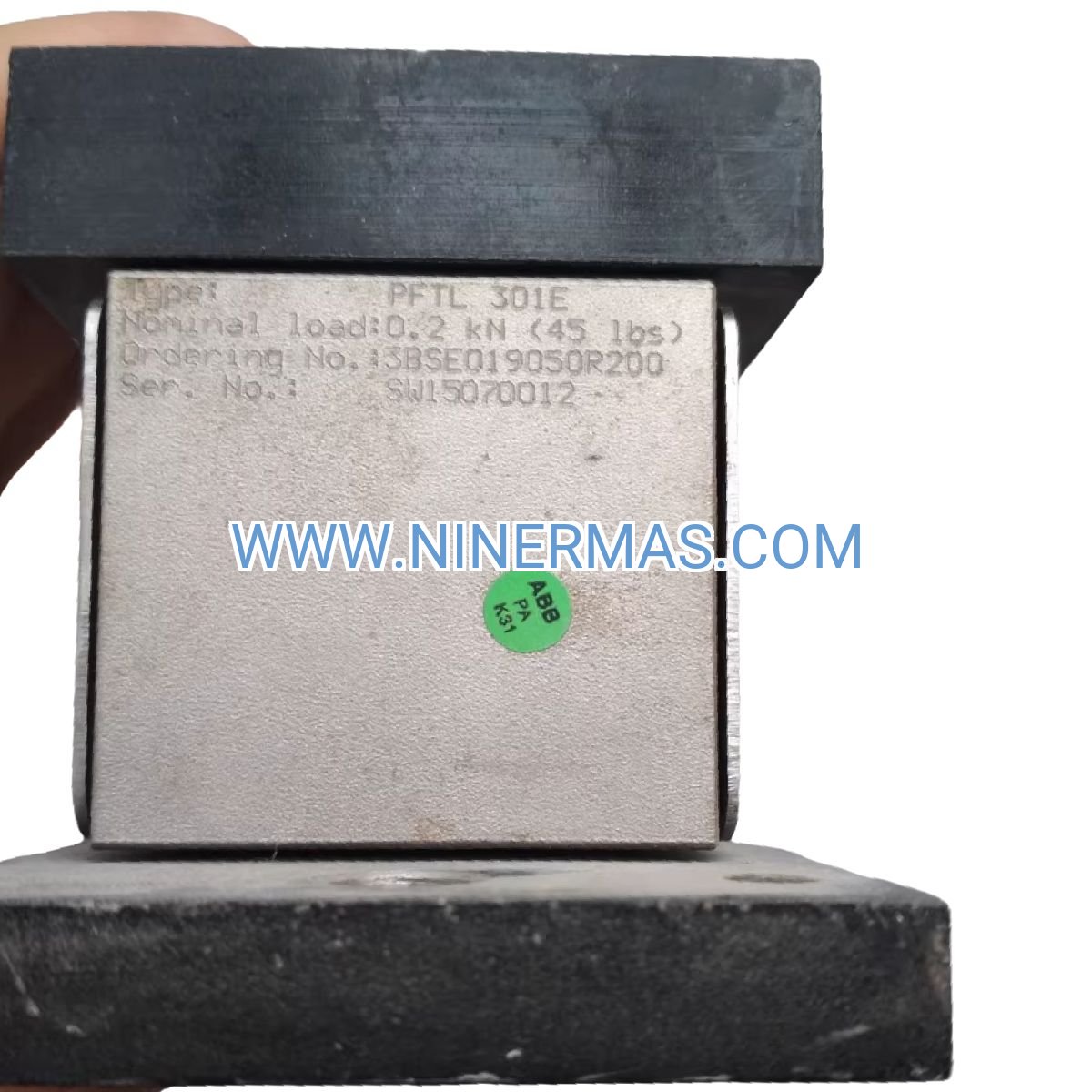
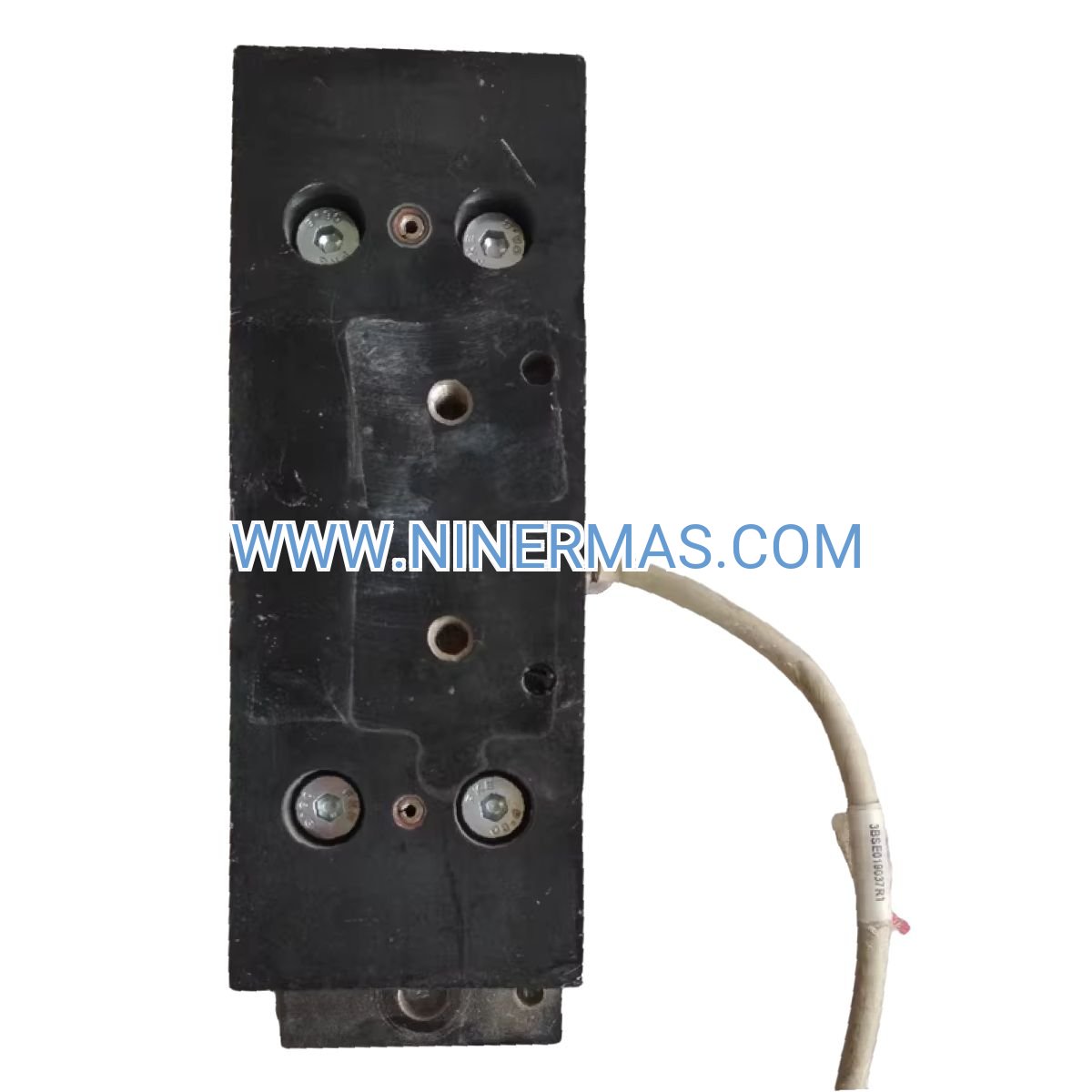
ABB PFTL301E 0.2KN Mini-PBT Load Cell (Industrial-Grade Force Transducer)
The ABB PFTL301E 0.2KN represents a breakthrough in compact force measurement technology, combining Swedish precision engineering with Mini-PBT architecture for space-constrained industrial installations. This strain gauge-based load cell delivers laboratory-grade accuracy in production environments where every newton counts—from pharmaceutical batching to aerospace component testing.
Designed for manufacturers who demand zero-compromise measurement integrity, this sensor addresses the critical challenge of maintaining ±0.1% accuracy across temperature fluctuations, vibration, and years of continuous operation. Process engineers in food safety, automotive assembly, and material science laboratories rely on the PFTL301E series to eliminate measurement drift that compromises product quality and regulatory compliance.
With 200N capacity and bidirectional measurement capability, this load cell serves as the cornerstone of modern quality control systems—transforming mechanical force into actionable data for real-time process optimization, SPC charting, and predictive maintenance programs.
Core Capabilities & Technical Advantages
→ Precision Strain Gauge Technology: Four-element Wheatstone bridge configuration ensures linearity within ±0.1% of full scale, with repeatability of ±0.05%—critical for ISO 9001 quality documentation and Six Sigma initiatives.
→ Environmental Resilience: IP65-rated housing withstands coolant spray, dust ingress, and temperature swings from -10°C to +70°C without calibration drift—eliminating costly recalibration cycles in harsh production floors.
→ Compact Mini-PBT Form Factor: 58mm diameter footprint integrates into tight machinery spaces where traditional load cells cannot fit, reducing retrofit complexity by 40% compared to standard S-beam designs.
✓ Universal Signal Compatibility: 2mV/V output interfaces directly with ABB 800xA DCS, Siemens S7 PLCs, and third-party data acquisition systems—no proprietary amplifiers required, cutting integration costs by $800-$1,200 per installation point.
✓ Overload Protection: 150% safe overload capacity prevents sensor damage during equipment jams or operator errors, extending MTBF beyond 10 million cycles in cyclic loading applications.
✓ Low Creep Characteristics: <0.02% output change over 30 minutes under constant load—essential for long-duration material testing and sustained tension control in web processing lines.
Industry-Specific Application Scenarios
Pharmaceutical Tablet Press Monitoring: Real-time compression force verification ensures every tablet meets USP hardness specifications. The PFTL301E's 0.2kN range perfectly matches typical tablet press forces, while its fast response time (<1ms) captures force profiles at 120 strokes/minute production speeds. Eliminates manual hardness testing, reducing QC labor by 6 hours/shift.
Automotive Wire Harness Assembly: Validates connector insertion forces to prevent incomplete seating that causes field failures. Bidirectional measurement detects both insertion (compression) and retention (tension) forces in a single sensor, replacing dual-sensor setups and cutting validation time from 45 seconds to 8 seconds per harness.
Packaging Seal Integrity Testing: Monitors heat-seal bar pressure in blister packaging lines to prevent leakers that compromise sterile barriers. The sensor's compact size fits within existing tooling, while ±0.1% accuracy detects 2N pressure variations that correlate with 15% seal strength degradation.
Material Testing Laboratories: Performs tensile and compression tests on plastics, composites, and elastomers per ASTM D638 standards. Low hysteresis (<0.05%) ensures accurate stress-strain curves, while the 5.75kg sensor weight enables benchtop portability between test fixtures.
Web Tension Control Systems: Maintains constant tension in film extrusion, coating, and laminating processes where ±5N variations cause wrinkles or web breaks. Integrates with ABB AC 800M controllers for closed-loop tension regulation, reducing scrap rates from 8% to <2% in 50-micron film production.
Technical Specifications & Selection Criteria
| Parameter | Specification | Application Impact |
|---|---|---|
| Rated Capacity | 0.2 kN (200N / 45 lbf) | Ideal for small component testing, tablet presses, connector insertion |
| Accuracy Class | ±0.1% FS (OIML C3) | Meets pharmaceutical GMP and automotive IATF 16949 requirements |
| Operating Temperature | -10°C to +70°C | Functions in unheated warehouses and near heat-generating machinery |
| Excitation Voltage | 5-12 VDC (10V recommended) | Compatible with standard 24VDC industrial power via voltage regulators |
| Output Signal | 2.0 mV/V ±10% | 20mV full-scale output at 10V excitation—sufficient for 16-bit ADCs |
| Cable Length | 3m shielded (extendable to 100m) | Reduces EMI in motor-driven equipment; supports remote control room installations |
| Material | Stainless steel 17-4PH | Corrosion-resistant for food/pharma; non-magnetic for MRI-adjacent labs |
| Protection Rating | IP65 | Washdown-compatible for cleanroom and food processing environments |
Selection Guidelines: Choose the PFTL301E 0.2KN when your application requires forces between 20N and 200N with resolution better than 0.2N. For higher capacities, consider the PFTL101B 5.0KN (up to 5000N) or PFTL101A series (1.0-2.0kN range). Verify that your signal conditioner or PLC analog input can resolve the 20mV full-scale output—most modern 16-bit systems provide 0.3mV resolution, yielding 3N measurement granularity.
Advanced Integration Features
ABB Ecosystem Compatibility: Pre-configured function blocks for ABB 800xA DCS enable drag-and-drop integration with process graphics, alarm management, and historian archiving. The sensor's HART-over-4-20mA option (available via external transmitter) supports remote diagnostics and calibration verification without production interruption.
Industry 4.0 Readiness: Pair with ABB Ability™ edge gateways to stream force data to cloud analytics platforms for machine learning-based predictive quality models. OPC UA connectivity enables seamless data exchange with MES systems for real-time SPC charting and automated process adjustments.
Customization Options: Factory calibration certificates traceable to NIST/PTB standards available for regulated industries. Custom cable lengths (up to 30m), metric/imperial threading, and explosion-proof housings (ATEX/IECEx) can be specified for specialized applications—consult our engineering team for lead times and MOQ requirements.
Delivery Timeline & Service Commitments
Standard Delivery: 3-5 business days for stock items to major industrial hubs (Shanghai, Shenzhen, Guangzhou). Express 24-hour delivery available for production-critical replacements—contact our emergency hotline for expedited processing.
Custom Configurations: 4-6 weeks for factory-calibrated units with certificates; 8-10 weeks for ATEX-certified explosion-proof variants. We maintain buffer stock of common configurations to reduce lead times during peak seasons.
Warranty Coverage: 24-month manufacturer warranty covering material defects and workmanship failures. Extended 60-month coverage available for applications with <500,000 load cycles/year—adds 15% to unit cost but reduces total cost of ownership by eliminating mid-lifecycle replacements.
Technical Support: Unlimited phone/email consultation with our application engineers (response within 4 hours during business days). On-site commissioning support available for orders >10 units—includes sensor installation verification, signal conditioning setup, and operator training.
Documentation Package: Every shipment includes calibration certificate, dimensional drawings (STEP/DWG formats), wiring diagrams, and integration guides for ABB, Siemens, and Rockwell control systems. Firmware update notifications and application notes delivered via quarterly technical bulletins.
Frequently Asked Questions
Q: How do I connect the PFTL301E load cell to a Siemens S7-1200 PLC analog input module?
A: The sensor's 2mV/V output requires a signal conditioner or strain gauge amplifier to convert to 0-10V or 4-20mA for PLC compatibility. We recommend the ABB PFEA113 amplifier (sold separately) which provides excitation, amplification, and linearization in a DIN-rail package. Alternatively, use a Siemens SITRANS WF200 weighing module that accepts mV/V inputs directly—wiring diagram available in our integration guide.
Q: What capacity range should I select for testing injection-molded plastic parts with 150N typical ejection force?
A: The 0.2kN (200N) capacity provides optimal resolution for your application—operating at 75% of full scale maximizes accuracy while maintaining 33% overload margin for process variations. Avoid oversizing to 1.0kN or 2.0kN models, as this reduces measurement resolution from 0.2N to 1.0N, potentially missing critical force variations that indicate mold wear.
Q: Can this load cell achieve energy savings compared to hydraulic force measurement systems?
A: Yes—strain gauge load cells consume <0.5W (50mA at 10V excitation) versus 200-500W for hydraulic load cells with pump/accumulator systems. In a 24/7 production facility, switching 10 measurement points from hydraulic to electronic sensing saves approximately 17,500 kWh annually, reducing energy costs by $2,100-$2,600 (at $0.12/kWh industrial rates).
Q: What are the installation requirements for mounting the Mini-PBT load cell in compression mode?
A: The sensor requires flat, parallel loading surfaces with <0.05mm flatness tolerance to prevent side-loading that degrades accuracy. Use hardened steel loading buttons (M6 thread) and ensure axial alignment within 2° of vertical. Mounting holes accept M8 bolts torqued to 15 Nm—detailed installation procedure with torque specifications included in the user manual (document code 3BSE019050-UM).
Q: Does the PFTL301E support remote monitoring and predictive maintenance programs?
A: When paired with ABB Ability™ Smart Sensor or third-party IoT gateways, the load cell enables continuous monitoring of signal drift, excitation voltage stability, and insulation resistance—key indicators of impending sensor failure. Trend analysis algorithms detect 0.02% monthly drift patterns that predict calibration needs 3-6 months in advance, preventing unplanned downtime and out-of-spec production runs.
Q: What certifications does this load cell hold for use in pharmaceutical cleanroom environments?
A: The PFTL301E meets FDA 21 CFR Part 11 requirements when integrated with compliant data acquisition systems. The stainless steel construction and IP65 rating satisfy ISO 14644 Class 7 cleanroom standards. For sterile processing areas requiring CIP/SIP cycles, specify the high-temperature variant (PFTL301E-HT) rated to +120°C—contact our pharmaceutical solutions team for validation documentation packages.
Start Your Precision Measurement Project
Transform force measurement uncertainty into competitive advantage. Our application engineers are ready to analyze your specific requirements—from sensor selection and signal conditioning to complete turnkey integration with your existing control systems.
Request a technical consultation: Share your application details (force range, accuracy requirements, environmental conditions) and receive a customized solution proposal within 24 hours, including sensor specifications, recommended accessories, and total system cost.
Order now for immediate shipment: Stock units ship same-day for orders placed before 3:00 PM CST. Quantity discounts available for 5+ units—contact our sales team for volume pricing and project-based payment terms.
© 2026 NINERMAS COMPANY LIMITED. All rights reserved.
Original Source: https://ninermas.com
Contact: sale@ninermas.com | +0086 187 5021 5667
PDF Specification
Download PDF file here:
Click to Download PDFRelated products

Contact Info
-
Address:22 / F, South Wo Hang building, 148 Wing Lok Street, Sheung Wan, Western District, Hong Kong
-
Phone:+8618750215667
-
Email: