ABB NTR002-A Digital Output Module | 16-Channel 24VDC Termination for Symphony Plus & INFI 90 DCS
Description
ABB NTR002-A Digital Output Termination Module (Industrial-Grade 16-Channel Control Solution)
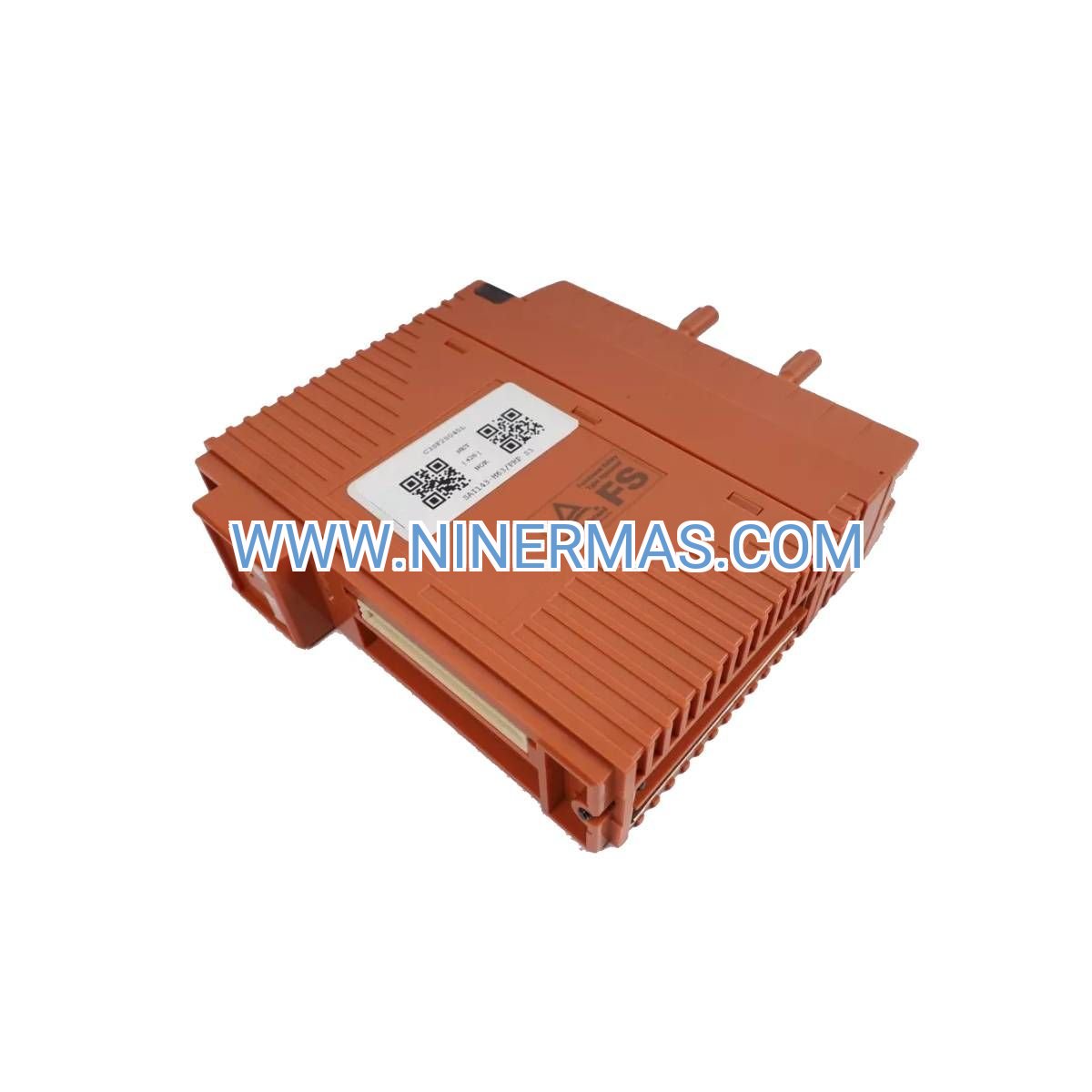
The ABB NTR002-A is a high-performance 16-channel digital output termination module designed for industrial process control applications. Through precision-engineered solid-state switching and robust electrical isolation (500V channel-to-ground), it delivers reliable on/off control signals to field devices including solenoid valves, motor starters, indicator lights, and actuators within Symphony Plus and Bailey INFI 90 distributed control systems (DCS).
Engineered for demanding industrial environments—including chemical processing, oil & gas, power generation, water treatment, and manufacturing automation—this module addresses critical challenges such as signal integrity degradation, electrical noise interference, ground loop issues, and field device protection failures. It ensures stable, interference-free output switching while safeguarding both control system and field equipment.
With standardized design and flexible configuration options, the NTR002-A offers exceptional reliability, simplified maintenance, broad compatibility with legacy and modern DCS architectures, and proven performance in mission-critical applications. Ideal for system integrators, control engineers, plant maintenance teams, and OEM equipment manufacturers requiring dependable digital output solutions. Contact our application engineers for system integration guidance and technical specifications.
Core Features & Technical Advantages
- 16 Independent Output Channels
Provides simultaneous control of up to 16 discrete field devices with individual channel addressing, enabling efficient multi-point control in compact footprint. Each channel operates independently to prevent cross-interference and simplify troubleshooting. - 24VDC Output with 0.5A Per Channel
Delivers industry-standard 24VDC switching voltage with 0.5A current capacity per channel, compatible with most industrial solenoid valves, relays, contactors, and pilot lights. Ensures reliable energization across diverse field device types. - 500V Channel-to-Ground Isolation
Advanced galvanic isolation protects sensitive DCS electronics from field-side voltage transients, ground potential differences, and electrical faults. Significantly reduces risk of system damage and improves overall installation safety. - Comprehensive Protection Mechanisms
Integrated overcurrent protection, short-circuit shutdown, reverse polarity safeguards, and thermal overload detection minimize downtime and extend module lifespan. Automatic fault recovery and diagnostic LEDs accelerate maintenance response. - Hot-Swappable Design for High Availability
Supports online replacement without system shutdown in redundant configurations, reducing mean time to repair (MTTR) and maintaining process continuity during maintenance activities. Critical for 24/7 continuous operations. - Seamless DCS Integration
Native compatibility with ABB Symphony Plus and Bailey INFI 90 control platforms via standardized backplane communication. Plug-and-play installation with automatic channel recognition and simplified configuration through engineering workstations.
Typical Application Scenarios
The NTR002-A module is engineered for applications demanding high reliability, precise timing, and robust environmental performance, particularly in:
- Chemical & Petrochemical Process Control
Controls reactor feed valves, emergency shutdown (ESD) systems, pump interlocks, and batch sequencing operations. Meets stringent safety integrity level (SIL) requirements and hazardous area classification standards for explosive atmospheres. - Oil & Gas Production & Refining
Manages wellhead control valves, separator level controls, compressor anti-surge systems, and pipeline isolation valves. Proven performance in offshore platforms, onshore facilities, and midstream infrastructure with extreme temperature and vibration exposure. - Power Generation & Distribution
Operates turbine control valves, boiler feedwater regulation, generator excitation systems, and substation switchgear interlocks. Supports both fossil fuel and renewable energy installations with high electromagnetic interference (EMI) immunity. - Water & Wastewater Treatment
Drives chemical dosing pumps, clarifier rake mechanisms, filtration backwash valves, and disinfection system controls. Handles corrosive environments and maintains reliable operation in municipal and industrial treatment facilities. - Manufacturing & Discrete Automation
Coordinates conveyor systems, robotic cell interlocks, material handling gates, and quality inspection stations. Integrates with MES/SCADA systems for real-time production monitoring and Industry 4.0 connectivity.
Technical Specifications & Selection Guide
To facilitate engineering design and procurement, we provide comprehensive technical parameters for the NTR002-A module. Custom configurations and application-specific variants are available upon request.
| Parameter | Specification |
|---|---|
| Number of Channels | 16 (individually controlled) |
| Output Voltage | 24VDC nominal (18-30VDC operating range) |
| Output Current | 0.5A per channel (continuous), 1.0A peak (100ms) |
| Isolation Voltage | 500VAC/VDC channel-to-ground, 1 minute test |
| Response Time | ≤10ms (on/off transition) |
| Operating Temperature | -40°C to +70°C (-40°F to +158°F) |
| Storage Temperature | -40°C to +85°C (-40°F to +185°F) |
| Humidity Range | 5% to 95% RH (non-condensing) |
| Protection Rating | IP20 (enclosure-dependent, IP54/IP65 available with appropriate housing) |
| Power Consumption | ≤5W (module logic), field power separate |
| Diagnostic Indicators | Per-channel LED status, module fault LED |
| Compliance Standards | IEC 61131-2, UL 508, CE marked, RoHS compliant |
| MTBF (Mean Time Between Failures) | >200,000 hours (at 40°C ambient) |
| Dimensions (W×H×D) | Approximately 25mm × 180mm × 120mm (module only) |
| Mounting | DIN rail or card rack (system-dependent) |
Selection Considerations: When specifying the NTR002-A, evaluate total output load current (sum of all connected devices), field wiring distance (voltage drop calculations), environmental conditions (temperature/humidity extremes), required response speed for critical interlocks, and compatibility with existing DCS hardware/firmware versions. For applications requiring higher current capacity, explosion-proof ratings, or redundant output configurations, consult our application engineering team with detailed load schedules and P&ID documentation.
Advanced Integration Capabilities
- Redundancy Support: Compatible with redundant controller architectures (1:1, 2:2, TMR) for fault-tolerant systems in safety-critical applications. Automatic switchover with bumpless transfer ensures uninterrupted field device control.
- Diagnostic & Predictive Maintenance: Provides real-time channel status monitoring, wire break detection, load fault indication, and cumulative switching cycle counters. Enables condition-based maintenance strategies and reduces unplanned downtime.
- Cybersecurity Features: Firmware authentication, secure configuration download, and audit trail logging support IEC 62443 industrial cybersecurity standards for critical infrastructure protection.
- Protocol Compatibility: Supports industry-standard communication protocols including Modbus TCP/RTU, PROFIBUS DP, and OPC UA for third-party system integration and enterprise-level data exchange.
Delivery, Service & Quality Assurance
Lead Time: Standard catalog items typically ship within 3-5 business days from regional distribution centers. Custom-configured modules or large project quantities require 2-4 weeks (subject to current production schedule).
Warranty: All NTR002-A modules include a comprehensive 24-month manufacturer warranty covering defects in materials and workmanship. Extended warranty programs and spare parts kits available for long-term service agreements.
Technical Support: Factory-trained application engineers provide pre-sales system design consultation, installation guidance, commissioning assistance, and post-sales troubleshooting support. Remote diagnostic services and on-site field service available in major industrial regions (subject to location and service contract terms).
Documentation Package: Each module ships with complete technical documentation including dimensional drawings, electrical schematics, terminal wiring diagrams, configuration software guides, and safety/compliance certificates. CAD models (STEP/IGES) and EPLAN macros available for download.
Quality Certifications: Manufactured in ISO 9001:2015 certified facilities with full traceability. Products undergo 100% functional testing, environmental stress screening (ESS), and burn-in procedures prior to shipment. Test reports and certificates of conformity provided upon request.
Frequently Asked Questions (FAQ)
Q: How does the ABB NTR002-A digital output module integrate with existing Symphony Plus or Bailey INFI 90 systems?
A: The NTR002-A features native backplane connectivity designed specifically for ABB DCS platforms. Installation involves inserting the module into an available I/O slot, where it automatically registers with the controller. Configuration is performed through the Symphony Plus Engineering Workstation or INFI 90 configuration software using standard function block programming. No special drivers or middleware required—the module appears as a standard digital output resource in your control strategy.
Q: What is the maximum number of NTR002-A modules that can be installed in a single I/O rack?
A: The maximum module count depends on your specific I/O rack model and power budget. Typical Symphony Plus racks accommodate 8-12 I/O modules, while Bailey INFI 90 racks support 4-8 modules per chassis. Each NTR002-A consumes approximately 5W from the backplane power supply. Consult your system's power budget calculations and rack configuration guidelines to determine exact capacity. For large point counts, multiple racks with distributed architecture are recommended.
Q: What energy savings or efficiency improvements can be expected with the NTR002-A compared to relay-based output systems?
A: Solid-state output modules like the NTR002-A eliminate mechanical relay coil power consumption (typically 2-5W per relay), reducing overall system power draw by 30-50W per 16-point module compared to equivalent relay cards. Additionally, solid-state switching eliminates contact wear, arc suppression requirements, and periodic relay replacement costs. Over a 10-year lifecycle, maintenance cost reductions of 40-60% are typical due to elimination of mechanical failure modes and reduced spare parts inventory.
Q: What are the environmental and installation requirements for the NTR002-A module?
A: The module operates reliably in industrial environments from -40°C to +70°C with 5-95% relative humidity (non-condensing). The base module carries IP20 rating; when installed in appropriate control cabinets with IP54 or IP65 enclosures, it withstands dust, moisture, and washdown environments. Ensure adequate ventilation (forced air cooling recommended above 55°C ambient), vibration isolation per IEC 60068-2-6 (2g maximum), and EMI shielding in high-noise environments. Maintain minimum clearances per NEC/IEC wiring codes for safe installation and maintenance access.
Q: Does the NTR002-A support remote monitoring, data logging, and integration with SCADA or cloud-based analytics platforms?
A: Yes, when integrated within Symphony Plus or INFI 90 DCS architectures, all channel states, diagnostic data, and fault conditions are accessible via the DCS communication network. The system supports standard industrial protocols including OPC UA, Modbus TCP, and PROFINET for SCADA integration. For cloud connectivity and IIoT applications, ABB Ability™ digital solutions enable secure data streaming to analytics platforms for predictive maintenance, performance optimization, and remote asset management. Protocol gateways and edge computing devices facilitate integration with third-party MES, ERP, and cloud services.
Q: What technical information is required for proper module selection and system integration?
A: To ensure optimal module selection, please provide: (1) Complete list of field devices with voltage/current ratings, (2) Maximum simultaneous output load current, (3) Field wiring distances and cable specifications, (4) Ambient temperature range and environmental conditions, (5) Existing DCS platform (Symphony Plus or INFI 90) with firmware version, (6) Safety integrity level (SIL) requirements if applicable, (7) Redundancy and availability requirements. Our application engineers will review your specifications and recommend the appropriate module configuration, power supply sizing, and installation best practices.
Request Technical Support & Quotation
For detailed application engineering support, custom configuration assistance, or project quotations, please provide the following information to our technical sales team:
- Project name and application description
- Total digital output point count and load schedule
- Field device specifications (voltage, current, device type)
- Existing DCS platform and firmware version
- Environmental conditions and installation requirements
- Required delivery timeline and quantity
- Any special certifications or compliance requirements (ATEX, IECEx, SIL, etc.)
Our application engineers will provide personalized system design recommendations, integration guidance, and competitive pricing within 24-48 hours.
© 2026 NINERMAS COMPANY LIMITED. All rights reserved.
Original Source: https://ninermas.com
Contact: sale@ninermas.com | +0086 187 5021 5667
Related products

Contact Info
-
Address:22 / F, South Wo Hang building, 148 Wing Lok Street, Sheung Wan, Western District, Hong Kong
-
Phone:+8618750215667
-
Email: