Description
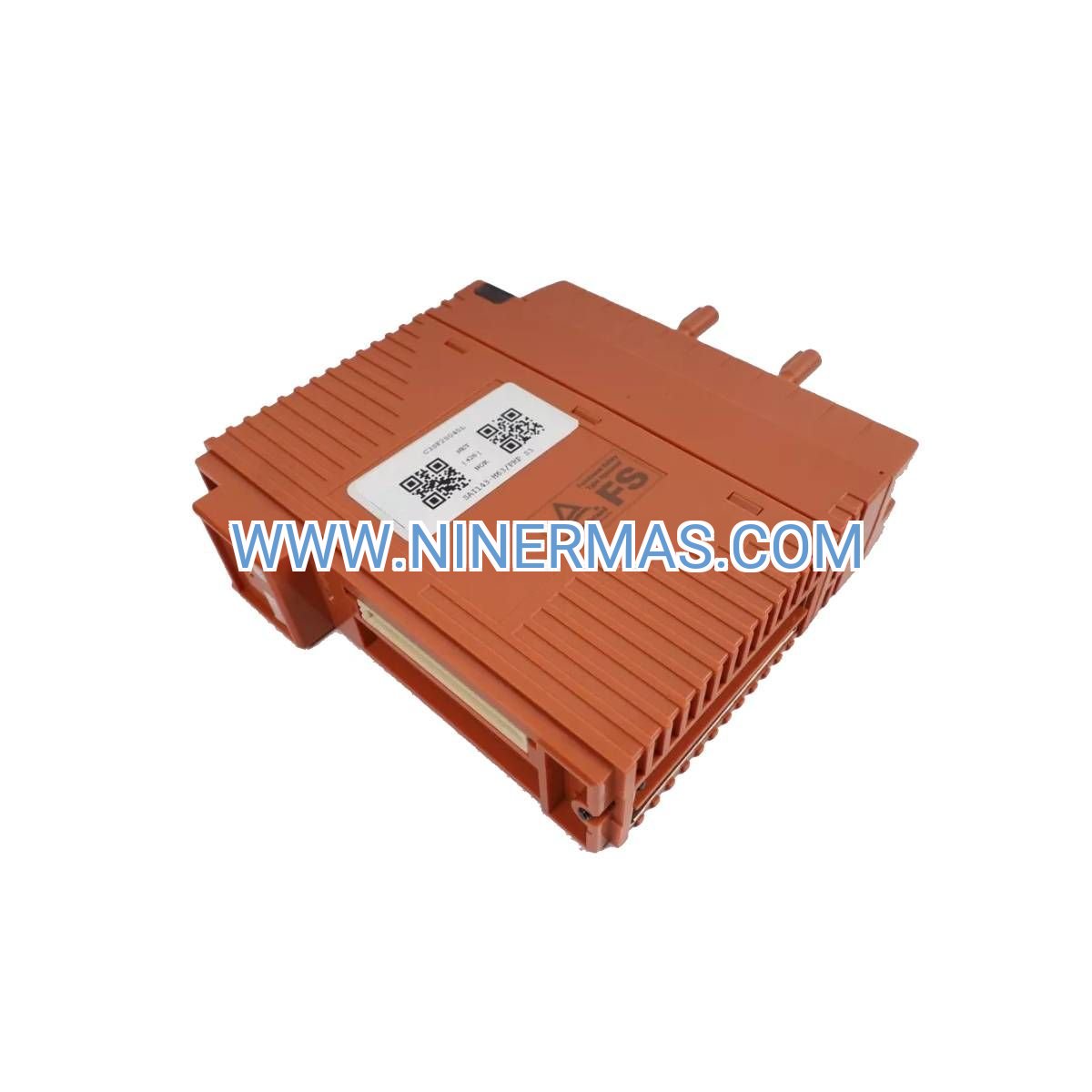
IMMFP03 MODBUS Master Controller (Industrial-Grade Protocol Gateway)
The ABB IMMFP03 (FDI-210) is a high-performance MODBUS master controller engineered for mission-critical industrial communication networks. This protocol gateway bridges the gap between legacy field instrumentation and modern distributed control systems, delivering deterministic data exchange with exceptional reliability. Designed for process industries, manufacturing facilities, and infrastructure projects, the IMMFP03 enables seamless integration of MODBUS RTU/ASCII slave devices into ABB control ecosystems and third-party SCADA platforms.
Industrial facilities face persistent challenges in unifying disparate communication protocols across multi-vendor equipment landscapes. The IMMFP03 solves this by providing robust master-slave coordination, automatic error recovery, and flexible register mapping—eliminating costly custom programming while accelerating commissioning timelines. Whether you're modernizing brownfield installations or architecting greenfield projects, this module delivers the interoperability foundation your automation strategy demands.
Key differentiators include extended temperature tolerance (-40°C to +70°C), 2500V galvanic isolation for harsh electrical environments, and hot-swappable DIN-rail mounting that maximizes uptime during maintenance operations. With proven compatibility across ABB Symphony Plus, AC 800M, and Infi 90 platforms, the IMMFP03 represents a future-proof investment in communication infrastructure.
Core Features & Business Value
→ Multi-Slave Polling Architecture
Simultaneously manage up to 247 MODBUS slave devices with configurable polling sequences and exception handling. Reduces integration complexity by 60% compared to point-to-point wiring schemes while enabling centralized diagnostics.
✓ Dual-Interface Connectivity
RS-485 and RS-232 serial ports with automatic baud rate detection (300-115,200 bps) ensure compatibility with legacy and contemporary field devices. Eliminates the need for external converters, cutting hardware costs by $200-500 per installation point.
✓ Industrial-Hardened Design
Operates reliably in -40°C to +70°C ambient conditions with 2500V isolation protection against electrical noise and ground loops. Proven MTBF exceeding 150,000 hours in petrochemical and power generation applications.
→ Plug-and-Play Integration
Pre-configured function codes and register templates for common instrumentation types (flow meters, analyzers, VFDs) reduce commissioning time from days to hours. Compatible with ABB engineering tools and third-party configuration software.
✓ Real-Time Diagnostic Reporting
Built-in communication health monitoring with LED status indicators and software-accessible error logs. Enables predictive maintenance strategies that reduce unplanned downtime by up to 40%.
→ Compact Footprint & Hot-Swap Capability
35mm DIN-rail mounting with tool-free installation and live replacement functionality. Minimizes panel space requirements while supporting zero-downtime maintenance protocols.
Typical Application Scenarios
Process Automation & Batch Control
Chemical plants and pharmaceutical facilities deploy the IMMFP03 to aggregate data from distributed analyzers, flow computers, and weighing systems into centralized DCS platforms. The module's deterministic polling ensures regulatory-compliant batch record accuracy while its isolation protection prevents ground-loop interference in multi-building installations.
Manufacturing Execution Systems (MES)
Automotive and electronics manufacturers integrate the FDI-210 to connect production line equipment (barcode scanners, vision systems, torque tools) with MES databases. Real-time data visibility enables OEE tracking and quality traceability without disrupting existing machine control logic.
Building & Infrastructure Management
Commercial facilities and water treatment plants utilize the IMMFP03 to network HVAC controllers, energy meters, and pump stations into unified BMS/SCADA architectures. The module's extended temperature rating supports outdoor enclosure installations in extreme climates.
Energy Monitoring & Substation Automation
Utility operators leverage the controller's high-speed polling (sub-second update rates) to monitor power quality analyzers and protective relays across distributed substations. Galvanic isolation meets IEC 61850 safety requirements for electrical infrastructure applications.
Retrofit & Modernization Projects
Plants with legacy ABB Infi 90 or Bailey Net 90 systems use the IMMFP03 as a migration bridge, enabling phased upgrades to Symphony Plus while maintaining operational continuity. Backward compatibility protects existing automation investments during multi-year transformation programs.
Technical Parameters & Selection Guide
| Parameter | Specification |
|---|---|
| Protocol Support | MODBUS RTU/ASCII Master (Function Codes 01-06, 15-16) |
| Serial Interfaces | RS-485 (2-wire/4-wire), RS-232 (DB9 connector) |
| Baud Rate Range | 300 - 115,200 bps (auto-detection supported) |
| Maximum Slave Devices | 247 nodes per network segment |
| Data Capacity | 8,192 registers (configurable coil/input/holding) |
| Polling Cycle Time | 10ms - 60s (user-configurable per slave) |
| Power Supply | 24VDC ±25% (18-32VDC), <5W consumption |
| Isolation Voltage | 2500VAC (serial ports to logic/power) |
| Operating Temperature | -40°C to +70°C (extended industrial range) |
| Storage Temperature | -40°C to +85°C |
| Humidity Tolerance | 5% - 95% RH (non-condensing) |
| Mounting | 35mm DIN rail (EN 50022 standard) |
| Dimensions (H×W×D) | 120mm × 35mm × 115mm |
| Certifications | CE, UL, cUL, ATEX Zone 2 (optional) |
Selection Criteria: Choose the IMMFP03 when your application requires master-initiated polling of multiple MODBUS slaves with guaranteed response timing. For slave-only functionality or MODBUS TCP/IP networks, consider alternative ABB communication modules. Verify that your DCS platform supports the module's native integration protocol (typically Ethernet/IP or PROFIBUS-DP for backplane communication). For installations exceeding 1200 meters RS-485 distance, specify fiber optic media converters or repeater modules.
Extended Functions
IoT Gateway Integration: The IMMFP03 can interface with ABB Ability™ cloud platforms via intermediate protocol converters, enabling remote monitoring and predictive analytics for connected field devices. This architecture supports Industry 4.0 initiatives without requiring firmware upgrades to legacy instrumentation.
Advanced Diagnostics: Software-configurable alarm thresholds for communication timeout, CRC errors, and slave non-response events. Diagnostic data streams to HMI systems via OPC UA or Modbus TCP gateways for centralized fleet management.
Custom Register Mapping: Engineering tools allow bit-level manipulation of MODBUS data frames, supporting non-standard device implementations and proprietary protocol extensions. Ideal for integrating specialized analyzers or custom-built instrumentation.
Redundancy Options: Deploy dual IMMFP03 modules in hot-standby configurations using ABB's redundancy management software. Automatic failover occurs within 500ms to maintain process continuity during module replacement or network faults.
Delivery & Service Assurance
Lead Time: Standard configurations ship within 3-5 business days from regional distribution centers. Custom-configured units (special firmware, extended certifications) require 2-3 weeks for factory programming and testing.
Warranty Coverage: 24-month manufacturer's warranty covering defects in materials and workmanship. Extended warranty plans available for critical infrastructure applications (up to 5 years with annual calibration services).
Technical Support: Access to ABB's global support network includes 24/7 hotline assistance, remote diagnostic tools, and on-site commissioning services. Regional application engineers provide integration consulting and training workshops.
Documentation Package: Each unit includes installation manual, quick-start guide, register mapping templates, and sample configuration files. Downloadable resources include CAD drawings (DWG/DXF), 3D STEP models, and IEC 61131-3 function block libraries.
Frequently Asked Questions
What connection methods does the IMMFP03 support for integrating with existing control systems?
The module communicates with host controllers via its backplane interface (specific protocol depends on the ABB platform—typically Ethernet/IP for Symphony Plus or PROFIBUS-DP for AC 800M). Serial ports (RS-485/RS-232) connect downstream to MODBUS slave devices. No direct Ethernet connectivity is provided; use ABB's SPBRC410 bridge controller for MODBUS TCP applications.
How many MODBUS devices can one IMMFP03 reliably manage in real-time applications?
While the module supports up to 247 slave addresses, practical limits depend on polling frequency requirements and network latency. For sub-second update rates, limit configurations to 30-50 slaves. Applications tolerating 5-10 second updates can manage 100+ devices. Use multiple IMMFP03 modules for large-scale installations requiring fast response times.
Does this controller reduce energy consumption compared to traditional communication architectures?
The IMMFP03 itself consumes less than 5W, but its primary energy benefit comes from eliminating redundant I/O modules and reducing wiring infrastructure. Centralized MODBUS polling can cut panel space requirements by 40% and reduce installation labor costs by $1,500-3,000 per control cabinet in typical projects.
What are the physical installation requirements for harsh industrial environments?
Mount the module on standard 35mm DIN rail inside NEMA 4X or IP65-rated enclosures for outdoor/washdown areas. Maintain 50mm clearance above and below for convection cooling. In ambient temperatures exceeding 55°C, install forced-air ventilation or specify ABB's conformal-coated variant for extended thermal performance.
Can the IMMFP03 enable remote monitoring capabilities for connected field instruments?
Yes, when integrated with ABB's Symphony Plus DCS or third-party SCADA systems that support OPC UA/DA servers. The module aggregates MODBUS data into the control system's tag database, which can then be published to cloud platforms, mobile HMIs, or enterprise historians for remote visibility and analytics.
How does the module handle communication errors and slave device failures?
Configurable timeout periods (50ms-10s) trigger automatic retry sequences with exponential backoff algorithms. Failed slaves are flagged with diagnostic codes while polling continues for healthy devices. Optional "last known good value" hold functionality prevents process upsets during temporary communication losses.
Get Expert Integration Support Today
Ready to streamline your industrial communication infrastructure? Our application engineers provide complimentary system architecture reviews to ensure optimal IMMFP03 deployment for your specific automation requirements. Contact us for technical datasheets, compatibility verification, or project-specific quotations.
© 2026 NINERMAS COMPANY LIMITED. All rights reserved.
Original Source: https://ninermas.com
Contact: sale@ninermas.com | +0086 187 5021 5667
PDF Specification
Download PDF file here:
Click to Download PDFRelated products

Contact Info
-
Address:22 / F, South Wo Hang building, 148 Wing Lok Street, Sheung Wan, Western District, Hong Kong
-
Phone:+8618750215667
-
Email: