


Description
Industrial-Grade Safety Output Module for Critical Shutdown Applications
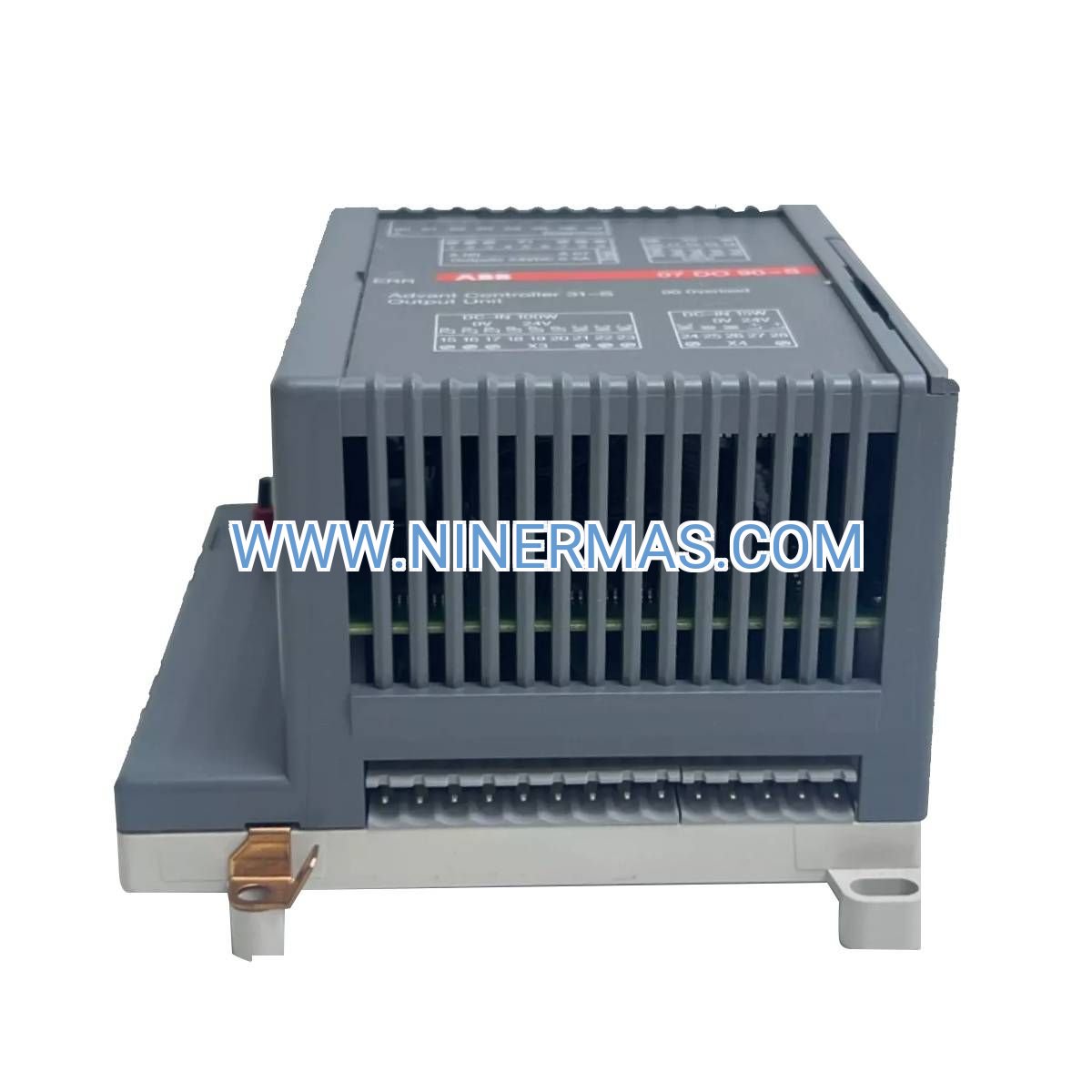
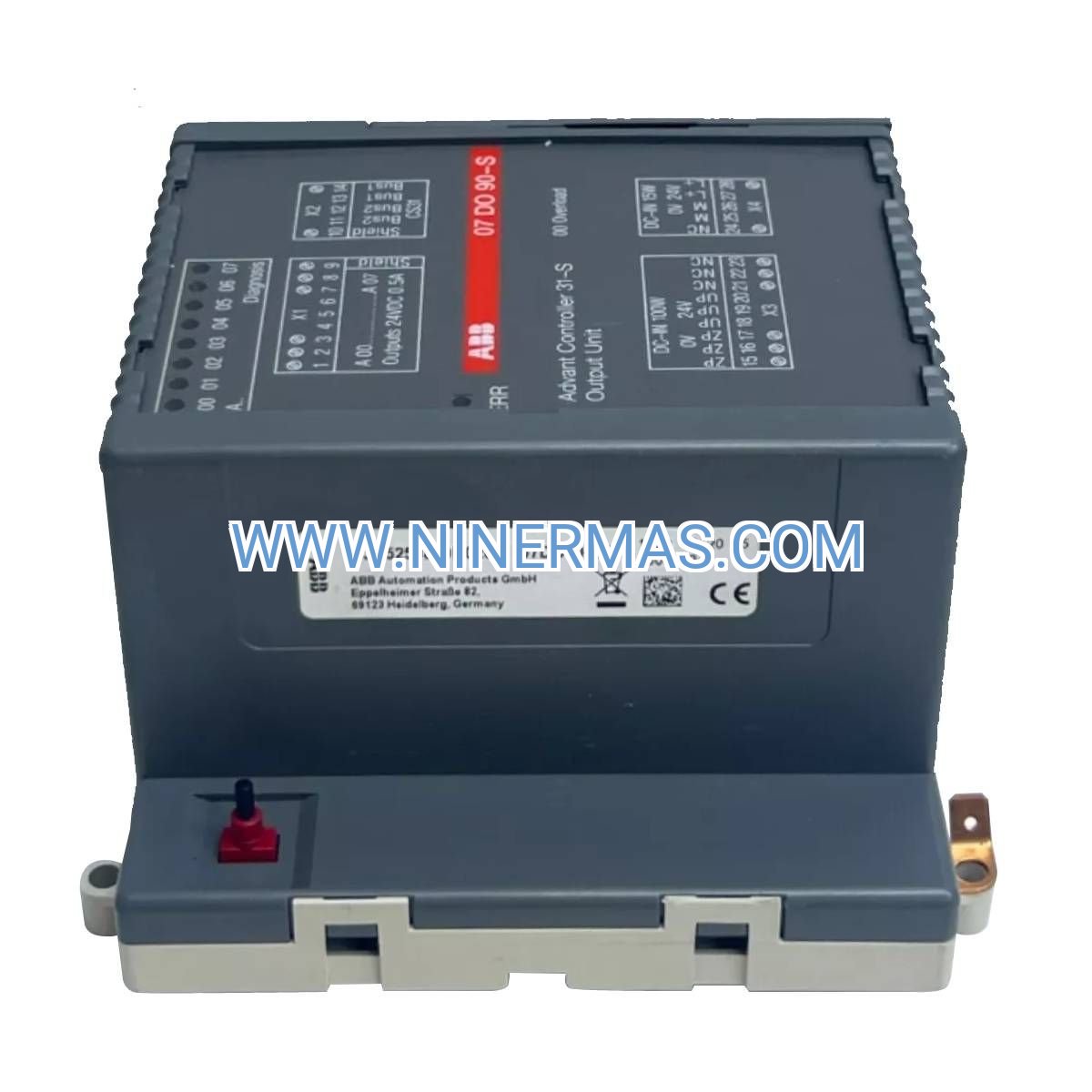
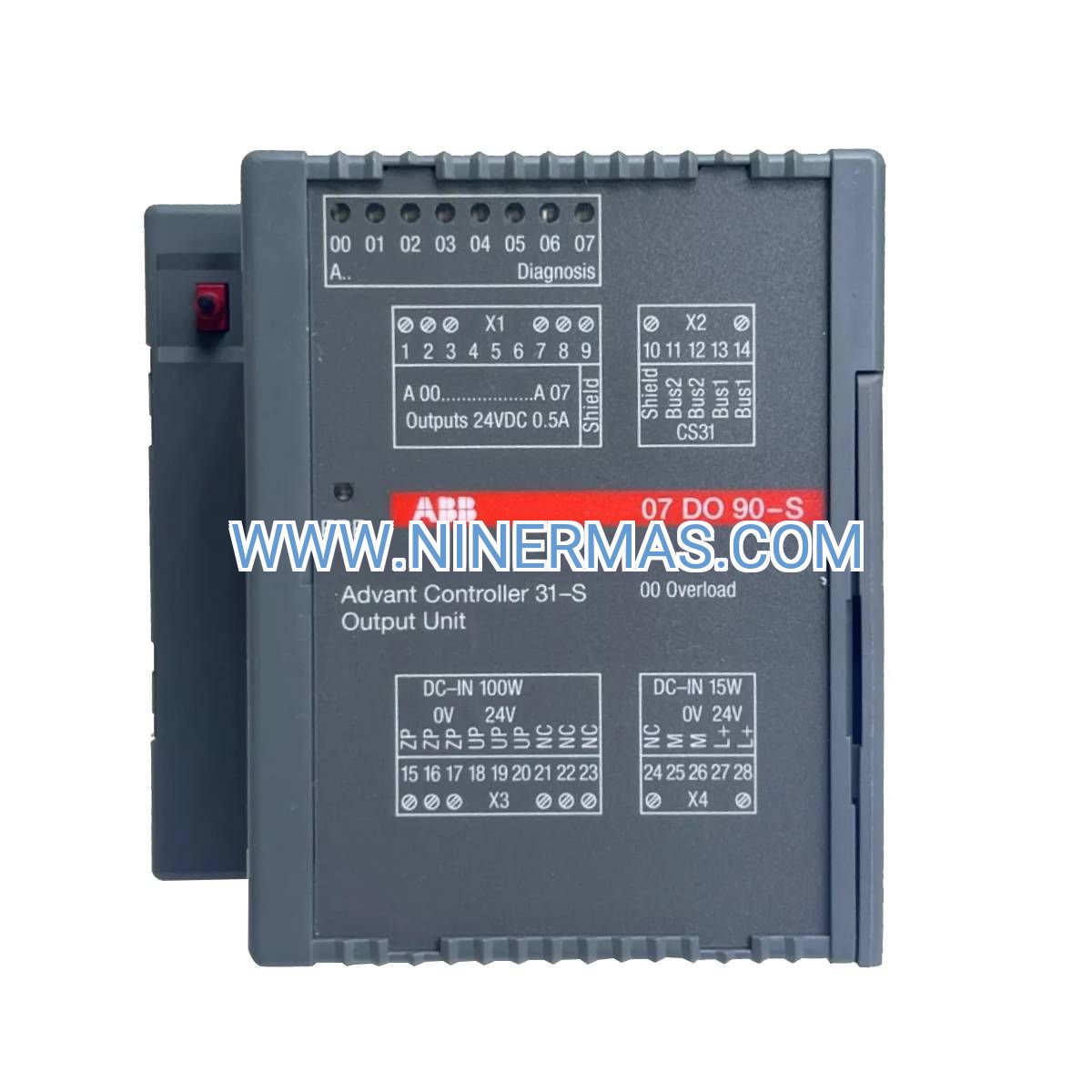
The ABB 07DO90-S (GJR5250800R0202) represents a purpose-engineered safety digital output module designed for Safety Instrumented Systems (SIS) demanding IEC 61508 SIL 2/3 certification. Engineered for the Advant OCS AC31-S safety controller platform, this module delivers eight independent 24VDC output channels with advanced diagnostic coverage exceeding 99%, enabling reliable actuation of safety-critical devices including emergency shutdown valves, fire suppression systems, and machine safety contactors across oil & gas, chemical processing, power generation, and manufacturing sectors.
Built to address the stringent requirements of process safety management, this module integrates single-wire connection technology that reduces installation complexity by 40% while maintaining full diagnostic integrity. Each output channel features dual-redundant switching elements with cross-monitoring capabilities, supporting flexible voting configurations (1oo1, 1oo2, 2oo3) to optimize safety integrity versus spurious trip rates for your specific application risk profile.
Whether you're implementing emergency shutdown systems protecting offshore platforms, burner management systems safeguarding industrial furnaces, or high-integrity pressure protection for pipeline networks, the 07DO90-S provides the certified safety performance, diagnostic transparency, and operational reliability demanded by IEC 61511 process safety standards and regulatory authorities worldwide.
Core Capabilities & Technical Advantages
This safety output module delivers measurable operational benefits through advanced engineering and certified safety architecture:
- ✓ Certified Safety Integrity: TÜV Rheinland certified to IEC 61508 SIL 2/3 with systematic capability SC3, enabling compliance with IEC 61511, API RP 556, and API RP 14C process safety standards for oil & gas applications
- ✓ Advanced Diagnostic Architecture: Continuous self-monitoring detects output short circuits, open loads, wire breaks, and stuck-at faults with >99% diagnostic coverage, automatically transitioning to safe state upon fault detection to prevent hazardous failures
- ✓ Simplified Installation Technology: Proprietary single-wire connection system reduces field wiring time by 40% compared to conventional dual-wire safety outputs while maintaining full diagnostic capability and safety integrity through innovative connector design
- ✓ Flexible Safety Configuration: Supports 1oo1, 1oo2, and 2oo3 voting logic enabling optimization of Safety Integrity Level versus spurious trip rate—critical for balancing safety performance against production availability in continuous process industries
- ✓ Hot-Swappable Maintenance: Module replacement during system operation without compromising safety integrity through automatic configuration download and output state verification before energization, minimizing maintenance downtime
- ✓ Industrial Environmental Hardening: Conformal-coated circuitry withstands moisture, corrosive gases, and temperature cycling from 0°C to +60°C, with enhanced EMC immunity per IEC 61000-6-2 for reliable operation near VFDs and high-power switching equipment
Application Scenarios Across Process Industries
Emergency Shutdown Systems (ESD) – Oil & Gas Production:
In offshore platforms and onshore production facilities, the 07DO90-S controls pneumatic shutdown valves, motor contactors, and isolation valves protecting against overpressure, fire, and toxic release scenarios. The module's SIL 3 capability (when configured with 1oo2 voting) meets regulatory requirements for high-demand safety functions while diagnostic coverage reduces proof test frequency, minimizing production interruptions.
Burner Management Systems (BMS) – Power Generation:
For industrial boilers, process heaters, and gas turbine combustion systems, this module operates fuel gas valves, ignition systems, and flame safeguard interlocks preventing explosive atmospheres. Fast <10ms response time ensures safe startup/shutdown sequences while built-in partial stroke test capabilities facilitate periodic proof testing without process shutdown, maintaining compliance with NFPA 85 and FM Global standards.
High Integrity Pressure Protection (HIPPS) – Pipeline Systems:
Protecting downstream equipment from overpressure conditions, the 07DO90-S drives fast-acting isolation valves in pipeline networks and pressure vessel applications. The module's galvanic isolation between channels prevents common-cause failures while redundancy integration with AC31-S controllers enables bumpless transfer during controller switchover events, ensuring continuous protection availability.
Fire & Gas Detection Systems – Chemical Processing:
In refineries and chemical plants, this module activates deluge valves, fire suppression systems, and emergency ventilation in response to fire or toxic gas detection. Configurable fail-safe behavior ensures outputs de-energize to safe state during communication loss or power failure, preventing spurious trips while maintaining safety integrity per IEC 61511 requirements.
Machine Safety Systems – Automated Manufacturing:
For robotic cells, automated assembly lines, and material handling equipment, the 07DO90-S controls safety contactors, brake releases, and light curtain muting circuits. When integrated with safety PLCs meeting ISO 13849 Category 3/4 or PLd/PLe requirements, the module enables compliant machine safety architectures protecting operators from mechanical hazards.
Technical Parameters & Selection Criteria
| Specification | Value | Engineering Notes |
|---|---|---|
| Output Channels | 8 independent safety-rated outputs | Each channel features dual-redundant switching with cross-monitoring |
| Output Type | 24VDC sourcing outputs | Electronic protection against short-circuit, overload, reverse polarity |
| Current Rating | 0.5A max per channel / 4A aggregate | Suitable for solenoid valves, contactors, indicators up to 12W per point |
| Safety Certification | IEC 61508 SIL 2/3 (TÜV certified) | SIL 2 in 1oo1 mode, SIL 3 with 1oo2 voting configuration |
| Diagnostic Coverage | >99% fault detection | Detects shorts, opens, wire breaks, stuck-at faults with automatic safe-state transition |
| Response Time | <10ms typical switching | Meets fast-acting shutdown requirements for burner management and HIPPS |
| Connection Method | Single-wire proprietary connector | Accepts 14-22 AWG wire with spring-loaded retention, reduces wiring 40% |
| Isolation | Galvanic isolation channels/logic | Prevents common-cause failures and electrical interference propagation |
| Operating Temperature | 0°C to +60°C | Industrial environment rating with conformal coating for harsh conditions |
| Mounting | DIN rail in AC31-S chassis | Hot-swappable with keyed connectors preventing incorrect insertion |
| Compliance | IEC 61511, API RP 556, CE, ATEX | Suitable for Zone 2/Div 2 hazardous locations with approved barriers |
Selection Guidance: Choose this module when your Safety Instrumented System requires IEC 61508 SIL 2/3 certified outputs for controlling shutdown valves, safety contactors, or alarm devices. For applications demanding SIL 3 performance, configure outputs in 1oo2 voting pairs. Verify that connected actuators draw ≤0.5A per channel and operate on 24VDC supply. For intrinsically safe applications in Zone 0/1 hazardous areas, combine with TÜV-certified safety barriers maintaining overall SIL rating.
Advanced Safety Features & Diagnostic Intelligence
Dual-Redundant Output Architecture:
Each output channel incorporates two independent switching elements with reciprocal monitoring, enabling detection of dangerous failures within one diagnostic cycle. This architecture supports both single-channel (1oo1) and dual-channel (1oo2) configurations, allowing engineers to optimize Safety Integrity Level versus spurious trip rate based on application-specific risk assessment and availability requirements.
Comprehensive Fault Detection:
Continuous diagnostic routines monitor output current, voltage levels, and switching element status to detect short circuits to ground/supply, open load conditions, wire breaks, and stuck-at failures. Upon fault detection, the module automatically transitions affected outputs to configured safe state (typically de-energized) and reports diagnostic alarms to the AC31-S controller for operator notification and maintenance scheduling.
Proof Test Support Capabilities:
Built-in partial stroke test functions enable periodic proof testing of connected actuators (e.g., partial valve closure) without full process shutdown, facilitating compliance with IEC 61511 proof test interval requirements. Diagnostic logging captures test results, fault history, and operational hours for safety lifecycle documentation and regulatory audits.
Safe-State Management:
Configurable fail-safe behavior ensures outputs respond appropriately to communication loss, power failure, or detected faults. Engineers can specify de-energized (typical for shutdown valves) or energized (for fail-locked applications) safe states per channel, with automatic transition timing optimized to prevent spurious trips while maintaining safety integrity.
System Integration & Engineering Workflow
The 07DO90-S integrates within ABB's Advant OCS AC31-S safety controller architecture through safety-certified backplane communication. Output channels map to safety function blocks programmed in IEC 61131-3 languages (Ladder Diagram, Function Block Diagram, Structured Text) with safety extensions for voting logic, timer functions, and diagnostic monitoring.
Engineering workflow involves safety parameter configuration using ABB's safety engineering tools, including output voting logic definition, diagnostic response settings, and proof test interval programming. The module participates in system-wide Safety Integrity Level calculations, supporting automated SIL verification per IEC 61508 Part 6 and compliance documentation generation for regulatory submissions.
Commissioning includes functional testing of each output channel, diagnostic verification through forced fault injection, and safety validation per IEC 61511 requirements—typically completed in 1-2 hours per module by TÜV-certified functional safety engineers.
Installation & Commissioning Process
Mechanical Installation: Module mounts in AC31-S safety controller racks via keyed connectors preventing incorrect insertion. DIN rail mounting with secure latching mechanism ensures vibration resistance in industrial environments. Hot-swappable design allows module replacement during system operation without compromising safety integrity.
Field Wiring: Connect actuator loads through proprietary single-wire terminals accepting 14-22 AWG wire with spring-loaded retention. Wire routing should maintain separation from high-voltage power cables per IEC 61000-6-2 EMC requirements. For hazardous area applications, install TÜV-certified safety barriers maintaining intrinsic safety parameters.
Configuration: Use ABB safety engineering software to configure output voting logic (1oo1, 1oo2, 2oo3), diagnostic response behavior, safe-state definitions, and proof test intervals. Download configuration to module with automatic verification and checksum validation ensuring configuration integrity.
Validation Testing: Perform functional testing of each output channel under no-load and full-load conditions. Verify diagnostic coverage through forced fault injection (simulated shorts, opens, wire breaks). Conduct safety validation per IEC 61511 requirements including response time measurement, safe-state verification, and documentation of test results for regulatory compliance.
Delivery Timeline & Technical Support
Standard Delivery: 5-7 business days for in-stock units with express shipping available for critical projects. All modules ship with factory calibration certificates, TÜV safety certification documentation, and installation manuals.
Custom Configuration: 10-14 business days for pre-configured modules with customer-specific safety parameters, voting logic, and diagnostic settings loaded at factory—reducing commissioning time by 50%.
Warranty Coverage: Comprehensive 24-month manufacturer warranty covering materials, workmanship, and safety certification validity. Extended warranty programs available for critical safety applications requiring long-term support commitments.
Technical Support: Access to TÜV-certified functional safety engineers (FS Engineer certification) for pre-sale consultation, SIL verification calculations, safety architecture design, and post-sale commissioning assistance. Support includes proof test procedure development, diagnostic troubleshooting, and lifecycle safety management planning.
Documentation Package: Complete safety manuals, TÜV certification documents, proof test procedures, diagnostic fault codes, wiring diagrams, and IEC 61511 compliance declarations provided with every module for regulatory submissions and safety lifecycle documentation.
Frequently Asked Questions
Q: What Safety Integrity Level can this module achieve in different configurations?
A: The 07DO90-S achieves IEC 61508 SIL 2 certification when outputs are used in single-channel (1oo1) configuration. For SIL 3 applications, configure outputs in 1oo2 voting pairs where both channels must agree to energize the safety actuator. The module's >99% diagnostic coverage and dual-redundant switching architecture support these certifications with TÜV validation.
Q: How does the single-wire connection technology maintain full diagnostic coverage?
A: ABB's proprietary single-wire connector incorporates integrated diagnostic sensing that monitors output current, voltage, and continuity through the single wire connection. The connector design includes embedded electronics that detect short circuits, open loads, and wire breaks without requiring separate diagnostic return wires—reducing installation complexity while maintaining >99% fault detection capability required for SIL 2/3 certification.
Q: Can this module control intrinsically safe devices in Zone 0 hazardous areas?
A: Yes, when combined with TÜV-certified intrinsic safety barriers (Zener barriers or galvanic isolators) that limit energy to intrinsically safe levels. The 07DO90-S provides 24VDC/0.5A outputs that connect to barriers installed in the safe area, with barrier outputs extending into Zone 0/1 hazardous locations. Ensure barrier selection maintains overall SIL rating and verify intrinsic safety parameters (Ui, Ii, Pi) match connected device requirements per IEC 60079-11.
Q: What is the typical proof test interval for this module in SIL 3 applications?
A: With >99% diagnostic coverage, typical proof test intervals range from 1-3 years depending on application-specific risk assessment and target Safety Integrity Level. The module's built-in partial stroke test capabilities enable online proof testing of connected actuators without process shutdown, facilitating compliance with IEC 61511 proof test requirements. Consult your safety engineer to calculate optimal proof test intervals based on your Safety Instrumented Function's risk reduction requirements.
Q: How does the module respond to communication loss with the AC31-S controller?
A: Upon detecting communication loss (typically within 100-200ms), the module transitions all outputs to their configured safe state—usually de-energized for shutdown valve applications or energized for fail-locked scenarios. This fail-safe behavior is configurable per channel during engineering to match your specific safety requirements. The module maintains safe state until communication is restored and the controller explicitly commands output re-energization after safety validation.
Q: What actuator types are compatible with the 0.5A per channel current rating?
A: The 0.5A rating supports most industrial safety actuators including pneumatic solenoid valves (typically 3-8W), safety contactors (coil power 5-12W), indicator lamps, and alarm horns. For higher-power actuators like large motor contactors or hydraulic valves, use the 07DO90-S output to control an intermediate safety relay rated for the actuator's current requirements, maintaining the safety integrity chain through relay contact monitoring.
Take the Next Step Toward Certified Safety Compliance
Implementing Safety Instrumented Systems that meet IEC 61508/61511 requirements demands certified components, expert engineering, and comprehensive documentation. Our team of TÜV-certified functional safety engineers provides end-to-end support from initial safety architecture design through commissioning and lifecycle management.
Contact our safety systems specialists today to discuss your specific application requirements, receive SIL verification calculations, and obtain detailed technical proposals including compliance documentation, delivery timelines, and engineering support options. We deliver factory-certified authentic ABB safety components with expedited global logistics and comprehensive warranty coverage.
Request a quote: sale@ninermas.com | Technical consultation: +0086 187 5021 5667
© 2026 NINERMAS COMPANY LIMITED. All rights reserved.
Original Source: https://ninermas.com
Contact: sale@ninermas.com | +0086 187 5021 5667
PDF Specification
Download PDF file here:
Click to Download PDFRelated products

Contact Info
-
Address:22 / F, South Wo Hang building, 148 Wing Lok Street, Sheung Wan, Western District, Hong Kong
-
Phone:+8618750215667
-
Email:
