Description
ABB DSTC 406 Passive SDB Terminator (Industrial-Grade Communication Component)
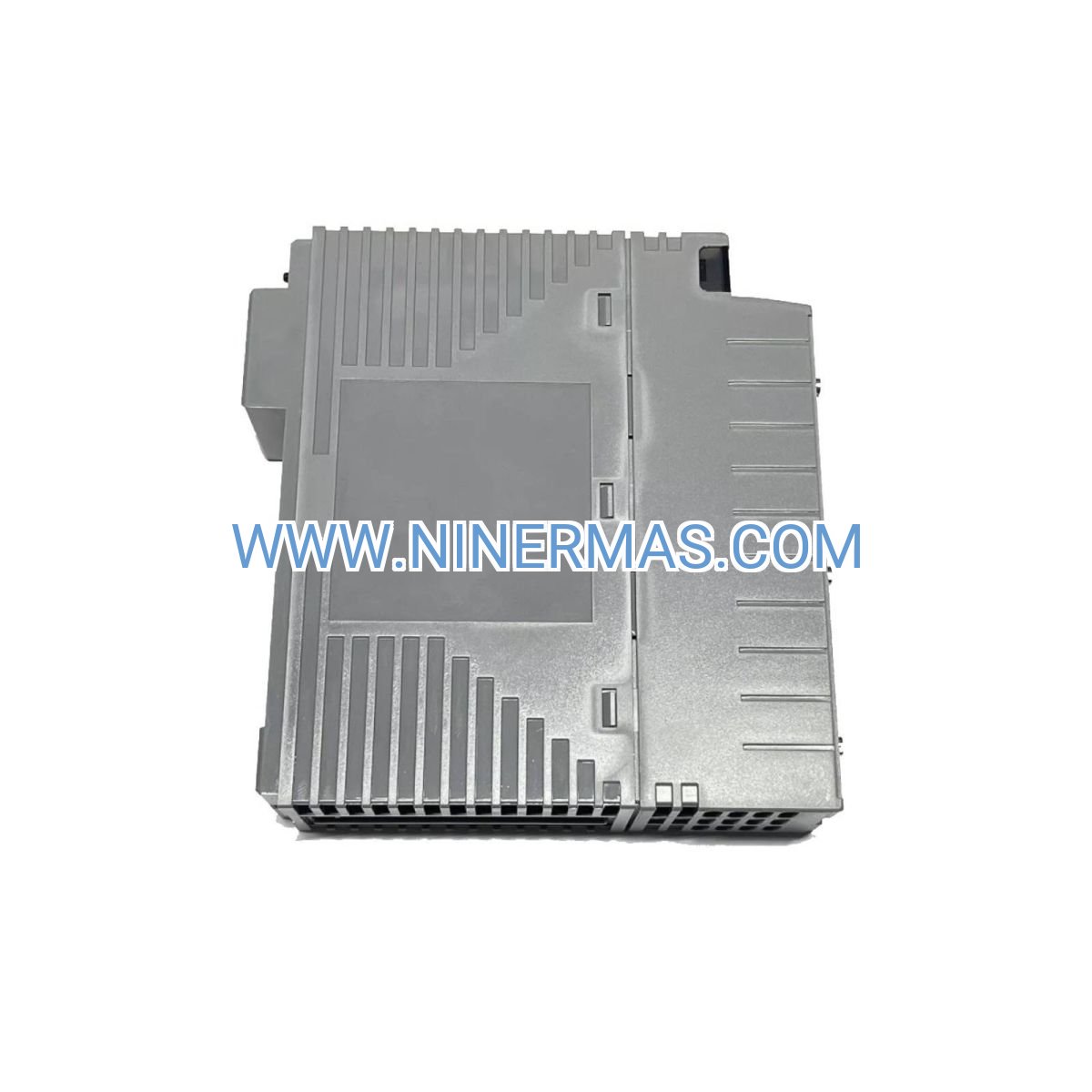
The ABB DSTC 406 (catalog number 57520001-DX) represents a precision-engineered passive termination solution for Serial Data Bus (SDB) networks in Advant OCS distributed control architectures. This specialized component eliminates signal reflections at final modem positions, ensuring deterministic communication performance across extended industrial networks where data integrity directly impacts process safety and operational continuity.
Designed for integration with DSTC 452 FSK modems, this terminating unit addresses a critical challenge in serial communication systems: impedance matching at network endpoints. Without proper termination, reflected signals create bit errors, frame corruption, and unpredictable communication timeouts that compromise control system reliability in mission-critical applications.
System integrators and maintenance engineers rely on the DSTC 406 to maintain communication stability in legacy Advant installations spanning chemical processing, power generation, and heavy manufacturing sectors. Its passive design delivers maintenance-free operation over decades of continuous service, making it an essential component for long-term system sustainability strategies.
Technical Specifications & Performance Parameters
| Parameter | Specification |
|---|---|
| Manufacturer Part Number | 57520001-DX |
| ABB Type Code | DSTC 406 |
| Functional Category | Passive SDB Network Terminator |
| Compatible Modem | DSTC 452 FSK Modem (5751017-A) |
| Network Position | Final modem only (one per SDB segment) |
| Physical Dimensions | 272mm (D) × 35mm (H) × 60mm (W) |
| Unit Weight | 0.025 kg (25 grams) |
| Mounting Options | DIN rail / Panel mount |
| Operating Environment | Industrial control cabinet (0-60°C typical) |
| Compliance Standards | RoHS 2011/65/EU, WEEE Category 5 |
| HS Classification | 85389091 |
| Country of Origin | Sweden |
Key Features & Operational Benefits
→ Impedance Matching Precision: Provides exact characteristic impedance termination for RS-485-based SDB networks, reducing signal reflections to below 5% of transmitted amplitude. This ensures bit error rates remain within acceptable thresholds (<10⁻⁹) even on maximum-length cable runs approaching 1200 meters.
→ Zero-Configuration Deployment: Passive circuit design requires no software setup, DIP switch configuration, or parameter programming. Installation consists solely of physical connection to the DSTC 452 modem's SDB output port, reducing commissioning time and eliminating configuration errors.
→ Maintenance-Free Longevity: Absence of active electronic components eliminates failure modes associated with semiconductor degradation, capacitor aging, or firmware corruption. Field installations demonstrate operational lifespans exceeding 25 years without replacement or service intervention.
✓ Space-Efficient Integration: Ultra-compact 60mm width footprint enables installation in densely populated control cabinets where panel space commands premium value. Lightweight construction (25g) imposes negligible mechanical load on DIN rail mounting systems.
✓ Environmental Compliance Assurance: RoHS-compliant materials meet European Union hazardous substance restrictions, facilitating equipment export to regulated markets. WEEE categorization provides clear end-of-life disposal pathways for decommissioned units.
✓ Diagnostic Transparency: Passive operation allows direct impedance measurement using standard multimeters or time-domain reflectometers, enabling field technicians to verify proper termination without specialized test equipment or factory calibration procedures.
Industrial Application Scenarios
Chemical Process Control Networks: In multi-unit chemical plants where Advant controllers coordinate reactor sequencing, distillation column control, and batch management across distributed process areas, the DSTC 406 ensures reliable SDB communication between central control rooms and remote field equipment enclosures. Signal integrity preservation prevents communication-induced process upsets that could trigger emergency shutdowns or product quality deviations.
Power Generation Monitoring Systems: Thermal power stations and combined-cycle facilities deploy Advant OCS for turbine control, boiler management, and emissions monitoring. Extended SDB cable runs connecting control room equipment to turbine deck instrumentation require proper termination to maintain deterministic scan cycles during critical startup and load-following operations.
Manufacturing Execution Integration: Automotive assembly lines and discrete manufacturing facilities use Advant controllers to bridge legacy PLC networks with modern MES systems. The DSTC 406 enables stable SDB communication in electrically noisy factory environments where VFD-generated EMI and welding equipment transients challenge signal integrity.
Water Treatment SCADA Architectures: Municipal water treatment plants with geographically distributed pump stations, filtration systems, and storage facilities rely on SDB networks for remote monitoring and control. Proper termination ensures communication reliability during storm events when rapid process adjustments prevent overflow conditions.
Legacy System Lifecycle Extension: Organizations maintaining operational Advant OCS installations deployed in the 1990s-2000s require authentic spare parts to sustain system availability until planned migration to modern platforms. The DSTC 406 serves as critical inventory for maintenance teams supporting aging infrastructure in refineries, paper mills, and food processing facilities.
Installation Methodology & Best Practices
Network Topology Verification: Prior to installation, obtain current SDB network diagrams showing all DSTC 452 modem locations and cable routing. Identify the final modem position—defined as the last modem in the daisy-chain sequence with no downstream SDB connections. Only this terminal modem requires the DSTC 406; mid-chain modems must remain unterminated to allow signal propagation.
Physical Mounting Procedure: Position the DSTC 406 adjacent to the target DSTC 452 modem on the same DIN rail or mounting panel. Secure the unit using provided mounting clips, ensuring mechanical stability under vibration conditions typical of industrial environments. Maintain minimum 50mm clearance from high-voltage power distribution components to prevent capacitive coupling.
Electrical Connection Protocol: Connect the termination unit to the modem's designated SDB output port using the specified termination cable assembly (typically a short jumper with keyed connectors preventing reverse polarity). Verify secure connector engagement by applying gentle pull force; properly seated connectors should resist disconnection under 5N axial load.
Post-Installation Validation: Measure SDB line impedance at the modem output using a digital multimeter set to resistance mode. Properly terminated networks should exhibit impedance matching the SDB characteristic impedance (typically 120Ω ±10% for RS-485 implementations). Deviations exceeding ±15% indicate connection faults or component damage requiring investigation.
Communication Performance Testing: Execute end-to-end communication diagnostics using Advant system tools to verify error-free data transmission. Monitor bit error rate counters, frame error statistics, and communication timeout events over a 24-hour observation period. Successful termination should reduce error rates to baseline levels (<1 error per 10⁹ bits transmitted).
Complementary Advant OCS Communication Products
| Component Model | Functional Description | Product Link |
|---|---|---|
| DSTC 452 (5751017-A) | FSK modem for SDB/LDB bridge communication | View Details |
| 07KR51 (1SBP260014R1001) | Advant Controller processing module | View Details |
| 07KT97 (GJR5253000R0100) | Enhanced Advant Controller with extended I/O capacity | View Details |
Diagnostic Troubleshooting Guide
Issue: Sporadic Communication Dropouts
Root Cause: Missing or improperly connected DSTC 406 termination creating signal reflections
Resolution: Verify termination unit is installed on final modem position; inspect cable connections for secure seating and pin contact integrity; measure line impedance to confirm proper termination resistance
Issue: Elevated Bit Error Rates (>10⁻⁶)
Root Cause: Impedance mismatch due to damaged termination component or incorrect installation location
Resolution: Replace DSTC 406 with known-good spare; verify only one termination exists per SDB segment; check for unauthorized termination on mid-chain modems
Issue: Communication Failure After Network Expansion
Root Cause: Termination remains on previously-final modem after adding downstream SDB devices
Resolution: Relocate DSTC 406 to new final modem position; remove termination from former endpoint modem; update network topology documentation
Issue: Intermittent Errors During Temperature Extremes
Root Cause: Thermal expansion affecting connector contact resistance or cable impedance characteristics
Resolution: Verify cabinet environmental controls maintain temperature within 0-60°C range; inspect connectors for corrosion or contamination; consider cable upgrade to temperature-stabilized variants
Frequently Asked Questions
Q: How many DSTC 406 terminators are required per SDB network segment?
A: Exactly one termination unit per SDB segment, installed exclusively on the final DSTC 452 modem. Mid-chain modems must remain unterminated to allow signal propagation to downstream devices. Over-termination (multiple terminators on one segment) causes signal attenuation and communication failures.
Q: Can the DSTC 406 be used with communication systems other than Advant OCS?
A: The DSTC 406 is specifically engineered for DSTC 452 modem integration within Advant OCS architectures. While the underlying termination principles apply to other RS-485 networks, connector pinouts, impedance values, and mechanical form factors are optimized for ABB Advant systems. Use with non-Advant equipment requires electrical compatibility verification.
Q: What is the expected service life of the DSTC 406 termination unit?
A: Passive component design with no active electronics enables operational lifespans exceeding 25 years under normal industrial conditions. Failure modes are limited to mechanical connector damage or environmental contamination rather than electronic component degradation. Preventive replacement is typically unnecessary unless physical damage occurs.
Q: How can I verify proper DSTC 406 installation without specialized test equipment?
A: Use a standard digital multimeter to measure DC resistance across the SDB line at the modem output. Properly terminated networks should exhibit approximately 120Ω impedance (±10%). Additionally, monitor communication error counters in the Advant system diagnostics—successful termination should reduce error rates to baseline levels within minutes of installation.
Q: Is the DSTC 406 compatible with redundant Advant controller configurations?
A: Yes, the DSTC 406 functions identically in both simplex and redundant Advant architectures. In redundant configurations, ensure termination is applied to the final modem on each independent SDB network segment. Redundant communication paths require independent termination on their respective final modems.
Q: What documentation is required for regulatory compliance audits?
A: The DSTC 406 includes RoHS compliance certification per EU Directive 2011/65/EU and WEEE categorization documentation. SCIP registration number 84229a5d-6eda-43d3-92c7-33704feb1827 provides traceability for substance-of-concern reporting. HS code 85389091 facilitates customs clearance for international shipments.
Procurement & Delivery Information
- Stock Status: Available for immediate shipment from authorized distribution center
- Standard Lead Time: 3-5 business days (expedited options available upon request)
- Minimum Order: Single unit (no minimum quantity restrictions)
- Package Contents: DSTC 406 terminating unit, DIN rail mounting hardware, installation documentation
- Warranty Coverage: 12-month manufacturer defect warranty from shipment date
- Technical Support: Application engineering assistance available for integration planning
- Recommended Spares: DSTC 452 modem, SDB communication cables, connector kits
Request Technical Consultation
Our industrial automation specialists provide complimentary application support for Advant OCS system integration projects. Contact our team to discuss SDB network design, termination strategies, or legacy system maintenance planning. We offer rapid-response technical guidance to minimize downtime and optimize communication reliability.
© 2026 NINERMAS COMPANY LIMITED. All rights reserved.
Original Source: https://ninermas.com
Contact: sale@ninermas.com | +0086 187 5021 5667
PDF Specification
Download PDF file here:
Click to Download PDFRelated products


Contact Info
-
Address:22 / F, South Wo Hang building, 148 Wing Lok Street, Sheung Wan, Western District, Hong Kong
-
Phone:+8618750215667
-
Email: