Description
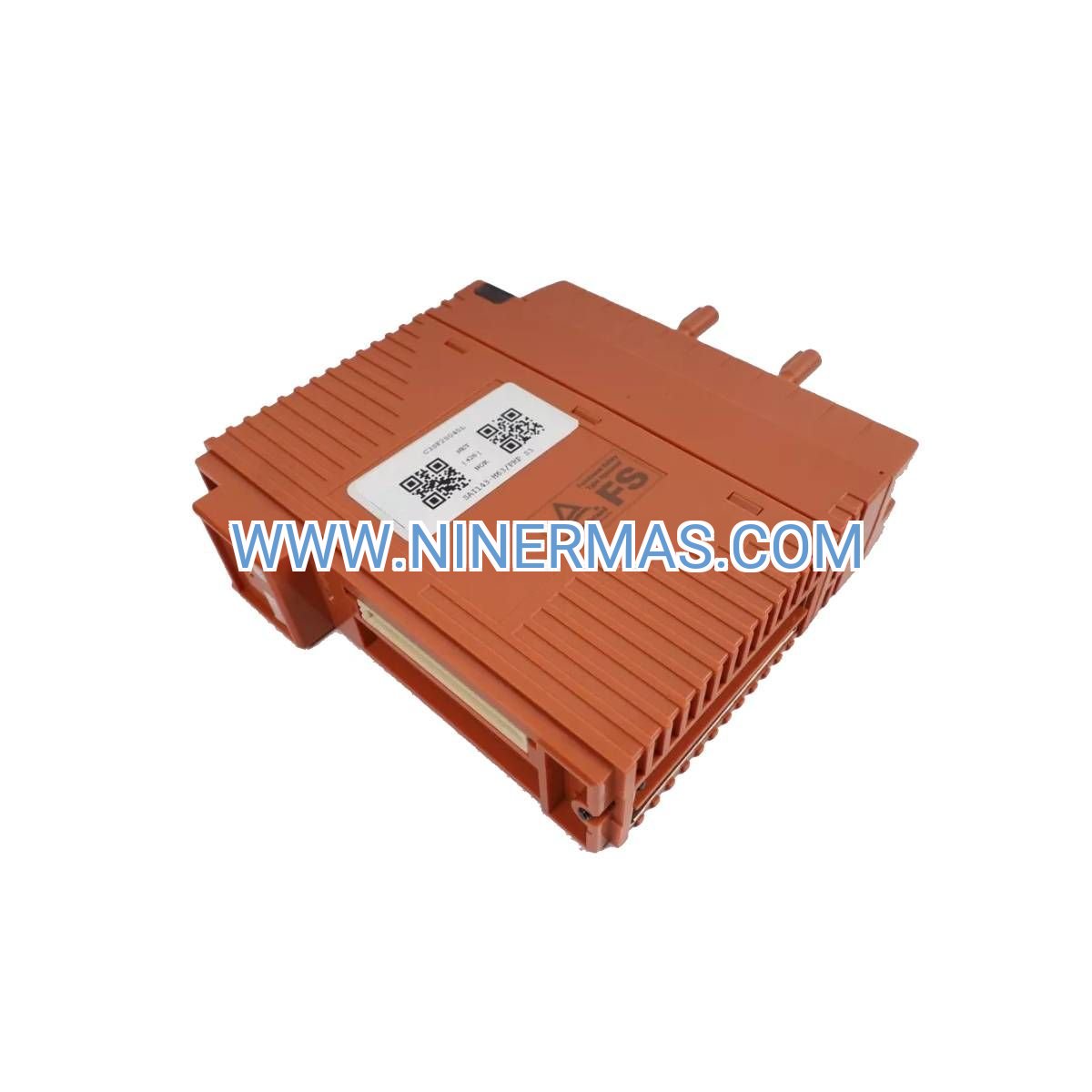
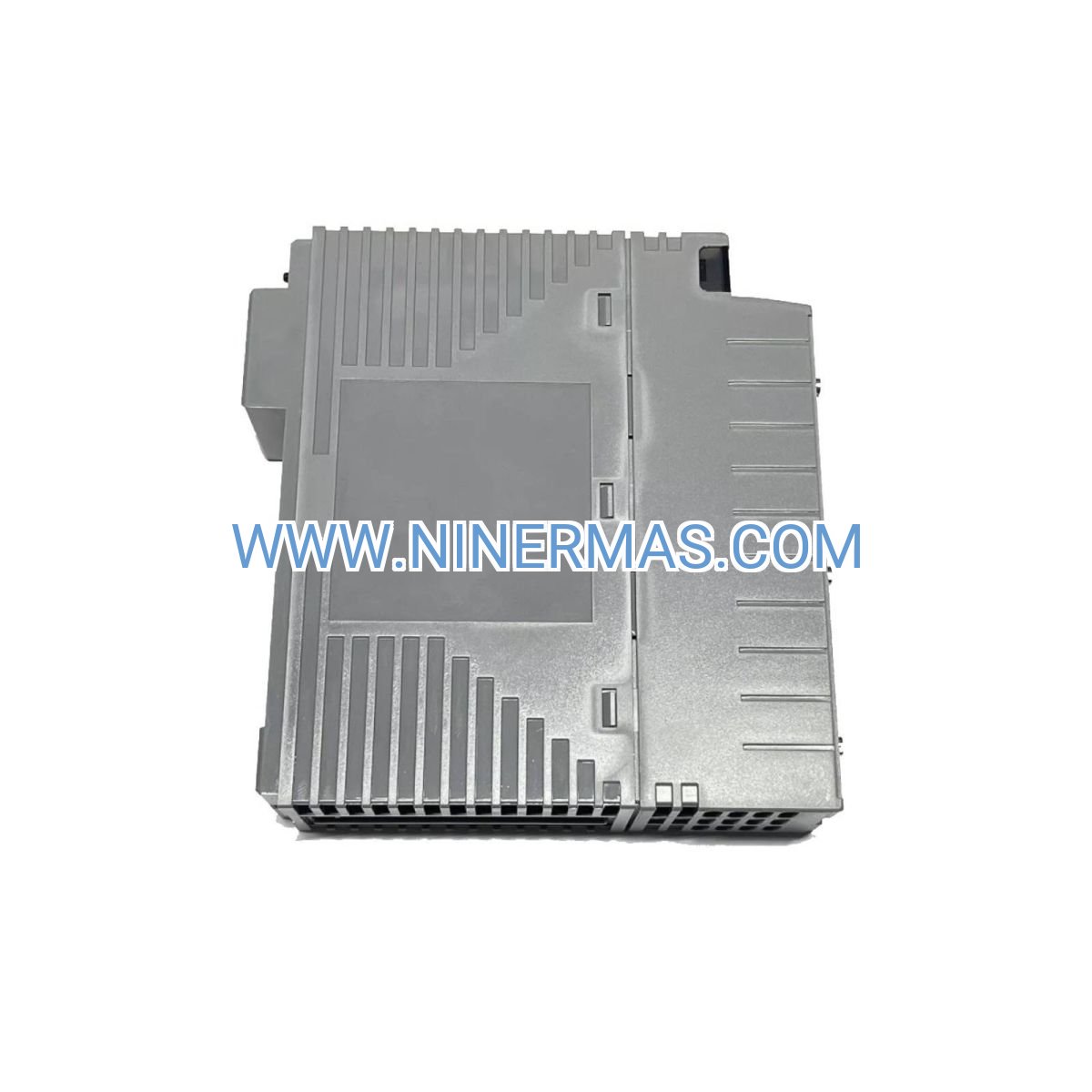
3HAC029818-001/07 ABB DSQC 663 Servo Drive (Industrial-Grade Motion Controller)
The ABB DSQC 663 represents a critical motion control component within IRC5 robotic architectures, engineered to deliver synchronized multi-axis servo performance for industrial manipulators. This drive module translates digital motion commands into precise electrical signals that govern robot joint positioning, velocity profiles, and torque output across demanding production environments.
Designed for integration with ABB's fifth-generation Integrated Robot Controller platform, the 3HAC029818-001/07 variant provides three-axis servo control with field-oriented algorithms that optimize motor efficiency while maintaining positional accuracy within micron-level tolerances. Manufacturing facilities deploying this drive unit gain access to advanced motion planning capabilities that reduce cycle times, minimize energy consumption, and extend mechanical component lifespan through intelligent load management.
Whether coordinating high-speed assembly operations, managing material transfer sequences, or executing precision welding patterns, the DSQC 663 delivers the real-time responsiveness and diagnostic transparency required for modern automated production lines.
Core Capabilities & Technical Advantages
→ Three-Axis Servo Architecture
Controls up to three robot joints simultaneously with independent current loops operating at 16 kHz switching frequency. This configuration enables standard 6-axis robots to achieve full kinematic control using two DSQC 663 units, while 7-axis configurations require three drives for complete motion coverage.
→ Field-Oriented Control (FOC) Technology
Implements vector control algorithms that decouple torque and flux components, resulting in 15-20% improved motor efficiency compared to scalar control methods. Reduced heat generation translates to lower cooling requirements and extended motor winding service life.
→ Integrated Safety Response
Monitors position feedback, current draw, and thermal conditions across all controlled axes. When fault conditions arise—such as encoder signal loss or overcurrent events—the drive executes controlled deceleration within 50 milliseconds, preventing mechanical damage and ensuring operator safety compliance.
✓ Real-Time Diagnostic Monitoring
Continuously tracks 24+ operational parameters including motor temperature, DC bus voltage, regenerative braking status, and position error magnitude. Fault logs capture timestamp data and system state snapshots, reducing mean time to repair (MTTR) by 30-40% during troubleshooting procedures.
✓ Hot-Swap Capability (Configuration-Dependent)
Supports drive replacement without full system shutdown in redundant controller configurations, minimizing production downtime during maintenance windows. Auto-configuration protocols restore operational parameters from controller memory upon drive installation.
✓ Regenerative Energy Recovery
Captures kinetic energy during robot deceleration phases and returns power to the DC bus, reducing overall system energy consumption by 8-12% in typical pick-and-place applications with frequent acceleration/deceleration cycles.
Industrial Deployment Scenarios
Automotive Body Assembly
In automotive manufacturing cells, DSQC 663 drives coordinate spot welding robots that execute 200+ welds per vehicle chassis. The drive's rapid current response enables consistent weld nugget formation across varying material thicknesses, while position feedback ensures electrode alignment within ±0.3mm across all weld points. Integrated collision detection halts motion when unexpected resistance occurs, protecting tooling and workpieces.
High-Speed Packaging Lines
Delta robot configurations powered by DSQC 663 drives achieve pick rates exceeding 120 cycles per minute in food packaging applications. Synchronized three-axis control maintains product orientation during rapid transfer movements, while smooth acceleration profiles prevent product damage. Energy recovery during deceleration reduces electrical demand by 600-800 watts per robot during peak operation.
Precision Electronics Assembly
SCARA robots equipped with DSQC 663 drives perform component placement with repeatability specifications of ±0.05mm, critical for PCB assembly and connector insertion tasks. The drive's position loop bandwidth of 800 Hz enables rapid settling times after motion commands, maximizing throughput without sacrificing placement accuracy.
Material Handling & Palletizing
Articulated robots handling payloads up to 250 kg rely on DSQC 663 drives to manage dynamic loads during acceleration and deceleration. Torque limiting functions prevent mechanical overload, while coordinated motion across all axes ensures stable product transfer even when handling irregularly shaped items or unstable stacks.
Technical Specifications & Selection Criteria
| Parameter | Specification |
|---|---|
| Part Number | 3HAC029818-001/07 |
| Model Designation | DSQC 663 |
| Controller Compatibility | IRC5 (Integrated Robot Controller 5) |
| Controlled Axes | 3 axes per drive unit |
| Control Algorithm | Digital PWM with Field-Oriented Control |
| PWM Switching Frequency | 16 kHz |
| Communication Protocol | RobotWare internal bus |
| Cooling Method | Forced air convection |
| Operating Temperature Range | +5°C to +45°C |
| Unit Weight | 12.2 kg |
| Country of Origin | Sweden |
Selection Guidelines: When specifying DSQC 663 drives for your IRC5 robot system, verify controller firmware compatibility (RobotWare 5.x or later required). Standard 6-axis robots require two drive units, while 7-axis configurations need three. Ensure adequate cabinet ventilation to maintain ambient temperatures within the +5°C to +45°C operating range. For applications involving frequent acceleration cycles or continuous operation above 80% duty cycle, consider supplementary cooling solutions to maximize component longevity.
Advanced Integration Features
Seamless IRC5 Ecosystem Compatibility
The DSQC 663 auto-detects connected motor types and encoder configurations during initial power-up, eliminating manual parameter entry for standard ABB motor combinations. Configuration data synchronizes with the IRC5 main computer, enabling rapid drive replacement during maintenance without extensive recommissioning procedures.
Predictive Maintenance Readiness
Built-in condition monitoring tracks cumulative operating hours, thermal cycling events, and regenerative braking frequency. When component wear indicators approach service thresholds, the drive generates maintenance alerts through the IRC5 FlexPendant interface, enabling proactive replacement scheduling before failures occur.
Multi-Robot Coordination
In cells with multiple IRC5 controllers, DSQC 663 drives support MultiMove functionality that synchronizes motion across independent robots. This capability enables coordinated material handling where two robots jointly manipulate large or flexible workpieces, maintaining precise relative positioning throughout transfer sequences.
Delivery Timeline & Service Commitments
Standard Lead Time: 5-7 business days for in-stock units; 15-21 business days for factory-direct orders requiring configuration verification
Warranty Coverage: 12-month comprehensive warranty covering manufacturing defects, component failures, and firmware issues
Technical Support: Direct access to application engineers for installation guidance, parameter optimization, and troubleshooting assistance
Documentation Package: Includes installation manual, wiring diagrams, parameter reference guide, and RobotWare integration instructions
Frequently Asked Questions
Can the DSQC 663 drive unit operate with legacy S4C+ robot controllers?
No, the DSQC 663 is exclusively compatible with IRC5 controller platforms. S4C+ systems require DSQC 346 series drives due to fundamental differences in communication protocols and power architecture. Migrating from S4C+ to IRC5 necessitates complete controller replacement along with compatible drive modules.
What is the maximum robot payload capacity supported by DSQC 663 drives?
Payload capacity is determined by the robot model and motor specifications rather than the drive unit itself. DSQC 663 drives support ABB robots ranging from 3 kg payload (IRB 140) to 250 kg payload (IRB 4600) configurations. Verify motor current ratings match drive output specifications for optimal performance.
How often should cooling fans be inspected or replaced?
Cooling fan inspection is recommended every 10,000 operating hours or annually, whichever occurs first. Fan bearing wear typically manifests as increased acoustic noise or reduced airflow. Replacement fans are available as field-serviceable components with installation procedures documented in the maintenance manual.
Does the drive support third-party motor integration?
While technically possible through custom motor parameter configuration, ABB strongly recommends using factory-matched motor and drive combinations. Third-party motors require manual entry of electrical parameters (resistance, inductance, back-EMF constants) and may exhibit suboptimal performance. Non-ABB motor integration typically voids warranty coverage.
What firmware update procedures apply to DSQC 663 drives?
Drive firmware updates are managed through RobotWare system upgrades rather than individual drive flashing. When updating IRC5 controller software, compatible drive firmware versions install automatically. ABB recommends applying RobotWare updates during scheduled maintenance windows to incorporate performance enhancements and security patches.
Can I configure custom motion profiles or acceleration limits?
Yes, motion parameters including maximum velocity, acceleration rates, and jerk limits are configurable through the IRC5 FlexPendant or RobotStudio software. Custom motion profiles enable optimization for specific applications—such as reduced acceleration for fragile product handling or aggressive profiles for high-throughput operations.
Ready to Optimize Your IRC5 Robot System?
Contact our automation specialists to verify DSQC 663 compatibility with your specific robot model and application requirements. We provide technical consultation, configuration assistance, and expedited shipping to minimize production downtime during drive replacement or system expansion projects.
© 2026 NINERMAS COMPANY LIMITED. All rights reserved.
Original Source: https://ninermas.com
Contact: sale@ninermas.com | +0086 187 5021 5667
Related products

Contact Info
-
Address:22 / F, South Wo Hang building, 148 Wing Lok Street, Sheung Wan, Western District, Hong Kong
-
Phone:+8618750215667
-
Email: