Description
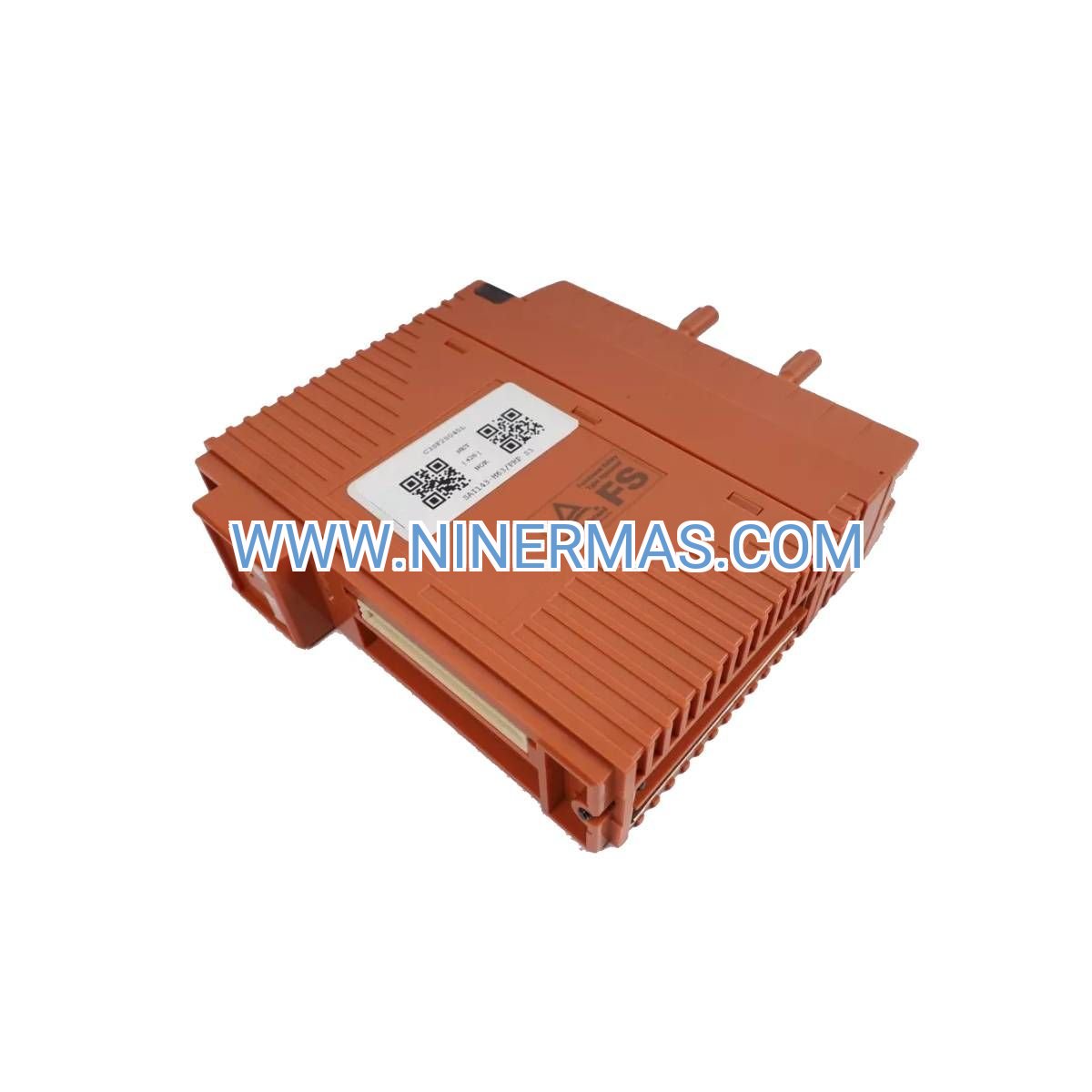
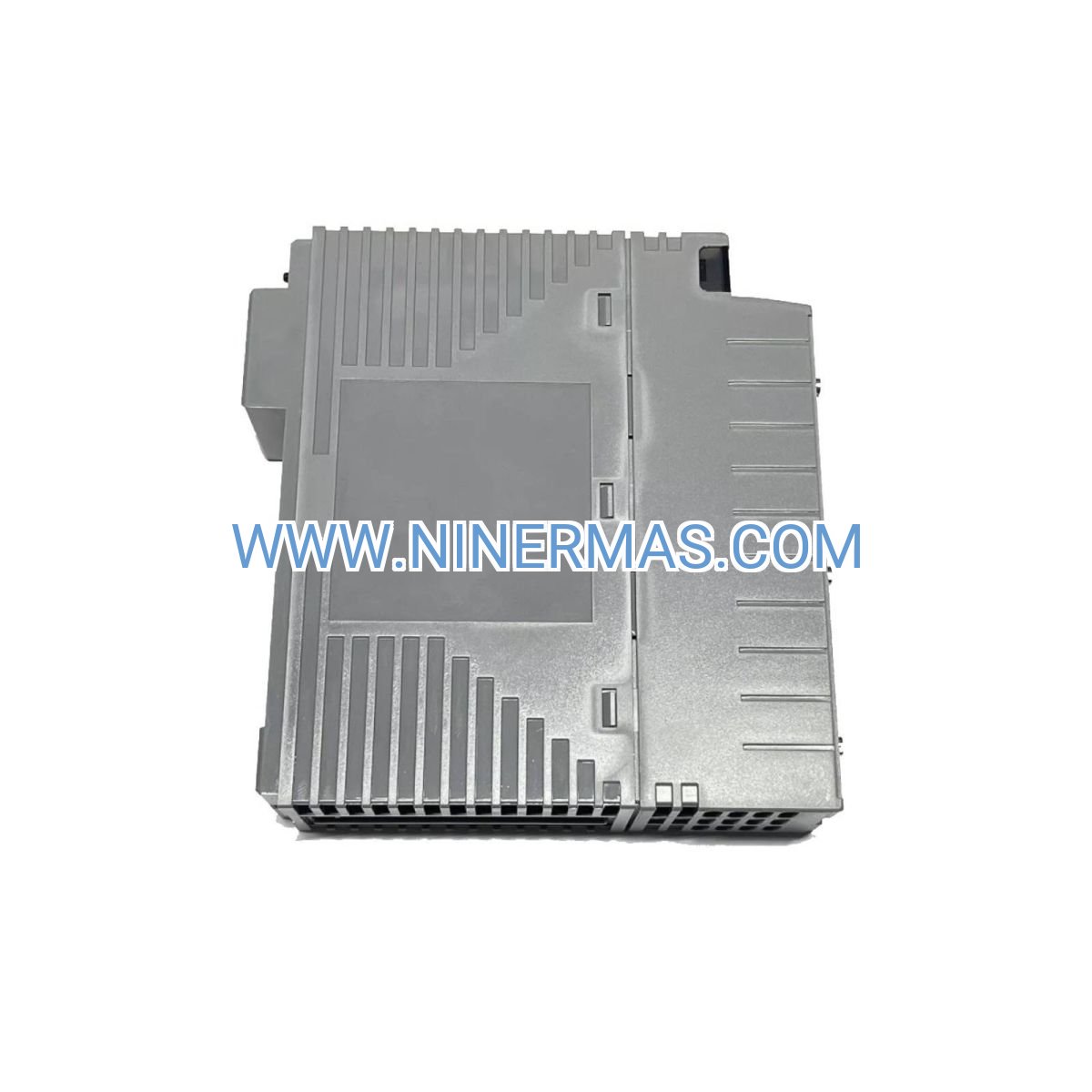
ABB DSDP 170 Pulse Counting Module (Industrial-Grade Encoder Interface)
The ABB DSDP 170 (part number 57160001-ADF) is an industrial pulse counting module designed for high-precision motion measurement in automated manufacturing environments. This encoder interface board captures position, velocity, length, and frequency data from rotary and linear encoders, delivering measurement accuracy essential for process synchronization, material tracking, and servo control applications across diverse industrial sectors.
Built for integration within ABB Bailey Infi 90 and Net 90 distributed control systems, the DSDP 170 processes differential encoder signals at frequencies reaching 2.5 MHz, enabling real-time feedback for high-speed production lines. Its robust signal conditioning circuitry ensures reliable operation in electrically harsh factory environments where electromagnetic interference and voltage transients are common challenges.
Whether you're implementing cut-to-length control for converting machinery, tracking web position in printing systems, or monitoring conveyor throughput in logistics operations, the DSDP 170 provides the measurement foundation for closed-loop automation strategies that improve yield, reduce waste, and enhance operational visibility.
Core Capabilities & Technical Advantages
→ 2.5 MHz Maximum Input Frequency – Handles high-resolution encoders on rapid production equipment without signal loss or measurement lag
→ Quadrature Decoding Logic – Automatically determines rotation direction and multiplies resolution through A/B phase processing
→ Differential Input Architecture – Rejects common-mode noise for stable measurements in industrial electrical environments
→ Multi-Parameter Measurement – Simultaneously tracks position (pulses), speed (frequency), length (calculated), and direction
→ Hardware Overflow Protection – Prevents data corruption during counter rollover events in continuous operation
→ Direct DCS Integration – Communicates measurement values to ABB controllers via backplane without external signal converters
Industrial Application Scenarios
Web Processing & Converting Lines
In paper, film, and textile converting operations, the DSDP 170 monitors material speed and accumulated length from encoder-equipped rollers. This feedback enables tension control loops to maintain consistent web stress, preventing stretching or tearing. Cut-to-length systems use position data to trigger shear mechanisms at precise intervals, minimizing scrap and ensuring dimensional accuracy across production runs.
Packaging & Filling Equipment
High-speed packaging machinery relies on encoder feedback for product registration and synchronization. The DSDP 170 tracks conveyor position to coordinate labeling, sealing, and inspection stations, ensuring each package receives proper treatment. In form-fill-seal applications, speed measurement from film feed encoders adjusts sealing temperature and dwell time to accommodate line rate variations.
Material Handling & Logistics
Conveyor systems in distribution centers use pulse counting for zone control and accumulation management. The DSDP 170 measures belt speed and calculates throughput rates, providing data for sortation logic and capacity planning. Automated storage and retrieval systems (AS/RS) depend on precise position feedback for crane positioning and inventory tracking accuracy.
Metal Processing & Coil Handling
Steel service centers and stamping operations track coil unwinding position to calculate remaining material and schedule changeovers. The DSDP 170's length measurement capability integrates with ERP systems for real-time inventory updates. In slitting lines, multiple encoder inputs monitor individual strip speeds to maintain tension balance across the rewind section.
Robotics & Motion Control
Servo-driven automation cells incorporate encoder feedback for closed-loop positioning. The DSDP 170 interfaces with rotary encoders on motor shafts or linear scales on actuators, providing position data that control algorithms use to achieve repeatability within microns. Multi-axis coordination relies on synchronized position measurements to maintain geometric relationships during complex motion profiles.
Technical Parameters & Selection Criteria
| Parameter | Specification |
|---|---|
| Part Number | 57160001-ADF |
| Maximum Input Frequency | 2.5 MHz |
| Input Type | Differential (RS-422 compatible) |
| Encoder Compatibility | Incremental quadrature (A, B, Z phases) |
| Counter Resolution | 32-bit (4,294,967,296 counts) |
| Measurement Functions | Position, speed, frequency, direction |
| System Compatibility | ABB Bailey Infi 90, Net 90 |
| Operating Temperature | 0°C to 60°C (32°F to 140°F) |
| Mounting | DIN rail or backplane slot |
| Power Consumption | Typical 5W from system bus |
Selection Guidelines: Choose the DSDP 170 when your application requires pulse frequencies above 1 MHz or when integrating with existing ABB Bailey control infrastructure. For lower-speed applications (under 500 kHz), consider standard digital input modules. Verify encoder output voltage levels match differential input specifications (typically 5V or 24V differential drivers). Applications requiring absolute position retention through power cycles should incorporate battery-backed controller memory or absolute encoders with separate interface modules.
Advanced Integration Features
The DSDP 170 supports preset and latch functions triggered by external signals or controller commands, enabling registration mark detection and batch counting applications. Its configurable scaling factors allow direct conversion of pulse counts to engineering units (meters, feet, RPM) within the controller logic, simplifying operator interfaces and reducing programming complexity.
Diagnostic capabilities include input signal quality monitoring, frequency overrange detection, and communication status indicators. These features accelerate troubleshooting during commissioning and provide early warning of encoder cable degradation or mechanical coupling issues during production operation.
For applications requiring redundant measurement, multiple DSDP 170 modules can monitor the same encoder through signal splitters, providing independent feedback paths for safety-critical positioning systems or cross-verification in quality assurance scenarios.
Delivery Timeline & Service Commitment
✓ Standard Delivery: 3-5 business days for in-stock units via express courier
✓ Custom Configuration: 7-10 business days for firmware customization or special testing
✓ Warranty Coverage: 12-month manufacturer warranty covering defects in materials and workmanship
✓ Technical Support: Application engineering assistance for encoder selection, wiring diagrams, and configuration parameters
✓ Documentation Package: Installation manual, wiring schematics, configuration software, and sample control logic included
Frequently Asked Questions
What encoder output types are compatible with the DSDP 170 pulse counting interface?
The module accepts differential line driver outputs (RS-422 standard) commonly found on industrial incremental encoders. Compatible signal types include 5V differential, 11-30V differential, and HTL (10-30V) with appropriate input conditioning. Single-ended (open collector or push-pull) encoders require external conversion to differential signals for optimal noise immunity.
How does the 2.5 MHz frequency capacity translate to maximum shaft speed for different encoder resolutions?
Maximum measurable speed depends on encoder pulses per revolution (PPR). For a 1024 PPR encoder, 2.5 MHz input frequency supports shaft speeds up to 146,484 RPM (2.5 MHz ÷ 1024 PPR × 60 sec/min). Higher resolution encoders (5000 PPR) reduce maximum speed to 30,000 RPM. Applications exceeding these limits require lower-resolution encoders or frequency divider circuits.
Can the DSDP 170 measure bidirectional motion and track net position in reversing applications?
Yes, quadrature decoding logic automatically detects rotation direction from A/B phase relationships. The 32-bit signed counter increments during forward motion and decrements during reverse, maintaining net position through unlimited direction changes. Controller logic can monitor direction status and implement limit checking for travel range enforcement.
What cable length limitations exist between encoders and the DSDP 170 input terminals?
Differential signaling supports cable runs up to 100 meters (330 feet) with twisted-pair shielded cable (120-ohm characteristic impedance). Longer distances require line receivers or fiber optic converters. Cable routing should avoid proximity to VFD power cables and high-current switching devices. Proper shield grounding at one end prevents ground loop noise injection.
Does the module support index pulse (Z-phase) for homing and reference position establishment?
The DSDP 170 includes dedicated Z-phase input for index pulse detection. Controller logic can capture counter value on index transitions, enabling automatic homing sequences and position reference calibration. This feature is essential for applications requiring absolute position knowledge within each encoder revolution or for detecting mechanical slippage in belt-driven systems.
How is speed measurement derived from pulse input, and what update rates are available?
Speed calculation uses frequency-to-analog conversion or pulse counting over fixed time windows (typically 10-100ms). Faster update rates improve control loop response but increase measurement noise at low speeds. The controller can implement filtering algorithms or dual-mode measurement (frequency method at high speed, period measurement at low speed) for optimal performance across the operating range.
Get Expert Application Support
Our automation specialists provide complimentary consultation for encoder selection, signal conditioning requirements, and control strategy development. Contact our team to discuss your motion measurement challenges and receive tailored recommendations for achieving your precision and throughput objectives.
© 2026 NINERMAS COMPANY LIMITED. All rights reserved.
Original Source: https://ninermas.com
Contact: sale@ninermas.com | +0086 187 5021 5667
PDF Specification
Download PDF file here:
Click to Download PDFRelated products

Contact Info
-
Address:22 / F, South Wo Hang building, 148 Wing Lok Street, Sheung Wan, Western District, Hong Kong
-
Phone:+8618750215667
-
Email: