Description
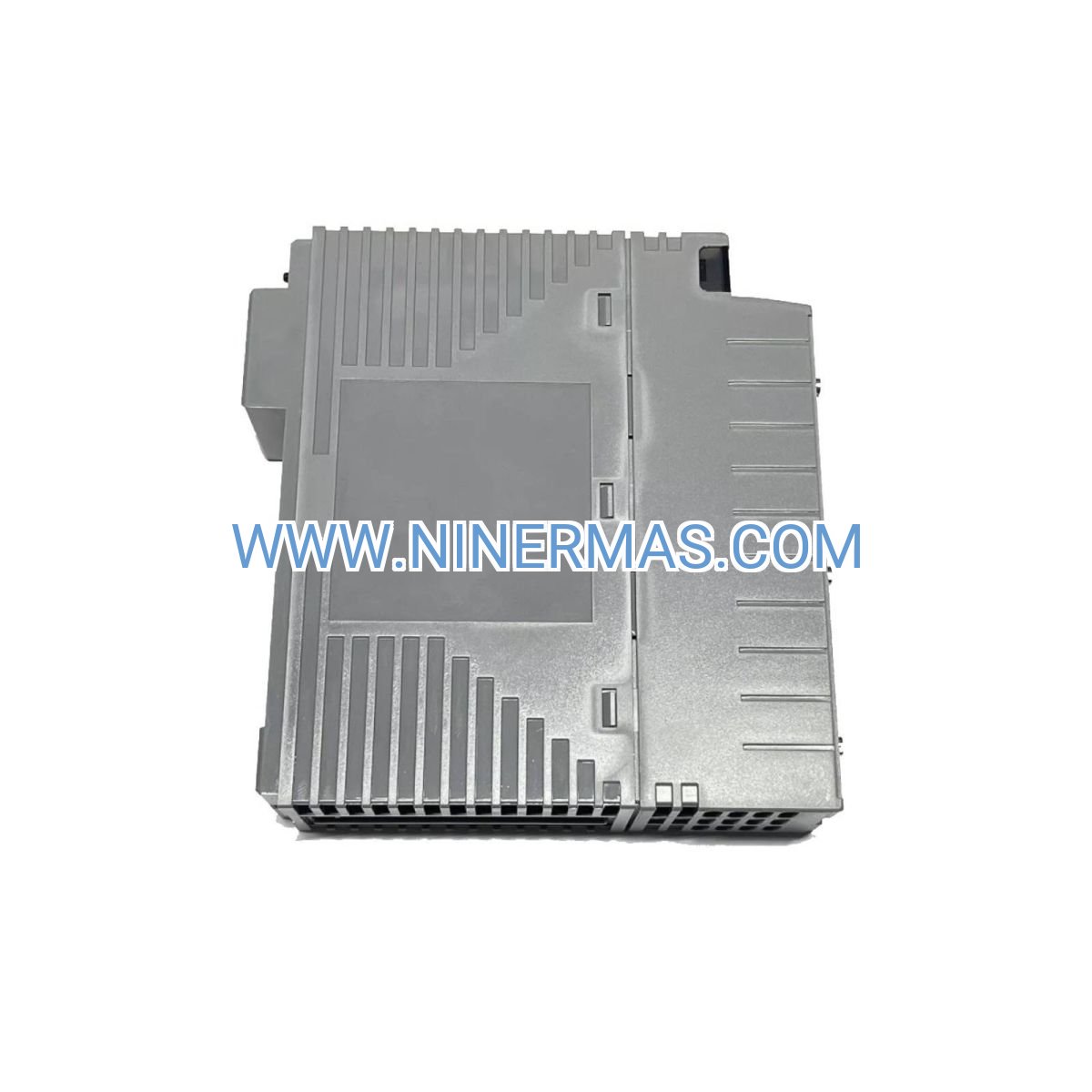
ABB DSAI155 57120001-HZ – Industrial-Grade Thermocouple Signal Conditioning Module
The ABB DSAI155 (57120001-HZ) delivers precision analog signal acquisition for multi-point temperature measurement in mission-critical industrial control systems. Engineered for seamless integration with ABB Advant OCS and 800xA distributed control platforms, this 14-channel thermocouple input board combines robust hardware design with advanced signal processing to ensure reliable thermal data acquisition across demanding process environments.
Designed for industries where temperature accuracy directly impacts product quality, safety compliance, and operational efficiency, the DSAI155 addresses the challenge of monitoring multiple thermal zones simultaneously while maintaining signal integrity in electrically harsh conditions. Process engineers, automation specialists, and plant maintenance teams rely on this module for applications ranging from petrochemical reactor monitoring to power generation turbine surveillance.
With 16-bit resolution and ±0.1% full-scale accuracy, the DSAI155 transforms raw thermocouple millivolt signals into precise digital values, enabling sophisticated control algorithms and predictive maintenance strategies. Channel-to-channel isolation eliminates ground loop interference, while built-in cold junction compensation simplifies installation by removing the need for external reference junctions.
Core Capabilities & Technical Advantages
✓ Multi-Sensor Compatibility: Accepts J, K, T, E, R, S, and B-type thermocouples without hardware reconfiguration, providing flexibility for diverse temperature ranges from cryogenic to high-temperature applications (up to 1800°C with Type B sensors).
✓ Galvanic Isolation Architecture: Each input channel features electrical isolation from adjacent channels and the communication bus, preventing cross-talk and protecting against voltage transients that could compromise measurement accuracy or damage downstream equipment.
✓ Hot-Swap Serviceability: Field-replaceable design allows module exchange during system operation without shutting down the entire I/O rack, minimizing production interruptions and supporting proactive maintenance schedules.
✓ Extended Environmental Rating: Operates reliably across -40°C to +70°C ambient temperatures with conformal coating protection against moisture, dust, and corrosive atmospheres common in heavy industrial settings.
✓ Integrated Diagnostics: Continuous self-monitoring detects sensor breaks, out-of-range conditions, and module faults, transmitting alarm status to the host DCS for immediate operator notification and automated fault logging.
✓ Low Power Consumption: 5W typical power draw reduces heat generation in densely populated I/O cabinets while supporting energy-efficient facility operations.
Industry Application Scenarios
→ Chemical Process Industries: Monitor exothermic reaction temperatures in batch reactors and continuous stirred-tank reactors (CSTRs), where thermal runaway prevention requires sub-second response to temperature deviations. The DSAI155's high sampling rate and accuracy enable tight control loop tuning for optimal yield and safety margin maintenance.
→ Power Generation Facilities: Track bearing temperatures, steam line conditions, and exhaust gas profiles in combined-cycle plants and coal-fired boilers. Early detection of thermal anomalies supports condition-based maintenance programs that reduce unplanned outages and extend turbine component life by 15-25%.
→ Metal Heat Treatment: Ensure uniform temperature distribution during annealing, quenching, and tempering operations where metallurgical properties depend on precise thermal cycling. Multi-zone monitoring with the DSAI155 helps maintain ±3°C uniformity across large furnace chambers.
→ Food & Beverage Processing: Validate pasteurization and sterilization temperatures for regulatory compliance (FDA 21 CFR Part 11, HACCP protocols). The module's calibration traceability and audit trail capabilities support quality management system requirements.
→ Pharmaceutical Manufacturing: Control crystallization, drying, and reaction temperatures in API production where batch consistency directly affects drug efficacy. The DSAI155's stability specifications align with cGMP documentation standards for critical process parameters.
Technical Parameters & Selection Criteria
| Parameter | Specification |
|---|---|
| Model Designation | DSAI155 / 57120001-HZ |
| Input Channels | 14 differential (isolated) |
| Thermocouple Types | J, K, T, E, R, S, B |
| A/D Resolution | 16-bit (65,536 counts) |
| Measurement Accuracy | ±0.1% FSR (±0.05% with calibration) |
| Sampling Rate | 10 samples/second per channel |
| Input Impedance | >10 MΩ |
| Common Mode Rejection | >120 dB at 50/60 Hz |
| Isolation Voltage | 1500 VDC channel-to-bus |
| Operating Temperature | -40°C to +70°C |
| Storage Temperature | -40°C to +85°C |
| Relative Humidity | 5% to 95% non-condensing |
| Power Supply | 24 VDC via S800 backplane |
| Power Consumption | 5W typical, 7W maximum |
| Communication Protocol | ModuleBus (S800 I/O system) |
| Mounting | DIN rail (S800 I/O rack) |
| Dimensions (H×W×D) | 119 × 70 × 120 mm |
| Weight | 0.5 kg |
| Certifications | CE, UL, CSA, ATEX, IECEx |
Selection Guidelines: Choose the DSAI155 when your application requires simultaneous monitoring of 8-14 temperature points with thermocouple sensors. For RTD-based measurements, consider the DSAI130 series. If channel count exceeds 14, deploy multiple DSAI155 modules on the same S800 rack or upgrade to the DSAI133A (32-channel variant). Verify that your DCS software version supports the DSAI155 firmware revision – consult ABB's compatibility matrix for Advant OCS releases prior to 2015.
Advanced Integration Features
Seamless DCS Connectivity: The DSAI155 communicates via ABB's proprietary ModuleBus protocol, enabling plug-and-play recognition by 800xA controllers. Configuration parameters (sensor type, engineering units, alarm thresholds) are downloaded from the control system during startup, eliminating manual DIP switch settings and reducing commissioning time by 40-60% compared to legacy I/O systems.
Redundancy Support: Deploy in redundant I/O configurations for high-availability applications where sensor failure cannot compromise process safety. The module supports automatic failover to backup channels with bumpless transfer, maintaining control loop stability during sensor replacement.
Predictive Maintenance Enablement: Trend analysis of sensor drift patterns and noise levels helps identify aging thermocouples before they fail, supporting condition-based replacement strategies. Integration with ABB Ability™ digital services enables cloud-based analytics for fleet-wide sensor health monitoring.
Delivery, Warranty & Technical Support
Lead Time: Standard delivery 3-5 business days for in-stock units; 4-6 weeks for factory-fresh orders with full traceability documentation. Expedited shipping available for critical outage situations.
Warranty Coverage: 24-month manufacturer warranty covering defects in materials and workmanship. Extended warranty programs available for installations in extreme environments (offshore platforms, desert climates).
Technical Assistance: Access to ABB-certified application engineers for pre-sales system design consultation, commissioning support, and troubleshooting. Phone/email support available 24/7 for emergency situations.
Documentation Package: Each module ships with installation manual, wiring diagrams, calibration certificate, and configuration templates for 800xA Control Builder. Downloadable firmware updates and technical bulletins available through ABB's customer portal.
Frequently Asked Questions
Q: Can the DSAI155 interface directly with third-party DCS platforms like Honeywell or Emerson?
A: The DSAI155 is designed exclusively for ABB control systems using the S800 I/O architecture. For non-ABB DCS integration, consider protocol converters or alternative universal analog input modules with Modbus/HART communication.
Q: What is the maximum cable length between thermocouples and the DSAI155 module?
A: Up to 100 meters using shielded thermocouple extension wire with proper grounding. Longer runs may introduce noise and voltage drop – consult ABB's installation guidelines for cable sizing recommendations based on sensor type and ambient temperature.
Q: Does the module require external power supplies or signal conditioners?
A: No external components needed. The DSAI155 receives 24 VDC power from the S800 I/O rack backplane and includes integrated cold junction compensation, linearization, and filtering. Simply connect thermocouples to the terminal blocks and configure via the DCS.
Q: How does the DSAI155 improve energy efficiency compared to older analog input cards?
A: Modern ASIC-based design reduces power consumption by 30-50% versus legacy discrete-component modules. Lower heat dissipation decreases cooling requirements in control cabinets, contributing to overall facility energy savings of 2-5% in large I/O installations.
Q: Is the DSAI155 suitable for hazardous area installations (Class I Div 2, ATEX Zone 2)?
A: Yes, when installed in appropriately rated enclosures. The module carries ATEX and IECEx certifications for use in Zone 2 gas/vapor environments. Verify that your complete installation (enclosure, wiring methods, grounding) meets local electrical code requirements for hazardous locations.
Q: Can I mix different thermocouple types on a single DSAI155 module?
A: Absolutely. Each channel is independently configurable for any supported thermocouple type (J, K, T, E, R, S, B). This flexibility allows monitoring of diverse temperature ranges within a single I/O module – for example, combining Type K sensors (up to 1260°C) with Type T sensors (down to -200°C) in cryogenic applications.
Ready to Enhance Your Temperature Monitoring System?
Contact our industrial automation specialists to discuss your specific application requirements, receive detailed technical specifications, and obtain project-specific pricing. We provide comprehensive support from initial system design through commissioning and ongoing maintenance.
Request a Quote: Email your temperature monitoring requirements, including channel count, sensor types, and DCS platform details to receive a customized solution proposal within 24 hours.
© 2026 NINERMAS COMPANY LIMITED. All rights reserved.
Original Source: https://ninermas.com
Contact: sale@ninermas.com | +0086 187 5021 5667
PDF Specification
Download PDF file here:
Click to Download PDFRelated products


Contact Info
-
Address:22 / F, South Wo Hang building, 148 Wing Lok Street, Sheung Wan, Western District, Hong Kong
-
Phone:+8618750215667
-
Email: