


Description
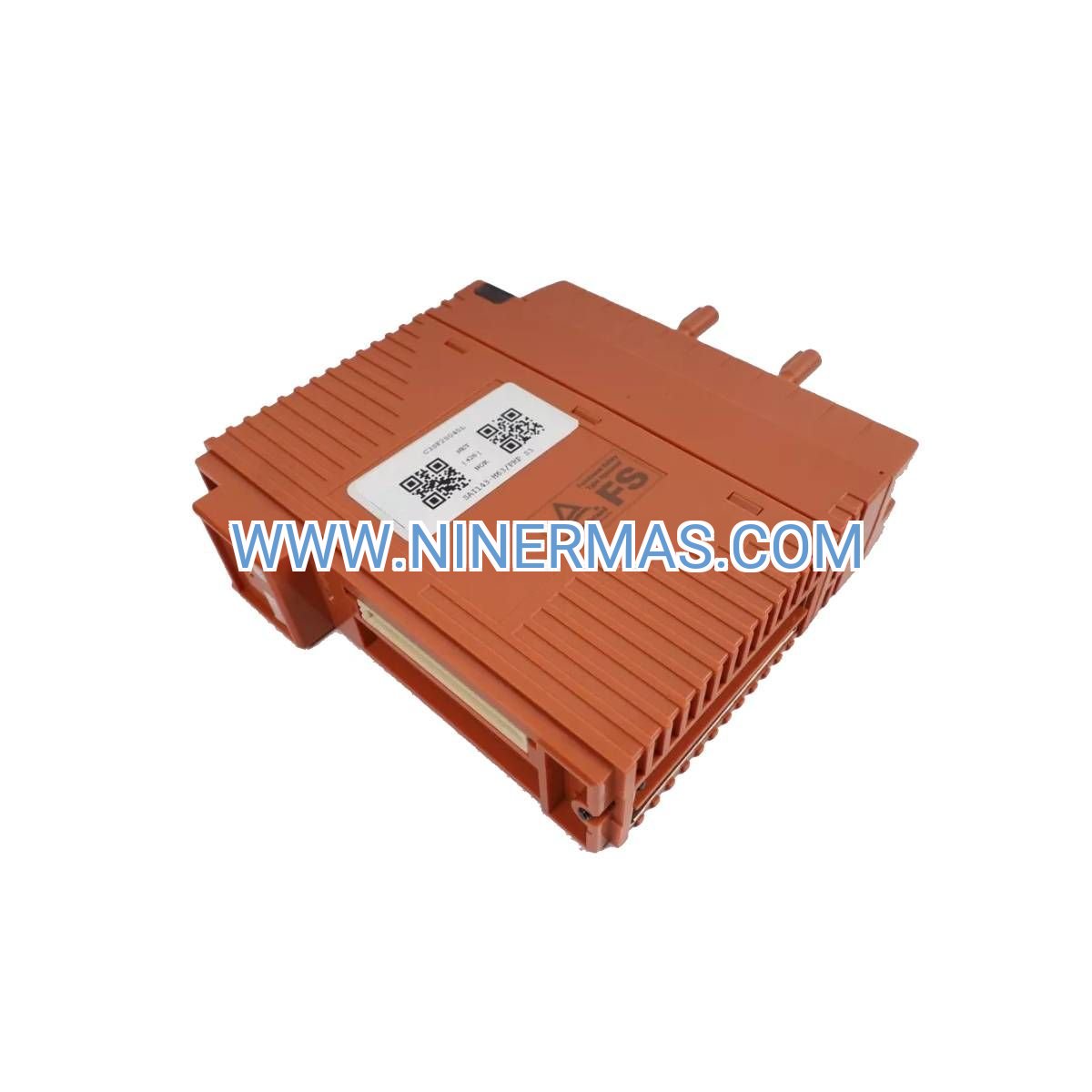
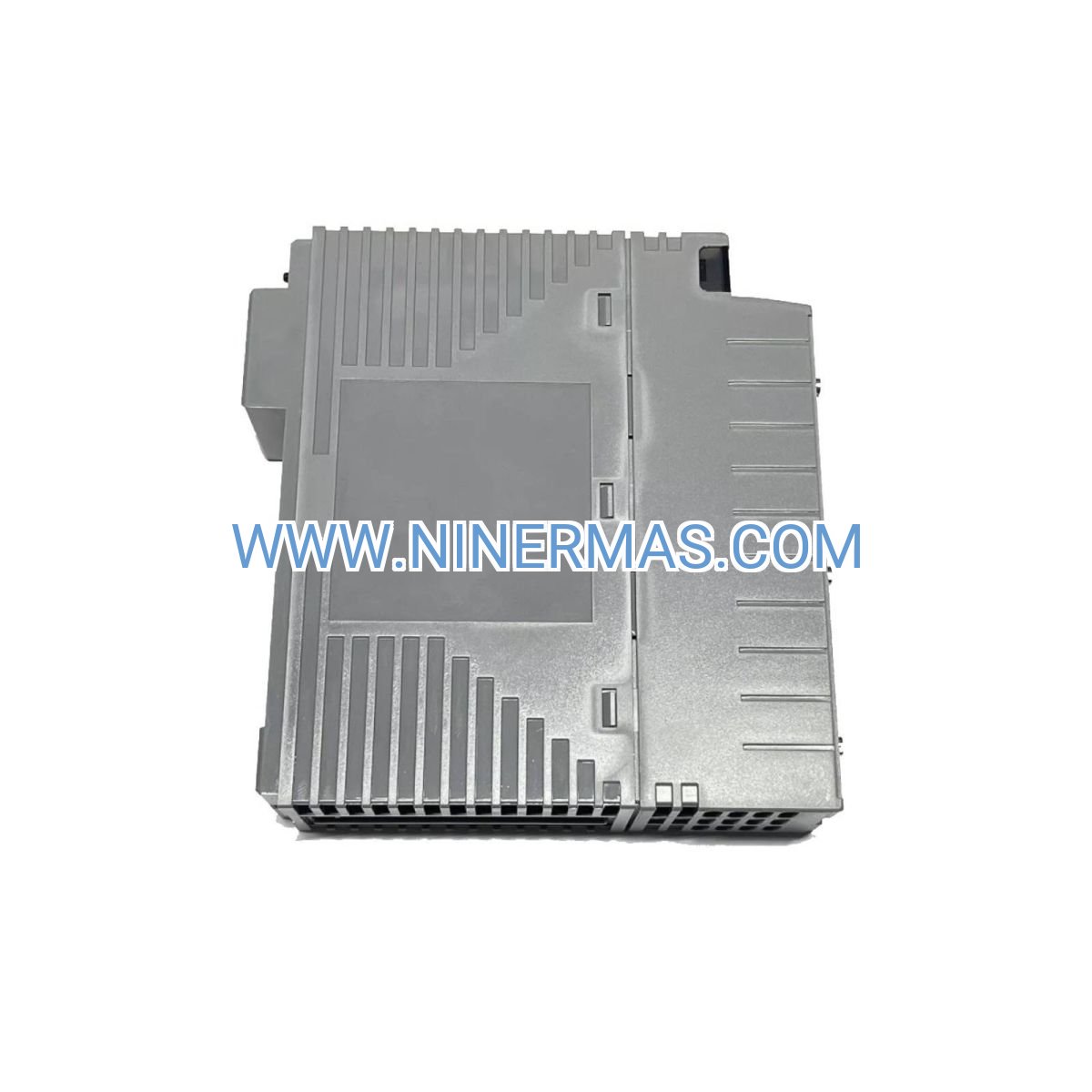
DI885 Digital Input Module (Industrial-Grade SOE Event Recorder)
The ABB DI885 (Part No. 3BSE013088R1) represents a specialized class of digital input technology engineered for applications where understanding when events occur is as critical as knowing what happened. This 8-channel module combines standard digital input functionality with high-resolution Sequence of Events (SOE) recording, delivering microsecond-precision time stamps that transform raw alarm data into actionable forensic intelligence for power utilities, process industries, and safety-critical operations.
Designed for integration with ABB 800xA distributed control systems and legacy Advant platforms, the DI885 addresses a fundamental challenge in complex automation environments: reconstructing the exact chronology of cascading events during system disturbances, equipment failures, or emergency shutdowns. Where conventional I/O modules simply report current states, this module captures the temporal relationships between events—critical data for root cause analysis, regulatory compliance, and protection system validation.
With dual-voltage capability (24/48V DC), extended temperature ratings (-25°C to +70°C), and compatibility with multiple termination unit families (TU810/812/814/830), the DI885 delivers deployment flexibility across diverse industrial environments while maintaining the reliability standards demanded by mission-critical applications.
Core Features & Benefits
→ Microsecond-Resolution Event Time-Stamping
Captures digital input state changes with sub-millisecond precision, enabling forensic reconstruction of event sequences that occur within fractions of a second—essential for analyzing power system faults, turbine trips, and safety system activations where timing differences of milliseconds determine root causes versus consequential effects.
✓ Dual-Voltage Input Architecture (24/48V DC)
Accommodates both control voltage standards commonly deployed in electrical substations and industrial facilities without requiring external voltage conversion, simplifying system design and reducing component count in mixed-voltage installations.
→ Local Event Buffer with Communication Resilience
Maintains SOE data integrity during network interruptions by buffering events locally until communication restoration, preventing critical event loss during the very disturbances you're trying to analyze—a failure mode that renders many standard I/O systems ineffective for forensic applications.
✓ Hot-Swap Capability in Redundant Configurations
Supports online module replacement when deployed with redundant power architectures, eliminating forced outages for maintenance activities in 24/7 operations where downtime translates directly to production losses or service interruptions.
→ Multi-Termination Unit Compatibility
Interfaces with TU810 (standard screw terminals), TU812 (enhanced isolation), TU814 (spring-clamp for vibration environments), and TU830 (high-voltage isolation) termination units, allowing field wiring infrastructure to be optimized for specific application requirements without changing the I/O module itself.
✓ Extended Industrial Temperature Range
Operates reliably from -25°C to +70°C, supporting installations in unheated enclosures, outdoor cabinets, and harsh industrial environments where commercial-grade electronics would require costly environmental conditioning.
Application Scenarios
Electrical Substation Protection & Automation
Utility substations deploy the DI885 to monitor circuit breaker auxiliary contacts, protective relay trip outputs, and switchgear position indicators. When a transmission line fault triggers multiple protection zones simultaneously, SOE data reveals whether the primary protection operated correctly or if backup systems initiated the trip—critical information for protection coordination studies and equipment maintenance planning. The dual 24/48V capability accommodates both modern microprocessor-based relays (typically 24V) and legacy electromechanical protection systems (often 48V) within the same I/O infrastructure.
Emergency Shutdown (ESD) System Forensics
Chemical plants, refineries, and offshore platforms use the module to track safety instrumented system (SIS) activations. During an emergency shutdown involving dozens of sensors, valves, and interlocks, SOE recording distinguishes the initiating event (e.g., high-pressure sensor trip) from cascading shutdowns (downstream equipment responding to process upsets). This forensic capability reduces investigation time from days to hours, accelerating return-to-service and preventing recurrence through targeted corrective actions.
Rotating Machinery Protection Analysis
Power generation facilities and compressor stations interface turbine protection systems with the DI885 to capture vibration monitor trips, bearing temperature alarms, and overspeed detector activations. When a turbine experiences a rapid shutdown, microsecond-resolution timestamps reveal whether mechanical failure preceded electrical protection activation or vice versa—essential data for warranty claims, insurance investigations, and predictive maintenance program refinement.
Railway Signaling & Interlocking Verification
Transit authorities and freight rail operators monitor track circuits, signal aspects, and point machine confirmations where safety regulations mandate precise event sequence documentation. The DI885's SOE logs provide auditable evidence that safety interlocks operated in the correct order and within specified time windows, supporting regulatory compliance and incident investigation requirements.
Water Treatment & Distribution SCADA
Municipal water systems track pump station alarms, reservoir level switches, and chlorination system status where understanding event chronology helps operators distinguish between equipment malfunctions and normal operational sequences during demand fluctuations or supply interruptions.
Technical Parameters & Selection Guide
| Parameter | Specification | Application Relevance |
|---|---|---|
| Input Channels | 8 digital inputs with SOE | Optimized for critical monitoring points requiring event sequencing |
| Input Voltage | 24/48V DC (auto-sensing) | Supports mixed control voltage installations without external conversion |
| SOE Time Resolution | Sub-millisecond (microsecond-class) | Resolves event sequences in high-speed protection systems |
| Channel Isolation | 50V (channel-to-system) | Provides electrical separation for noise immunity in industrial environments |
| Operating Temperature | -25°C to +70°C | Enables deployment in unheated enclosures and outdoor cabinets |
| Termination Options | TU810/812/814/830 | Allows field wiring optimization for vibration, isolation, or maintenance requirements |
| System Compatibility | 800xA DCS, Advant OCS | Integrates with current and legacy ABB control platforms |
| Dimensions (L×W×H) | 102×45×119 mm | Standard ABB S800 I/O form factor for existing cabinet layouts |
| Weight | 0.3 kg | Lightweight design minimizes structural loading in dense I/O configurations |
Selection Criteria: Choose the DI885 when your application requires forensic-quality event recording rather than simple state monitoring. If you need to answer questions like "Did the backup pump start before or after the primary pump tripped?" or "Which protection zone operated first during the fault?", the SOE capability justifies the premium over standard digital input modules. For applications where only current state matters (e.g., valve position indication without timing requirements), consider cost-optimized alternatives like the DI801 or DI811.
Extended Functions
Configurable Event Filtering: Reduce data storage requirements and focus analysis efforts by configuring the module to time-stamp only significant state changes (e.g., transitions from normal to alarm states) while ignoring routine operational fluctuations. This intelligent filtering prevents SOE buffer overflow in high-event-rate applications without sacrificing visibility into critical events.
System-Wide Time Synchronization: The DI885 synchronizes its event timestamps with the control system's master clock (typically GPS-referenced in utility applications), ensuring that events recorded across distributed I/O networks share a common time reference. This capability enables correlation of events occurring in geographically separated substations or process units—essential for analyzing wide-area disturbances or coordinated equipment failures.
Diagnostic LED Indicators: Termination units provide per-channel status LEDs that visualize input states and module health without requiring software tools, accelerating commissioning activities and enabling rapid troubleshooting during maintenance windows.
Redundant Communication Paths: When deployed in redundant controller configurations, the module maintains SOE data availability even during controller failover events, ensuring continuous forensic data collection during the very system disturbances that trigger redundancy switchovers.
Delivery & Service Assurance
Lead Time: Standard delivery 5-7 business days for in-stock units; custom configurations or large quantities may require 2-3 weeks. Contact our team for expedited shipping options when supporting emergency outage restoration or critical project deadlines.
Warranty Coverage: 12-month manufacturer warranty covering defects in materials and workmanship. Extended warranty programs available for critical spares inventory and long-term service agreements.
Technical Support: Our applications engineering team provides pre-sales consultation for system architecture questions, termination unit selection guidance, and SOE configuration best practices. Post-sales support includes troubleshooting assistance, firmware compatibility verification, and integration support for complex multi-vendor systems.
Documentation Package: Each module ships with installation quick-start guide, termination unit compatibility matrix, and links to full technical manuals. Engineering drawings, GSDML files for PROFIBUS integration, and sample configuration files available upon request.
Frequently Asked Questions
Q: How does SOE recording differ from standard alarm time-stamping in SCADA systems?
A: SCADA alarm timestamps typically reflect when the control system processed the alarm (subject to scan cycle delays and communication latency), while SOE recording captures the precise moment the physical input changed state at the I/O module itself. For events separated by milliseconds, this distinction determines whether your forensic analysis reflects actual equipment behavior or artifacts of system timing.
Q: Can the DI885 interface with non-ABB control systems?
A: The module is designed for ABB 800xA and Advant platforms using proprietary S800 I/O communication protocols. Integration with third-party controllers (Siemens, Rockwell, Schneider) requires protocol gateways or is generally not recommended due to loss of SOE functionality. For multi-vendor environments, consider using the DI885 for critical SOE applications while deploying vendor-native I/O for standard monitoring points.
Q: What is the maximum event rate the module can capture without data loss?
A: The DI885 can reliably capture events occurring at rates up to several hundred events per second across all channels, with local buffering preventing loss during communication interruptions. Actual sustainable rates depend on network loading and controller processing capacity. For applications expecting sustained high event rates (e.g., vibration monitoring), consult with ABB applications engineering to validate system architecture.
Q: How do I select between TU810, TU812, TU814, and TU830 termination units?
A: TU810 provides standard screw terminals for general applications; TU812 offers enhanced channel-to-channel isolation for electrically noisy environments; TU814 uses spring-clamp connections recommended for high-vibration installations (rotating machinery, mobile equipment); TU830 delivers the highest voltage isolation for applications requiring enhanced electrical separation. All support the DI885's full SOE functionality.
Q: Is the DI885 suitable for safety instrumented systems (SIS) applications?
A: The DI885 is designed for monitoring and forensic analysis rather than safety-critical control functions. While it can monitor SIS activations for post-event analysis, safety-rated I/O modules certified to IEC 61508 or IEC 61511 should be used for actual safety interlock implementation. The DI885 complements SIS architectures by providing forensic data that validates safety system performance.
Q: What happens to SOE data during power interruptions?
A: The module buffers SOE events in volatile memory, so complete power loss results in loss of unbuffered events. For applications requiring absolute event preservation, deploy the module with uninterruptible power supplies (UPS) or implement redundant I/O configurations where at least one module maintains power during switchover events.
Ready to Enhance Your Event Analysis Capabilities?
Transform alarm floods into actionable intelligence with microsecond-precision event recording. Contact our technical team to discuss your application requirements, validate system compatibility, and configure the optimal termination unit for your installation environment. Whether you're upgrading existing ABB systems or designing new critical monitoring infrastructure, we provide the expertise and genuine components to ensure reliable long-term operation.
Request a technical consultation: Share your I/O count, voltage requirements, and application details for customized recommendations and competitive project pricing.
© 2026 NINERMAS COMPANY LIMITED. All rights reserved.
Original Source: https://ninermas.com
Contact: sale@ninermas.com | +0086 187 5021 5667
PDF Specification
Download PDF file here:
Click to Download PDFRelated products

Contact Info
-
Address:22 / F, South Wo Hang building, 148 Wing Lok Street, Sheung Wan, Western District, Hong Kong
-
Phone:+8618750215667
-
Email:
