Description
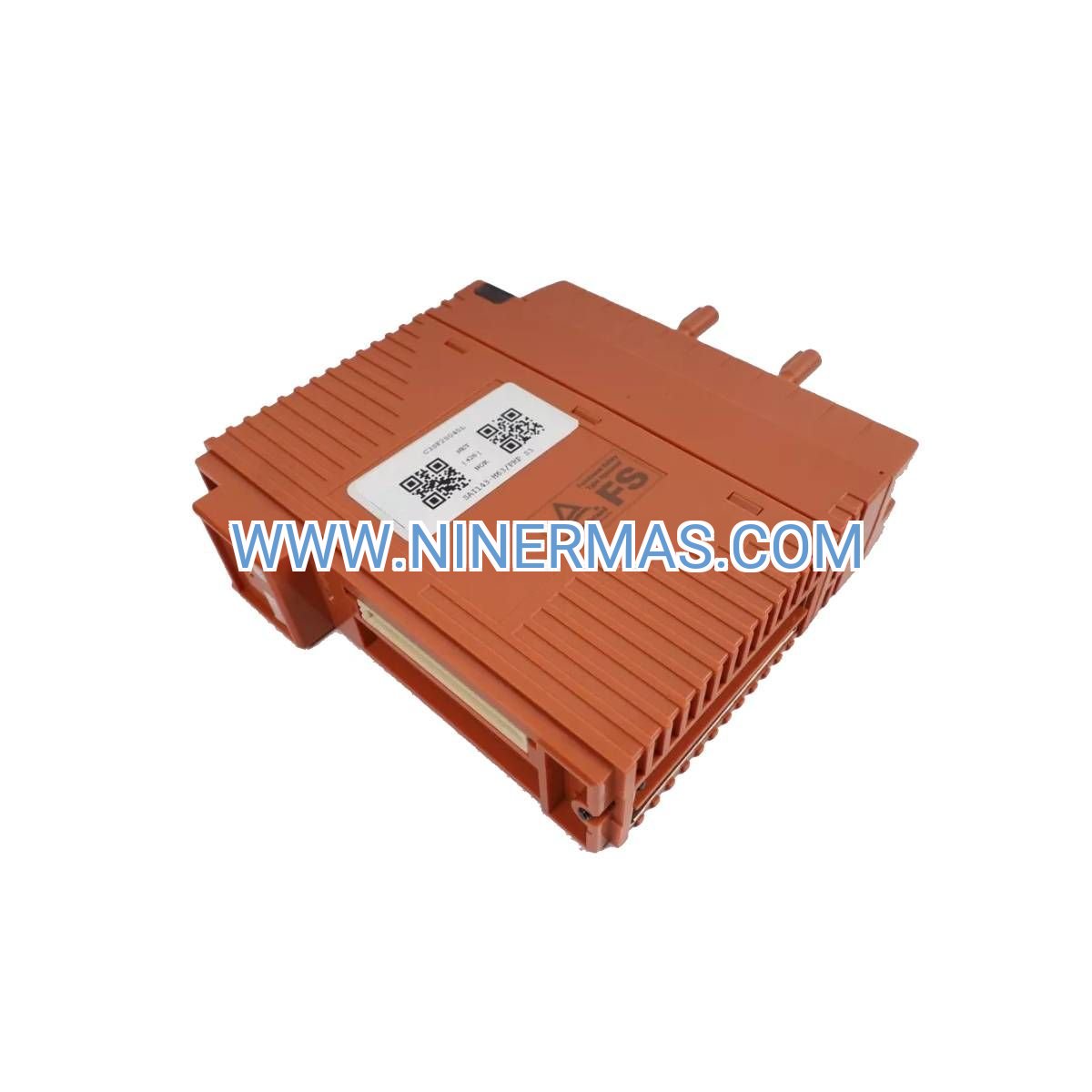
ABB 1VCF751021R802 MODBUS Interface Board (Industrial-Grade Serial Protocol Converter)
The ABB 1VCF751021R802 represents a professional-grade MODBUS communication solution engineered for industrial automation environments demanding reliable serial data exchange. This protocol interface board bridges legacy MODBUS RTU/ASCII networks with modern control architectures, operating on 24 VDC power across extended temperature ranges from -10°C to +60°C. Designed for manufacturing facilities, process control installations, and building automation systems, it delivers galvanically isolated RS-485 connectivity that withstands electrical noise and harsh industrial conditions.
Industrial operators face persistent challenges integrating multi-vendor equipment across factory floors—incompatible protocols, signal degradation over distance, and electrical interference compromise system reliability. The 1VCF751021R802 addresses these pain points through robust isolation technology, configurable communication parameters, and support for up to 247 networked devices on a single bus segment. Whether retrofitting legacy machinery or deploying new distributed I/O architectures, this interface board ensures seamless data flow between PLCs, variable frequency drives, HMI panels, and SCADA supervisory systems.
Key differentiators include rapid DIP-switch configuration eliminating custom programming, LED diagnostic indicators for real-time troubleshooting, and surge protection safeguarding connected equipment. With proven performance in automotive assembly lines, water treatment plants, and energy management networks, the ABB 1VCF751021R802 delivers the reliability industrial operations demand.
Core Features & Industrial Benefits
✓ Dual-Protocol Flexibility: Native support for both MODBUS RTU and MODBUS ASCII protocols enables integration with diverse equipment ecosystems without protocol converters, reducing system complexity and potential failure points.
→ Extended Network Reach: RS-485 physical layer supports cable runs up to 1200 meters at optimized baud rates, eliminating costly repeater installations in large facilities while maintaining signal integrity across production zones.
✓ Galvanic Isolation Protection: 2500 VAC isolation barrier prevents ground loop currents and electrical noise propagation, protecting sensitive control equipment from voltage spikes common in motor-driven environments.
→ Wide Operating Temperature Range: -10°C to +60°C operational capability ensures reliable performance in unheated warehouses, outdoor enclosures, and thermally challenging industrial settings without auxiliary cooling.
✓ Multi-Device Network Capacity: Address up to 247 MODBUS slave devices on a single network segment, supporting complex distributed control architectures with centralized data acquisition and minimal wiring infrastructure.
→ Tool-Free Configuration: DIP switch and software-based parameter setup streamlines commissioning—adjust slave addresses, baud rates (1200-115200 bps), parity, and data bits without specialized programming tools or vendor software licenses.
Typical Application Scenarios
Manufacturing Execution Systems (MES): Automotive assembly plants deploy the 1VCF751021R802 to aggregate real-time production data from robotic welding cells, conveyor systems, and quality inspection stations. The board's multi-drop capability consolidates 50+ MODBUS devices onto a single RS-485 backbone, feeding production metrics to MES platforms for OEE analysis and predictive maintenance scheduling. Galvanic isolation prevents electrical noise from high-current welding equipment from corrupting data transmissions.
Building Energy Management: Commercial HVAC contractors integrate this interface board to connect legacy chiller controllers, boiler systems, and air handling units into modern BACnet/IP building management systems. The MODBUS-to-Ethernet gateway architecture enables centralized monitoring of energy consumption across 100,000+ sq ft facilities, delivering 15-25% utility cost reductions through optimized scheduling and demand response participation.
Water & Wastewater Treatment: Municipal utilities utilize the 1VCF751021R802 to network remote pump stations, flow meters, and chemical dosing systems across treatment plants spanning multiple acres. The extended 1200-meter cable distance eliminates fiber optic conversion costs, while the -10°C to +60°C rating ensures year-round operation in outdoor enclosures. Real-time SCADA integration enables operators to respond to process upsets within seconds rather than minutes.
Process Control & Batch Manufacturing: Chemical processing facilities employ this board to interface third-party analytical instruments (pH meters, conductivity sensors, spectrophotometers) with DCS platforms. The configurable baud rate and protocol settings accommodate instruments from multiple vendors, while surge protection guards against transient voltages from nearby motor starters and solenoid valves.
Renewable Energy Monitoring: Solar farm operators deploy the interface to collect performance data from string inverters, weather stations, and tracker controllers distributed across multi-megawatt installations. The 247-device addressing capacity supports large-scale arrays, feeding production analytics to asset management platforms for performance ratio calculations and warranty claim documentation.
Technical Parameters & Selection Guide
| Parameter | Specification | Notes |
|---|---|---|
| Power Supply | 24 VDC nominal (±20%) | Typical consumption: 2-3W |
| Protocol Support | MODBUS RTU, MODBUS ASCII | Auto-detection available on select firmware |
| Physical Interface | RS-485 half-duplex | 2-wire or 4-wire configurations |
| Baud Rate Range | 1200 to 115200 bps | Configurable via DIP switch or software |
| Data Format | 7/8 data bits, None/Even/Odd parity, 1/2 stop bits | Matches legacy equipment requirements |
| Network Capacity | Up to 247 MODBUS slave addresses | Practical limit: 32 devices per segment |
| Cable Distance | Up to 1200 meters (RS-485) | Use ≤19200 bps for distances >500m |
| Isolation Voltage | 2500 VAC galvanic isolation | Protects against ground loops |
| Operating Temperature | -10°C to +60°C | Storage: -40°C to +85°C |
| Humidity Range | 5% to 95% RH (non-condensing) | Conformal coating recommended for harsh environments |
| Mounting Options | 35mm DIN rail or panel mount | Compact footprint: ~90mm width |
| Diagnostic LEDs | Power, TX, RX, Error status | Simplifies commissioning and troubleshooting |
Selection Criteria: Choose the 1VCF751021R802 when your application requires MODBUS RTU/ASCII protocol support over RS-485 physical media with galvanic isolation. For Ethernet-based MODBUS TCP applications, consider ABB's CI868 series communication modules. If your network exceeds 32 devices or 1200 meters, implement RS-485 repeaters at 1000-meter intervals or transition to fiber optic media converters for extended reach. Verify that your 24 VDC power supply provides adequate current capacity—budget 150mA per board plus connected device loads.
Extended Functions & Integration Capabilities
IoT Gateway Integration: Pair the 1VCF751021R802 with industrial IoT gateways (e.g., Moxa, Advantech, Siemens) to bridge MODBUS serial networks to cloud platforms like AWS IoT Core, Azure IoT Hub, or ThingWorx. This architecture enables remote monitoring, predictive analytics, and mobile dashboards without replacing existing field devices.
Protocol Translation: Deploy alongside protocol converters to translate MODBUS RTU data into BACnet MS/TP, Profibus DP, or EtherNet/IP formats, enabling multi-protocol system integration in brownfield installations where equipment replacement is cost-prohibitive.
Redundancy Configurations: Implement dual-board architectures with automatic failover for mission-critical applications. Configure primary and backup boards with identical slave addresses, using external watchdog circuits to switch communication paths upon primary board failure.
Custom Firmware Options: ABB offers application-specific firmware variants supporting extended register maps, custom function codes, or proprietary protocol extensions. Contact technical support for evaluation of custom firmware feasibility for high-volume OEM applications.
Delivery Timeline & Service Guarantees
Standard Lead Time: In-stock units ship within 1-2 business days via express courier (DHL, FedEx, UPS). Typical delivery to North America, Europe, and Asia-Pacific regions: 3-7 business days from order confirmation.
Custom Configuration Lead Time: Boards requiring pre-programmed firmware, custom labeling, or factory testing: 10-15 business days. Volume orders (25+ units) may qualify for expedited production scheduling.
Warranty Coverage: Each ABB 1VCF751021R802 includes a comprehensive 12-month manufacturer warranty covering defects in materials and workmanship. Warranty includes advance replacement service—receive a replacement board before returning the defective unit to minimize downtime.
Technical Support Services: Access to ABB-certified application engineers for network design consultation, protocol troubleshooting, and integration guidance. Support channels include email (24-hour response SLA), phone hotline (business hours), and remote diagnostic sessions via TeamViewer or AnyDesk.
Documentation Package: Each shipment includes installation manual, quick-start guide, wiring diagrams, MODBUS register map, and configuration software (Windows-compatible). Downloadable resources include AutoCAD DXF mechanical drawings, 3D STEP models for panel design, and sample PLC ladder logic for common integration scenarios.
Frequently Asked Questions
Q: What cable specifications are recommended for RS-485 networks with this MODBUS interface board?
A: Use twisted-pair cable rated for RS-485 applications—minimum 24 AWG (0.5mm²) with characteristic impedance of 120 ohms. For industrial environments, specify shielded cable (Belden 3105A or equivalent) with drain wire connected to earth ground at one end only. Avoid running RS-485 cables parallel to AC power lines; maintain 300mm separation or use conduit barriers.
Q: How do I determine the optimal baud rate for my MODBUS network configuration?
A: Baud rate selection balances communication speed against cable distance and network reliability. For distances under 100 meters, 115200 bps provides maximum throughput. Reduce to 57600 bps for 100-500 meter runs, and 19200 bps or lower for 500-1200 meter installations. Higher baud rates increase susceptibility to electrical noise—conduct site surveys in electrically noisy environments before finalizing settings.
Q: Can this board operate as a MODBUS master controller or only as a slave device?
A: The 1VCF751021R802 firmware configuration determines master/slave capability. Standard versions typically function as slave devices responding to master queries. Master/client functionality requires specific firmware variants—consult ABB technical support with your application requirements to verify availability and ordering codes for master-capable versions.
Q: What termination resistors are required for reliable RS-485 communication?
A: Install 120-ohm, ¼-watt termination resistors at both physical ends of the RS-485 bus (not at each device). Many industrial installations use switchable termination via DIP switches or jumpers for flexible network topology during commissioning. Verify termination with a multimeter—measure 60 ohms across the A/B terminals with all devices powered off (two 120-ohm resistors in parallel).
Q: How many devices can realistically connect to a single MODBUS network using this interface?
A: While MODBUS protocol supports 247 slave addresses (1-247), practical network performance degrades beyond 32 devices due to bus loading and collision probability. For larger installations, segment the network into multiple RS-485 buses using separate interface boards or implement MODBUS TCP gateways to aggregate multiple serial segments onto Ethernet backbones.
Q: Does the board support remote firmware updates or configuration changes?
A: Configuration changes (baud rate, slave address, protocol mode) typically require physical access to DIP switches or connection via configuration software and USB/serial adapter. Remote firmware updates are not standard but may be available through custom engineering services for OEM applications requiring field-upgradeable functionality.
Ready to Integrate Industrial MODBUS Communication?
The ABB 1VCF751021R802 MODBUS interface board delivers the reliability, flexibility, and performance industrial automation systems demand. Whether you're retrofitting legacy equipment, expanding distributed I/O networks, or integrating multi-vendor control architectures, this protocol converter provides proven connectivity solutions.
Contact our automation specialists today: Share your network topology, device count, and environmental requirements to receive application-specific recommendations, wiring diagrams, and integration support. Volume pricing available for system integrators and OEM partners.
© 2026 NINERMAS COMPANY LIMITED. All rights reserved.
Original Source: https://ninermas.com
Contact: sale@ninermas.com | +0086 187 5021 5667
Related products

Contact Info
-
Address:22 / F, South Wo Hang building, 148 Wing Lok Street, Sheung Wan, Western District, Hong Kong
-
Phone:+8618750215667
-
Email: