Description
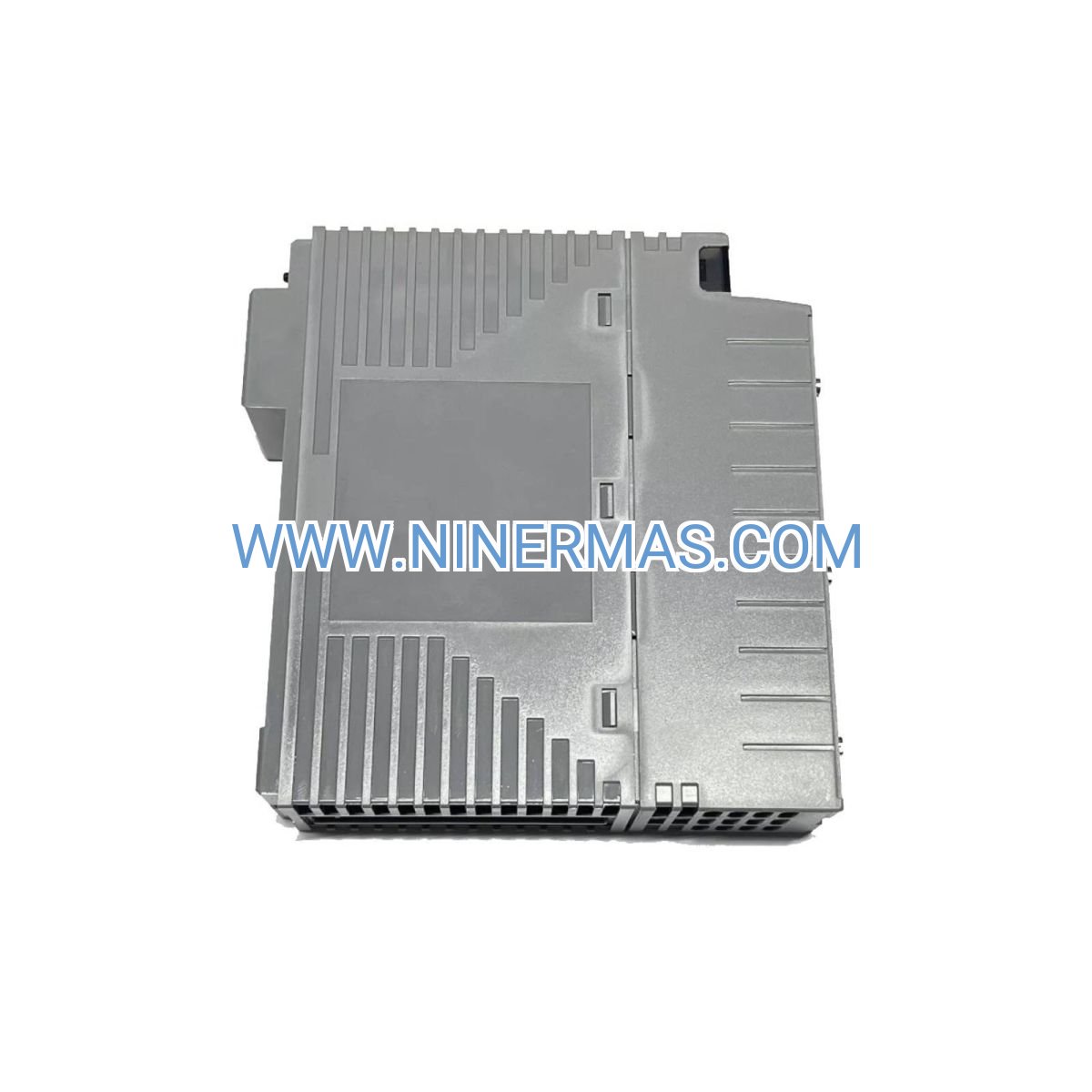
Emerson Ovation 8-Channel RTD Temperature Module (Industrial-Grade Precision)
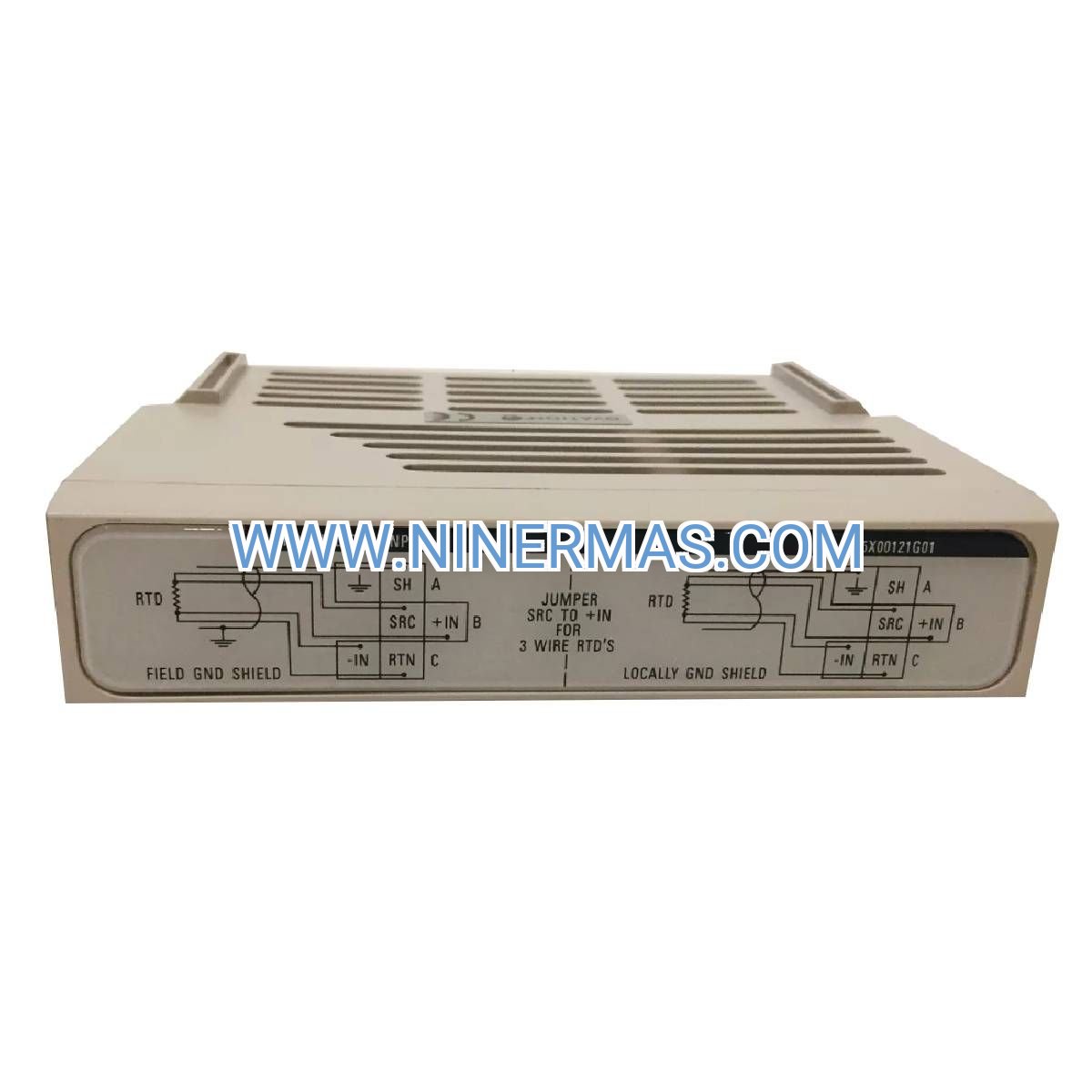
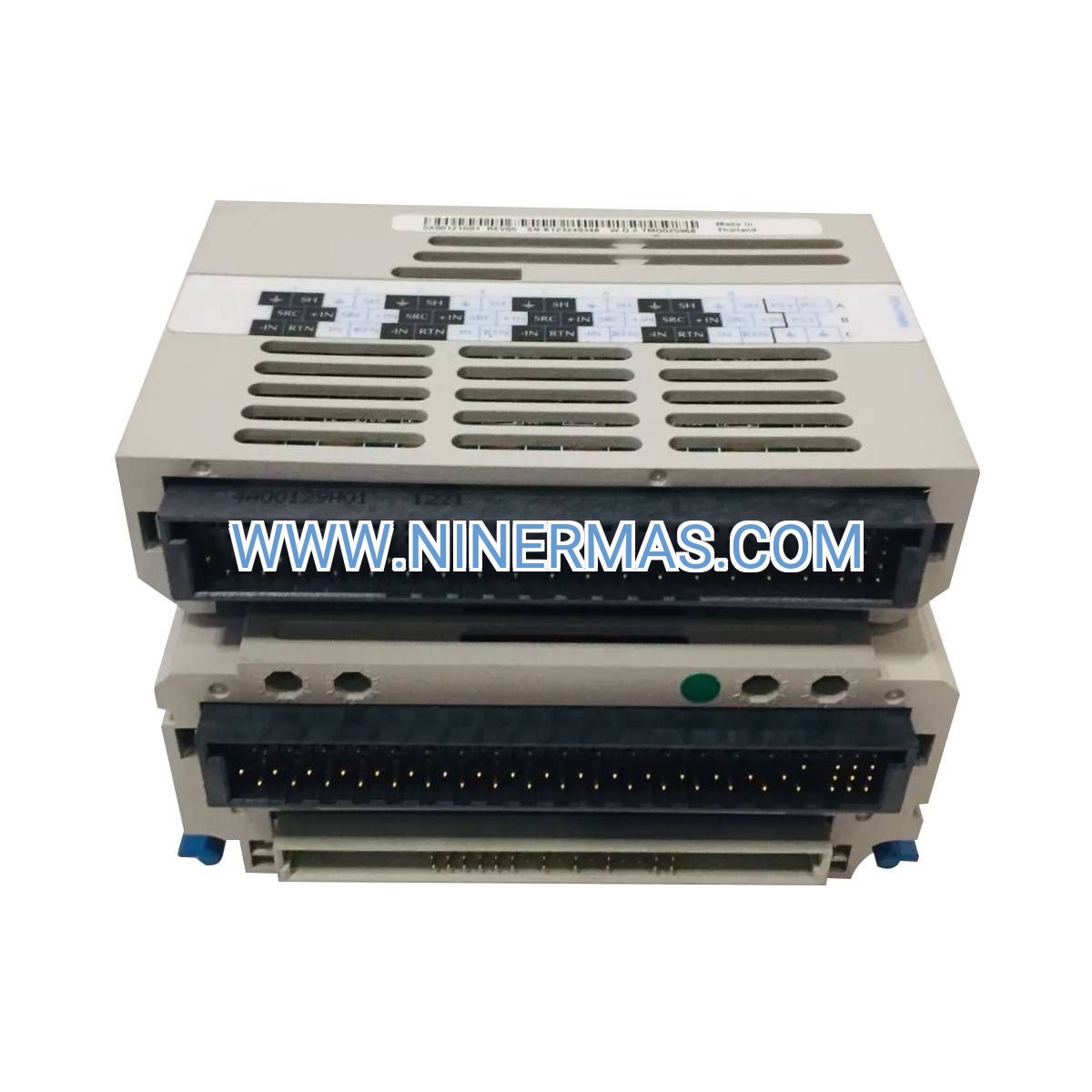
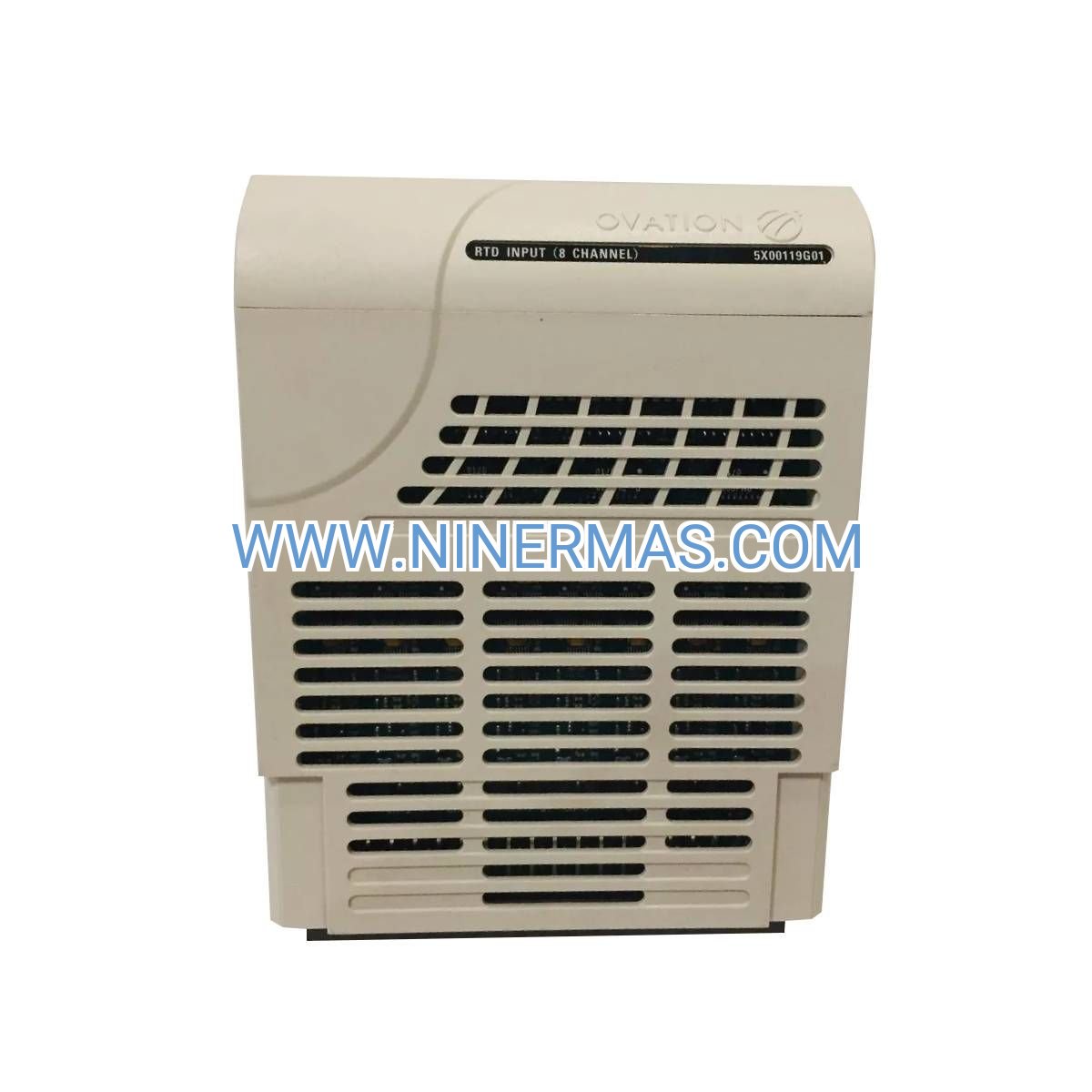
The 5X00119G01 + 5X00121G01 represents a professional-grade RTD temperature acquisition system engineered for Emerson Ovation distributed control platforms. This dual-component solution integrates an eight-input signal processor with field-mountable terminal hardware, delivering laboratory-grade thermal measurement accuracy in demanding industrial environments. Designed for applications where temperature deviations of even 0.5°C can compromise product quality, equipment integrity, or operational safety, this module serves as the critical interface between process sensors and control logic.
Target users include instrumentation engineers in power generation facilities, process control specialists in chemical manufacturing, and automation technicians managing thermal-critical operations in metals processing, pharmaceutical production, and food & beverage industries. The system addresses three fundamental challenges: eliminating measurement drift in high-EMI environments, maintaining calibration accuracy across wide ambient temperature swings, and providing fail-safe diagnostics for sensor integrity monitoring.
Key advantages include multi-sensor compatibility (Pt100/Pt1000/Ni/Cu configurations), automatic lead resistance compensation for long cable runs, built-in galvanic isolation preventing ground loop interference, and SIL 2 functional safety certification enabling deployment in safety instrumented systems. The spring-clamp terminal design reduces installation time by 40% compared to screw-terminal alternatives while ensuring vibration-resistant connections in high-shock environments.
Core Features & Benefits
✓ Eight Independent RTD Input Channels
Simultaneous monitoring of multiple temperature zones eliminates the need for channel multiplexing, providing real-time thermal profiling across reactor vessels, heat exchanger sections, or turbine bearing assemblies. Business value: Reduces hardware costs by consolidating eight single-channel modules into one compact unit.
✓ Universal Sensor Compatibility
Supports Pt100, Pt1000, Ni100, Ni1000, Cu10, and Cu50 RTDs in 2-wire, 3-wire, or 4-wire configurations without hardware modifications. Business value: Protects existing sensor investments during control system upgrades and simplifies spare parts inventory management.
✓ ±0.3°C Measurement Accuracy at Reference Conditions
Achieves pharmaceutical-grade precision suitable for GMP-compliant temperature validation, meeting FDA 21 CFR Part 11 requirements for electronic records. Business value: Eliminates costly batch rejections due to out-of-specification thermal excursions.
✓ Automatic Lead Resistance Compensation (3-Wire/4-Wire)
Compensates for up to 100Ω per lead, maintaining accuracy in installations with 500+ meter cable runs between sensors and control cabinets. Business value: Enables centralized I/O architecture in large facilities, reducing field junction box requirements.
✓ 1500VAC Channel-to-System Isolation
Protects control system electronics from transient voltage spikes, ground potential differences, and electromagnetic interference in high-power industrial environments. Business value: Prevents nuisance trips and extends mean time between failures (MTBF) to >150,000 hours.
✓ Comprehensive Sensor Fault Diagnostics
Detects open circuits, short circuits, and out-of-range conditions with configurable alarm outputs, triggering maintenance notifications before measurement failures impact process control. Business value: Shifts maintenance strategy from reactive to predictive, reducing unplanned downtime by 60%.
Application Scenarios
→ Steam Turbine Protection Systems (Power Generation)
Scenario: Monitoring bearing metal temperatures in 500MW combined-cycle gas turbines where bearing failures can cause $15M+ in damage and 6-month outages.
Pain point addressed: Legacy systems lack redundancy and SIL-rated diagnostics required by NERC reliability standards.
Value delivered: Dual-redundant configuration with automatic failover meets SIL 2 requirements, enabling turbine operation at higher load factors while maintaining protection system integrity.
→ Polymerization Reactor Temperature Control (Chemical Manufacturing)
Scenario: Controlling exothermic reactions in continuous polyethylene production where runaway reactions can exceed safe temperature limits in under 90 seconds.
Pain point addressed: Slow sensor response times and measurement lag prevent early detection of thermal excursions.
Value delivered: 4 samples/second acquisition rate with adaptive filtering enables feed-forward control strategies, reducing batch-to-batch variability by 35%.
→ Heat Treatment Furnace Profiling (Aerospace Metals)
Scenario: Verifying temperature uniformity across 12-zone furnaces processing titanium alloy components for aircraft landing gear.
Pain point addressed: Manual thermocouple profiling requires production shutdowns and provides only snapshot data.
Value delivered: Permanent eight-zone monitoring with data logging enables continuous process validation, supporting AS9100 quality management system requirements.
→ Pharmaceutical Lyophilization Cycle Monitoring
Scenario: Tracking shelf temperatures during freeze-drying of biologics where temperature deviations compromise product stability and efficacy.
Pain point addressed: Existing systems lack the accuracy and documentation required for FDA process validation.
Value delivered: ±0.3°C accuracy with factory-traceable calibration certificates supports IQ/OQ/PQ validation protocols, accelerating regulatory approval timelines.
Technical Parameters & Selection Guide
| Parameter | Specification |
|---|---|
| Input Channels | 8 differential RTD inputs |
| Sensor Types | Pt100, Pt1000, Ni100, Ni1000, Cu10, Cu50 |
| Wiring Configurations | 2-wire, 3-wire, 4-wire |
| Temperature Range | -200°C to +850°C (sensor-dependent) |
| Accuracy | ±0.3°C @ 0°C, ±0.5°C full span |
| Resolution | 0.01°C (16-bit ADC) |
| Sampling Rate | 4 samples/sec/channel |
| Lead Resistance Compensation | Up to 100Ω per lead (3/4-wire) |
| Isolation | 1500VAC channel-to-system, 500VAC channel-to-channel |
| Operating Temperature | -40°C to +70°C |
| Power Consumption | 4.5W typical, 6W maximum |
| MTBF | >150,000 hours @ 40°C |
| Safety Certification | SIL 2 per IEC 61508 |
| Hazardous Area Approvals | ATEX, IECEx Zone 2, Class I Div 2 |
Selection Criteria: Choose 3-wire RTD connections for installations with cable runs under 300 meters where moderate accuracy (±0.5°C) is acceptable. Specify 4-wire configurations for precision applications requiring ±0.3°C accuracy or cable runs exceeding 300 meters. For safety instrumented systems, deploy dual-redundant modules with 1oo2 voting logic to achieve SIL 3 capability. Consult factory application engineers for installations in Class I Division 1 hazardous areas requiring intrinsically safe barriers.
Extended Functions
IoT Integration & Remote Diagnostics: The module supports OPC UA connectivity through Emerson's DeltaV Distributed Control System gateway, enabling cloud-based analytics platforms to access real-time temperature data for predictive maintenance algorithms. Machine learning models can identify sensor drift patterns 30-60 days before calibration failures occur.
Advanced Alarming: Configure multi-stage alarm thresholds (warning/high/high-high) with independent time delays and hysteresis bands. Alarm outputs can trigger email notifications, SMS alerts, or automated control actions such as feed rate reductions or emergency cooling system activation.
Customization Options: Factory-configurable options include extended temperature range calibration (-200°C to +850°C), conformal coating for corrosive atmospheres (NEMA 4X/IP66 equivalent), and custom terminal block labeling for plant-specific sensor identification schemes. Minimum order quantities apply for custom configurations.
Delivery & Service Assurance
Lead Time: Standard configurations ship within 3-5 business days from regional distribution centers in North America, Europe, and Asia-Pacific. Custom-configured modules require 4-6 weeks for factory programming and extended testing. Expedited delivery available for critical outage situations (additional charges apply).
Warranty: 24-month manufacturer's warranty covering defects in materials and workmanship. Extended warranty programs available offering 5-year coverage with advance replacement service and on-site failure analysis.
Technical Support: Access to Emerson's 24/7 global support hotline staffed by certified control system engineers. Support includes configuration assistance, troubleshooting guidance, firmware updates, and integration consulting for complex multi-vendor system architectures.
Documentation Package: Each module ships with installation manual, quick-start guide, wiring diagrams, dimensional drawings (DWG/PDF formats), calibration certificate traceable to NIST/ITS-90 standards, and configuration file templates for Ovation Developer Studio. Online resources include video tutorials, application notes, and interoperability matrices.
Frequently Asked Questions
Q: What interface protocols does this RTD module support for integration with third-party SCADA systems?
A: The module communicates via Emerson's proprietary IONET network protocol within the Ovation DCS architecture. For third-party integration, data is accessible through OPC DA/UA servers, Modbus TCP gateways, or DNP3 protocol converters. Direct fieldbus connectivity (FOUNDATION Fieldbus, PROFIBUS) is not supported—integration requires Ovation controller intermediaries.
Q: Can this module handle the full -200°C to +850°C range simultaneously across all eight channels?
A: The module's electronics support the full range, but practical limits depend on RTD sensor specifications. Pt100 sensors typically cover -200°C to +600°C, while specialized high-temperature Pt100 variants extend to +850°C. You can mix sensor types across channels—for example, channels 1-4 monitoring cryogenic processes (-200°C to 0°C) while channels 5-8 track furnace temperatures (+400°C to +850°C).
Q: What energy efficiency improvements does this module offer compared to legacy analog systems?
A: The module consumes 4.5W typical versus 12-15W for equivalent relay-based analog input cards, reducing panel cooling requirements by approximately 65%. In a typical 200-point temperature monitoring system, this translates to 1,500 kWh annual energy savings and 15% reduction in HVAC load for control room air conditioning.
Q: Are there specific installation requirements for mounting this module in high-vibration environments?
A: The module meets IEC 60068-2-6 vibration resistance (10-150 Hz, 1g acceleration) when installed in standard Ovation card racks with proper retention hardware. For extreme vibration environments (reciprocating compressor skids, mobile equipment), specify shock-mount card rack assemblies and use flexible conduit for field wiring connections. Avoid mounting near variable frequency drives or large contactors without EMI shielding.
Q: Does the module support remote calibration verification without removing it from service?
A: Yes, the built-in self-calibration feature uses precision reference resistors to verify measurement accuracy without external equipment. Automated verification routines can run during scheduled maintenance windows (typically 15 minutes per module) while the system remains online. For full NIST-traceable calibration, modules must be removed and returned to authorized calibration laboratories—recommended interval is 24 months for non-critical applications, 12 months for SIL-rated safety systems.
Q: What is the maximum cable distance between the RTD sensors and this input module?
A: With 4-wire RTD configurations, cable runs up to 1,000 meters are feasible while maintaining ±0.5°C accuracy, assuming shielded twisted-pair cable (18 AWG minimum) and proper grounding practices. For 3-wire configurations, limit runs to 500 meters to keep lead resistance errors within acceptable bounds. Installations exceeding these distances should consider field-mounted temperature transmitters with 4-20mA outputs instead of direct RTD wiring.
Take the Next Step
Ready to upgrade your temperature monitoring infrastructure with proven Emerson Ovation technology? Our application engineers are available to review your specific requirements, recommend optimal sensor configurations, and provide detailed integration proposals. Contact us today for a complimentary system assessment and discover how the 5X00119G01 + 5X00121G01 module can enhance your process control accuracy, reduce maintenance costs, and improve operational safety.
Request a quote now: Email sale@ninermas.com or call +0086 187 5021 5667 to speak with a technical specialist.
© 2026 NINERMAS COMPANY LIMITED. All rights reserved.
Original Source: https://ninermas.com
Contact: sale@ninermas.com | +0086 187 5021 5667
Related products

Contact Info
-
Address:22 / F, South Wo Hang building, 148 Wing Lok Street, Sheung Wan, Western District, Hong Kong
-
Phone:+8618750215667
-
Email: