Description
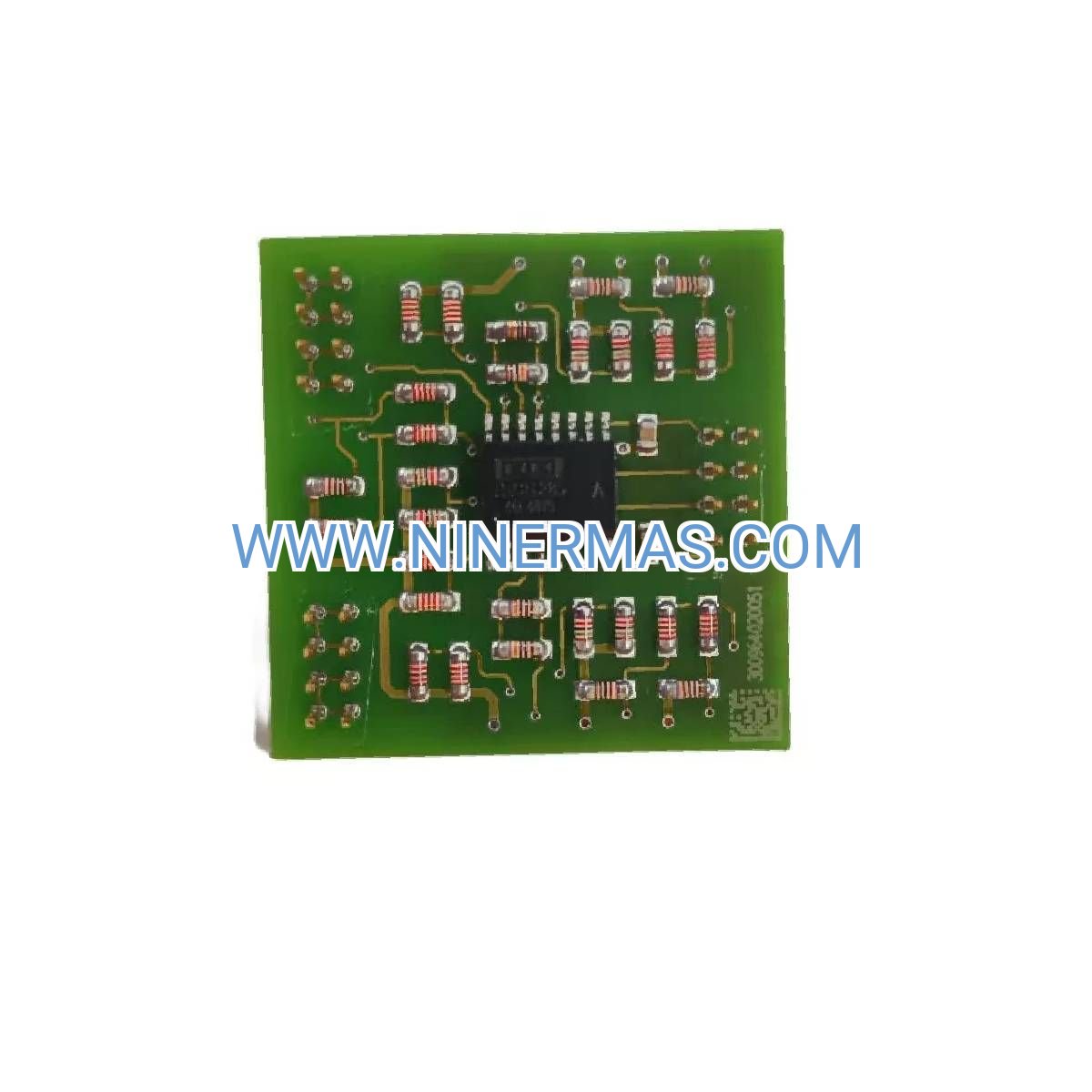
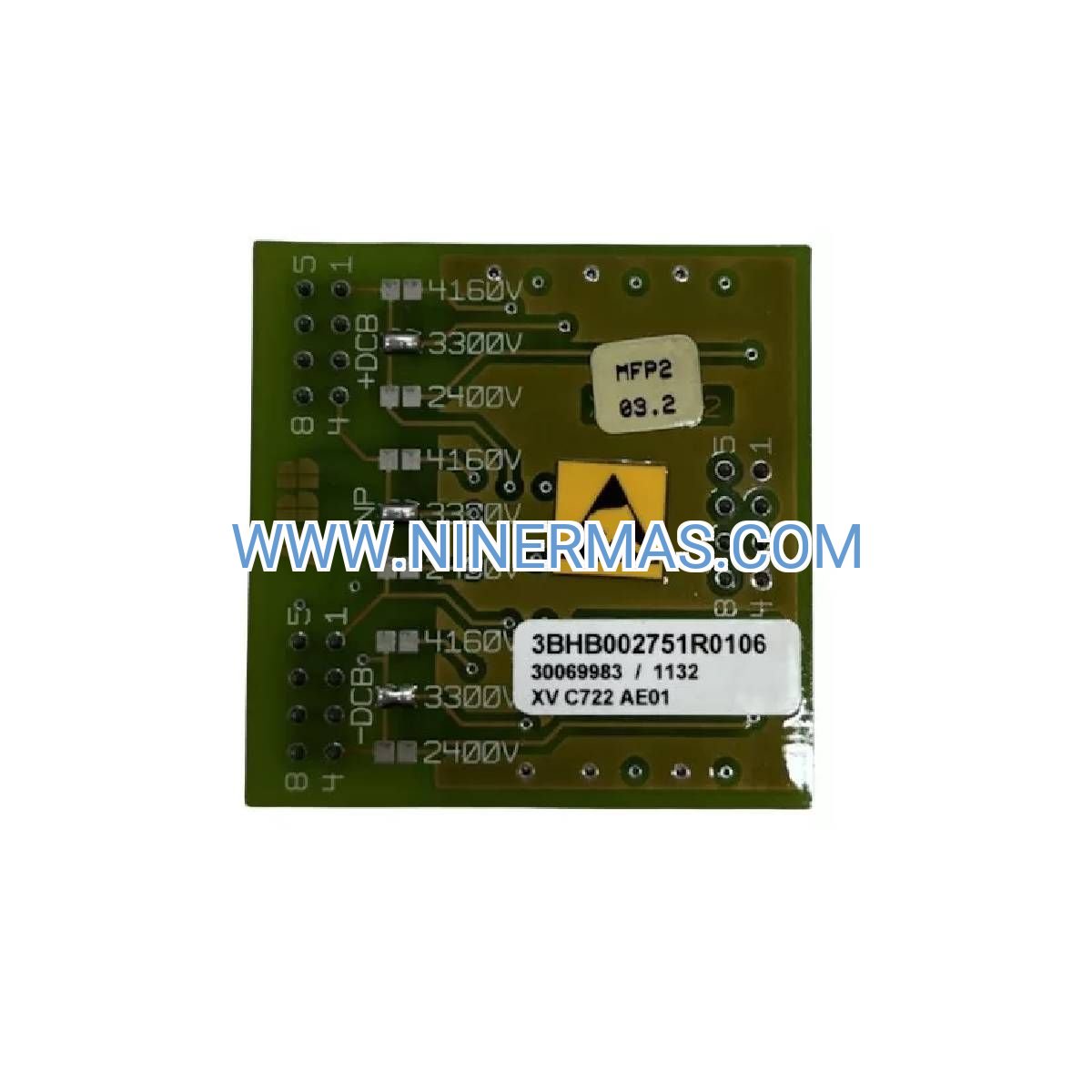
ABB ACS1000 Diode Rectifier Module (Industrial-Grade Power Conversion)
The ABB ACS1000 diode rectifier (P/N: 3BHB002751R0106) represents a proven solution for medium voltage variable frequency drive systems requiring reliable AC-to-DC power conversion. Engineered for continuous industrial operation, this module delivers 200-5000 kW output capacity with configurable 12-pulse or 24-pulse architecture, achieving up to 98% conversion efficiency while maintaining motor current total harmonic distortion below 2%.
Designed for process-critical applications across mining, marine, oil & gas, and power generation sectors, this rectifier addresses the fundamental challenge of efficient, low-harmonic power conversion in medium voltage motor control systems. Target users include plant engineers, electrical contractors, OEM integrators, and maintenance teams managing large-scale rotating equipment.
Key differentiators include flexible transformer integration options (external 1.3-2.3 kV or integrated 2.3-11 kV), superior harmonic performance meeting IEC 61000-2-4 and IEEE 519 standards, and proven reliability in ambient temperatures from 0°C to +50°C with altitude capability up to 5500m ASL. The module's compact footprint and dual cooling options (air/water) enable installation flexibility while minimizing total cost of ownership.
Core Features & Technical Advantages
✓ Multi-Pulse Harmonic Mitigation
12- or 24-pulse diode configuration reduces grid-side harmonic injection to <5% THDv, eliminating costly active filter requirements while ensuring compliance with utility interconnection standards. Business value: Avoid $50K-$200K filter investments and utility penalty fees.
✓ Dual Transformer Architecture
Supports external dry-type transformers (1.3/1.9/2.3 kV input) or factory-integrated units (2.3-11 kV input) with optimized impedance matching for your specific grid voltage. Technical benefit: Single-source procurement with pre-validated electrical integration reduces commissioning time by 40%.
✓ Peak Efficiency Operation
98% conversion efficiency (external transformer) or 96% (integrated) across 25-100% load range translates to 2-4% energy savings versus competing topologies. For a 2 MW drive operating 8000 hrs/year at $0.10/kWh, annual savings exceed $32,000.
✓ Adaptive Cooling Systems
Field-selectable air-cooled (IP21-IP42) or water-cooled (IP31-IP54) configurations accommodate installation environments from dusty mining sites to marine engine rooms. Water cooling reduces acoustic emissions to <70 dB(A) for noise-sensitive applications.
→ Extended Voltage & Frequency Range
Output voltage options from 2.3 kV to 4.16 kV with frequency capability to 82.5 Hz (higher on request) support diverse motor nameplates and overspeed requirements without custom engineering.
→ Proven Industrial Reliability
Thyristor-free diode design eliminates gate driver failures, while oversized thermal management ensures 40°C continuous rating with derating curves to 50°C. MTBF exceeds 200,000 hours in typical process industry duty cycles.
Typical Application Scenarios
1. Mining Ventilation & Material Handling
Scenario: Underground mine main ventilation fans (1500-3000 kW) and overland conveyor drives requiring variable speed control with minimal electrical infrastructure upgrades.
Pain Point Solved: Eliminates need for separate harmonic filters and reduces transformer oversizing, cutting substation costs by 25-35%.
Value Delivered: Energy savings of 30-50% versus fixed-speed operation, plus soft-start capability protects mechanical systems and extends bearing life.
2. Oil & Gas Pipeline Compression
Scenario: Natural gas pipeline compressor stations with 2-5 MW motor drives operating in remote locations with limited grid capacity.
Pain Point Solved: High power factor (>0.95) and low harmonics prevent voltage sag issues affecting adjacent facilities, while water cooling suits hot climates.
Value Delivered: Precise flow control optimizes throughput, reducing compressor cycling and maintenance intervals by 40%.
3. Marine Propulsion & Thruster Systems
Scenario: Dynamic positioning vessels and cruise ships requiring 1-4 MW azimuth thrusters with four-quadrant torque control.
Pain Point Solved: DNV-GL and ABS marine certifications (optional) plus IP54 water-cooled enclosures withstand saltwater environments and vessel vibration.
Value Delivered: Fuel savings of 15-25% through optimized propeller speed matching to sea conditions, plus enhanced maneuverability.
4. Water Treatment & Municipal Pumping
Scenario: High-service pumps (500-2500 kW) in water/wastewater plants requiring energy-efficient flow modulation.
Pain Point Solved: Quiet operation (<75 dB air-cooled) suits urban installations, while high efficiency reduces carbon footprint for sustainability reporting.
Value Delivered: 35-60% energy reduction versus throttle valve control, with payback periods under 18 months.
5. Power Plant Auxiliary Systems
Scenario: Boiler feed pumps, induced draft fans, and cooling tower drives (1-5 MW) in coal, gas, or nuclear generating stations.
Pain Point Solved: Altitude capability to 5500m ASL enables installations in high-elevation plants without derating, while 50/60 Hz compatibility supports global projects.
Value Delivered: Improved plant heat rate through optimized auxiliary load matching, contributing 0.1-0.3% efficiency gain to overall station output.
Technical Parameters & Selection Guide
| Parameter | Specification Range | Selection Notes |
|---|---|---|
| Output Power | 200 - 5000 kW | Match to motor nameplate rating; consult for >5 MW |
| Input Voltage (External Xfmr) | 1.3 / 1.9 / 2.3 kV | Use when existing transformer available |
| Input Voltage (Integrated Xfmr) | 2.3 / 3.3 / 4.16 / 6-6.9 / 10-11 kV | Specify utility primary voltage |
| Output Voltage | 2.3 / 3.3 / 4.0 / 4.16 kV | Must match motor winding voltage ±10% |
| Pulse Configuration | 12-pulse / 24-pulse | 24-pulse for THDi <3%; 12-pulse for <5% |
| Cooling Method | Air / Water | Water for ambient >40°C or noise <70 dB |
| Enclosure Rating | IP21 - IP54 | IP42+ for dusty/wet environments |
| Efficiency | 96% - 98% | External transformer yields +2% efficiency |
| Altitude Capability | Up to 5500m ASL (air) / 4000m (water) | Derating required above 1000m |
Selection Criteria:
- Power Rating: Size rectifier for 110% of motor full-load current to accommodate transient overloads
- Harmonic Limits: Choose 24-pulse if utility Point of Common Coupling (PCC) has strict THD requirements (<3%)
- Transformer Strategy: Integrated transformer reduces footprint by 30% but limits serviceability; external allows independent replacement
- Cooling Selection: Air cooling suits temperate climates (<40°C); water cooling mandatory for tropical installations or enclosed spaces
- Enclosure Grade: Upgrade to IP42/IP54 for coastal, mining, or chemical plant environments with airborne contaminants
Extended Functions & Integration Options
Advanced Control Interfaces:
- Modbus RTU/TCP, PROFIBUS DP, DeviceNet fieldbus connectivity for SCADA/DCS integration
- Analog 4-20mA and digital I/O for legacy PLC interfacing
- Ethernet/IP option enables real-time performance monitoring and predictive maintenance analytics
IoT & Condition Monitoring:
- Optional ABB Ability™ cloud connectivity streams operational data (temperature, current, voltage, efficiency) to centralized dashboards
- Embedded vibration and thermal sensors trigger early-warning alarms 48-72 hours before component failures
- Remote diagnostics capability reduces on-site service calls by 60%
Customization Capabilities:
- Custom paint colors and corrosion-resistant coatings (C4/C5 per ISO 12944) for offshore/marine applications
- Seismic bracing and shock mounts for earthquake zones or mobile installations
- Redundant cooling fans and power supplies for high-availability processes
- Factory acceptance testing (FAT) with customer-witnessed commissioning protocols
Delivery Cycle & Service Guarantee
Lead Times:
- Standard Configurations: 8-12 weeks from order confirmation (air-cooled, common voltages)
- Custom Specifications: 14-18 weeks for non-standard voltages, marine certifications, or special enclosures
- Expedited Service: 6-week fast-track available for critical outage replacements (subject to engineering review)
Warranty & Support:
- Standard Warranty: 24 months from commissioning or 30 months from shipment (whichever occurs first)
- Extended Coverage: Optional 5-year comprehensive warranty with annual preventive maintenance visits
- Technical Support: 24/7 global hotline with 4-hour response SLA for critical failures
- Spare Parts Availability: Guaranteed 15-year parts supply commitment; critical components stocked regionally
Documentation Package:
- Detailed installation manual with foundation drawings and cable termination diagrams
- Commissioning checklist and startup procedure (on-site support available)
- Maintenance schedule with recommended spare parts list
- As-built electrical schematics and control logic documentation
- Compliance certificates (CE, UL, marine class as applicable)
Frequently Asked Questions
Q1: What is the difference between 12-pulse and 24-pulse rectifier configurations for medium voltage drives?
A: 12-pulse rectifiers use two 6-pulse bridges with phase-shifted transformers, achieving 4-6% input current THD. 24-pulse configurations add two more bridges for <3% THD, critical when utility Point of Common Coupling (PCC) has strict harmonic limits (IEEE 519) or when multiple drives share a common bus. The 24-pulse option adds 15-20% to system cost but eliminates active filter requirements.
Q2: Can this rectifier module integrate with existing DCS or PLC control systems?
A: Yes, the ACS1000 supports multiple industrial protocols including Modbus RTU/TCP, PROFIBUS DP, DeviceNet, and Ethernet/IP. Standard I/O includes 4-20mA analog signals for speed reference and feedback, plus configurable digital inputs for start/stop/fault reset. Custom protocol gateways available for legacy systems (e.g., Allen-Bradley DH+, Siemens S5).
Q3: How much energy savings can be achieved compared to fixed-speed motor operation?
A: Energy savings depend on load profile and application. Typical results: centrifugal pumps/fans see 30-60% reduction through affinity law benefits (power scales with speed cubed), conveyors achieve 15-25% savings from optimized speed matching, and compressors gain 20-40% efficiency through inlet guide vane elimination. Payback periods range from 12-36 months based on runtime and electricity costs.
Q4: What are the installation space requirements and foundation specifications?
A: Footprint varies by power rating: 200-500 kW units require approximately 2.5m × 1.5m × 2.2m (W×D×H), while 3-5 MW systems need 4m × 2m × 2.5m. Foundation must support 150-200 kg/m² static load with vibration isolation pads for air-cooled units. Minimum clearances: 1m front access, 0.5m rear, 0.3m sides. Water-cooled versions reduce depth by 30% but require chilled water supply (10-15 L/min at 20-30°C).
Q5: Is remote monitoring and predictive maintenance capability available?
A: Optional ABB Ability™ connectivity enables cloud-based monitoring of 50+ operational parameters including DC bus voltage, rectifier temperature, cooling system status, and power quality metrics. Machine learning algorithms analyze trends to predict component failures 1-3 weeks in advance. Remote diagnostics allow ABB engineers to troubleshoot 70% of issues without site visits, reducing downtime by 40-60%.
Q6: What certifications are required for marine or offshore oil platform installations?
A: Standard units carry CE marking and IEC compliance. Marine applications require classification society approval (DNV-GL, ABS, Lloyd's Register, or Bureau Veritas) - specify during order as this adds 4-6 weeks to lead time and requires type testing. Offshore platforms may need ATEX/IECEx hazardous area certification for Zone 2 locations; consult for Zone 1 requirements which necessitate pressurized enclosures.
Request Technical Consultation & Quotation
Our application engineers are ready to assist with drive system sizing, harmonic analysis, and ROI calculations tailored to your specific process requirements. To expedite your quote, please provide:
- Motor nameplate data (kW, voltage, RPM, service factor)
- Utility supply voltage and available fault current (MVA)
- Load profile (constant torque, variable torque, duty cycle)
- Environmental conditions (ambient temp, altitude, enclosure needs)
- Any special requirements (certifications, communication protocols, seismic)
Contact our industrial drives specialists today:
? Email: sale@ninermas.com
? Phone: +0086 187 5021 5667
? Technical Resources: https://ninermas.com
Typical response time: Technical inquiries answered within 4 business hours | Formal quotations delivered within 48 hours
Related products

Contact Info
-
Address:22 / F, South Wo Hang building, 148 Wing Lok Street, Sheung Wan, Western District, Hong Kong
-
Phone:+8618750215667
-
Email: