Description
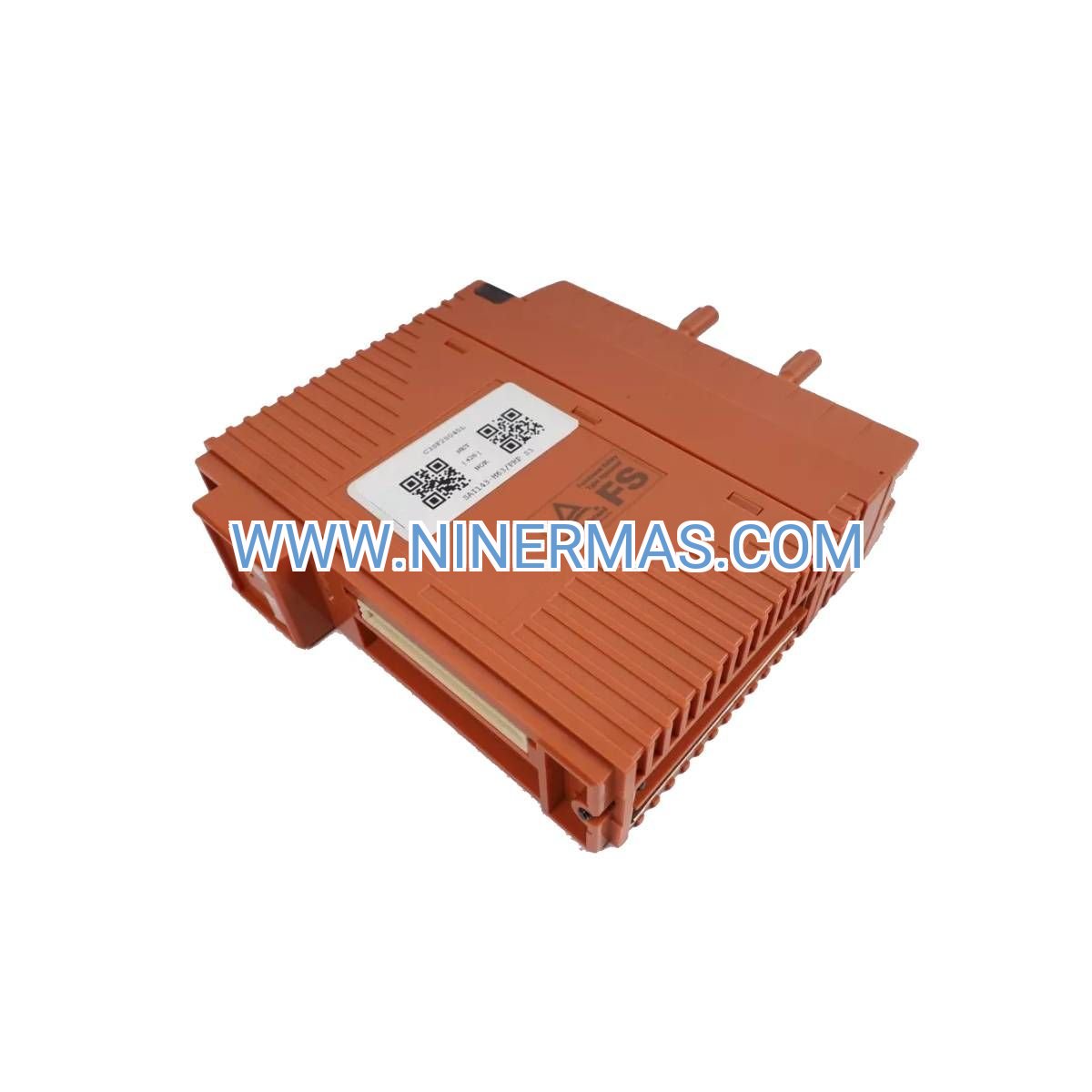
SNB10D-225/CU2T Safety Node Unit (Industrial-Grade SIS Controller)
The SNB10D-225/CU2T represents Yokogawa's advanced safety node architecture for mission-critical Safety Instrumented Systems. Designed for process industries demanding uncompromising reliability, this dual-redundant controller delivers SIL 3-certified protection across oil & gas, chemical processing, power generation, and pharmaceutical facilities. Built on the proven ProSafe-RS platform, it combines fault-tolerant hardware with deterministic safety logic execution to safeguard personnel, assets, and environmental integrity.
Engineered for complex safety applications, the SNB10D-225/CU2T addresses the escalating demands of modern process automation where single-point failures are unacceptable. Target users include safety engineers, instrumentation specialists, and plant managers responsible for emergency shutdown systems, fire & gas detection networks, and high-integrity pressure protection. With its scalable I/O capacity and hot-swappable design, this safety node minimizes lifecycle costs while maximizing operational uptime.
Key differentiators include 99%+ diagnostic coverage, optical fiber ESB bus connectivity for electromagnetic immunity, and seamless integration with CENTUM DCS platforms. The CU2T topology ensures synchronized redundancy across dual communication channels, eliminating common-cause failures that compromise conventional safety systems.
Core Features & Benefits
→ Dual-Redundant Architecture
Fault-tolerant design with automatic failover ensures continuous safety protection during component failures. Business value: Eliminates unplanned shutdowns, reducing production losses by up to $500K annually for mid-sized refineries.
→ SIL 3 Certified Safety Integrity
IEC 61508/61511 certification with proven failure rates (PFDavg < 10⁻⁴) meets the most stringent regulatory requirements. Business value: Accelerates project approvals and reduces insurance premiums through documented risk reduction.
→ Enhanced Safety Bus (ESB) Connectivity
Optical fiber communication delivers deterministic 10ms scan cycles with zero electromagnetic interference. Business value: Enables reliable operation in electrically noisy environments like motor control centers and high-voltage switchyards.
✓ 225 I/O Point Capacity
Supports extensive sensor/actuator networks within a single node, reducing system complexity. Business value: Lowers engineering costs by 30% compared to multi-node architectures requiring additional cabinets and wiring.
✓ Hot-Swappable Maintenance
Replace modules during operation without safety system bypass or production interruption. Business value: Reduces maintenance windows from 8 hours to 15 minutes, preserving production schedules.
✓ Integrated Self-Diagnostics
Continuous health monitoring with predictive failure alerts enables proactive maintenance. Business value: Prevents 95% of unplanned safety system trips through early fault detection.
Application Scenarios
Emergency Shutdown Systems (ESD) - Refinery Crude Units
Deploy the SNB10D-225/CU2T as the primary safety controller for atmospheric distillation units processing 100,000+ barrels per day. The system coordinates 180+ shutdown valves, pump trips, and furnace isolations during overpressure, high-temperature, or toxic gas release scenarios. Pain point addressed: Conventional relay-based ESD systems suffer from contact degradation and unpredictable response times. Value delivered: Guaranteed <500ms shutdown initiation with full audit trails for regulatory compliance.
Fire & Gas Detection - Offshore Production Platforms
Integrate with multi-zone flame detectors and toxic gas sensors across topside modules, living quarters, and subsea control rooms. The safety node executes voting logic (2oo3, 1oo2) and activates deluge systems, HVAC isolation, and mustering alarms. Pain point addressed: False alarms from single-point detection cause unnecessary platform evacuations costing $2M+ per incident. Value delivered: Advanced voting algorithms reduce nuisance trips by 85% while maintaining SIL 3 protection.
Burner Management Systems (BMS) - Power Plant Boilers
Control critical combustion interlocks for 500MW coal-fired boilers, managing air-fuel ratios, flame monitoring, and purge sequences. The SNB10D-225/CU2T prevents explosive fuel accumulation during startup and handles emergency fuel cutoffs during flame failures. Pain point addressed: Legacy BMS controllers lack diagnostic transparency, complicating troubleshooting during forced outages. Value delivered: Real-time diagnostic displays reduce mean-time-to-repair from 6 hours to 45 minutes.
High Integrity Pressure Protection (HIPPS) - Gas Transmission Pipelines
Implement overpressure protection logic for 36-inch transmission lines operating at 1,200 psi, isolating upstream sources within 2 seconds of pressure excursions. Pain point addressed: Mechanical relief valves require annual testing and suffer from leakage, causing product loss and environmental violations. Value delivered: HIPPS activation prevents 99.7% of relief valve demands, saving $400K annually in lost product and maintenance.
Pharmaceutical Reactor Safety - Batch Chemical Processing
Monitor exothermic reactions in jacketed reactors, triggering emergency cooling and venting when temperature or pressure deviates from safe operating envelopes. Pain point addressed: Manual safety interventions introduce human error risks during night shifts. Value delivered: Automated safety responses reduce incident probability by 10x while maintaining batch quality.
Technical Parameters & Selection Guide
| Parameter | Specification | Selection Criteria |
|---|---|---|
| Model Designation | SNB10D-225/CU2T | CU2T topology for dual-redundant ESB bus |
| Safety Integrity Level | SIL 3 (IEC 61508/61511) | Required for Category 3/4 safety functions |
| I/O Capacity | Up to 225 points per node | Select based on total sensor/actuator count |
| Scan Cycle Time | 10ms deterministic | Critical for fast-acting ESD applications |
| Communication Interface | Optical fiber ESB bus | Mandatory for EMI-prone environments |
| Power Supply | Dual 24V DC (18-32V range) | Requires redundant UPS-backed supplies |
| Operating Temperature | -20°C to +60°C | Standard for climate-controlled enclosures |
| Diagnostic Coverage | >99% (TÜV certified) | Ensures low PFDavg for SIL 3 compliance |
| MTBF (Mean Time Between Failures) | >100,000 hours | Indicates long-term reliability |
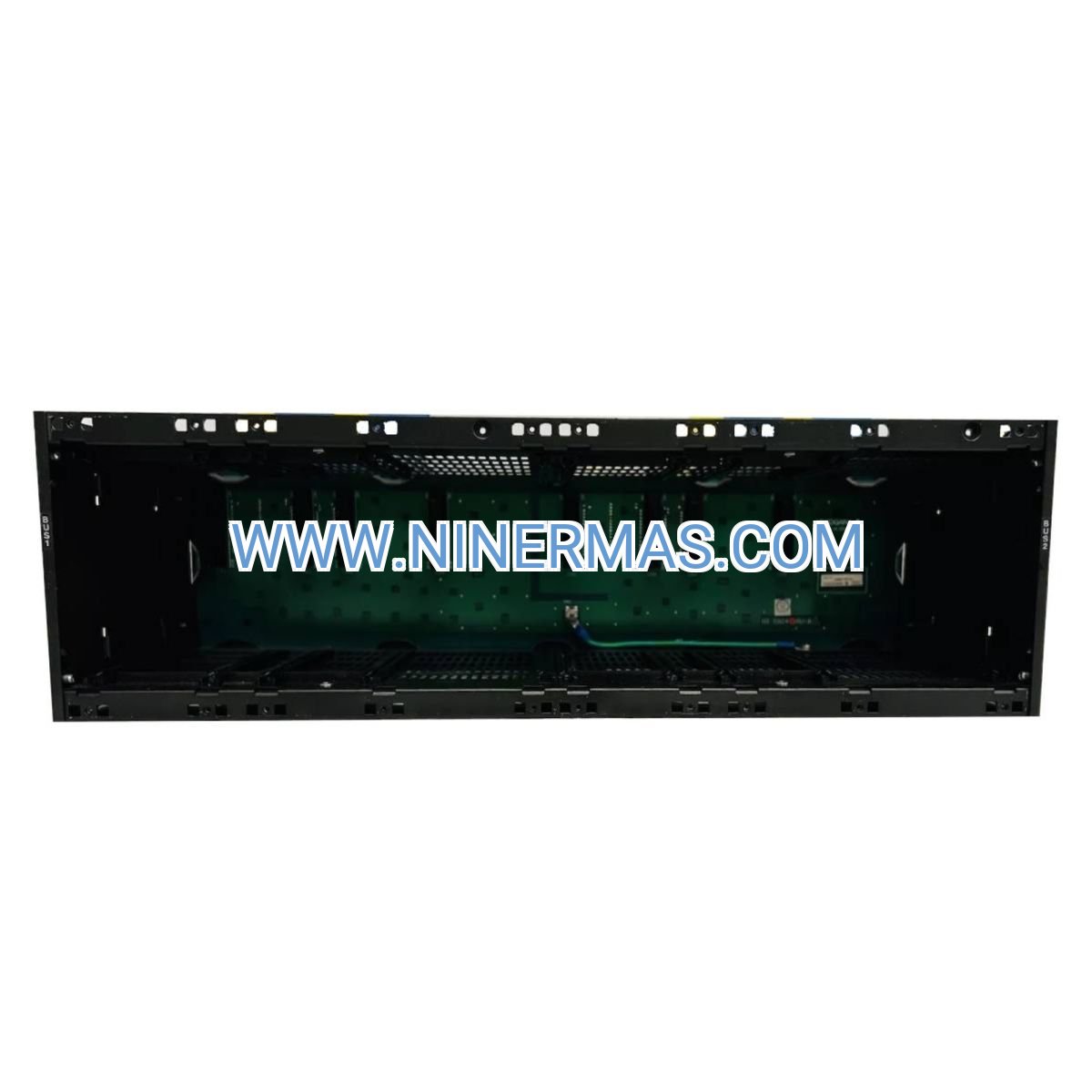
| Mounting Configuration | 19-inch rack (3U height) | Standard for control room installations |
Selection Criteria: Choose the SNB10D-225/CU2T when your application requires SIL 3 certification, I/O counts between 100-225 points, and integration with existing ProSafe-RS infrastructure. For smaller systems (<100 I/O), consider the SNB10D-100 variant. For SIL 2 applications, the single-channel SNB10S series offers cost optimization. Verify ESB bus compatibility with existing SSC50D controllers and ensure adequate rack space for dual-redundant power supplies.
Extended Functions
IoT Integration & Remote Monitoring: The SNB10D-225/CU2T supports OPC UA connectivity for secure data exchange with cloud-based asset performance management platforms. Real-time safety system health metrics, including partial stroke test results and diagnostic alarm histories, stream to Yokogawa's Sushi Sensor cloud service for predictive maintenance analytics. This enables remote troubleshooting by safety system experts, reducing on-site service calls by 60%.
Advanced Cybersecurity Features: Built-in firewall functionality, encrypted ESB bus communication, and role-based access control (RBAC) comply with IEC 62443 industrial cybersecurity standards. Firmware authentication prevents unauthorized code modifications, while audit logging tracks all configuration changes for forensic analysis.
Customization Options: Factory-configured I/O mapping and pre-tested safety logic libraries accelerate commissioning timelines. Custom faceplate designs and extended temperature variants (-40°C to +70°C) available for specialized applications. Consult with our engineering team for ATEX/IECEx Zone 2 certified enclosure options.
Delivery & Service Assurance
Lead Time: Standard configurations ship within 4-6 weeks from order confirmation. Custom-configured units with factory acceptance testing (FAT) require 8-10 weeks. Expedited delivery available for critical outage scenarios (contact for pricing).
Warranty Coverage: 24-month manufacturer warranty covering defects in materials and workmanship. Extended 5-year warranty packages available, including annual calibration verification and firmware updates.
Technical Support: Lifetime access to Yokogawa's global support network, including 24/7 emergency hotline for safety-critical issues. On-site commissioning assistance and safety logic validation services available through certified system integrators.
Documentation Package: Each unit ships with IEC 61508 safety manual, installation/commissioning guide, AutoCAD terminal drawings, HART device descriptions, and TÜV certification documents. Soft copies include safety logic programming examples and cybersecurity hardening checklists.
Frequently Asked Questions
Q: How does the SNB10D-225/CU2T interface with existing DCS systems?
A: The safety node communicates with CENTUM VP/DCS via dedicated gateway modules (e.g., ALR121 Vnet/IP interface). This maintains strict separation between safety and control layers per IEC 61511 requirements while enabling operator visibility of safety system status. Modbus TCP and OPC UA protocols support third-party DCS integration.
Q: What is the maximum I/O expansion capacity for a single safety node?
A: The SNB10D-225/CU2T supports up to 225 I/O points through distributed SAI/SDV I/O modules connected via the ESB bus. For larger systems, multiple safety nodes can be networked, with each node handling independent safety functions. Total system capacity exceeds 2,000 I/O points across 10 nodes.
Q: Can this safety node achieve energy efficiency improvements compared to relay-based systems?
A: Yes. The SNB10D-225/CU2T consumes approximately 45W during normal operation versus 200W+ for equivalent relay panel systems. Solid-state outputs eliminate contact arcing losses, and intelligent power management reduces standby consumption by 30%. Annual energy savings exceed $800 for 24/7 operation at $0.12/kWh.
Q: What are the installation requirements for rack mounting?
A: Requires standard 19-inch equipment rack with minimum 3U vertical space (133mm). Ensure adequate ventilation (minimum 50mm clearance above/below) and ambient temperature control. Dual 24V DC power supplies must be UPS-backed with independent circuit breakers. ESB bus fiber optic cables require LC-type connectors with bend radius >30mm.
Q: Does the system support remote diagnostics and firmware updates?
A: Remote diagnostics are fully supported via secure VPN connections using Yokogawa's FieldMate software. Firmware updates require on-site access with physical key-switch authorization to comply with IEC 61511 management of change procedures. Remote monitoring of diagnostic parameters (CPU load, communication health, I/O status) operates continuously without safety system impact.
Q: How does the dual-redundant architecture handle synchronization during module replacement?
A: The CU2T topology employs automatic bumpless transfer during hot-swap operations. When a replacement module is inserted, it synchronizes with the active controller within 3 scan cycles (30ms), downloads current safety logic and I/O states, and enters standby mode. No safety function interruption occurs, and the system maintains SIL 3 integrity throughout the maintenance procedure.
Take the Next Step
Protect your critical processes with proven SIL 3 safety technology. Contact our safety systems specialists today for application-specific configuration guidance, detailed quotations, and integration support. Request a complimentary safety integrity level verification study to validate your system architecture.
Email: sale@ninermas.com | Phone: +0086 187 5021 5667
© 2026 NINERMAS COMPANY LIMITED. All rights reserved.
Original Source: https://ninermas.com
Contact: sale@ninermas.com | +0086 187 5021 5667
PDF Specification
Download PDF file here:
Click to Download PDFRelated products

Contact Info
-
Address:22 / F, South Wo Hang building, 148 Wing Lok Street, Sheung Wan, Western District, Hong Kong
-
Phone:+8618750215667
-
Email: