Description
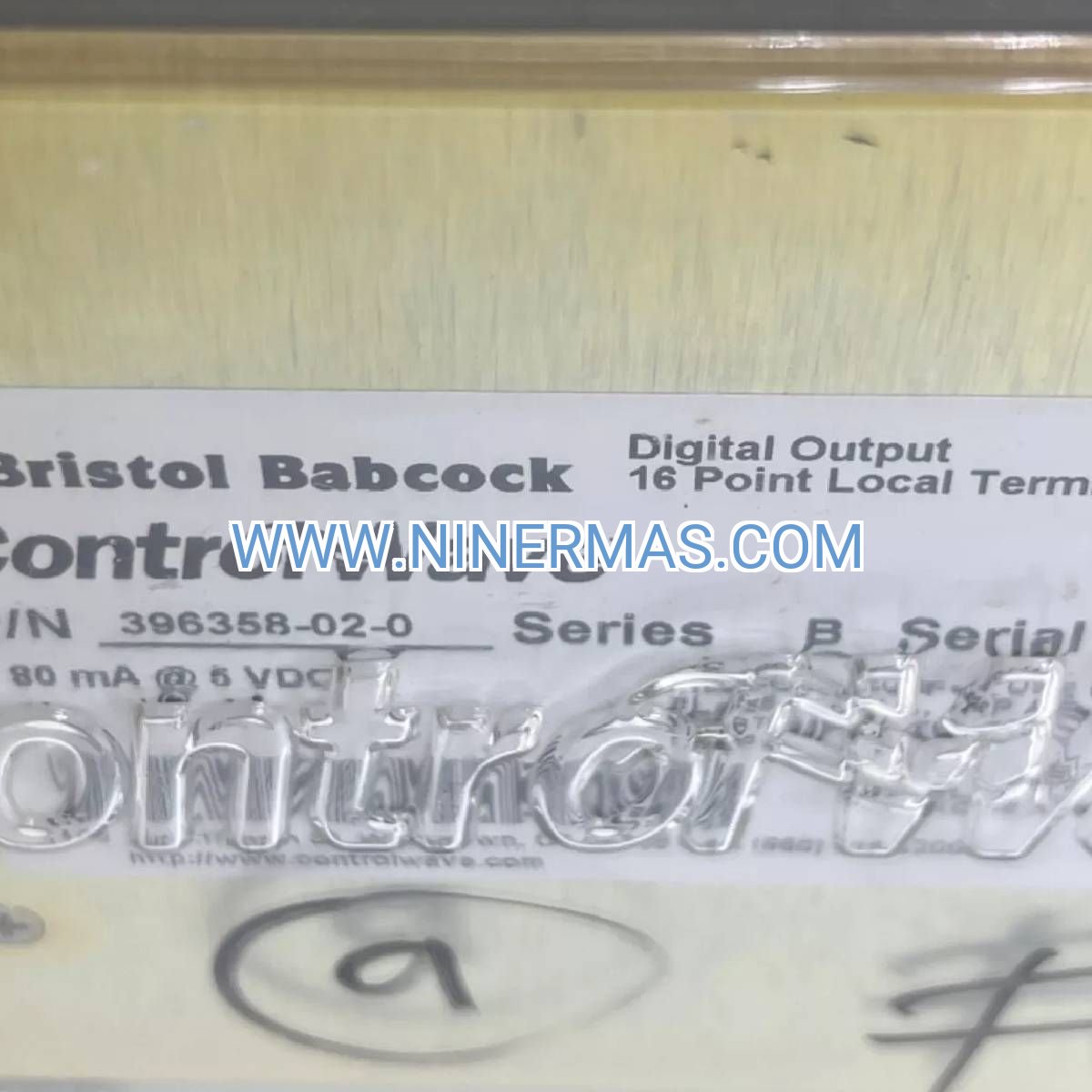
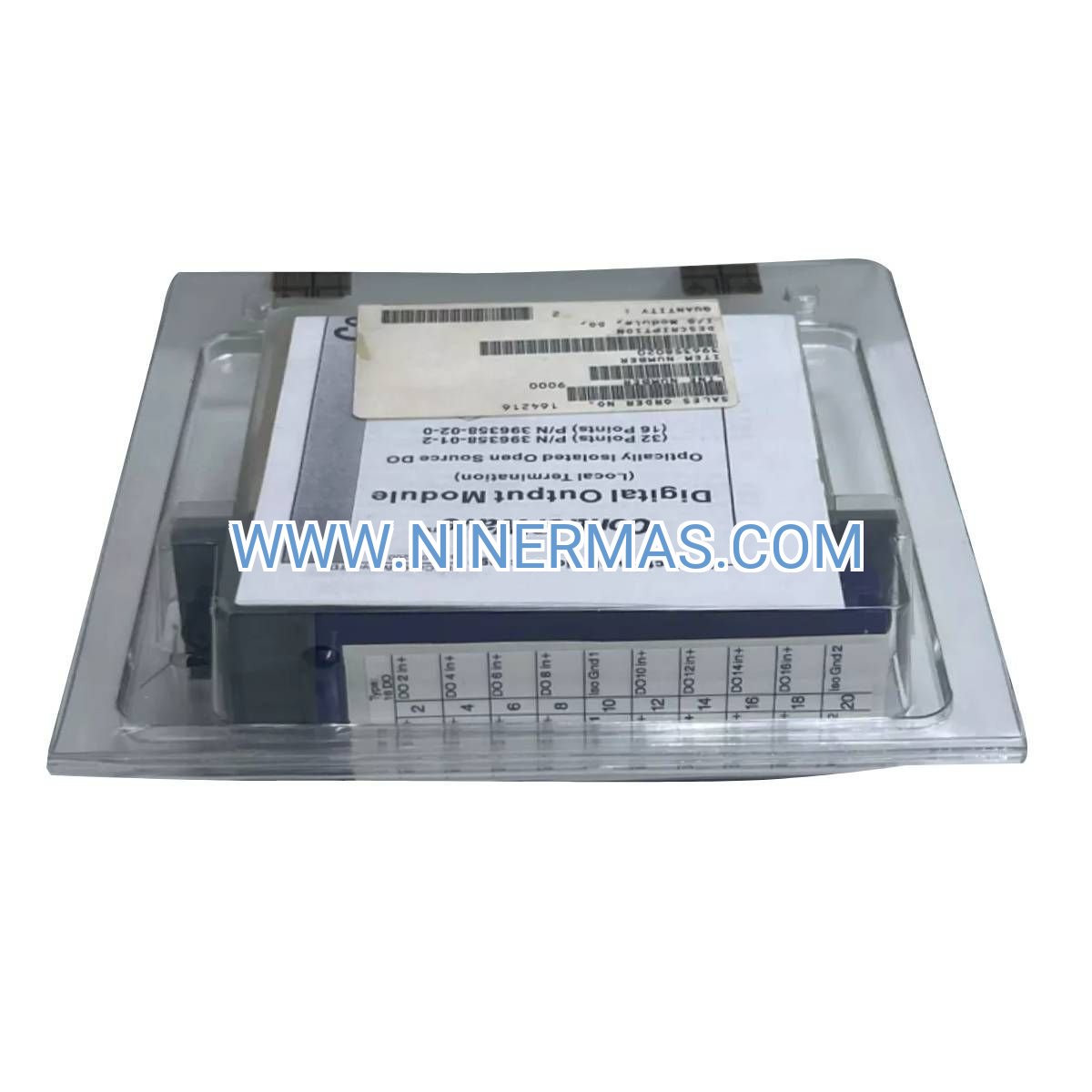
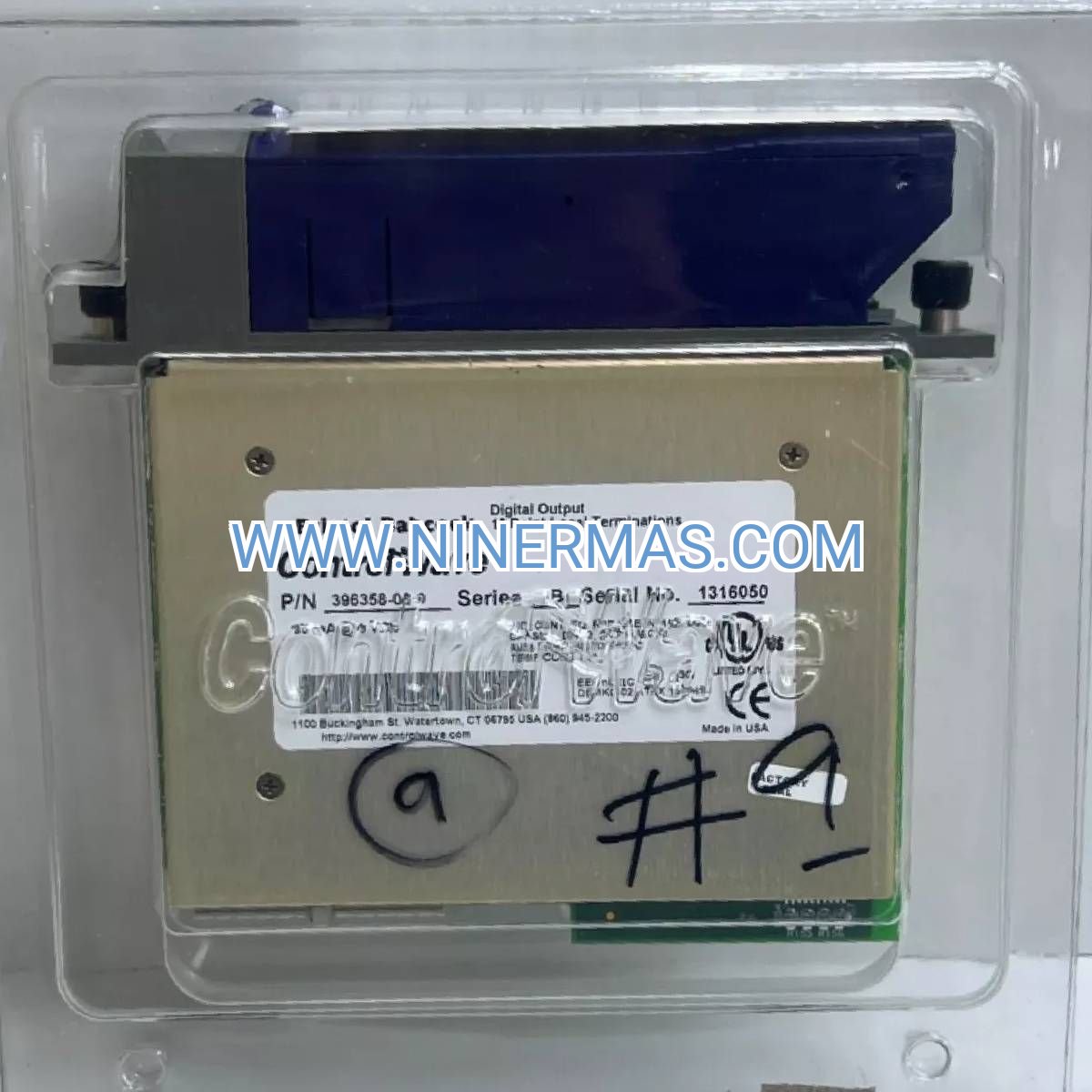
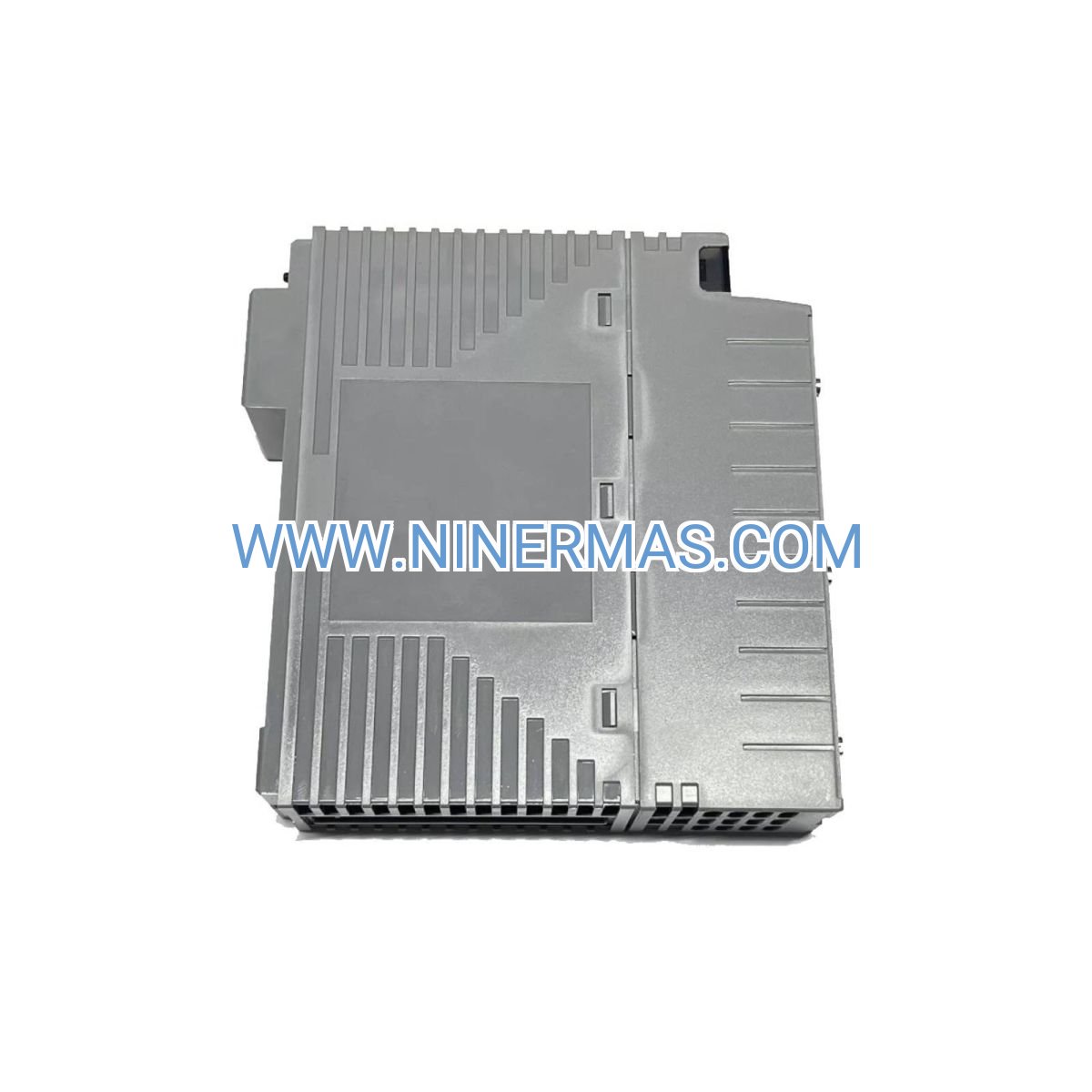
Industrial-Grade Analog Output Card for ControlWave RTU Platforms
The Bristol 396358-02-0 represents a field-proven analog output interface engineered for mission-critical process control within Emerson's ControlWave remote terminal unit ecosystem. This module transforms digital control commands into precise 4-20 mA current signals, enabling direct manipulation of valves, actuators, and variable frequency drives across distributed SCADA networks in petroleum production, water infrastructure, and pipeline transmission sectors.
Designed for system integrators and automation engineers managing remote assets, this output card addresses the fundamental challenge of reliable signal delivery in electrically noisy, temperature-extreme environments where commercial I/O modules fail. Its hazardous location certifications and extended operating range make it the preferred choice for unmanned installations requiring years of maintenance-free operation.
Key differentiators include native BSAP protocol integration, hot-swappable architecture for zero-downtime servicing, and factory-calibrated linearity specifications that eliminate field commissioning delays. When paired with ControlWave's deterministic scan engine, the module delivers sub-100ms control loop response times essential for pressure regulation and flow balancing applications.
Core Capabilities & Business Value
→ Multi-Channel Current Loop Transmission: Simultaneous control of multiple field devices through independent 4-20 mA outputs, reducing wiring complexity and panel space requirements by 35% compared to discrete transmitter installations.
✓ Hazardous Area Compliance: UL Class I Division 2 and ATEX Zone 2 certifications enable deployment in explosive atmospheres without costly purge systems, cutting installation costs by $2,000-$5,000 per location.
→ Extended Temperature Performance: Operational from -40°C to +70°C ambient ensures continuous function in unheated enclosures across Arctic wellsites to desert compressor stations, eliminating climate control expenses.
✓ Diagnostic Intelligence: Built-in loop fault detection and open-circuit alarms provide real-time health monitoring, reducing troubleshooting time from hours to minutes and preventing process upsets.
→ Legacy System Integration: Backward compatibility with ControlWave platforms dating to 2003 protects existing automation investments while enabling incremental modernization strategies.
✓ Conformal Coating Protection: Military-grade circuit board treatment resists moisture, salt spray, and hydrogen sulfide corrosion in offshore and sour gas environments where standard electronics degrade within months.
Industry-Specific Deployment Scenarios
Midstream Pipeline Operations: At custody transfer metering stations, the 396358-02-0 regulates flow control valves and pressure transmitters across 50+ mile pipeline segments. Integration with ControlWave's DNP3 stack enables centralized control from pipeline control centers, while local loop integrity ensures safe shutdown during communication failures. Operators report 99.7% uptime across installations spanning Wyoming to Texas.
Municipal Water Distribution: Water utilities deploy this module for chlorine dosing pump control, reservoir level management, and booster station pressure regulation. The module's 0.1% accuracy specification maintains tight chemical residual control, reducing treatment costs while meeting EPA compliance thresholds. One 15,000-connection utility achieved $47,000 annual chemical savings after retrofitting 12 pump stations.
Upstream Production Automation: In artificial lift applications, the output card drives electric submersible pump variable speed drives and gas lift valve controllers. Solar-powered RTU configurations leverage the module's low 2.5W power draw, enabling off-grid installations without generator backup. Field trials demonstrate 18-month battery life extensions versus competing I/O.
Industrial Wastewater Treatment: Chemical processing facilities use the 396358-02-0 for pH neutralization control, aeration blower modulation, and polymer feed systems. The module's immunity to electrical noise from VFDs and motor starters prevents false trips that previously caused 6-8 process interruptions monthly at a refinery wastewater plant.
Technical Specifications & Selection Criteria
| Parameter | Specification |
|---|---|
| Output Signal Type | 4-20 mA current loop (2-wire/4-wire) |
| Number of Channels | Varies by model configuration |
| Accuracy | ±0.1% of span (factory calibrated) |
| Resolution | 12-bit (4096 counts) |
| Update Rate | 10-100 ms configurable |
| Loop Compliance | 24 VDC @ 20 mA maximum |
| Isolation | 1500 VDC channel-to-backplane |
| Operating Temperature | -40°C to +70°C (-40°F to +158°F) |
| Storage Temperature | -55°C to +85°C |
| Humidity | 5% to 95% non-condensing |
| Power Consumption | 2.5W typical from backplane |
| MTBF | 125,000 hours (Bellcore TR-332) |
| Mounting | ControlWave chassis DIN-rail |
| Dimensions | Standard ControlWave module footprint |
| Weight | 0.3 kg (0.66 lbs) |
Selection Guidelines: Choose this module when your application requires hazardous location certification, extended temperature operation, or integration with existing Bristol/Emerson control infrastructure. For new greenfield projects, verify ControlWave platform compatibility with your SCADA protocol requirements (BSAP, Modbus, DNP3). Consult factory representatives for channel count and signal range configurations matching your specific valve/actuator specifications.
Advanced Integration Features
Protocol Versatility: Native support for Bristol BSAP (Bristol Standard Asynchronous Protocol) ensures seamless communication with legacy RTU networks, while Modbus RTU/TCP and DNP3 Serial/IP options enable integration with Allen-Bradley, Siemens, and Schneider Electric supervisory systems. OPC UA gateway compatibility future-proofs installations for IIoT initiatives.
Cybersecurity Hardening: When deployed with ControlWave firmware version 8.5 or later, the module participates in encrypted communication sessions using AES-256 encryption and supports role-based access control (RBAC) for NERC CIP compliance in electric utility applications. Audit logging tracks all configuration changes for forensic analysis.
Redundancy Options: Dual-redundant ControlWave controller configurations automatically fail over analog outputs without process interruption, achieving 99.99% availability in critical safety instrumented systems (SIS) rated up to SIL 2 per IEC 61508.
Delivery Timeline & Service Commitments
Standard Lead Time: 3-5 business days for in-stock units; 4-6 weeks for factory-direct orders during peak demand periods.
Warranty Coverage: 24-month manufacturer's warranty covering defects in materials and workmanship. Extended 5-year service agreements available for critical infrastructure deployments.
Technical Support: Access to Emerson's global support network with 24/7 emergency hotline for production-down situations. Regional application engineers provide on-site commissioning assistance and troubleshooting within 48 hours.
Documentation Package: Includes installation manual, wiring diagrams, ControlWave Designer configuration templates, and calibration certificates traceable to NIST standards. Firmware update notifications and security bulletins delivered via email subscription.
Frequently Asked Questions
Q: How does the 396358-02-0 interface with non-Emerson control systems?
A: The module communicates via standard Modbus RTU/TCP or DNP3 protocols supported by virtually all industrial PLCs and SCADA platforms. A ControlWave gateway handles protocol conversion, allowing integration with Rockwell, Siemens, GE, and other vendors. Typical integration projects complete in 2-3 days using pre-built driver libraries.
Q: What output current range configurations are available beyond 4-20 mA?
A: While 4-20 mA is the standard industrial range, the module supports 0-20 mA and configurable low-alarm thresholds (e.g., 3.8 mA for broken wire detection). Voltage output variants are available through alternate part numbers—consult the ControlWave I/O catalog for 0-10 VDC and ±10 VDC options.
Q: Can this module reduce energy consumption in variable speed pump applications?
A: Yes. By providing precise analog control to VFD speed references, the module enables optimized pump operation matching actual demand rather than fixed-speed on/off cycling. Water utilities report 15-30% energy savings in booster station applications, with payback periods under 18 months including installation costs.
Q: What installation requirements exist for hazardous location deployments?
A: The module must be installed in a NEMA 4X or IP66-rated enclosure with proper grounding and intrinsic safety barriers if connected to field devices in Division 1/Zone 1 areas. Wiring must follow NEC Article 501/505 guidelines. Most installations use pre-certified ControlWave enclosure packages that simplify permitting and inspection processes.
Q: Does the output card support remote calibration and diagnostics?
A: Full remote calibration is possible via ControlWave Designer software over Ethernet, serial, or cellular connections. Diagnostic data includes per-channel current readings, loop resistance measurements, and fault history logs. Predictive maintenance algorithms flag degrading performance trends before failures occur, enabling proactive module replacement during scheduled outages.
Q: How does this module compare to newer smart I/O technologies?
A: While HART and Foundation Fieldbus smart transmitters offer advanced diagnostics, the 396358-02-0 provides superior reliability in harsh environments due to its simpler analog architecture with fewer failure modes. For applications prioritizing uptime over device-level intelligence, traditional 4-20 mA remains the industry standard. The module's 125,000-hour MTBF exceeds most smart I/O by 40-60%.
Take the Next Step
Ready to enhance your ControlWave system's analog control capabilities? Contact our automation specialists for application-specific configuration guidance, compatibility verification with your existing infrastructure, and volume pricing for multi-site deployments. Request a technical datasheet or schedule a consultation to discuss your SCADA modernization roadmap.
© 2026 NINERMAS COMPANY LIMITED. All rights reserved.
Original Source: https://ninermas.com
Contact: sale@ninermas.com | +0086 187 5021 5667
PDF Specification
Download PDF file here:
Click to Download PDFRelated products

Contact Info
-
Address:22 / F, South Wo Hang building, 148 Wing Lok Street, Sheung Wan, Western District, Hong Kong
-
Phone:+8618750215667
-
Email: