Description
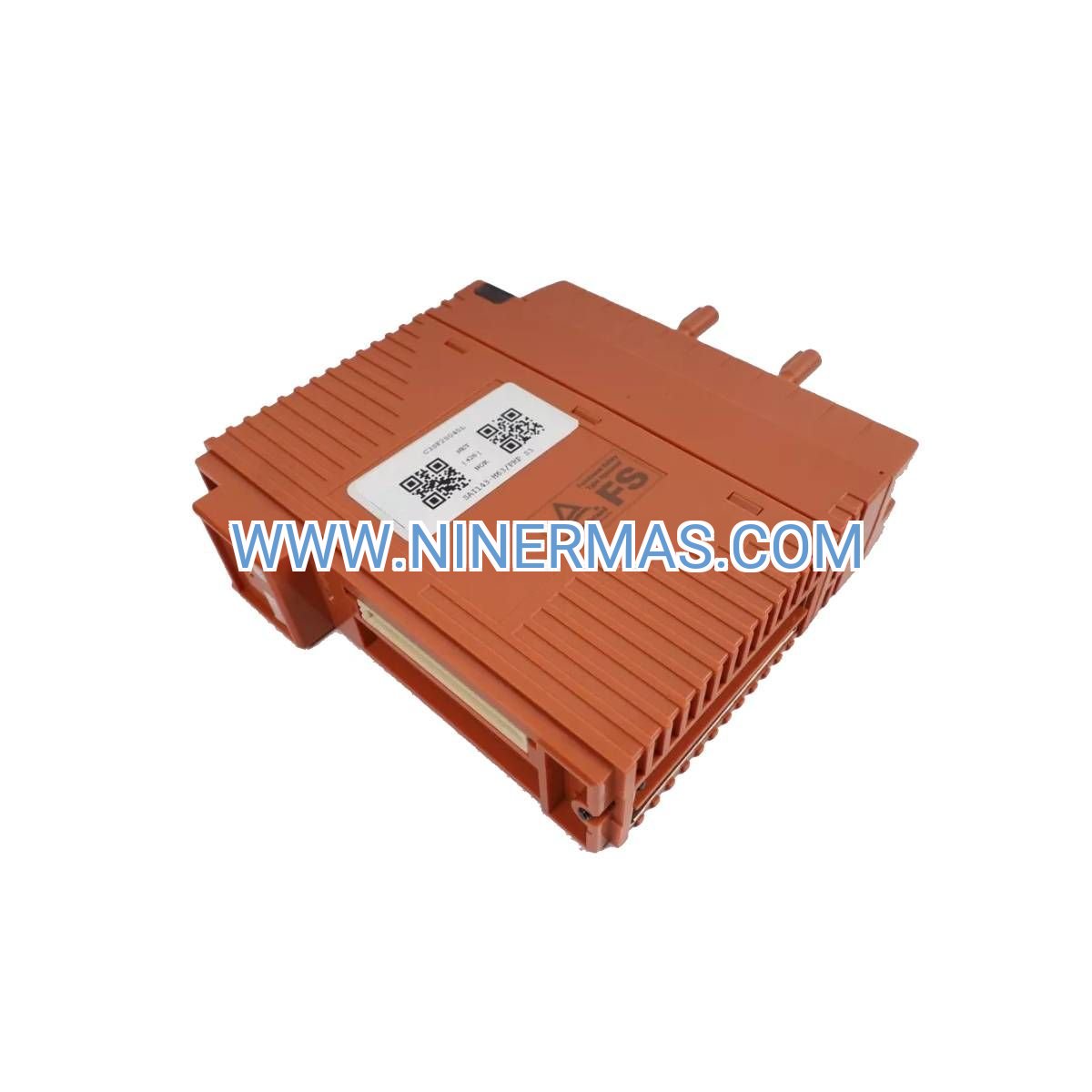
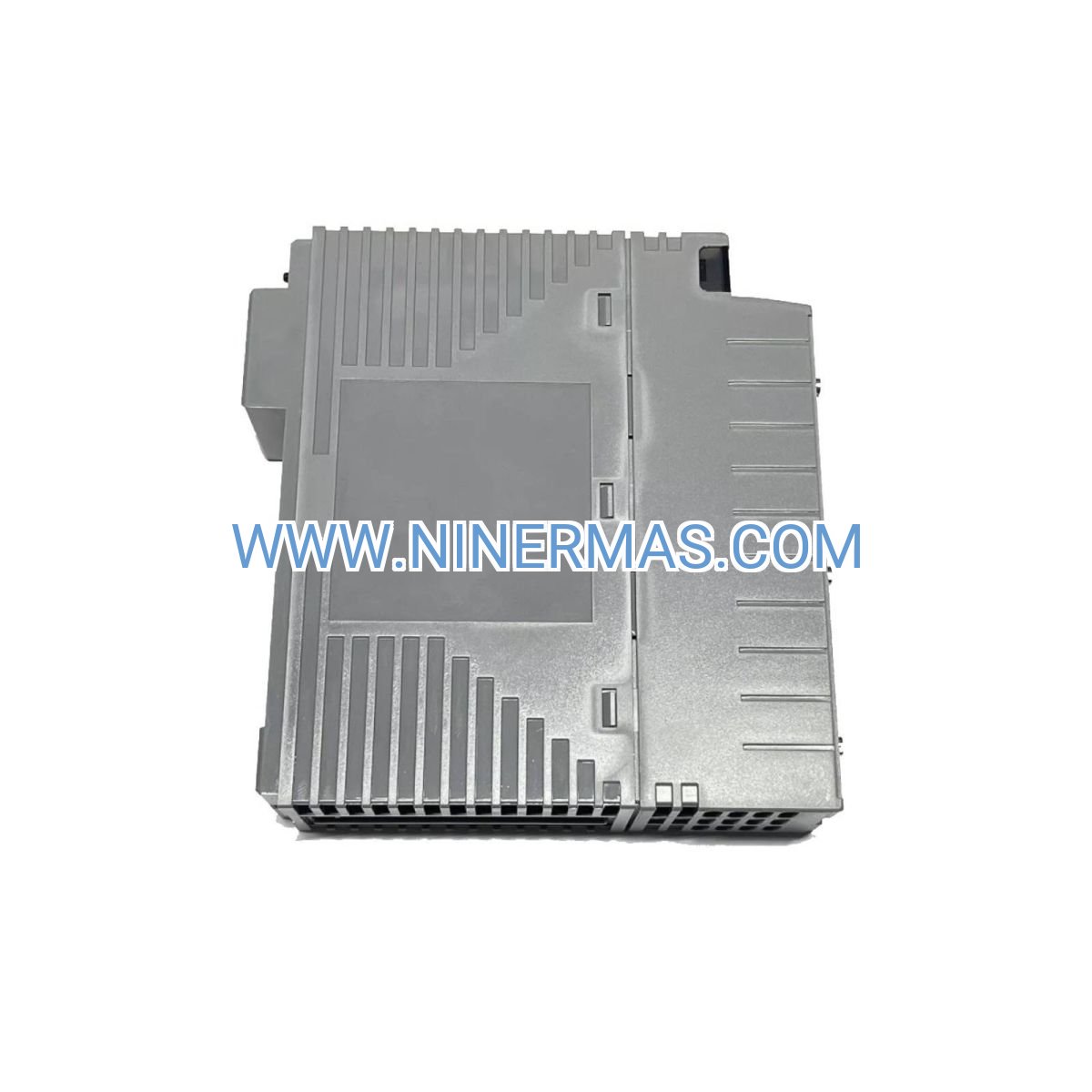
YS150-012/A31 S3 Single-Loop Controller (Industrial-Grade Process Automation)
The YS150-012/A31 S3 represents Yokogawa's commitment to precision process control in mission-critical industrial environments. This single-loop multifunction controller combines adaptive PID algorithms with robust RS-485 Modbus RTU connectivity, delivering reliable setpoint regulation for temperature, pressure, and flow applications across pharmaceutical, chemical, and food processing sectors.
Designed for engineers managing heat treatment furnaces, batch reactors, and continuous process lines, this controller eliminates manual tuning complexity through intelligent auto-tuning routines. Its ±0.3% accuracy specification ensures consistent product quality while reducing energy waste from temperature overshoot. The dual-line LED display provides instant visibility of process variables and setpoints, even in high-ambient-light manufacturing floors.
Whether you're upgrading legacy analog controllers or building new automation systems, the YS150 series integrates seamlessly with existing SCADA infrastructure through industry-standard Modbus protocol. Multi-drop capability supports up to 31 devices on a single RS-485 bus, minimizing wiring costs and simplifying commissioning workflows.
Core Capabilities & Business Value
✓ Adaptive PID Control with Auto-Tuning
Eliminates trial-and-error commissioning through self-optimizing algorithms that analyze process dynamics. Reduces startup time by 60% compared to manual tuning methods while achieving tighter setpoint tolerance (±0.5°C typical for thermal processes).
✓ Multi-Input Flexibility
Accepts thermocouple (K, J, T, R, S, B types), RTD (Pt100, JPt100), and DC voltage/current signals without hardware modifications. Single controller handles diverse sensor types across multiple process zones, reducing spare parts inventory.
✓ RS-485 Modbus RTU Communication
Enables real-time data exchange with PLCs, HMIs, and SCADA systems using open-protocol architecture. Supports remote setpoint adjustment, alarm acknowledgment, and trend logging without proprietary software licenses.
→ Relay & Analog Output Options
Configurable relay contacts (SPDT, 3A @ 250VAC) drive heating elements, solenoid valves, or alarm annunciators. Optional 4-20mA output provides proportional control for SCR power controllers and motorized valves.
→ High-Visibility Dual-Line Display
Red LED digits (14mm height) remain readable at 5-meter viewing distance under direct sunlight. Simultaneous display of process value and setpoint accelerates operator response during abnormal conditions.
→ Industrial Environmental Rating
Operates reliably in 0-50°C ambient with 35-85% RH non-condensing humidity. Conformal-coated PCBs resist corrosive atmospheres common in chemical processing and wastewater treatment facilities.
Proven Application Scenarios
Heat Treatment Furnace Control
Maintains ±2°C temperature uniformity across annealing, tempering, and carburizing cycles. Auto-tuning compensates for thermal mass variations when switching between aluminum and steel workloads. Alarm outputs trigger emergency shutdown if thermocouples fail or temperature exceeds metallurgical limits.
Pharmaceutical Reactor Temperature Management
Ensures FDA 21 CFR Part 11 compliance through Modbus data logging to validated SCADA systems. PID control prevents exothermic reaction runaway while maintaining ±0.5°C stability during crystallization phases. Relay outputs interlock with cooling water valves for fail-safe operation.
Food Processing Oven Regulation
Controls baking, roasting, and pasteurization temperatures with repeatable accuracy for consistent product quality. Multi-zone configurations use RS-485 networking to synchronize heating profiles across conveyor ovens. Reduces energy consumption by 15% through optimized on/off cycling.
Chemical Batch Process Automation
Regulates jacketed vessel temperatures during polymerization, distillation, and blending operations. Supports cascade control strategies when paired with secondary flow controllers. Modbus integration enables recipe management and batch reporting through MES platforms.
HVAC & Environmental Chamber Control
Maintains stability test chamber conditions (temperature/humidity) for pharmaceutical shelf-life validation. Proportional heating/cooling outputs minimize oscillation in low-thermal-mass systems. Alarm relays notify technicians of sensor drift or calibration due dates.
Technical Parameters & Selection Guide
| Parameter | Specification |
|---|---|
| Control Algorithm | PID with auto-tuning, on/off, manual modes |
| Input Signal Types | TC (K/J/T/R/S/B), RTD (Pt100/JPt100), 0-10VDC, 4-20mA |
| Control Output | Relay SPDT 3A @ 250VAC, optional 4-20mA analog |
| Accuracy | ±0.3% of span (±1 digit) |
| Sampling Rate | 250ms (4 samples/second) |
| Communication | RS-485 Modbus RTU, 1200-38400 baud |
| Display | Dual-line red LED, 14mm digit height |
| Panel Cutout | 48mm (W) × 96mm (H) DIN standard |
| Power Supply | 100-240VAC ±10%, 50/60Hz, 8VA max |
| Operating Environment | 0-50°C, 35-85% RH non-condensing |
| Certifications | CE, UL, cUL pending (industrial equipment) |
Selection Criteria: Choose YS150 series for single-zone temperature/pressure control requiring ±0.5% accuracy. For multi-loop coordination or advanced logic, consider YS170 programmable controllers. Applications needing SIL-rated safety functions should specify Yokogawa CENTUM DCS modules with redundant I/O.
Extended Integration Capabilities
SCADA & MES Connectivity: Modbus RTU protocol enables plug-and-play integration with Wonderware, Ignition, and FactoryTalk platforms. Standard register mapping (holding registers 40001-40050) simplifies HMI screen development without custom driver programming.
IoT Gateway Compatibility: Pair with Modbus-to-Ethernet converters (e.g., Moxa MGate series) for cloud-based monitoring via MQTT or OPC UA protocols. Supports predictive maintenance analytics through temperature trend analysis and alarm frequency tracking.
Customization Options: Factory configuration services available for pre-programmed setpoints, alarm thresholds, and Modbus slave addresses. Custom front-panel labeling and extended temperature ratings (-20 to 60°C) offered for OEM applications with MOQ 50+ units.
Delivery Timeline & Service Assurance
Standard Lead Time: 3-5 business days for in-stock units (YS150-012/A31 S3 configuration). Express shipping available to major industrial hubs in North America, Europe, and Asia-Pacific regions.
Custom Configuration: 10-15 business days for factory programming, extended I/O options, or non-standard power supplies. Engineering support included for Modbus register mapping and PID parameter recommendations.
Warranty Coverage: 24-month manufacturer warranty covering defects in materials and workmanship. Advance replacement program available for critical process applications (RMA processed within 48 hours).
Technical Support: Email/phone assistance for installation troubleshooting, Modbus communication setup, and PID tuning optimization. Access to CAD drawings (DXF/PDF), wiring diagrams, and Modbus register documentation via download portal.
Documentation Package: Includes quick-start guide, full operation manual (EN/CN), calibration certificate, and Modbus communication protocol specification. Ladder logic examples provided for Allen-Bradley, Siemens, and Mitsubishi PLC integration.
Frequently Asked Questions
Q: How do I connect the YS150 controller to my existing PLC via Modbus RTU?
A: Wire RS-485 terminals (A/B) to your PLC's Modbus port using twisted-pair cable (Belden 3105A or equivalent). Configure controller as Modbus slave (address 1-247), set baud rate to match PLC (typically 9600 or 19200), and enable even parity. Refer to register map in user manual for reading process value (register 40001) and writing setpoint (register 40002).
Q: What is the maximum number of YS150 units I can daisy-chain on one RS-485 network?
A: Modbus RTU standard supports up to 31 slave devices per master. Ensure total cable length stays below 1200 meters and use 120-ohm termination resistors at both network ends. For larger systems, implement multiple RS-485 segments with Modbus gateways.
Q: Can this controller achieve energy savings compared to on/off thermostats?
A: Yes. PID control reduces temperature overshoot by 40-60% versus mechanical thermostats, directly cutting heating element runtime. Customers report 12-18% energy reduction in furnace applications through optimized duty cycling and elimination of temperature hunting.
Q: What panel cutout dimensions are required for installation?
A: Standard DIN 48mm × 96mm cutout (1/8 DIN size). Panel thickness range: 1-10mm. Mounting clips included secure controller from rear without front-panel screws. Ensure 50mm clearance behind panel for wiring access.
Q: Does the YS150 support remote monitoring via smartphone or web browser?
A: Not directly. The controller outputs Modbus RTU data over RS-485. Add a Modbus-to-Ethernet gateway (e.g., Moxa MGate 5105) to enable web-based SCADA access or cloud connectivity through MQTT/OPC UA protocols. Third-party IoT platforms like ThingWorx and Azure IoT Hub support Modbus TCP integration.
Q: How often does the controller require calibration for ±0.3% accuracy?
A: Annual calibration recommended for critical processes (pharmaceutical, aerospace). Industrial applications typically calibrate every 18-24 months. Calibration procedure requires precision voltage source and takes approximately 30 minutes per unit. Factory recalibration service available with 5-day turnaround.
Request Technical Consultation
Our application engineers provide complimentary system design reviews for multi-zone control projects, Modbus network architecture, and PID tuning optimization. Contact us with your process parameters (temperature range, load characteristics, response time requirements) for customized controller recommendations and integration support.
© 2026 NINERMAS COMPANY LIMITED. All rights reserved.
Original Source: https://ninermas.com
Contact: sale@ninermas.com | +0086 187 5021 5667
PDF Specification
Download PDF file here:
Click to Download PDFRelated products

Contact Info
-
Address:22 / F, South Wo Hang building, 148 Wing Lok Street, Sheung Wan, Western District, Hong Kong
-
Phone:+8618750215667
-
Email: