Original Industrial Spare Part
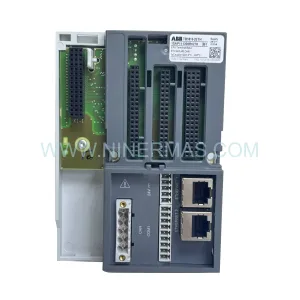
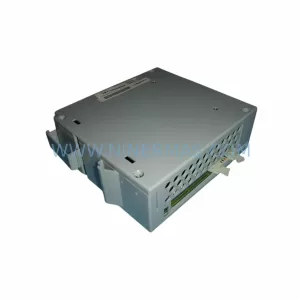
Yokogawa ALE111-S50 S1 Retrofit-Compatible Communication Module
Verify the part, confirm the platform family, and move straight into quotation with the right commercial details.
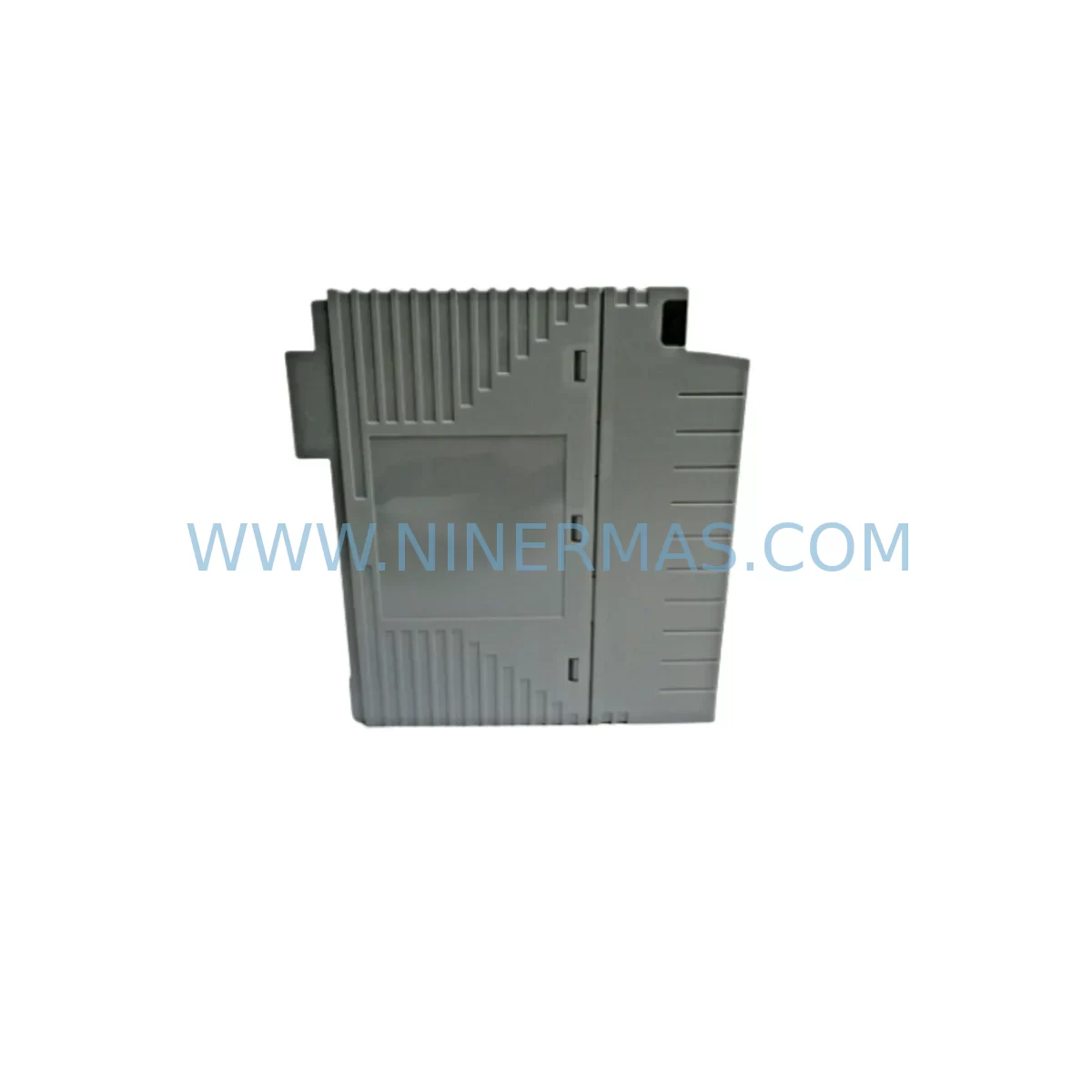
RFQ Ready
- SKUALE111-S50 S1
- CategoryDCS Distributed Control Systems
- BrandYokogawa
- SupportAvailability, lead time, condition, and shipping coordination
How Buyers Usually Use This Page
- Confirm the exact part number and platform family before sending the quote request.
- Use direct email when quantity, condition, and destination are already defined internally.
- Switch to the broader brand or category archive when you need alternates nearby.
Series Navigation
Move through the most common platform families behind this part.
Product RFQ
Send this part directly for quotation.
Include quantity, required condition, destination country, and target delivery timing. Current reference: Yokogawa ALE111-S50 S1 Retrofit-Compatible Communication Module with SKU ALE111-S50 S1.
Yokogawa ALE111-S50 S1 Retrofit-Compatible Communication Module: Legacy System Compatibility and Smooth Upgrade
The Yokogawa ALE111-S50 S1 is a ruggedized field communication module engineered for demanding industrial environments, widely deployed in STARDOM and CENTUM VP distributed control system architectures. As legacy automation infrastructure ages and original equipment reaches end-of-life, the ALE111-S50 S1 has become a critical retrofit component for engineers managing spare parts programs, control cabinet upgrades, and communication protocol migrations across process industries including oil & gas, chemical, power generation, and water treatment.
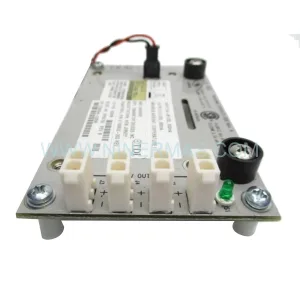
When planning a retrofit or replacement around the ALE111-S50 S1, engineers must carefully evaluate power supply capacity within the existing control cabinet. The module draws from the rack’s backplane power bus, and any replacement or parallel installation must confirm that the existing Yokogawa PW481 or PW482 power supply unit can sustain the additional load without triggering under-voltage faults. In aging systems where the power supply has already been in service for several years, a concurrent power supply replacement is strongly recommended to avoid cascading failures during commissioning.
Upgrade Compatibility Table
| Parameter | ALE111-S50 S1 Specification | Retrofit Consideration |
|---|---|---|
| Communication Interface | Ethernet / Serial (model-dependent) | Verify protocol compatibility with existing CENTUM VP or STARDOM FCN/FCJ controller |
| Backplane Slot Compatibility | STARDOM / CENTUM VP standard rack | Confirm slot assignment and module address in engineering tool before hot-swap |
| Power Consumption | Per Yokogawa datasheet (S50 variant) | Validate PW481/PW482 capacity; replace if total load exceeds 80% rated output |
| Terminal Wiring | Field terminal block (FTB) connection | Cross-reference existing wiring diagrams; re-label terminals after replacement |
| HMI Screen Mapping | Tag-based addressing | Verify HMI tag database in CENTUM VP Builder or FAST/TOOLS before cutover |
| Communication Link | Vnet/IP or Ethernet-based fieldbus | Confirm IP addressing, subnet mask, and gateway settings match existing network topology |
| Installation Space | Standard 19″ rack / DIN rail (per variant) | Measure available slot clearance; confirm no adjacent module interference |
| Replacement Path | Direct drop-in for ALE111 series | Confirm firmware revision compatibility with host controller revision |
| Commissioning | Yokogawa engineering tool required | Use CENTUM VP Builder or STARDOM Engineering Tool for module registration and I/O mapping |
| Warranty | 12-Month Warranty — All units shipped from NINERMAS are tested and covered for 12 months from date of delivery | |
Retrofit Planning for Existing Automation Systems
A successful ALE111-S50 S1 retrofit begins well before the physical module swap. Engineers should start by auditing the existing rack configuration, identifying all installed modules including the ALR111 remote I/O adapter, ALD111 digital I/O modules, ALF111 analog input modules, and any ALR121 communication repeaters sharing the same backplane. Understanding the full rack population ensures that the replacement module’s address assignment does not conflict with existing I/O maps already compiled in the CENTUM VP control database.
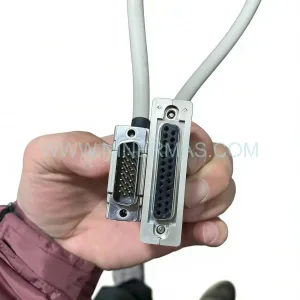
Terminal wiring is one of the most time-sensitive steps in any field retrofit. The ALE111-S50 S1 connects to the field via a dedicated field terminal block, and all existing cable labels, wire colors, and terminal numbers must be documented before disconnection. In older installations where original wiring diagrams may be incomplete or outdated, a physical point-to-point continuity check is essential. Engineers should also inspect the condition of the existing FCN-RTU or FCJ controller’s communication ports, as degraded connectors or corroded contacts can introduce intermittent faults that are difficult to diagnose after the new module is installed.
For systems running Vnet/IP as the primary control network, the ALE111-S50 S1 must be registered in the Vnet/IP domain configuration before it can participate in the control loop. This requires access to the CENTUM VP Builder engineering workstation, where the module’s node address, domain ID, and communication parameters are defined. If the engineering workstation software version does not match the controller firmware revision, a software update may be required before the new module can be recognized — a step that should be planned and tested in a staging environment to avoid surprises during the live cutover window.
Signal isolation is another consideration when integrating the ALE111-S50 S1 into a mixed-vintage control cabinet. In installations where legacy 4–20 mA analog loops share grounding infrastructure with newer digital fieldbus segments, a signal isolator or galvanic separator may be required to prevent ground loop interference. This is particularly relevant in retrofits where the ALE111-S50 S1 is being introduced alongside newer Yokogawa YFGW410 field wireless management stations or HART multiplexers that share the same cabinet ground bus.
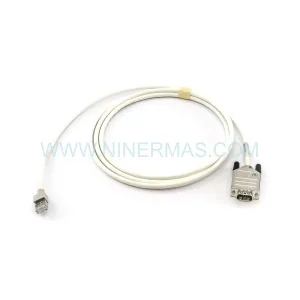
Programming cable access is also a practical concern during commissioning. The STARDOM FCN/FCJ controller family uses a dedicated USB or Ethernet programming port for online monitoring and parameter download. Ensuring that the programming cable and laptop running the STARDOM Engineering Tool are available on-site during the cutover window eliminates delays caused by last-minute equipment sourcing.
Downtime Control During System Migration
Minimizing downtime during an ALE111-S50 S1 replacement requires a structured pre-cutover checklist. Before any physical work begins, the existing control program should be backed up from the FCN or FCJ controller using the STARDOM Engineering Tool, with the backup file stored on both the engineering workstation and an offline USB drive. This ensures that if the replacement module introduces unexpected behavior, the original program logic can be restored within minutes rather than hours.
Where process conditions allow, a hot-standby or bumpless transfer strategy should be evaluated. In CENTUM VP dual-redundant configurations, the standby controller can maintain process control while the primary communication module is replaced, effectively reducing the live outage window to the time required for module registration and online verification — typically 15 to 30 minutes for an experienced engineer with all documentation and tools prepared in advance.
For single-controller installations without redundancy, the cutover window must be coordinated with the operations team to align with a planned process shutdown or low-activity period. All field devices connected through the ALE111-S50 S1 should be placed in manual mode or safe-state before the module is removed, and the control room operator should be informed of the expected duration and the fallback procedure if the replacement cannot be completed within the planned window.
After the new ALE111-S50 S1 is installed and registered, a systematic I/O verification sequence should be performed: confirm each analog input channel reads the expected process value, verify each digital output responds correctly to a test command from the HMI, and check that all communication status indicators on the module front panel show normal operation. Only after this verification is complete should the field devices be returned to automatic control mode and the cutover declared successful.
Retrofit Support FAQ
Q1: Is the ALE111-S50 S1 a direct drop-in replacement for earlier ALE111 variants?
The ALE111-S50 S1 is designed for compatibility within the ALE111 series, but engineers should verify the firmware revision of the host FCN/FCJ or CENTUM VP controller before installation. In some cases, a controller firmware update may be required to support the S50 hardware revision. NINERMAS can provide the module’s hardware revision documentation upon request to assist with pre-installation compatibility checks.
Q2: What pre-shipment testing is performed on the ALE111-S50 S1?
All ALE111-S50 S1 units supplied by NINERMAS undergo functional power-on testing and communication interface verification before dispatch. Each unit is inspected for physical condition, connector integrity, and firmware version. A test report is available upon request. All units are covered by a 12-month warranty from the date of delivery.
Q3: Can the ALE111-S50 S1 be used in a mixed-protocol environment with both Vnet/IP and Modbus devices?
The ALE111-S50 S1’s protocol support depends on the specific firmware and configuration loaded on the module. In CENTUM VP environments, Vnet/IP is the primary control network protocol, while Modbus RTU or Modbus TCP connectivity is typically handled through a dedicated communication module such as the ALM12E or a gateway device. Engineers should confirm the required protocol stack with Yokogawa’s technical documentation or contact NINERMAS for application-specific guidance.
Q4: What is the typical lead time and inventory availability for the ALE111-S50 S1?
NINERMAS maintains stock of the ALE111-S50 S1 as part of our long-term spare parts program for legacy Yokogawa STARDOM and CENTUM VP systems. Standard lead time for in-stock units is 3–7 business days for international shipments. For customers requiring guaranteed long-term supply commitments, NINERMAS offers blanket order arrangements to support multi-year maintenance programs. Contact our team at sale@ninermas.com or +0086 187 5021 5667 to confirm current stock levels and pricing.
| Product Series | STARDOM |
|---|---|
| Country of Origin | JP |
Catalog Continuation
More Yokogawa modules in the catalog.
Use the brand lane to compare nearby part numbers, platform-adjacent modules, and other inquiry-ready listings before sending your final RFQ.
Catalog Continuation
Alternative parts within DCS Distributed Control Systems.
Stay inside the same system family when you need substitutes, adjacent modules, or a broader shortlist for procurement review.
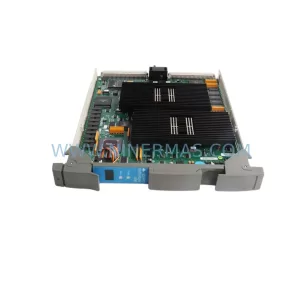
SKU: High Performance Communication Controller
Honeywell 51401635-150 Service-Ready Spare for C300
SKU: 6DD2920-0AR2 6DD2920-OAR2
Siemens 6DD2920-0AR2 Service-Ready Spare Part for Industrial Maintenance