
Description
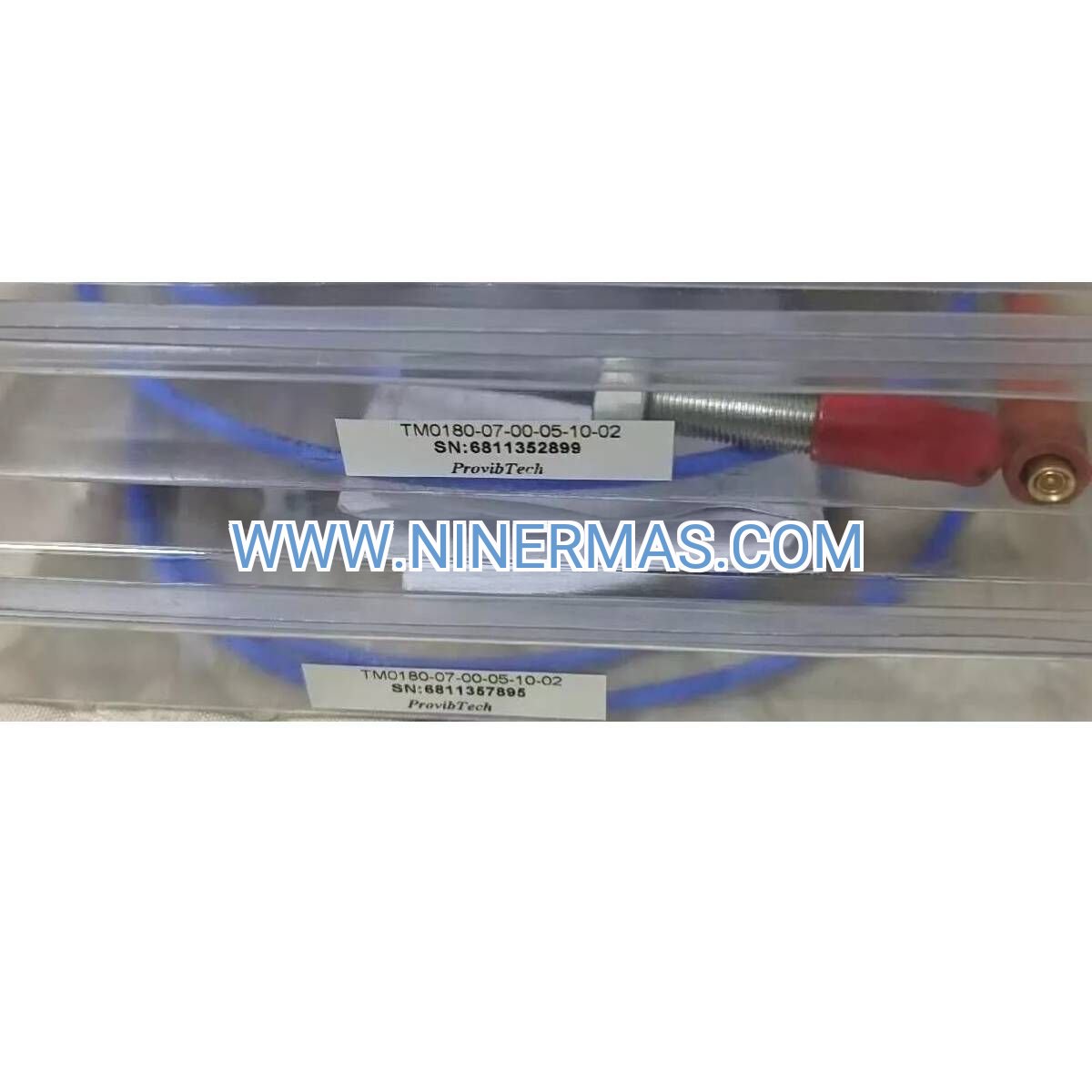
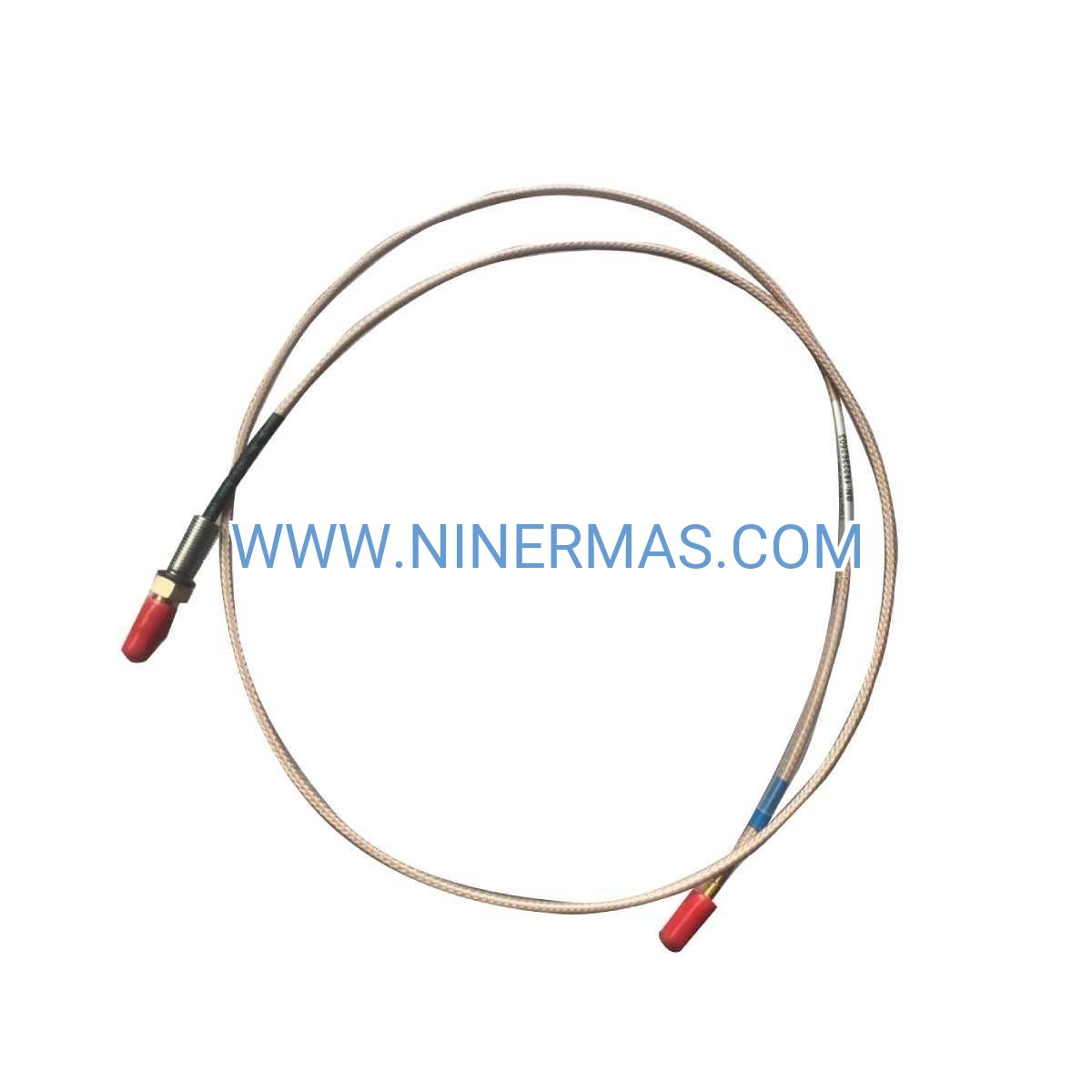
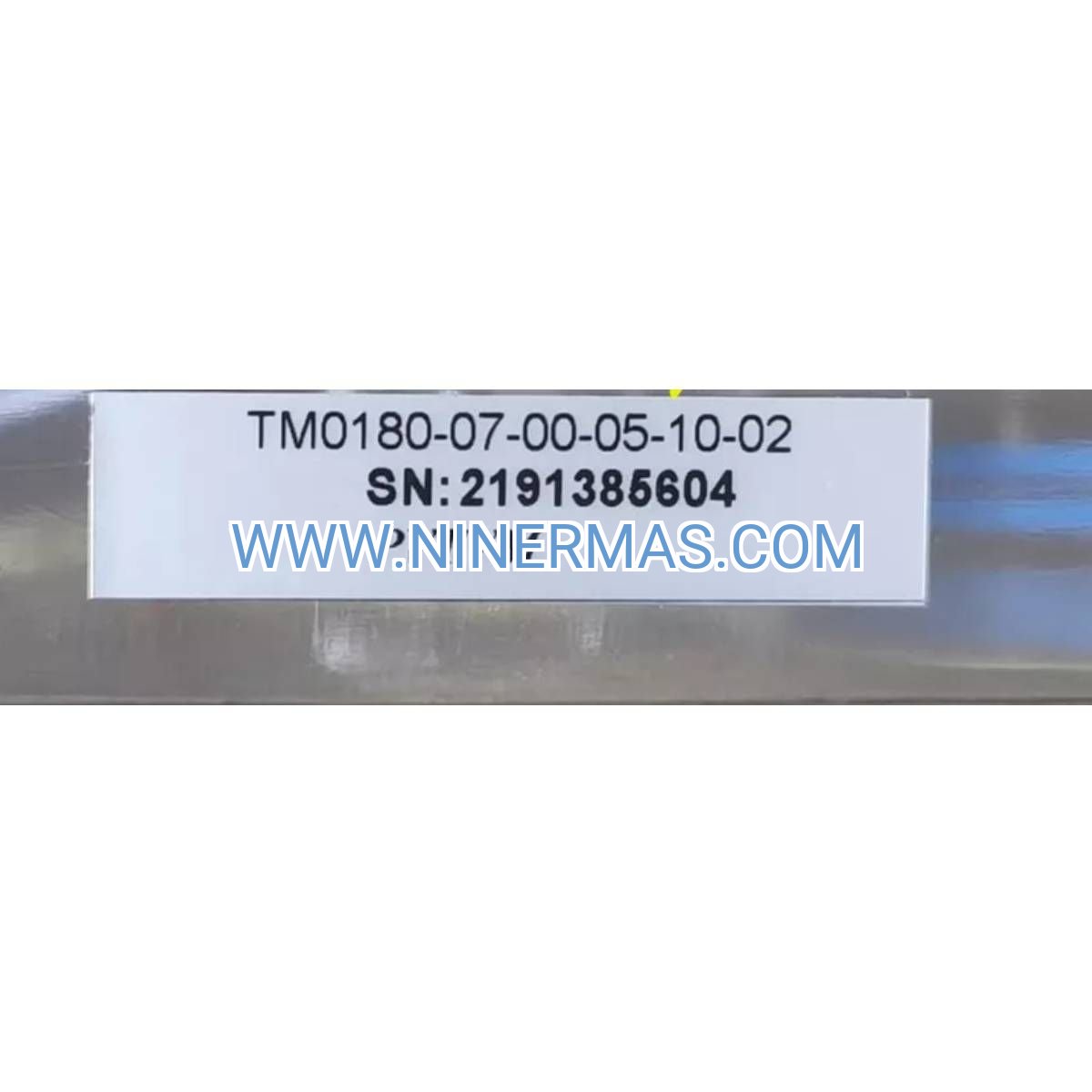
ABB TM0180-07-00-05-10-02 Proximity Sensor (Industrial-Grade Vibration Detection)
The ABB TM0180-07-00-05-10-02 is a precision-engineered 8mm proximity sensor designed for continuous shaft displacement and vibration monitoring in critical rotating machinery. Built to withstand extreme industrial conditions from -40°C to +125°C, this probe delivers consistent ±1% linearity across its full 0-2.0mm measurement span, making it indispensable for predictive maintenance strategies in power generation, oil & gas, and heavy manufacturing sectors.
Engineered for reliability-critical applications, this sensor addresses the challenge of unplanned downtime by providing early warning signals of bearing wear, shaft misalignment, and rotor imbalance. Process engineers and maintenance teams rely on the TM0180 series to protect high-value assets including steam turbines, centrifugal compressors, and large electric motors where failure costs can exceed $50,000 per hour.
With its M8 x 1.0 threaded mounting and 1.0-meter integral cable, the probe offers straightforward installation while maintaining signal integrity in electromagnetically noisy environments. The sensor's wide frequency response (0-10 kHz) captures both low-speed imbalance and high-frequency bearing defects, delivering comprehensive machinery health insights through a single measurement point.
Core Capabilities & Technical Advantages
→ Precision Measurement Architecture: ±1% full-scale linearity ensures accurate trending for ISO 10816 compliance and API 670 machinery protection standards, enabling confident threshold setting for alarm and trip functions.
→ Extended Environmental Range: -40°C to +125°C operating window accommodates installation near hot bearings, steam lines, and process equipment without requiring thermal barriers or cooling systems.
→ Broadband Frequency Response: DC to 10 kHz (-3dB) bandwidth captures slow-roll runout, synchronous vibration, and bearing fault frequencies up to 600,000 CPM, eliminating the need for multiple sensor types.
→ Robust Construction: Corrosion-resistant stainless steel housing and hermetically sealed electronics withstand moisture, chemical exposure, and mechanical shock in harsh process environments.
→ Universal System Compatibility: Interfaces seamlessly with ABB, Bently Nevada 3300/3500, and third-party proximitor modules using industry-standard -24VDC excitation and 200mV/mil output scaling.
→ Installation Flexibility: 1.0-meter cable length supports direct mounting to machinery casings while maintaining adequate separation from proximitor electronics, reducing installation complexity and cable management costs.
Industrial Application Scenarios
✓ Steam & Gas Turbine Monitoring: Continuous shaft displacement measurement on journal bearings detects thrust bearing failure, thermal growth anomalies, and rotor bow conditions before catastrophic failure. Typical installations monitor both radial vibration and axial position on turbines from 5MW to 500MW capacity.
✓ Centrifugal Compressor Protection: Real-time vibration analysis on multi-stage compressors identifies surge conditions, impeller fouling, and seal rub events. The probe's high-temperature rating enables mounting near hot gas discharge zones where conventional accelerometers fail.
✓ Large Motor & Generator Surveillance: Bearing health monitoring on motors above 500HP and generators from 1MVA to 100MVA capacity. Early detection of rotor bar cracks, eccentricity, and foundation looseness prevents unscheduled outages during peak demand periods.
✓ Pulp & Paper Machine Rolls: Vibration tracking on dryer cans, calendar rolls, and press sections where moisture and chemical exposure eliminate alternative sensor technologies. The probe's corrosion resistance ensures 5+ year service life in these aggressive environments.
✓ Petrochemical Rotating Equipment: Continuous monitoring of pumps, blowers, and agitators handling flammable or toxic fluids. Integration with DCS and safety instrumented systems (SIS) enables automated shutdown sequences when vibration exceeds safe operating limits.
Technical Parameters & Selection Criteria
| Parameter | Specification | Selection Notes |
|---|---|---|
| Probe Diameter | 8mm (0.315") | Standard size for machinery 100-5000 HP |
| Thread Type | M8 x 1.0 | Requires 8.5mm mounting hole |
| Cable Length | 1.0 meter | Proximitor must be within 1m of probe tip |
| Measurement Range | 0-2.0mm pk-pk | Suitable for most industrial machinery per ISO 7919 |
| Linearity Error | ±1% FSO | Meets API 670 accuracy requirements |
| Frequency Response | 0-10 kHz (-3dB) | Captures 1X to 20X running speed harmonics |
| Operating Temperature | -40°C to +125°C | Probe tip rating; cable rated to +105°C |
| Target Material | Ferrous metals | Minimum 4140 steel or equivalent permeability |
| Output Scaling | 200mV/mil (7.87mV/μm) | Industry-standard proximitor compatibility |
Selection Guidelines: Choose this 8mm probe for shaft diameters above 50mm (2") where adequate mounting space exists. For smaller shafts or confined installations, consider 5mm variants. Verify target material magnetic permeability exceeds 100 for proper eddy current generation. When monitoring speeds above 10,000 RPM, confirm proximitor bandwidth supports required frequency range.
Advanced Integration Options
The TM0180-07-00-05-10-02 forms the sensing element in comprehensive machinery protection systems when paired with appropriate signal conditioning and analysis platforms. Modern installations integrate probe signals with:
• Wireless Condition Monitoring: Retrofit existing machinery with IIoT gateways that transmit vibration data to cloud analytics platforms, enabling remote diagnostics and fleet-wide performance benchmarking without dedicated monitoring systems.
• Machine Learning Algorithms: Feed raw proximity probe data into AI-driven anomaly detection models that learn normal operating patterns and flag subtle deviations weeks before traditional threshold alarms trigger.
• Digital Twin Synchronization: Combine real-time vibration measurements with physics-based rotor dynamic models to predict remaining useful life and optimize maintenance intervals based on actual operating stress rather than fixed schedules.
• Multi-Parameter Correlation: Integrate shaft vibration data with bearing temperature, lubricant analysis, and process variables to diagnose root causes faster—distinguishing mechanical faults from process-induced excitation.
Delivery Timeline & Support Services
Standard Lead Time: 3-5 business days for in-stock units; 4-6 weeks for factory-direct orders with custom cable lengths or special materials.
Warranty Coverage: 24-month manufacturer's warranty covering material defects and workmanship failures under normal operating conditions per ABB's standard terms.
Technical Support: Access to application engineers for installation guidance, proximitor compatibility verification, and troubleshooting assistance via email and phone during business hours (GMT+8).
Documentation Package: Each probe ships with calibration certificate, dimensional drawings, installation instructions, and recommended proximitor pairing guide. CAD models available in STEP and IGES formats upon request.
Calibration Services: ISO 17025-accredited recalibration available with 10-15 business day turnaround, including before/after test data and NIST-traceable certification.
Frequently Asked Questions
Q: What proximitor or signal conditioner is required to operate this proximity probe?
A: The TM0180-07-00-05-10-02 requires a standard -24VDC proximitor with 200mV/mil scaling. Compatible models include ABB's own proximitor modules, Bently Nevada 3300 XL or 3500 series, or equivalent third-party units meeting API 670 specifications. The probe's 1.0m cable must connect directly to the proximitor without extension cables to maintain calibration accuracy.
Q: Can this 8mm probe measure vibration on non-ferrous shafts like stainless steel or titanium?
A: No, eddy current proximity probes require ferromagnetic target materials with relative permeability above 100. For non-ferrous shafts, you'll need to install a ferrous target sleeve (typically 4140 steel) or use alternative sensor technologies like laser displacement sensors. Contact our applications team for target sleeve specifications and installation guidance.
Q: What installation gap should I maintain between the probe tip and shaft surface?
A: Set the initial gap at 1.0mm (40 mils) from the shaft surface—the midpoint of the 0-2.0mm range. This provides equal headroom for shaft movement in both directions and ensures the probe operates in its most linear region. Use a feeler gauge or dial indicator during installation, then lock the probe position with the jam nut torqued to 15-20 Nm.
Q: How does the -40°C to +125°C temperature rating compare to accelerometer-based vibration sensors?
A: Proximity probes significantly outperform piezoelectric accelerometers in high-temperature environments. While standard accelerometers fail above 80°C, the TM0180 maintains full accuracy to +125°C at the probe tip, making it ideal for mounting near turbine bearings, hot process pumps, and kiln drive systems where thermal radiation exceeds 100°C.
Q: Is this proximity sensor compatible with wireless vibration monitoring systems?
A: Yes, when paired with a proximitor that outputs 4-20mA or Modbus signals. Many modern wireless transmitters accept analog inputs from proximity probe systems, enabling retrofit of legacy machinery with IIoT connectivity. Ensure your wireless gateway supports the required sampling rate (typically 25.6 kHz minimum for machinery above 3600 RPM).
Q: What maintenance or recalibration schedule is recommended for proximity probes?
A: Proximity probes are passive sensors with no moving parts, requiring minimal maintenance. Inspect cable integrity and mounting security during annual shutdowns. Recalibration is recommended every 3-5 years or after any mechanical impact to the probe. Between calibrations, verify system performance using shaft runout measurements during slow-roll conditions.
Request Technical Consultation
Our vibration monitoring specialists are available to discuss your specific machinery protection requirements, recommend optimal sensor placement, and provide proximitor compatibility verification. Contact us for application-specific guidance, bulk pricing for multi-unit installations, or expedited delivery options for critical maintenance situations.
© 2026 NINERMAS COMPANY LIMITED. All rights reserved.
Original Source: https://ninermas.com
Contact: sale@ninermas.com | +0086 187 5021 5667

Contact Info
-
Address:22 / F, South Wo Hang building, 148 Wing Lok Street, Sheung Wan, Western District, Hong Kong
-
Phone:+8618750215667
-
Email: