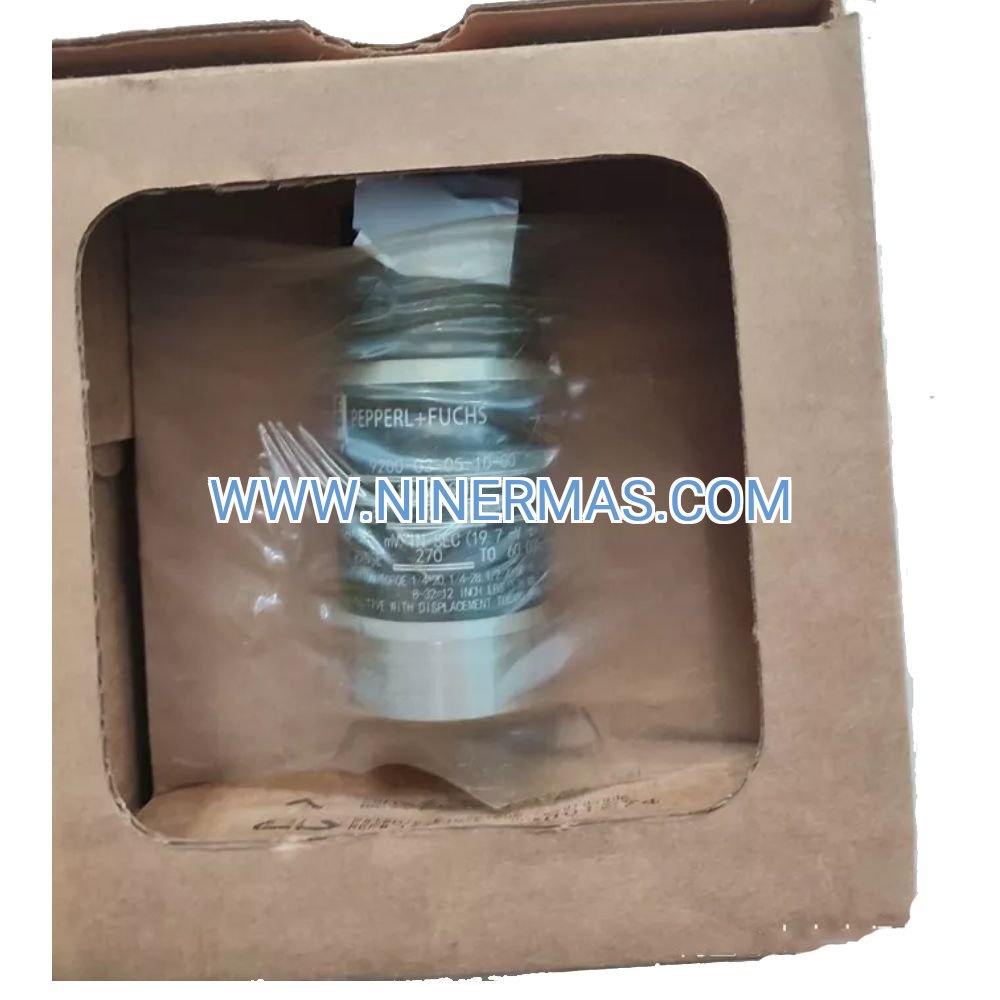
Description
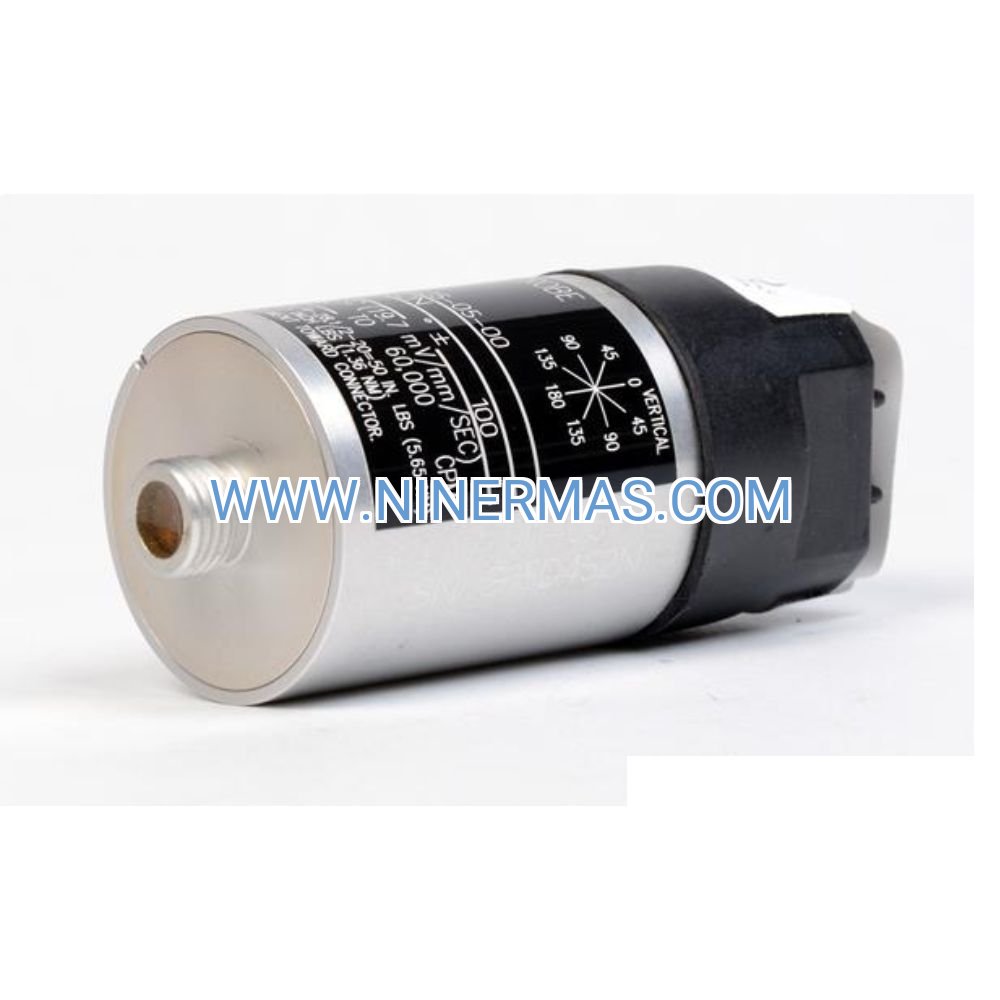
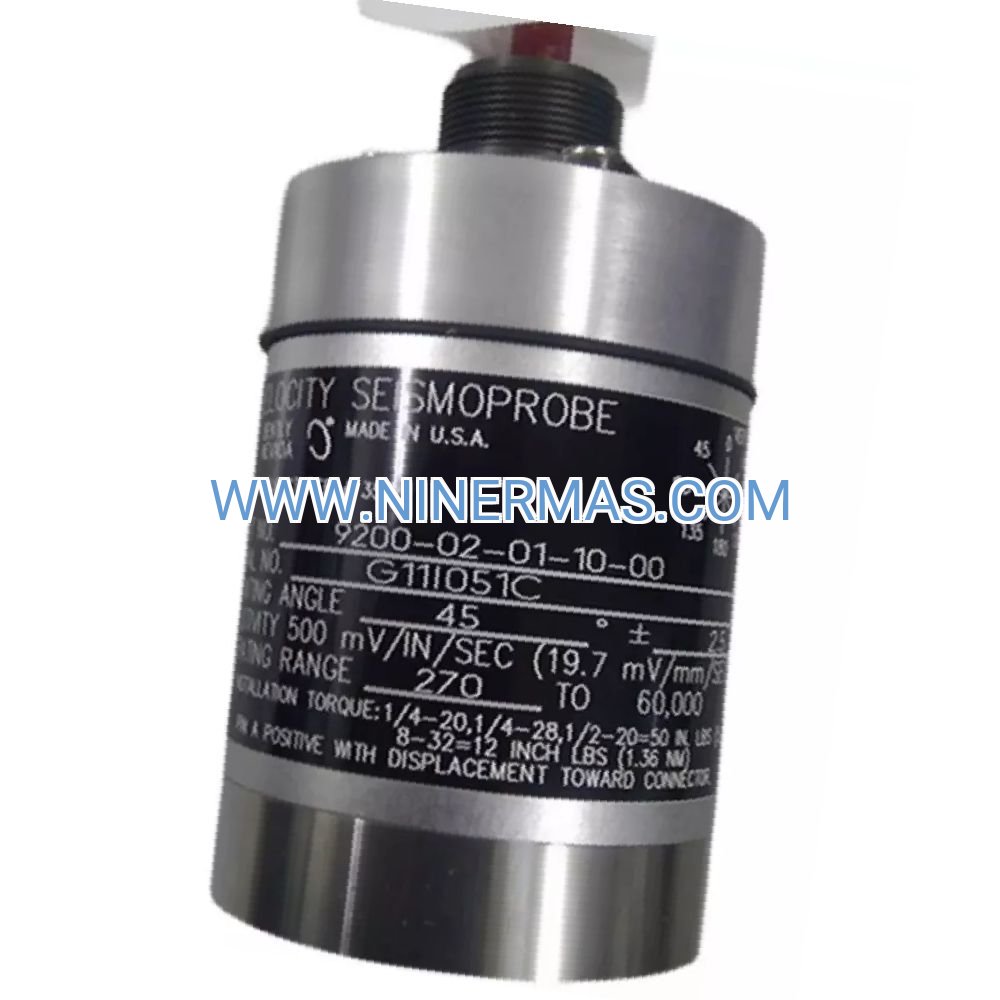
9200-03-05-10-00 Seismoprobe Velocity Transducer (Industrial-Grade Vibration Sensor)
The 9200-03-05-10-00 represents a proven solution in machinery health diagnostics—a self-generating velocity transducer engineered for continuous vibration surveillance in power generation, oil & gas, and heavy manufacturing environments. This passive sensor eliminates external power requirements while delivering reliable velocity measurements across a 10 Hz to 1000 Hz spectrum, making it the preferred choice for bearing condition monitoring, unbalance detection, and predictive maintenance programs.
Designed for installations where sensor failure is not an option, the 9200-03-05-10-00 combines electromagnetic transduction technology with hermetically sealed 316L stainless steel construction. Plant engineers rely on this transducer to protect critical assets including steam turbines, centrifugal compressors, and process pumps—equipment where unplanned downtime can cost $50,000 to $500,000 per incident.
With field-proven reliability exceeding two decades and compatibility with Bently Nevada 3500 monitoring systems, this velocity sensor transforms raw vibration data into actionable intelligence that extends equipment life, optimizes maintenance schedules, and prevents catastrophic failures.
Key Performance Features & Business Value
✓ Self-Powered Operation
Moving-coil electromagnetic design generates output signal without external power supply. Eliminates power conditioning equipment, reduces installation costs by 35-45%, and ensures intrinsic safety for hazardous area applications (Class I, Div 2 suitable).
✓ Direct Velocity Measurement
100 mV/mm/s sensitivity provides velocity output without mathematical integration. Delivers the most relevant parameter for ISO 10816 machinery condition assessment, enabling faster fault diagnosis compared to acceleration-based systems requiring signal processing.
✓ Extreme Environment Durability
IP67-rated hermetic seal withstands -40°C to +121°C operating range, corrosive atmospheres, and washdown conditions. Proven performance in offshore platforms, steel mills, and chemical plants where sensor replacement requires costly shutdowns.
✓ Wide Frequency Response
10 Hz to 1000 Hz (±3 dB) captures both low-speed machinery faults (bearing defects, misalignment) and high-frequency anomalies (gear mesh issues, cavitation). Single sensor replaces multiple narrow-band devices in multi-speed applications.
✓ Simplified Two-Wire Installation
Integral 2-meter cable with flying leads reduces wiring complexity versus four-wire accelerometer systems. Field technicians complete installation in 60% less time, lowering labor costs and minimizing production interruptions.
✓ Long-Term Calibration Stability
Passive transduction principle exhibits minimal drift over 20+ year service life. Eliminates recalibration expenses and maintains measurement accuracy within ±5% across entire operating temperature range.
Industrial Application Scenarios
→ Power Generation: Turbine-Generator Protection
Monitor bearing housing vibration on 50-500 MW steam turbines and generators. Early detection of bearing wear, rotor unbalance, and foundation settling prevents forced outages costing $1M+ per day. Typical installation: 8-12 sensors per turbine-generator set, interfaced to Bently Nevada 3500/42M monitors for continuous protection and trending.
→ Petrochemical Processing: Compressor Train Surveillance
Casing vibration monitoring on centrifugal compressors handling natural gas, ethylene, and refrigerants. Identifies surge conditions, impeller fouling, and seal degradation before process upsets occur. Addresses pain point: Remote installations requiring sensors with proven 5+ year MTBF and minimal maintenance intervention.
→ Pulp & Paper: High-Temperature Dryer Monitoring
Dryer section roll vibration surveillance in environments reaching 120°C with high humidity and chemical exposure. Detects bearing failures, shell eccentricity, and drive coupling issues that cause web breaks and quality defects. Value delivered: 40% reduction in unplanned dryer section downtime through condition-based bearing replacement.
→ Water Treatment: Critical Pump Reliability
Monitor municipal water supply pumps, wastewater treatment aerators, and desalination plant high-pressure pumps. Passive sensor design eliminates electrical safety concerns in wet environments while providing early warning of cavitation, impeller damage, and motor coupling failures.
→ Mining Operations: Conveyor & Crusher Monitoring
Vibration surveillance on conveyor drive motors, crusher bearings, and material handling equipment exposed to dust, moisture, and temperature extremes. Rugged construction survives shock loads exceeding 100g during equipment startups and material impacts.
Technical Specifications & Selection Guide
| Parameter | Specification | Application Relevance |
|---|---|---|
| Model Number | 9200-03-05-10-00 | Bently Nevada OEM part number |
| Sensitivity | 100 mV/mm/s @ 100 Hz | Standard sensitivity for general machinery (10-3600 RPM) |
| Frequency Range | 10 Hz to 1000 Hz (±3 dB) | Covers 600-60,000 CPM machinery speeds |
| Measurement Range | 0 to 50 mm/s peak | Suitable for ISO 10816 Zone A through Zone D vibration levels |
| Transduction Type | Moving coil electromagnetic | Self-generating, no external power required |
| Operating Temperature | -40°C to +121°C | Covers cryogenic to high-temperature applications |
| Environmental Rating | IP67 (dust-tight, waterproof) | Outdoor and washdown environment suitable |
| Mounting Thread | 5/8-18 UNF-2A | Industry-standard vibration sensor mounting |
| Electrical Output | Integral 2m cable, flying leads | Direct connection to monitors or junction boxes |
| Housing Material | 316L stainless steel | Corrosion resistance for chemical/marine environments |
| Weight | 300 grams | Suitable for bearing housing mounting without reinforcement |
| Coil Resistance | 500-700 Ω typical | Verification parameter for installation checkout |
Selection Criteria: Choose the 9200-03-05-10-00 when machinery operates between 600-60,000 CPM, ambient temperatures remain below 121°C, and vibration levels fall within 0-50 mm/s peak. For higher sensitivity requirements (low-speed machinery below 600 RPM), consider 200 mV/mm/s models. For temperatures exceeding 121°C, specify high-temperature accelerometer alternatives.
Advanced Integration Capabilities
Bently Nevada 3500 System Compatibility
Direct interface to 3500/42M Proximitor Seismic Monitor and 3500/55 Dual Velocity Monitor modules. Supports 4-20 mA proportional outputs, alarm setpoints, and Modbus communication for SCADA integration. Typical configuration: Four velocity sensors per monitor channel with independent OK/Alert/Danger alarm logic.
Portable Analyzer Integration
Compatible with SKF Microlog, Emerson CSI 2140, and Fluke 810 vibration analyzers for route-based data collection. Enables correlation between online monitoring trends and detailed spectral analysis during diagnostic investigations.
Wireless Retrofit Solutions
Pairs with IIoT wireless vibration transmitters (Emerson Plantweb, Honeywell Sentience) for cost-effective monitoring expansion. Addresses challenge: Adding monitoring points to existing plants where cable installation costs $150-300 per meter.
PLC/DCS Integration
Output signal converts to 4-20 mA via signal conditioners for direct PLC analog input. Supports protective shutdown logic and process control interlocks based on vibration thresholds.
Delivery, Warranty & Technical Support
Standard Lead Time: 3-5 business days for stock items; 2-3 weeks for factory-fresh units with calibration certificates
Expedited Service: Next-day shipping available for critical breakdown situations (additional charges apply)
Warranty Coverage: 24-month manufacturer warranty covering material defects and workmanship failures
Technical Support: Application engineering assistance for sensor selection, mounting design, and system integration
Documentation Included: Installation manual, calibration certificate with NIST-traceable data, dimensional drawings
Calibration Services: Factory recalibration available with 10-business-day turnaround. Recommended interval: 5 years for critical safety applications, 10 years for general monitoring.
Installation Best Practices
1. Mounting Surface Preparation
Machine flat surface with 63 microinch (1.6 μm Ra) finish or better. Remove paint, rust, and scale within 25mm radius of mounting hole. Drill and tap 5/8-18 UNF-2A thread to 15mm depth minimum. Surface flatness critical—uneven mounting causes 20-40% sensitivity reduction.
2. Sensor Orientation
Install with sensing axis perpendicular to shaft for radial vibration measurement (most common). Axial mounting detects thrust bearing condition. Mark sensor orientation with paint pen for future reference during troubleshooting.
3. Torque Application
Tighten to 20-25 Nm (15-18 ft-lbs) using calibrated torque wrench. Under-torquing causes resonance issues; over-torquing damages internal coil suspension. Apply anti-seize compound to threads for future removal.
4. Cable Management
Secure integral cable within 150mm of sensor using P-clip or cable clamp. Route in grounded metal conduit maintaining 300mm separation from AC power cables and VFD wiring. Prevent cable tension on sensor connection—use drip loop before conduit entry.
5. Electrical Termination
Extend using shielded twisted-pair cable (Belden 8760 or equivalent). Connect shield to ground at monitoring system end only—avoid ground loops. Verify coil resistance (500-700 Ω) and insulation resistance (>100 MΩ to ground) before energizing monitoring system.
Frequently Asked Questions
Q: How does this velocity transducer interface with existing PLC systems?
A: The sensor outputs a low-level AC voltage proportional to vibration velocity. For PLC integration, install a signal conditioner (e.g., Bently Nevada 3300/55 or equivalent) that converts the velocity signal to 4-20 mA. This analog current loop connects directly to standard PLC analog input modules, enabling vibration-based alarms and shutdown logic.
Q: What vibration velocity range does the 9200-03-05-10-00 measure accurately?
A: The transducer measures 0 to 50 mm/s peak velocity, covering ISO 10816 severity zones from "Good" (Zone A, <2.8 mm/s RMS) through "Not Permissible" (Zone D, >11.2 mm/s RMS). This range accommodates normal operation through severe fault conditions on most industrial rotating equipment.
Q: Can this sensor reduce energy consumption in our monitoring system?
A: Yes—the self-generating design eliminates power supply requirements, reducing monitoring system energy consumption by approximately 5-8 watts per sensor compared to powered accelerometer systems. For installations with 50+ sensors, this translates to 250-400 watts continuous savings plus elimination of power conditioning equipment.
Q: What are the mounting requirements for accurate vibration measurement?
A: Critical requirements include: (1) Rigid mounting surface with <63 microinch finish, (2) Proper torque application (20-25 Nm), (3) Mounting location with direct mechanical path to vibration source, (4) Avoid flexible structures or painted surfaces. Improper mounting causes 30-50% measurement error and premature sensor failure.
Q: Does the 9200-03-05-10-00 support remote condition monitoring applications?
A: Absolutely. The sensor's passive design and two-wire output make it ideal for remote monitoring. It interfaces with wireless vibration transmitters, cellular gateways, and IIoT platforms for cloud-based condition monitoring. Typical applications include unmanned pump stations, remote compressor sites, and distributed renewable energy installations.
Q: How do I verify sensor functionality during commissioning?
A: Perform three checks: (1) Measure coil resistance—should read 500-700 Ω between output leads, (2) Verify insulation resistance >100 MΩ from coil to housing, (3) Perform "tap test"—gently tap sensor housing with plastic mallet while monitoring output on oscilloscope; should produce clean sinusoidal waveform. These tests confirm electrical integrity and mechanical functionality.
Start Protecting Your Critical Assets Today
Implement proven vibration monitoring technology that has protected thousands of industrial facilities worldwide. Contact our application engineers to discuss your specific machinery monitoring requirements, receive mounting recommendations, and configure complete monitoring solutions tailored to your operational needs.
Request a quote now or speak with our technical team to ensure proper sensor selection for your application.
© 2026 NINERMAS COMPANY LIMITED. All rights reserved.
Original Source: https://ninermas.com
Contact: sale@ninermas.com | +0086 187 5021 5667
PDF Specification
Download PDF file here:
Click to Download PDF

Contact Info
-
Address:22 / F, South Wo Hang building, 148 Wing Lok Street, Sheung Wan, Western District, Hong Kong
-
Phone:+8618750215667
-
Email: